V4mp

Explore V4mp

Baby Bat’s library

Find your next route. Get back to playing.

Primary genre

Horror books

Gothic castles and suburban houses, vampires and possessions, cosmic dread and quiet dread, from the novels that set the rules to this decade. 412 books so far, across 84 series, plus 264 titles with no series listed. This is page 5 of the shelf.

412 books84 series
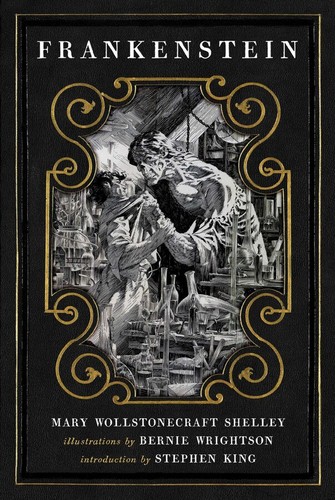
Cover of Frankenstein by Mary Shelley

The horror shelf

Search by title or author, filter with the subgenre chips, the primary-genre chips or the tag chips, or sort the list. Filtering happens in your browser and nothing about the visit is stored.

Sort
Subgenre
Primary genre

Showing 48 of 412 books

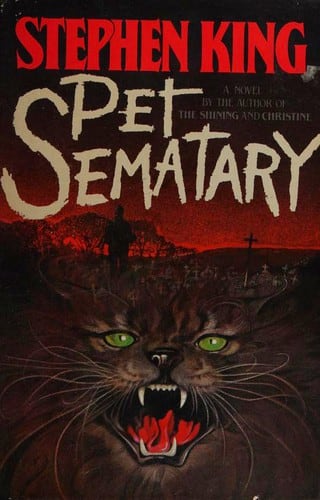
Cover of Pet Sematary by Stephen King

Pet Sematary

Stephen King · 1983

Louis Creed takes a job as a doctor at the university in Maine and moves his family into a house beside a road where trucks run all night. Behind the house, down a path through the woods, the local children keep a pet cemetery for animals killed on that road. Their neighbour, an old man called Jud Crandall, shows Louis something further on, past a deadfall of branches, and explains what the ground there is for. When the family's cat is killed, Jud takes Louis up the path and the novel stops being about grief and starts being about what Louis does with it.
Modern horrorDomestic horror
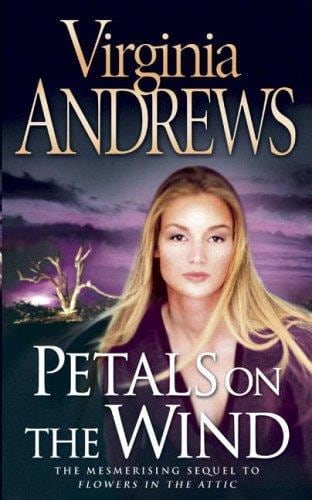
Cover of Petals on the Wind by V. C. Andrews

Petals on the Wind

V. C. Andrews · 1980

The second Dollanganger novel picks up where Flowers in the Attic leaves off, with the four children out of the attic and on a bus heading south. Cathy narrates what follows: a decade of trying to build ordinary lives while the inheritance, the family that imprisoned them and the brother she loves all remain unresolved. The book runs from their escape in November 1960 to 1975, and it moves through a ballet career, a marriage and a plan for revenge that takes years to carry out.

Southern gothicDomestic horror
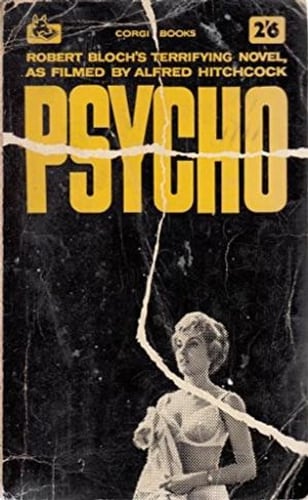
Cover of Psycho by Robert Bloch

Psycho

Robert Bloch · 1959

Norman Bates runs a small motel on a back road, and his mother lives with him in the house on the hill behind it. A woman who has taken money from her employer and left town stops for the night, and the motel's register gets its first guest in a long time. What follows is the novel that introduced one of the most recognisable figures in American horror, and it does its work in fewer than two hundred pages, with a plot that turns on what the reader has been told about a family rather than on what they have seen.

Modern horrorPsychological horror
Cover of Swan Song by Robert R. McCammon

Swan Song

Robert R. McCammon · 1987

The United States and the Soviet Union go to war, and within hours the country has been turned into a wasteland under a sky that will not clear. The novel follows a group of survivors across the years after the exchange: a girl with a glass ring and a talent nobody can explain, a professional wrestler who has been travelling the country, and a former soldier who finds that the end of the world has given him permission to be himself. Meanwhile something older than the bombs is moving through the ruins, hunting for the child.
Post-apocalypticModern horror
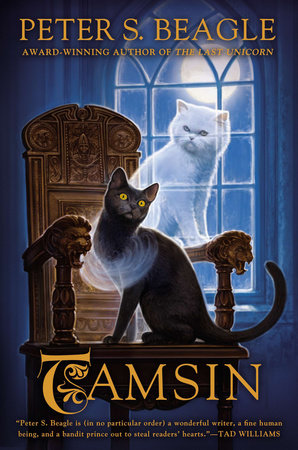
Paperback cover of Tamsin by Peter S. Beagle

Tamsin

Peter S. Beagle · 1999

Thirteen-year-old Jenny Gluckstein moves from New York City to a farm in Dorset after her mother remarries an English biologist. As Jenny adjusts to a new family and helps restore the property, she encounters Tamsin, a young woman who has haunted the estate for centuries. Their connection draws Jenny into the farm’s history and the folklore of the surrounding countryside, where ghosts and other beings are part of the landscape. Told by Jenny several years after the events, Peter S. Beagle’s novel follows her effort to understand Tamsin’s hidden past and confront a danger tied to it.

Young adult fantasyGhost storyHistorical fantasy
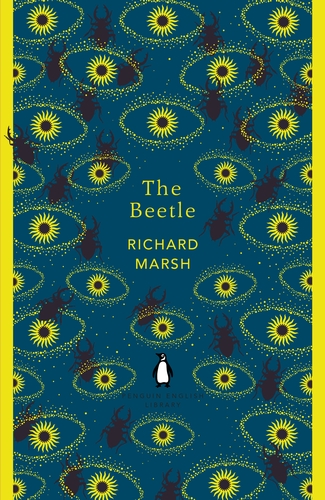
Cover of The Beetle by Richard Marsh

The Beetle

Richard Marsh · 1897

After a ragged stranger smashes a workhouse window, destitute clerk Robert Holt leaves and later enters a house in Hammersmith through an open window. His account of a burglary and an uncanny creature connects to politician Paul Lessingham, scientist Sydney Atherton and Marjorie Lindon. As the narrators change, Lessingham recounts an earlier ordeal in Egypt and investigator Augustus Champnell follows clues after Marjorie disappears. The pursuit leads to a railway wreck, where she is found alive but gravely injured. The novel resolves some consequences while leaving the Beetle’s identity and nature uncertain.

Gothic horrorClassic horrorDetective fiction

What fits on this shelf

The horror shelf runs from the eighteenth and nineteenth-century gothic novels that invented the furniture - the castle, the diary, the thing that will not stay buried - through the twentieth-century paperbacks and film-era classics to books published this decade. Ghost stories and haunted houses sit beside vampire and possession novels, cosmic and weird fiction, folk horror, body horror and quiet psychological dread.

A book lands here when it is built to unsettle: a haunting, a monster, a curse, an appetite, or a wrongness the characters cannot name. Crime and horror overlap at the edges, and a thriller that stays on the crime side of the line sits on the mystery shelf instead. Cross-over titles that genuinely belong on both shelves reuse one page and are listed on each.

The other shelves

Who writes about these books

Books editor

Baby Bat