V4mp

Explore V4mp

Baby Bat’s library

Find your next route. Get back to playing.

Primary genre

Sci-Fi books

Science fiction from the genre-defining classics to the newest award winners: ships, cities, robots, first contact and the futures we keep writing about. 630 books so far, across 151 series, plus 352 titles with no series listed. This is page 6 of the shelf.

630 books151 series1 tagged
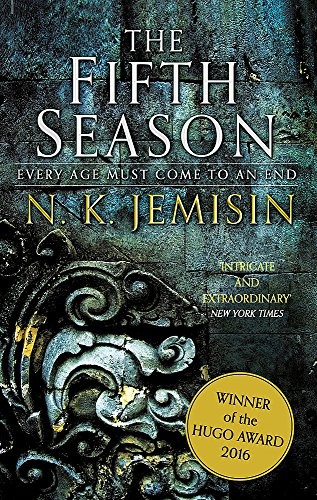
Cover of The Fifth Season by N. K. Jemisin

The sci-fi shelf

Search by title or author, filter with the subgenre chips, the primary-genre chips or the tag chips, or sort the list. Filtering happens in your browser and nothing about the visit is stored.

Sort
Subgenre
Primary genre
Tag

Showing 48 of 630 books

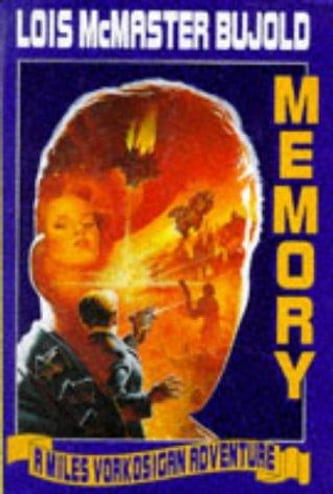
Cover of Memory by Lois McMaster Bujold

Memory

Lois McMaster Bujold · 1996

Miles Vorkosigan has spent years commanding a mercenary fleet for his home world's security service under a rank that exists mostly on paper, and in Memory the medical problem he has been hiding finally catches up with him. The falsified report he files to cover it costs him the career he built. Back on Barrayar, cut off from the only work he was ever good at, he watches his former employer collapse and finds himself the one person able to look into why.

Space operaMilitary science fiction
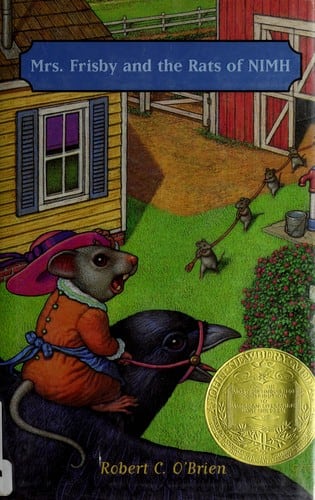
Cover of Mrs. Frisby and the Rats of NIMH by Robert C. O'Brien

Mrs. Frisby and the Rats of NIMH

Robert C. O'Brien · 1971

Mrs Frisby is a widowed mouse with four small children, and she has a problem that cannot wait: the family has to move to its summer quarters or face almost certain death, but her youngest son Timothy is ill with pneumonia and cannot be moved. She encounters the rats of NIMH, an extraordinary colony of highly intelligent creatures, who find a solution to her dilemma, and she in turn does them a great service.

Science fantasyAdventure fiction
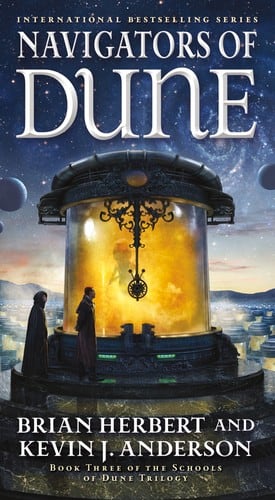
Cover of Navigators of Dune by Brian Herbert and Kevin J. Anderson

Navigators of Dune

Brian Herbert and Kevin J. Anderson · 2016

Set nearly a century after the events of Dune: The Battle of Corrin, this is the third book of the Great Schools of Dune trilogy, which follows the founding years of the organisations that will matter in Frank Herbert's Dune. The Bene Gesserit, the Mentat schools and the Spacing Guild are all still being formed, and all of them are threatened by the anti-technology forces that have been gaining power since the Butlerian Jihad. The volume closes the sequence and accounts for the origins of the Navigators.

Space operaMilitary science fiction
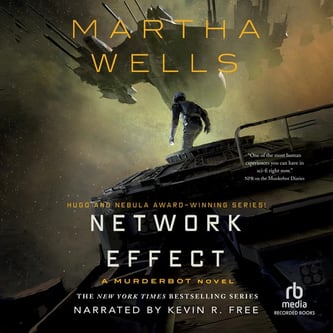
Cover of Network Effect by Martha Wells

Network Effect

Martha Wells · 2020

Murderbot is a security unit that hacked its own governor module years ago and has been quietly doing as it pleases ever since, most of which involves watching soap operas. In the first full-length novel of the series, it is escorting a research expedition when a hostile ship attacks, and Murderbot and one of its humans are taken aboard by force. The transport turns out to be one it has travelled on before, and the artificial intelligence running it has plans.

Space operaRobot and AI
Cover of Neuromancer by William Gibson

Neuromancer

William Gibson · 1984

Case was one of the best console cowboys in the Sprawl until his employers burned his nervous system and cut him off from cyberspace, which is worse than dying. He is drinking his way through Chiba City when a woman with surgically inset mirrorshades offers him a repair job with strings attached: a mysterious employer, a run nobody explains, and a partner who handles the parts of the work that require a body. The target is an artificial intelligence with plans of its own, and the people paying for the run are not the only ones with an interest in what it becomes. Case's repair depends on completing the job, and the artificial intelligence has been waiting for someone like him.

CyberpunkClassic science fiction
Cover of New York 2140 by Kim Stanley Robinson

New York 2140

Kim Stanley Robinson · 2017

Two rises in sea level have left most of New York City permanently under water, and the streets have become canals while the skyscrapers have become islands. The residents have adapted: the upper floors are still lived in, and the flooded city, nicknamed SuperVenice, is as busy as it ever was. Against that backdrop the book follows a group of people who live in one building, the MetLife Tower on 23rd Street, and the changes the water keeps forcing on the city around them.

Climate fictionDystopian
Cover of News from Nowhere by William Morris, Warbler Classics paperback

News from Nowhere

William Morris · 1890

After a heated Socialist League discussion, a Victorian visitor wakes in a transformed future London. He explores shared markets and guest houses with Dick Hammond, then questions Dick’s great-grandfather about a society organized without money or national government. A journey up the Thames brings him into contact with Clara, Ellen and village communities whose work follows local interests and seasonal needs. As Guest learns how this world came through revolution and conflict, he must also make sense of its unfamiliar responses to love, labour and violence. The book ends with his return to Hammersmith, leaving him uncertain whether the journey was a dream or a vision.

Classic science fictionLiterary fiction
Cover of Nineteen Eighty-Four by George Orwell

Nineteen Eighty-Four

George Orwell · 1949

Winston Smith works at the Ministry of Truth in London, in the province of Oceania, where his job is to correct old newspaper records until they agree with the Party's current account of events. Doing it properly requires holding two contradictory facts in your head at once, which is what the Party calls doublethink. Winston keeps a diary, which is a capital offence, drifts into an affair with a woman from the fiction department, and writes down the reasons he believes the regime cannot last. He also believes he has found somebody willing to say out loud what everyone knows. The Party's control works through rewritten records, invented language and a telescreen in every room, and it has been at this for a long time.

DystopianClassic science fiction
Cover of Noor by Nnedi Okorafor

Noor

Nnedi Okorafor · 2021

Anwuli Okwudili calls herself AO, for Autobionic Organism, and she has spent her life being told that her body is wrong: born with limbs that needed rebuilding, and rebuilt again with cybernetic prosthetics after a car accident. She works as a mechanic in Abuja, in a Nigeria where everything is streamed and a permanent sandstorm is eating the north. Then a trip to a market goes catastrophically wrong, and AO is a fugitive running north with a herdsman who is also wanted for murder.

CyberpunkSurvival fiction
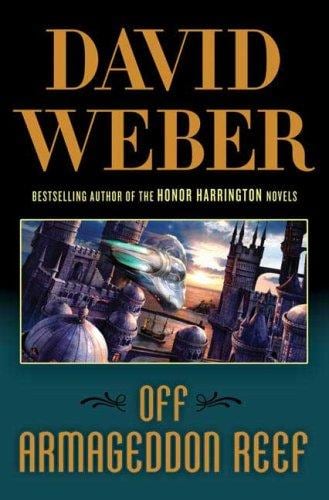
Cover of Off Armageddon Reef by David Weber

Off Armageddon Reef

David Weber · 2007

In the twenty-fourth century, eight million people escape the destruction of human civilisation by a genocidal alien enemy and settle a world they name Safehold, hoping to stay hidden. To keep the colony invisible from space, its leaders decide that it has to give up advanced technology altogether and live as a pre-industrial society. Administrator Eric Langhorne goes considerably further than the plan allows, and the first of the Safehold novels follows what his version of it does to the people who have to live inside.

Military science fictionSpace opera
Cover of Old Man's War by John Scalzi

Old Man's War

John Scalzi · 2005

John Perry turns seventy-five, buries his wife, and joins the Colonial Defense Forces, which is what a lot of old people do, because the CDF only recruits people with decades of experience and nobody knows what its soldiers actually look like. The answer arrives after he leaves Earth and stops being seventy-five. Humanity holds a handful of inhabited worlds in a galaxy that is crowded, and the colonies are won and kept by a force that fights for land, water and settlers with technology nobody back home is told about. Perry's first year in the CDF is boot camp, first contact, and a long look at what the war is actually for.

Military science fictionSpace opera

What fits on this shelf

The science fiction shelf runs from the nineteenth-century novels that set the rules to books published this decade. Space opera and first contact sit beside cyberpunk, military science fiction, time travel, climate fiction, dystopia and stories about robots and minds that are not human.

A book qualifies when the science or the speculation shapes the story: a technology, a discovery or a world that could not exist here. Science fantasy that blends the two is welcome, and a couple of titles on this shelf also sit on the fantasy shelf because both descriptions are fair.
Tags on this shelf

Tags are cross-cutting markers, not genres. They have their own landing pages.

The other shelves

Who writes about these books

Books editor

Baby Bat