
About Wolcen: Lords of Mayhem
Follow the Children of Heimlock through a dark-fantasy campaign as a customizable fighter confronting the Brotherhood of Dawn and other threats to the Republic. Weapons shape available skills, while Rage and Willpower, the rotating Gate of Fates, loot crafting and temporary Apocalyptic forms create a flexible action-RPG progression system in the surviving single-player game.
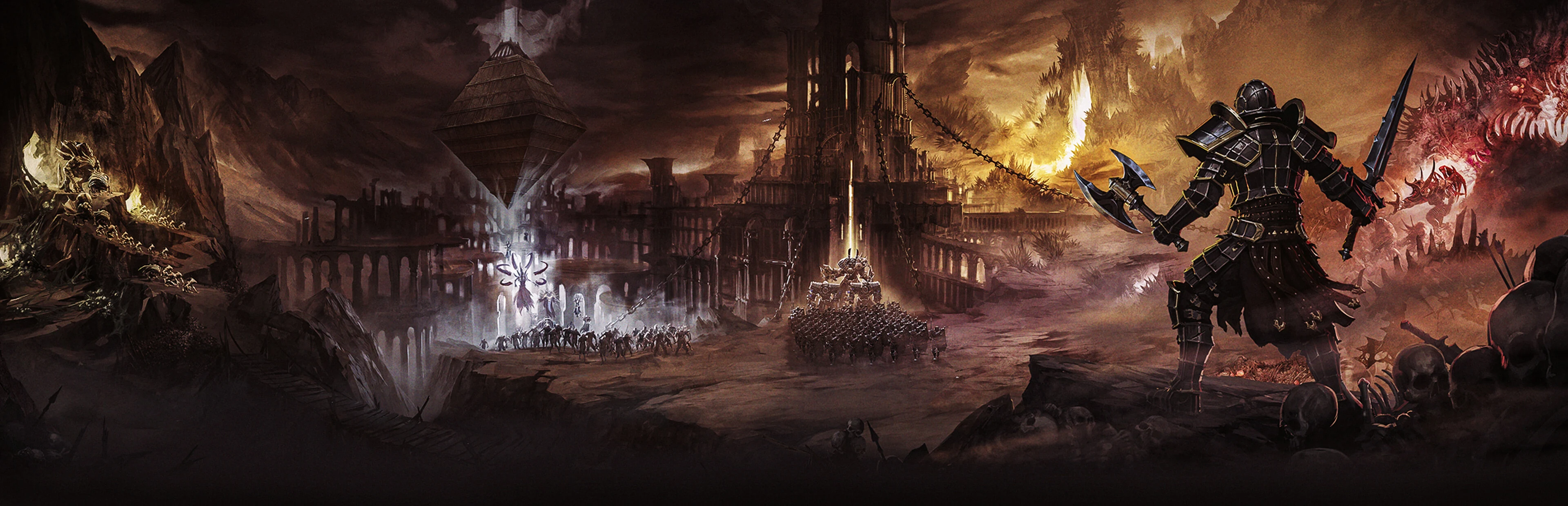
Wolcen: Lords of Mayhem is a dark-fantasy action RPG set in a Republic that wages war against supernatural forces. The player is one of the Children of Heimlock, raised by Grand Inquisitor Heimlock alongside adoptive siblings Edric and Valeria. The opening conflict follows an attack on the Brotherhood of Dawn after a Republican fortress in the northern Red Wastes is infiltrated. The campaign moves through different environments and puts the player among soldiers, hostile factions and creatures tied to the setting's conflict. The original three-act campaign was extended by a fourth chapter, Endgame, which adds another phase of the story and a different progression structure. Enemy groups are associated with distinct biomes and story factions, and those groups can also be hostile to one another. Optional encounters create detours between the campaign scenes and major confrontations.
Character creation does not lock the player into a traditional class. The equipped weapon determines which skills can be used, so choosing a blade, ranged weapon or magical focus also changes the available combat vocabulary. Each weapon type has its own combos and style, while skills can be learned and leveled regardless of weapon choice. As those skills develop, modifier choices can alter damage type, add utility or change how an ability functions. This lets a character shift toward a different combat approach by changing equipment and skill selections rather than starting over with a fixed archetype.
Combat combines active dodging with two opposing resources: Rage and Willpower. Different abilities draw on them, and spending one can affect the other, so a rotation depends on which resource is available rather than only waiting for a cooldown. Enemy attacks use visible markers and animation cues, making movement part of offense and defense. The character can dash into close combat and dodge away from incoming attacks; recognizing a heavy tell can matter more than remaining stationary to complete a combo. Four Apocalyptic forms provide a temporary transformation option, each with its own set of skills and a powerful ultimate.
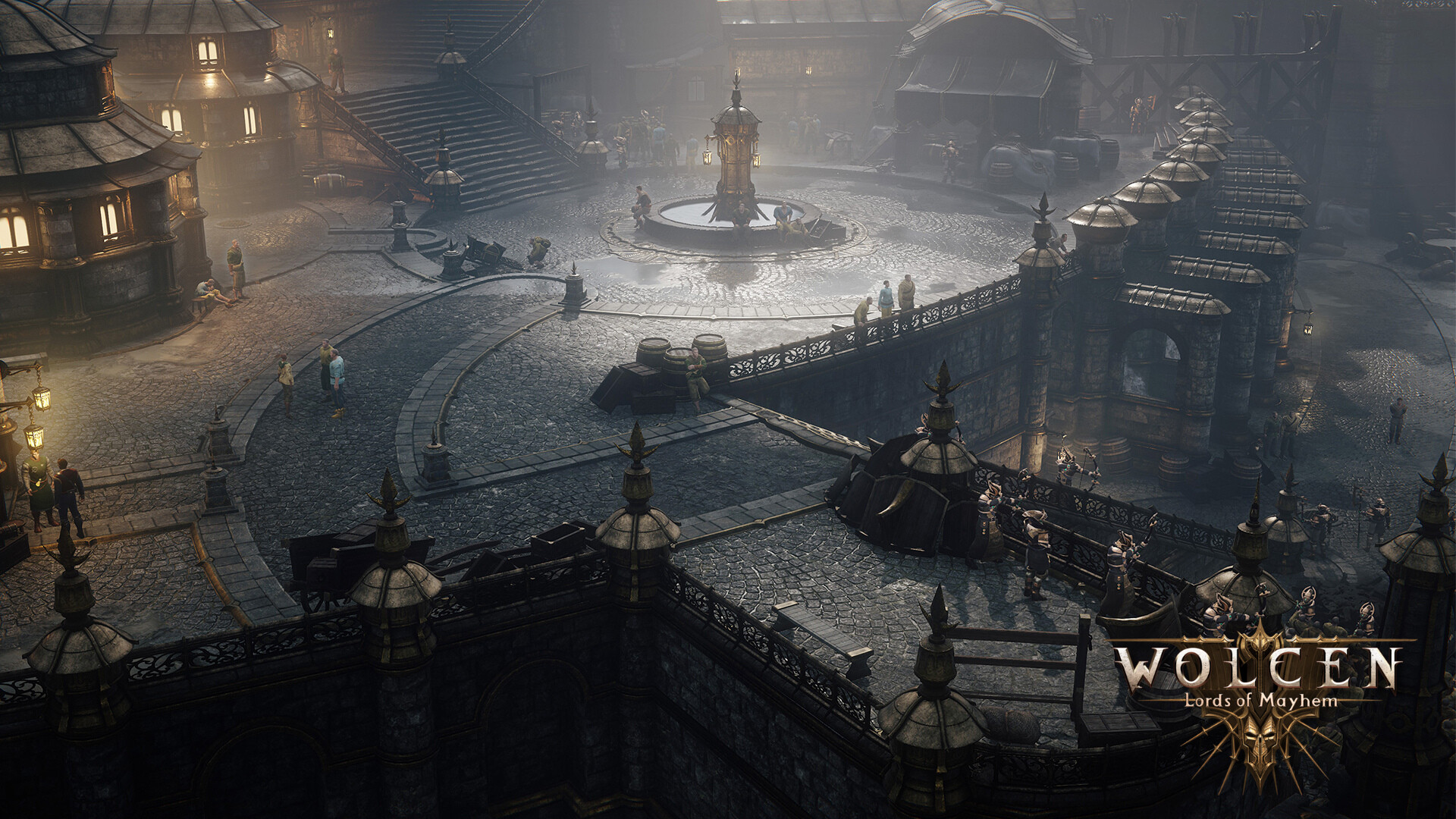
Passive progression is handled by the Gate of Fates, a large wheel divided into themed sections associated with different archetypes. Characters earn points while leveling and can rotate the wheel's rings to connect different sections, combining passive bonuses that suit a chosen weapon and skill setup. Attribute points can be assigned to improve the character's capabilities, while skill points are spent on ability modifiers. Together, these systems make progression a series of connected decisions: weapon choice selects usable skills, skill modifiers define their behavior, and the rotating passive tree shapes the underlying build without requiring a preset class.
Equipment and crafting form another layer of character development. Armor and weapons carry offensive and defensive affixes, and rare or unique items can support unusual combinations that work beyond a weapon's expected role. Items can contain sockets for gems; gems enhance equipment and also serve as crafting ingredients. Crafting reagents can add, modify, protect or randomize affixes, with socketed gems giving some control over the result. The process therefore involves more than replacing a lower-numbered item: players can weigh the value of existing modifiers, sockets and build synergies before committing materials to an upgrade.
The fourth chapter moves the conflict to the defense of Stormfall, where Ahriman threatens the city. Its structure combines story progression with a lighter version of the Champion of Stormfall management loop. Operations advance two separate preparations: the approach of Ahriman and opportunities to confront his Lieutenants. Successfully defeating a Lieutenant weakens a selected attack before the next confrontation, while city projects reinforce Stormfall and develop its facilities. This gives repeated missions a specific purpose beyond collecting gear: each operation contributes to preparing the city and shaping the threat ahead. Once the chapter is completed, Champion of Stormfall extends the system through increasingly difficult operations and further equipment progression. Normal and Story difficulty remain available for the campaign, separate from the escalating endgame challenge.
Wolcen's current availability has an important practical distinction: multiplayer support ended in September 2024, but the game remains available as a single-player title. The online service and co-op features described in earlier material should not be mistaken for functioning current modes. The surviving campaign and offline character progression still center on weapon-defined skills, Gate of Fates choices, equipment and Stormfall's endgame development. That boundary keeps the experience focused on shaping one character and pursuing challenges locally, rather than forming a party or relying on an online world.
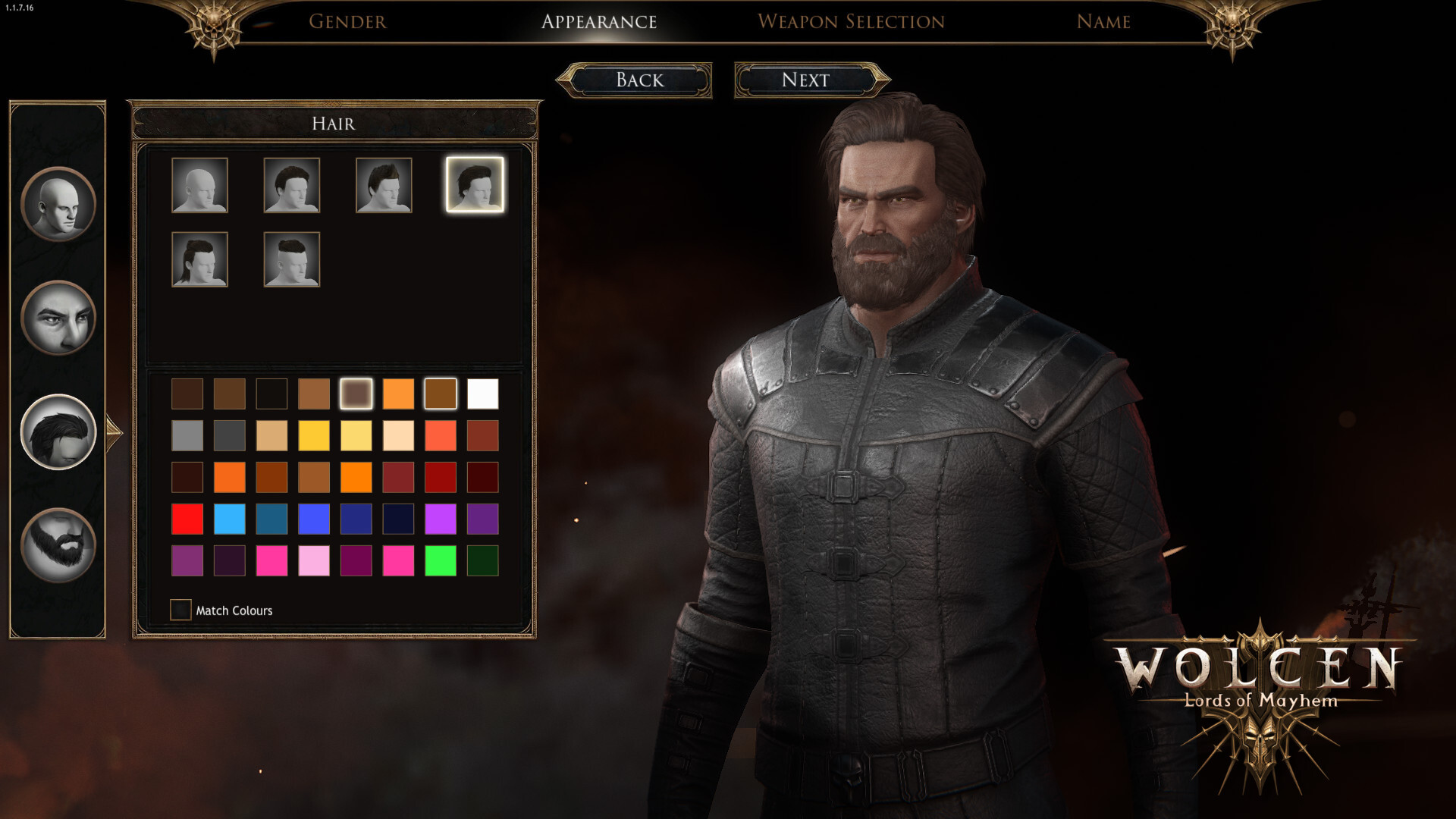
Character appearance has its own progression track through collected armor skins and dyes. The cosmetic inventory lets players change the visible form of equipment without replacing its gameplay properties, and armor pieces can be selected asymmetrically, such as different shoulders or gloves on each side. This sits alongside the loot system rather than competing with it: a build can preserve the look of an item after its statistics are no longer useful.
The weapon picks your skills, rage and willpower feed each other, and the Gate of Fates is a path rather than a menu. Here is what is left now that co-op and further updates are off the table.
The weapon is the class
Wolcen advertises itself as a hack-and-slash free from class boundaries, and it is specific about what replaces them: your weapons set the rules for your skill types. There is no class to choose at the start, which sounds like freedom and is really a relocation of the decision. The important choice now happens every time you equip something new.
Because weapons come with their own stances and combos, learning a weapon means learning a rhythm rather than reading a damage number. Swapping a weapon rewrites your available options instead of just changing your stats, which makes it the cheapest way to test a different build before you spend anything permanent on the passive tree.
Rage and willpower are one system
Three resources run the character, and the first two are wired into each other. Rage and Willpower interact through what the game calls the Resource Opposition System, and the transfer runs both ways: spending Willpower converts into Rage over the moments that follow, and spending Rage converts back into Willpower. That is what makes a hybrid build work, because a spell phase pays for the melee phase that comes next and the melee phase refills the spells.
How you refill each one is fixed by what you are holding. Attacking with a staff or catalyst builds Willpower, and attacking with anything else builds Rage, so a mixed loadout is a deliberate rhythm rather than a menu setting. Stamina is the third pool, and it has a second job: it pays for the dodge-roll that keeps you alive, and the same resource can be spent to travel faster.
The Gate of Fates is a path, not a list
Long-term power sits in the Gate of Fates, a rotating passive tree split into 21 sub-class sections. Read it as a route rather than a shopping list, because the passives you skip say as much about the character as the ones you take.
Skills sit on top of that with modifier points earned by levelling the skill. Those points do more than raise damage: they can change a skill's damage type, add a function, attach a buff or a debuff, or rewrite how it works. That turns each skill into a small build inside the larger one, which is why the sensible approach is to settle on a few skills and modify them deeply rather than spread points across everything you find.
The online side was retired, and that is the headline
This is the part that decides whether you should buy the game at all. In 2024 the studio announced that Wolcen would stop receiving development and support, that multiplayer functionality would end, and that the servers would be shut down shortly afterwards. All of that has since happened.
Wolcen remains playable in single-player. The shutdown announcement described an Import Online Character tool intended to convert saved online characters for offline play. Its current operation has not been independently verified here; preserve any existing saves before attempting a transfer.
Achievements survived the transition. The studio says the one achievement that originally depended on another player was reworked to require reviving an NPC companion instead, and that achievements completed online before the shutdown are retained.
What is left to play
What remains is the campaign and its endgame, which is a reasonable amount of game. The story can be played on two settings, with a Story mode and a Normal mode, and the endgame is built to let difficulty climb progressively rather than asking you to pick a wall up front.
On top of the combat sits the Aspects of Apocalypse system, where any character can shapeshift into one of four Celestial incarnations, each carrying four skills and an ultimate. Because it is not tied to a class, it slots into whatever build you have already assembled, and it gives you a dramatic answer to a fight that has stopped going your way.
Should you play it
Yes, with clear eyes, if you want a single-player classless action RPG and you are buying it for the build system rather than for a community. The weapon-driven skill rules, the two-way resource conversion and the Gate of Fates are where its depth sits.
Two things to be honest about first. Multiplayer has been switched off and the studio has ended development and support, so do not buy this to play with friends or to wait for new content. And if you want to see what the studio does next with the same ideas, a direct sequel called Wolcen 2 is planned to enter early access on PC in 2027, with single-player and co-op for up to four players.
Go deeper with V4mp
- Developer
- WOLCEN Studio
- Genre
- Action RPG
Explore Wolcen: Lords of Mayhem further
Explore the wiki for detailed reference pages on the game's world, systems, items and locations.