
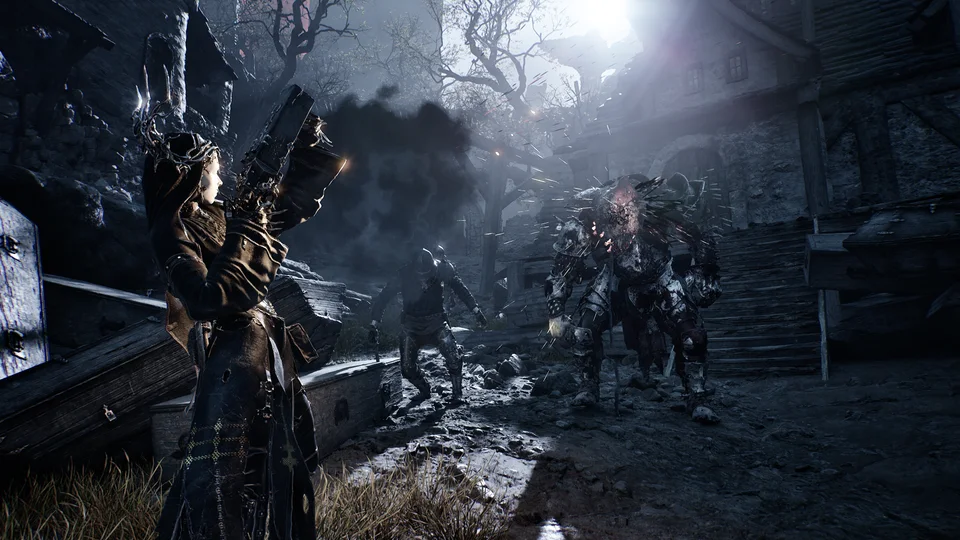
About Mortal Shell II
Mortal Shell II takes the tight, comparatively short adventure of 2020 and replots it as a full-scale action RPG. What it gains in ambition it pays for in focus, and the trade is more interesting than the first game ever got to be.
The shells are the whole point now
The original's conceit was strong and its execution was thin. You embodied dead warriors and borrowed their bodies, but the difference between a nimble fighter and a heavy one came down to a life bar, with the actual variation buried in passives you unlocked later. Choosing a shell was a decision you made once.
That's fixed here, and it's the best thing about the sequel. The roster has roughly doubled, and each shell now carries its own active abilities on top of the passive progression, which means switching is a genuine change of approach rather than a respec. Points you spend on a shell can be refunded and reallocated freely and as often as you like, so experimenting costs nothing but the walk back to a menu. It's the rare progression system that encourages you to actually use the variety it built. We found ourselves rotating shells between regions purely to see how a fight would go differently, which is not something the first game ever provoked.
The caveat is that a few abilities are awkward to land. Anything that travels a distance or relies on auto-locking will occasionally miss for reasons that aren't entirely your fault, and that stings most in a game where a wasted animation can cost you the exchange. It's a rough edge rather than a flaw.
The world is where it overreaches
Cold Symmetry has expanded from interconnected corridors into open regions, and this is the part of the sequel that doesn't hold up. The individual spaces are fine, and the art direction remains the studio's strongest asset — the world is genuinely horrible in the way it wants to be, full of things worth looking at. Navigating between those spaces is the problem. Route-finding is fussy, the map is unhelpful when you need it most, and there are stretches where you spend more time working out where you are than deciding what to do there.
Some of that reaction is unfair and some of it is structural, and it's worth separating the two. Expanding into open areas invites the comparison to Elden Ring, which is a contest nobody wins; judge it against what the studio was actually reaching for and it's a reasonable swing. Judge it against the standard the genre now sets and the world is the weakest thing in the game. Going in expecting the dungeons and the duels to be the good part will set you up far better than expecting a landscape to get lost in.
Hard from the first hour, and vague about why
This is a difficult game immediately, before you reach anything open, and it stays difficult in the way these games are meant to be. Combat rewards patience and punishes greed, the boss fights are the best-constructed encounters in the game, and the weapon and Tarstone system gives you real reasons to tinker. If you came for a fight, it delivers.
The story is the same bargain the studio offered last time, and it hasn't been resolved so much as dressed differently. The main plot is deliberately obscure to the point of being hard to follow at all, while the individual shells are where the writing actually lands. Building a bond with a character through a collectable and a memorably odd patron turns the roster into something closer to a cast, and those smaller stories do the work the main narrative doesn't. We'd take that trade, but be honest with yourself about wanting it — if you need the world explained, this isn't the game that will do it.
The pulse
Worth knowing before you buy: the reception has settled into a fairly consistent shape. The combat and the shell system are the parts people defend, and the open world is the part they argue about — some treating it as a sequel that reached past its budget, others as an ambitious step that mostly works. The split is real rather than noise, and it lines up with what we found: the fights are better than the original's, the world is more ambitious and less pleasant to move through. There's no meaningful disagreement about whether it's harder or longer than the first game.
Should you play it
Yes, if you liked the original's body-swapping and wanted the studio to build an actual game around it. The sequel does that, and the shell rotation alone justifies the trip. It's also the right pick if the first game's length was your complaint, because there is considerably more of this one.
Be more careful if exploration is what you play these games for. The dungeons, the bosses and the build-crafting are genuinely good; getting between them is a chore, and that's the trade this sequel asks you to accept. We'd take it. We'd just go in with our expectations pointed at the fighting.
Go deeper with V4mp
- Developer
- Cold Symmetry
- Genre
- Dark fantasy action RPG
Explore Mortal Shell II further
Explore the wiki for detailed reference pages on the game's world, systems, items and locations.
Open the Mortal Shell II wiki ↗
Maps & Tools
Looking for locations and items? Search and filter the places we have mapped.