
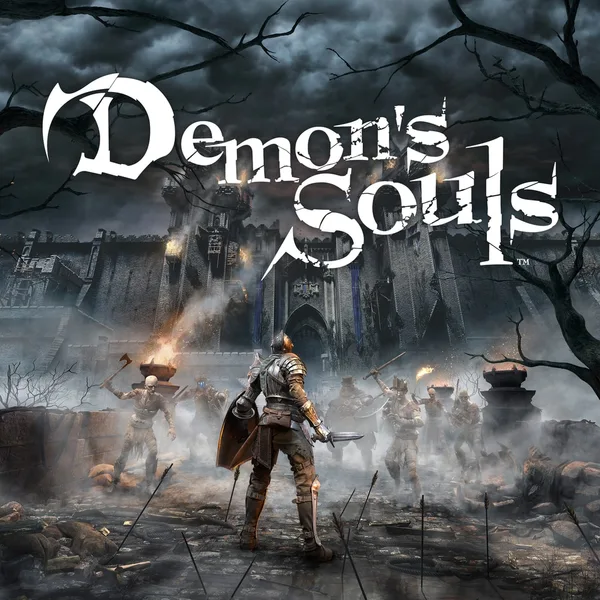
About Demon’s Souls
Bluepoint Games rebuilt the 2009 original with SIE Japan Studio and FromSoftware for the PlayStation 5 in 2020, published by Sony Interactive Entertainment. It changed the visuals, the vocal performances, the cutscenes, the animations and the interface. It did not change the systems, and that is the entire argument for it.
Why a remake was needed at all
The original was a PlayStation 3 exclusive and a slow-burn cult hit rather than a hit on arrival. Its online servers were shut down in 2018, which mattered more here than it would for most games — Demon's Souls was built around strangers leaving messages and ghosts in each other's worlds, and once the servers went, the thing people remembered playing was no longer reachable. By the time a remake was plausible, the game had spent years being described rather than played.
So the remake's job was less about improving a classic than restoring access to it. Bluepoint had form with this kind of careful reconstruction, and the work shows. What's striking is how little of the underlying game they touched. The combat still moves at the pace it always did, the five worlds are still split into their sections with a boss at the end of each, and the Nexus is still the only safe place in a game where nothing else is.
The design still bites
The systems were strange in 2009 and they remain strange now. You can't pause — bringing up the menu restricts you to walking while you navigate it, which turns a boss fight into a commitment you have to see through. World tendency shifts between light and dark based on your successes and failures, so dying repeatedly in an area can make that area harder, punishing you for struggling by giving you more to struggle with. That mechanic is the clearest example of the game's temperament: it is not interested in meeting you partway.
It also isn't interested in helping you find out what it is. The five worlds are enormous, they're guarded by things that kill you in one or two hits, and the game gives you almost no explanation of how any of it works. What makes that bearable rather than annoying is that it's legible — you die because you mistimed an attack or got greedy, not because the game lied.
The pulse
The remake was received warmly and settled into a comfortable place: widely regarded as the correct way to play Demon's Souls, with 8.9 territory praise rather than perfect scores. The recurring criticism is aesthetic rather than mechanical — a handful of redesigned enemies, effects and music cues that departed from the original's intent, which bothered people who had played it the first time and largely passed everyone else by. No serious argument emerged about the systems, and that's the point. By changing the presentation and leaving the design alone, the remake works for people meeting it cold and for people who never got to finish it in 2009. It is also still the hardest starting point in the genre, and nothing about the new coat of paint softens the first few hours.
Should you play it
Yes, if you want to see where all of this came from. Nearly everything the genre has spent fifteen years refining is here in its earliest form, including a few ideas the later games quietly dropped — the world tendency system being the big one, and it still has no real equivalent in the sequels.
Be honest about where it sits in the difficulty curve, though. This is a harder starting point than Dark Souls III, and it is far less forthcoming about what it wants from you. If you're new to the genre, start with Dark Souls III or Demon's Souls' own successors and come to this one once you understand the language. If you already speak it, the remake is the best version of the game that started the argument.
Go deeper with V4mp
- Developer
- Bluepoint Games
- Genre
- Dark fantasy action RPG
Explore Demon’s Souls further
Explore the wiki for detailed reference pages on the game's world, systems, items and locations.