
About DREDGE
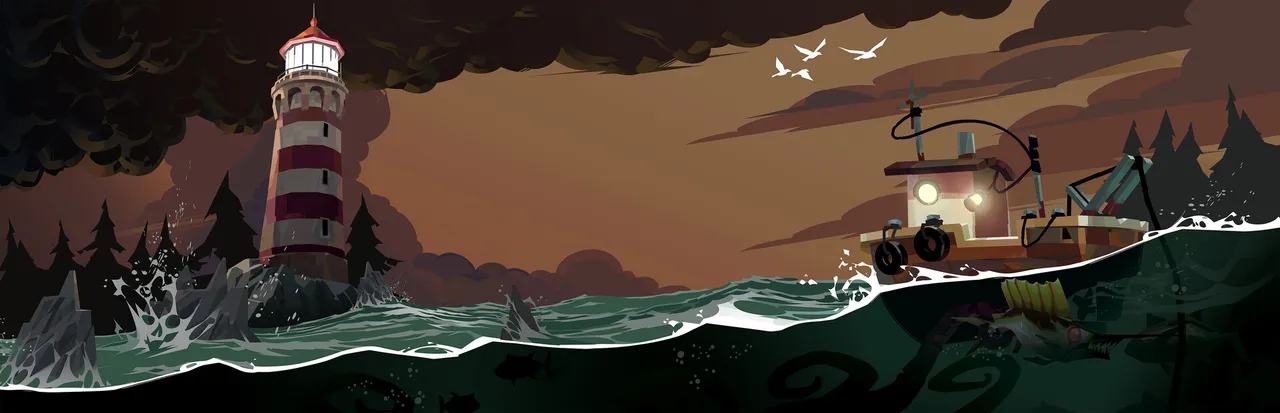
DREDGE is a single-player fishing adventure set across a remote archipelago. Captain a small trawler, catch and sell fish, dredge wrecks for materials and treasures, and take requests from island residents. Boat upgrades open new waters and fishing grounds, while night voyages bring dangers and signs that the sea holds more than ordinary wildlife.
DREDGE begins with a practical problem: a newly arrived fisherman has lost his boat and needs work in the Marrows. The local mayor arranges a replacement vessel, and the Fishmonger offers a way to earn money by bringing in the catch. This modest harbour routine introduces the game’s main loop before the wider mystery takes shape. The player steers a compact boat through an archipelago, stops at fishing grounds and ports, and decides how much cargo space to devote to the day’s haul. Residents provide Pursuits, the game’s quests, that gradually draw the captain away from the starting islands and toward questions about the region’s past.
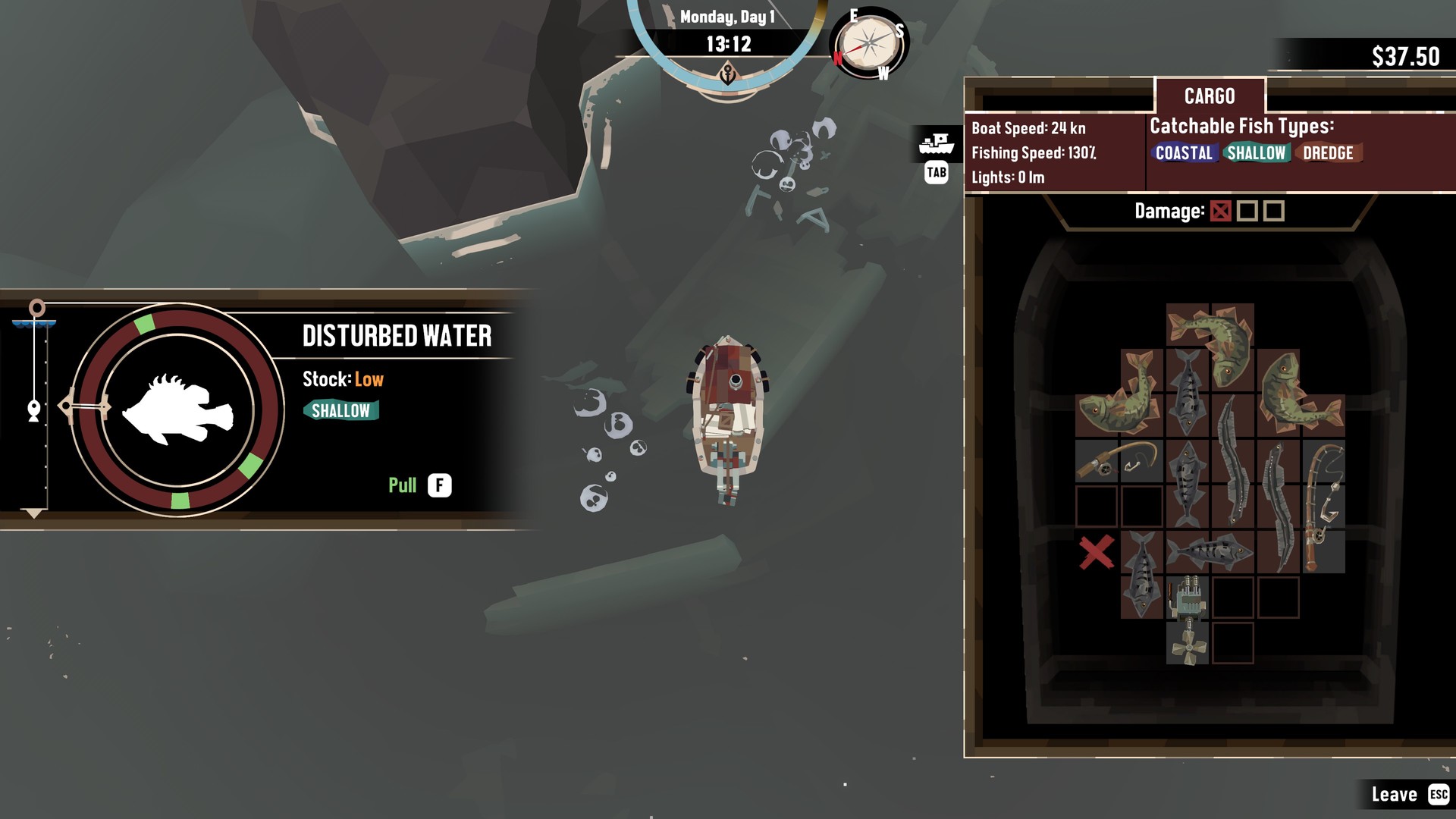
Fishing is a hands-on task rather than a passive timer. At a marked spot, the player selects compatible equipment and completes a short timing challenge to bring fish aboard. Different rods cover different water habitats, so a promising shoal may remain inaccessible until the boat carries the right gear. The catch must then be arranged in a limited hold, where its shape and size affect how much can fit alongside tools, materials and quest items. A spyglass helps scan disturbed water and identify the habitat of a fishing spot, while the fish catalogue records discoveries and clues. Repeated fishing can deplete a spot, so a familiar patch is not an unlimited source of income. Pursuits may call for particular species, making the catalogue and equipment coverage useful for more than selling the day’s catch. Selling fish at a settlement turns a successful trip into money for equipment and hull improvements.
Not every salvage spot is a fishing ground. Dredging lets the captain recover objects and construction materials from marked patches of seabed, using another small timing puzzle to lift each item. The cargo hold makes these finds compete with fish for space, so a trip can involve weighing what to keep and when to return to port. Salvaged lumber, metal and cloth feed boat development at the dry dock, while Research Parts unlock new equipment in research menus. Unlocking a design and obtaining the installed item are separate steps: research makes gear available for purchase, after which the player fits it into the vessel’s equipment spaces.
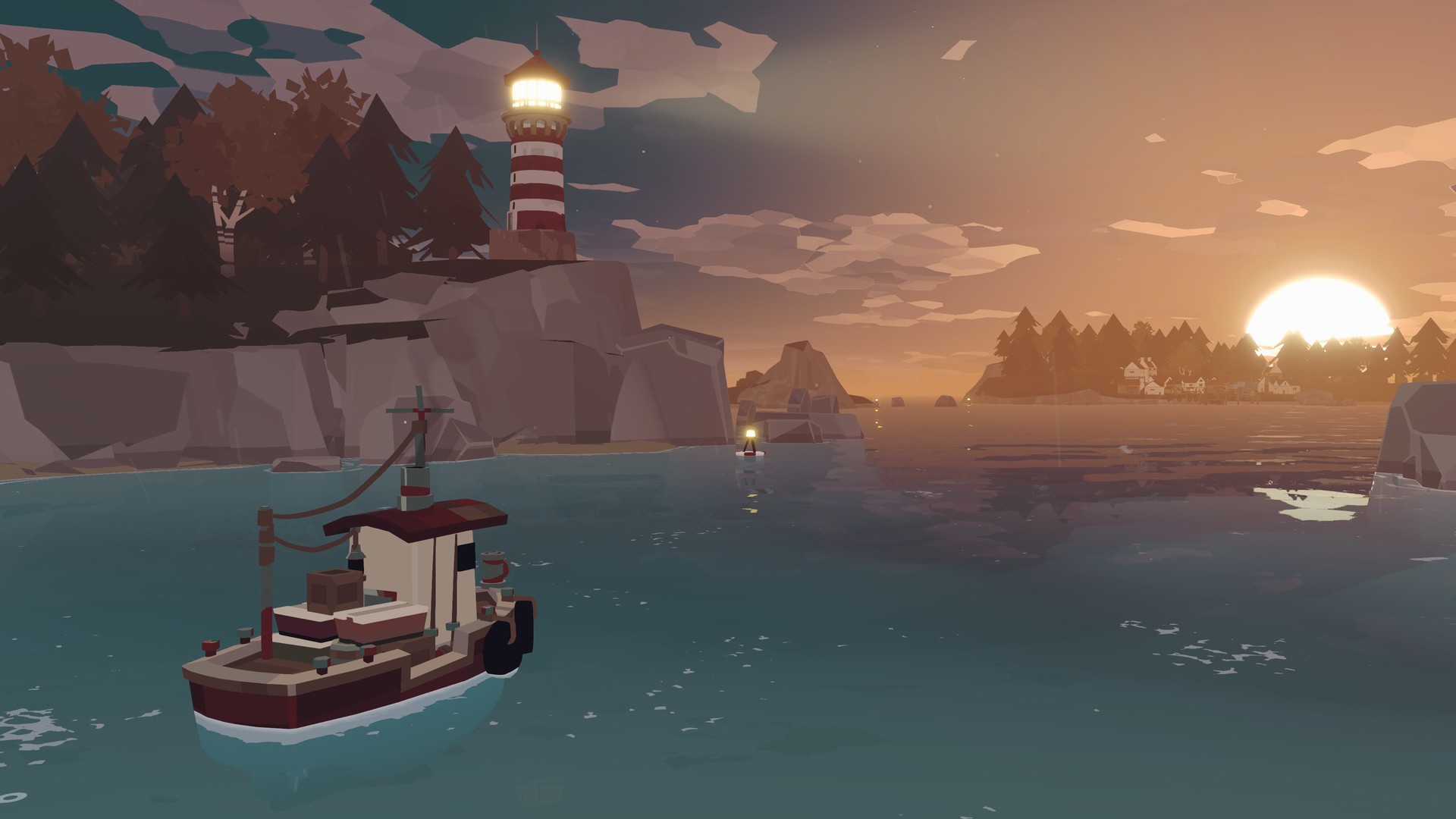
The boat is the player’s means of travel, storage and progression. Engines determine how quickly the captain can cross open water; rods determine which fish habitats can be worked; crab pots and nets provide other ways to collect seafood. Dry-dock work expands the hull and reorganizes cargo capacity, while equipment slots force choices about what the boat can carry on a particular journey. These improvements are practical keys to reaching farther parts of the map, not a separate character-level system. Money comes from selling catches and other goods, whereas research parts and recovered materials support different upgrade paths, encouraging the player to alternate fishing with salvage and visits to settlements.
The archipelago is divided into distinct regions with their own routes, residents and environmental hazards. The Marrows form the starting area, but Pursuits point toward other waters and introduce people whose requests reveal local concerns. The Fishmonger buys catches and issues fish-related work; the mayor and other islanders give the captain reasons to travel. A mysterious Collector also becomes central to the larger errand that links the regions. Conversations and recovered objects gradually assemble the story, while the game leaves room for unscheduled detours to inspect landmarks, search wrecks or return to an earlier port with newly acquired equipment.
Time and visibility change the character of a voyage. A short trip in daylight can become harder to manage if the captain stays at sea after dark: the surrounding waters grow less reliable, and strange sights and sounds can unsettle the captain’s sense of what is present. Lights help with night travel, and equipment upgrades can make journeys more capable, but the player still has to navigate, watch the boat and decide whether to continue or head for shelter. Damage and lost cargo can turn an overlong run into a costly setback. This makes the clock part of route planning: a distant fishing ground, a detour for salvage and the return to port all draw on the same voyage.
DREDGE’s progression comes from combining these activities rather than following a single upgrade ladder. A Pursuit may ask for a particular catch or item; meeting the request can reveal another lead, a useful reward or access to a new service. Research Parts can be spent on equipment families, but the player still needs funds and suitable boat space to put new gear to work. Better hull capacity allows more flexible packing, and new habitat-specific rods turn previously unavailable fishing spots into options. Research Parts can come from more than one branch of play: the captain may find them while dredging or exploring, receive them for completing some Pursuits, or buy them from the Travelling Merchant when available. That gives optional errands and detours a mechanical reward as well as a story purpose. Each outing can support the central pursuit, the boat’s development or the catalogue of sea life without requiring a fixed daily routine.
Black Salt Games built a small trawler, a handful of islands, and a loop that's easy to settle into and hard to leave. The horror isn't separate from the fishing. It's what the fishing turns into.
What you're doing out there
You run a boat between remote islands. You catch fish, sell them, take jobs from the people you meet, and spend the proceeds on better equipment so you can reach water you couldn't before. That's the whole spine of it, and it's deliberately unhurried. There's no combat to learn and no fighting system to master — the minigames are simple on purpose, and once you've fished a species a few times you'll do it without thinking.
What you're actually managing is time. Daylight is short, and the day/night cycle isn't decoration — it changes what's catchable and how much risk you're carrying. Which brings us to the thing that makes this work at all: your hold. Catches and salvage arrive as awkward shapes that have to physically fit into a limited grid alongside your gear and engines, so packing is a real decision rather than a menu. Do you take the profitable crab and leave space for the quest fish, or fill the hold and come back for it tomorrow?
The boat is the character sheet
Upgrades change what trips are possible, not just how fast you get there. A bigger hold, a sturdier hull, an engine that gets you home before the light goes — each one redraws the map of what's worth attempting. This is a better progression system than it first appears, because the reward for investing is usually a riskier journey rather than an easier one.
The pacing snag is on that same track. Research parts, which gate the later upgrades, can be thin enough that a completionist working toward a fully kitted-out boat may reach the ending before the boat is finished. If you play these games to max everything out, that's worth knowing up front — the game's ending doesn't wait for your spreadsheet.
Where the dread actually comes from
DREDGE is often filed under Lovecraftian fishing, which undersells how practical its fear is. Almost all of the tension sits on an ordinary decision: cash in now, or stay out a little longer. The clock is short, the hold is finite, and the water past the dock is worse in the dark. When something goes wrong out there, it's usually because you chose the extra twenty minutes.
There's a Panic system attached to the nights, and some fish only appear after dark, which means the game eventually makes staying out mandatory rather than optional. That's the smartest thing it does. It teaches you to be cautious, then removes the option of caution, and the result is that a game with no combat still manages to make a hull integrity bar stressful. Occasional jumps aside, the horror is atmosphere and consequence rather than threat.
The pulse
Reception has been warm and consistent, and the shape of it is worth knowing. The inventory grid draws the most praise — people arrive expecting a fishing game and get a packing puzzle — and the short regions and the small scale are treated as strengths rather than limitations. The recurring criticisms are the upgrade path feeling more linear than it looks, and a general sense that the game is compact by design and ends when it ends. There's also an accessibility note worth mentioning: a Passive Mode was added after launch, selectable in Settings mid-playthrough, which removes the danger from the creatures in the deep and substantially changes how the nights feel. This review covers the base game, not The Pale Reach or The Iron Rig.
Should you play it
Yes, if you like games where the way home is the interesting decision, and you'd rather have a tight hundred-percent-than-you-can-eat than a sea to live in. It's also a good fit if you want horror atmosphere without being chased through it.
Skip it if you want fishing with technical depth, a large world with room to wander, or a system-heavy build game. The minigames are thin, and that's the point — the difficulty lives in your route, your hold and the time on the clock. If none of those sound like a mechanic you'd enjoy negotiating, there isn't a second layer underneath them to catch you.
Go deeper with V4mp
- Developer
- Black Salt Games
- Genre
- Fishing adventure
Explore DREDGE further
Explore the wiki for detailed reference pages on the game's world, systems, items and locations.