
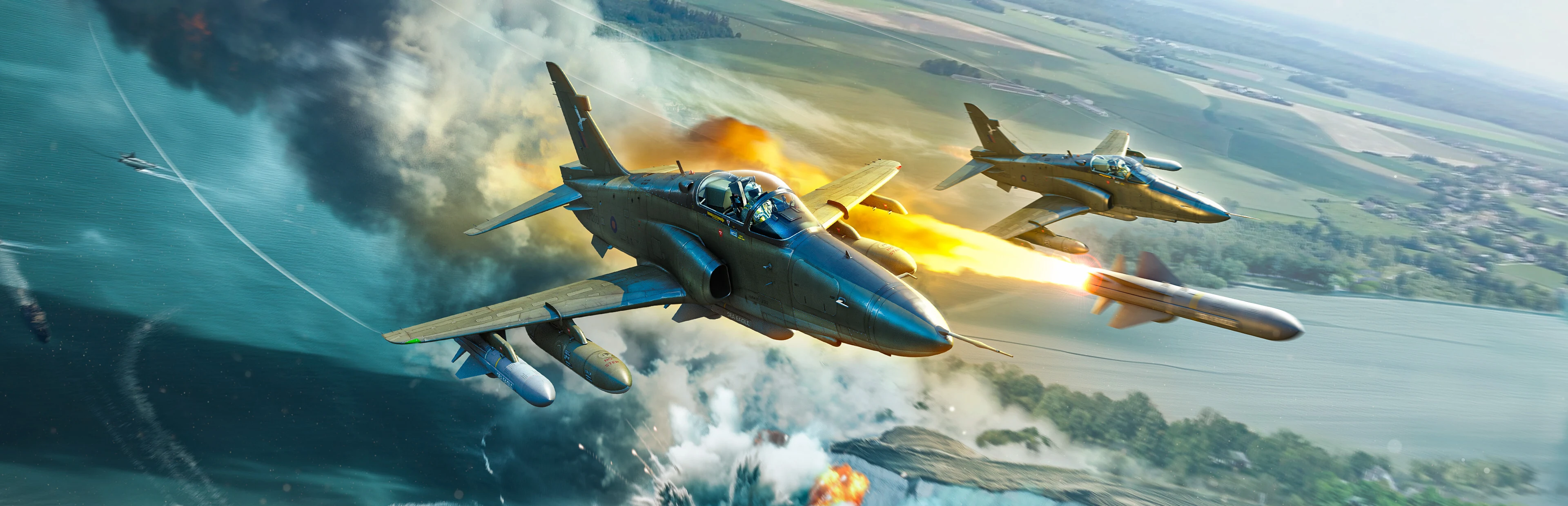
About War Thunder
War Thunder is a free-to-play vehicle-combat game spanning aircraft, ground vehicles, helicopters, and naval craft. Players enter objective-based battles, research new machines and modifications, and build lineups for different roles, from capturing ground positions to intercepting aircraft or attacking ships.
War Thunder is a multiplayer military vehicle game built around battles on land, in the air, and at sea. Its vehicles range across much of the twentieth century and into modern combat, placing aircraft, tanks, helicopters, and naval craft in a shared catalog. There is no single campaign protagonist: players choose a nation and vehicle line, then take part in competitive battles or selected cooperative and mission-based activities. The central appeal is learning how different machines operate and how their strengths can support teammates in a battlefield objective.
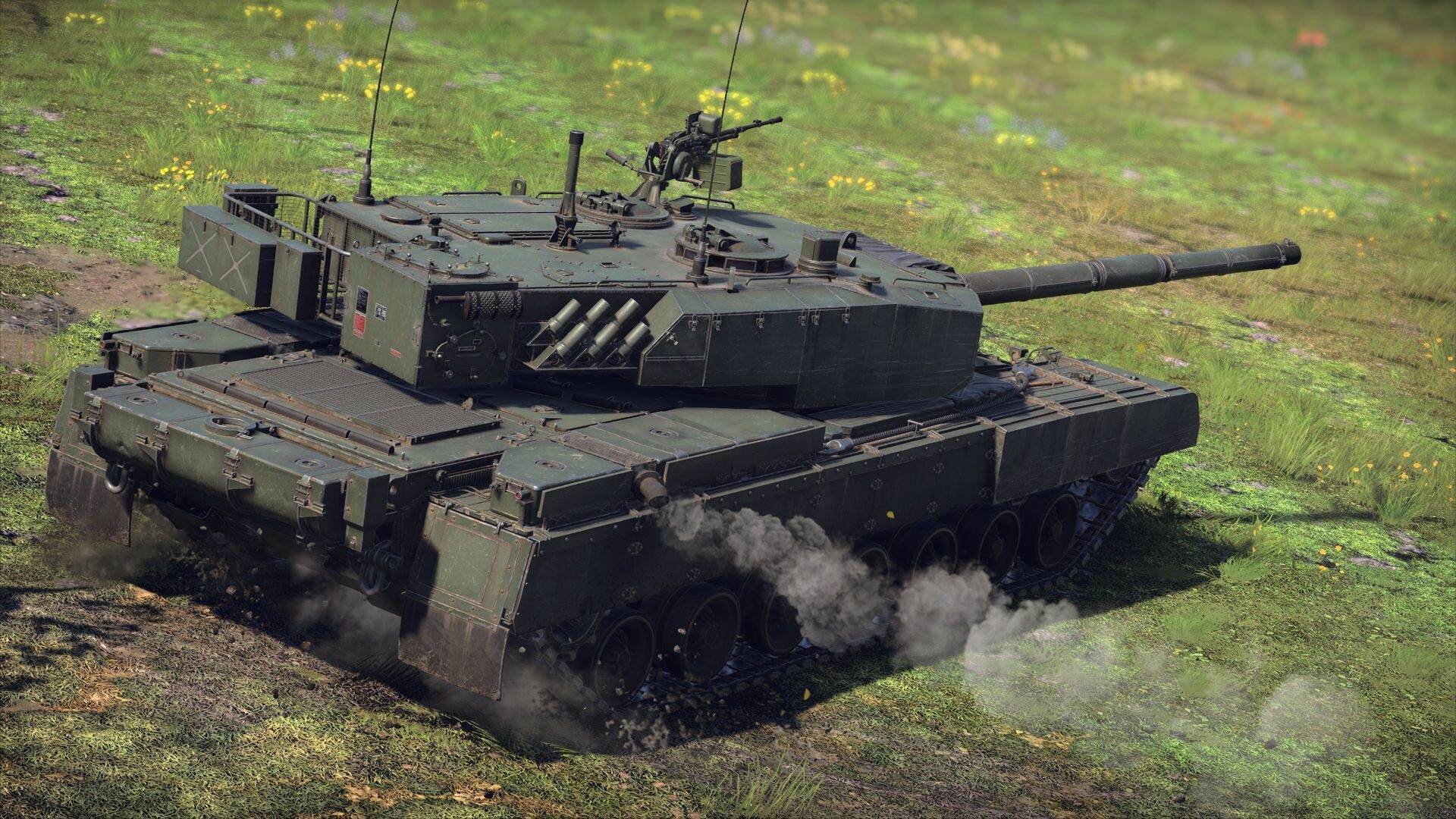
Ground battles ask players to maneuver armored vehicles through terrain, use cover, and capture or defend designated points. A tank’s armor, gun, ammunition, and crew matter alongside its position: a well-placed shot can disable an opponent, while exposing a vehicle to several angles can quickly become dangerous. Anti-aircraft vehicles protect friendly armor against aircraft, and aircraft can attack ground targets or disrupt a push. In combined battles, the contest can shift between the surface and the sky, so watching for threats beyond the nearest tank is part of keeping an objective secure.
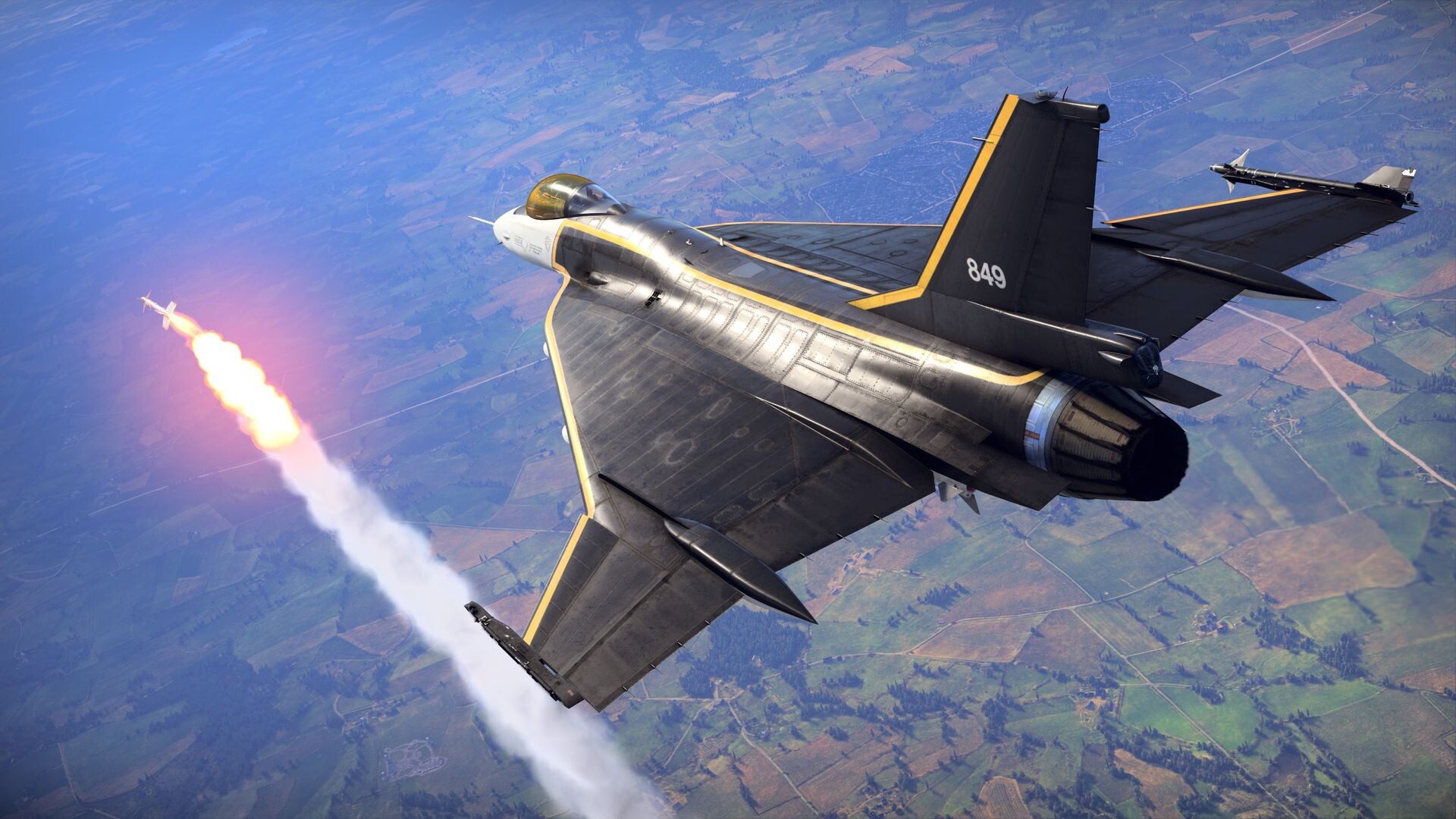
Air battles use a different set of decisions. Fighters seek favorable firing positions and protect allied aircraft, while attackers and bombers can target ground forces or installations. Pilots manage speed, altitude, turning room, and ammunition rather than simply aiming a crosshair at a target. A pass that misses may leave the aircraft vulnerable as it turns around, and damage can affect whether it is still safe to stay in the fight. The vehicle’s controls can be approached through different difficulty settings, from the more accessible Arcade mode to Realistic and Simulator Battles with greater emphasis on vehicle handling and historical presentation.
Naval battles bring boats and ships into the same objective framework. Smaller craft can maneuver quickly around coastlines, while larger vessels bring heavier weapons and can contest distant targets. Aircraft remain a factor at sea: a bomber may attack a ship with torpedoes, and ground or ship-based anti-aircraft weapons can defend against an incoming raid. The mixed forces mean that a player’s role can change as the battle develops. A vessel securing a capture area may need to watch both the water and the air, while a fast boat can challenge a larger ship from a closer approach.
Battles award progression toward new vehicles and modifications. Players select research targets in a nation’s vehicle tree, then earn Research Points in matches; Silver Lions cover in-game purchases and upkeep. A new vehicle can open a different branch or role, while modifications improve a machine’s equipment and performance. Crew training is another layer: the crew assigned to a vehicle gains skills that affect how effectively it operates. Progress is therefore connected to what players bring into battle, as they select a lineup of vehicles that fits the mode and the range of situations they expect to face.
Modes change how much assistance a player receives and how the battle is framed. Arcade Battles simplify aspects of combat and support quick engagement, while Realistic Battles reduce some of those aids and ask players to pay closer attention to identification, aiming, and vehicle behavior. Simulator Battles use more demanding controls and perspective. All three center on teams completing objectives such as capturing points or destroying and defending targets. Practice areas and training scenarios let players test vehicles and controls without treating every attempt as a competitive match.
War Thunder also includes player-versus-environment activities. Historical and Dynamic Campaigns present missions against computer-controlled forces, while cooperative Assault missions let players work together against AI. These modes provide a change from fighting another team and can help players get familiar with a vehicle or its weapons. Players can also form squads with friends for multiplayer battles. Coordination matters because a team benefits when its vehicles cover different jobs: an anti-air unit can watch for aircraft, a fighter can intercept threats, and ground forces can keep pressure on capture points.
Vehicle damage is modeled through components and crew rather than a single pool of hit points. A penetrating shell can damage an engine, transmission or gun mechanism, leaving a machine unable to move or return fire without necessarily destroying it outright. Ammunition storage introduces another vulnerability: a hit to a loaded rack can produce a catastrophic detonation, while depleted racks no longer contain the same threat. Different layouts place those components behind different armor, making the direction of a shot matter. Damage to tracks, wheels or turret drives changes the options left to the crew, so an apparently surviving vehicle may still need cover and repairs. That distinction gives firefights several possible outcomes: a tank can lose its mobility, a weapon can be disabled, or a hit can remove the crew needed to operate it. It also makes learning a vehicle’s internal layout a separate task from learning its silhouette or gun range.
It is a free-to-play vehicle battler from Gaijin Entertainment, running on Windows, Linux, Mac, PlayStation 4, PlayStation 5, Xbox One and Xbox Series X|S. Gaijin builds it as a cross-platform game, and the free end of it is the whole game rather than a demo: every mode is open to you from the first match.
What you are actually crewing
War Thunder is built from aircraft, attack helicopters, ground vehicles and warships, split into their own tech trees by nation, and the official figure is more than 2,500 vehicles across more than 140 maps. That range runs from early 20th century machines to current-service equipment, and the thing worth knowing early is that none of it decides who you meet. A vehicle's battle rating is what does that work, and Gaijin is explicit that matchmaking looks at the rating and nothing else — not the research rank you have reached and not your player statistics. Line-ups are formed within one battle rating of each other, so the fight you get is the fight your line-up asks for.
Games are separated by vehicle type and by mode, and the three modes are the real first decision. Arcade, Realistic and Simulator are run as different rulesets rather than a difficulty slider, so the game you learn in Arcade is genuinely not the game you get in Simulator. Pick the one you actually enjoy before you spend anything, because the time investment is measured in trees, not matches.
Two currencies, and one of them is patience
The progression runs on Research Points. A vehicle is researched first, then bought with Silver Lions, then given a crew, and all three steps are required before it can be flown or driven in a battle. Modifications work the same way: research them, then pay to fit them.
That second currency is where most new players get surprised. Silver Lions are earned from battles, and they are spent on far more than new hardware. Repairing a vehicle after a battle, restocking ammunition and suspended ordnance, and paying for crew replacements inside a match all come out of the same balance. Play badly for a session and the repair bill can outrun your earnings, which turns a bad night into a slower next week.
Each vehicle carries its own Silver Lion and Research Point multiplier, and a premium vehicle's multiplier is double that of the regular version of the same machine. A premium account adds a 100 percent bonus to Research Point earnings and at least 50 percent to Silver Lions. The premium currency, Golden Eagles, is not required to research anything, but it buys the shortcuts: convertible Research Points, faster progression, and the paid side of the Battle Pass.
Arcade is the on-ramp, and it is openly assisted
Arcade is the fastest and most forgiving of the three modes, and the assists are not hidden. In an Arcade ground battle the gunner works out roughly where your shell will land and what chance it has of going through the armour you are pointing at, and vehicle modules are never destroyed outright — a hit engine or gun keeps partial function, so a damaged gun fires less accurately and with less penetration rather than falling silent. Spotted enemies are called out above their vehicles and on the minimap, and tanks handle more sharply than they would in life.
Air Arcade makes a similar trade. There is no stalling, spent ammunition is replenished while you are still flying rather than sending you back to the airfield, and a lead marker appears when an enemy is in range so you can see where to put your burst. Respawns are the other half of it: a player with a full set of crew slots and backups can cycle through aircraft repeatedly in a single match rather than being knocked out once and waiting.
What you spend those respawns on is the decision that shapes a match. Air Arcade rotates through Ground Strike, Front Line, Domination, Air Domination and Air Conquest, and Ground Arcade runs a different set of its own — Domination, Conquest and Battle — so the objectives do not carry cleanly from one to the other. They do share an ending: a team runs out of tickets, or runs out of vehicles it can still spawn. That is why the machine you bring next matters as much as the shots you take.
Realistic and Simulator change the deal
Step up and the assists come off. The lead marker and the coloured penetration crosshair are gone, enemy vehicles stop being named on the map unless somebody actually sees them, and ammunition has to be topped up at an airfield or a capture point instead of in mid-air. The two halves of Realistic then split in a way worth understanding before you commit. Air Realistic gives you the one aircraft you selected and no respawn at all. Ground Realistic runs on spawn points: you start with enough to bring your first vehicle, earn more through what you do in the battle, and spend them to come back as your line-up allows. Simulator pushes further still, and it is the reason a lot of players settle in Arcade and decide they are happy there.
There is no wrong answer, and the game does not force you upwards. Arcade teams are assembled from vehicles with suitable battle ratings and can mix nations freely, so an Arcade match is often more about what your line-up can answer than about the historical era you are flying.
What is in it right now
War Thunder is a live game with a steady release schedule rather than a fixed box. The current cycle is built around the Sky Odyssey major update, which added a Greek line of aircraft and armour to Israel's tree alongside new machines for other nations, and Battle Pass Season 24, whose paid track hands out two vehicles born from improvised field engineering: a Romanian IAR-81 rebuilt around a Bf 109G engine and a Somali FIAT 6616 carrying a 57 mm rocket pod. Neither is required to play, and the free trees keep filling in regardless.
Should you play it
Yes, if you want a vehicle battler where the long-run decision is what to research next and how much Silver Lion you can afford to lose getting there. Arcade gives you a real match without demanding a flight manual, and with more than 2,500 machines spread across air, ground and sea there is always a next thing to be curious about.
Skip it if you want rewards that arrive as fast as you earn them. The research-and-buy loop is deliberately long, premium vehicles and accounts are sold as multipliers rather than a different game, and repairs come out of the same balance as everything else. That makes each match a balance between progression and running costs, and if that sounds like friction rather than texture, this is the wrong hangar.
Go deeper with V4mp
- Developer
- Gaijin Entertainment
- Genre
- Vehicle combat
Explore War Thunder further
Explore the wiki for detailed reference pages on the game's world, systems, items and locations.