
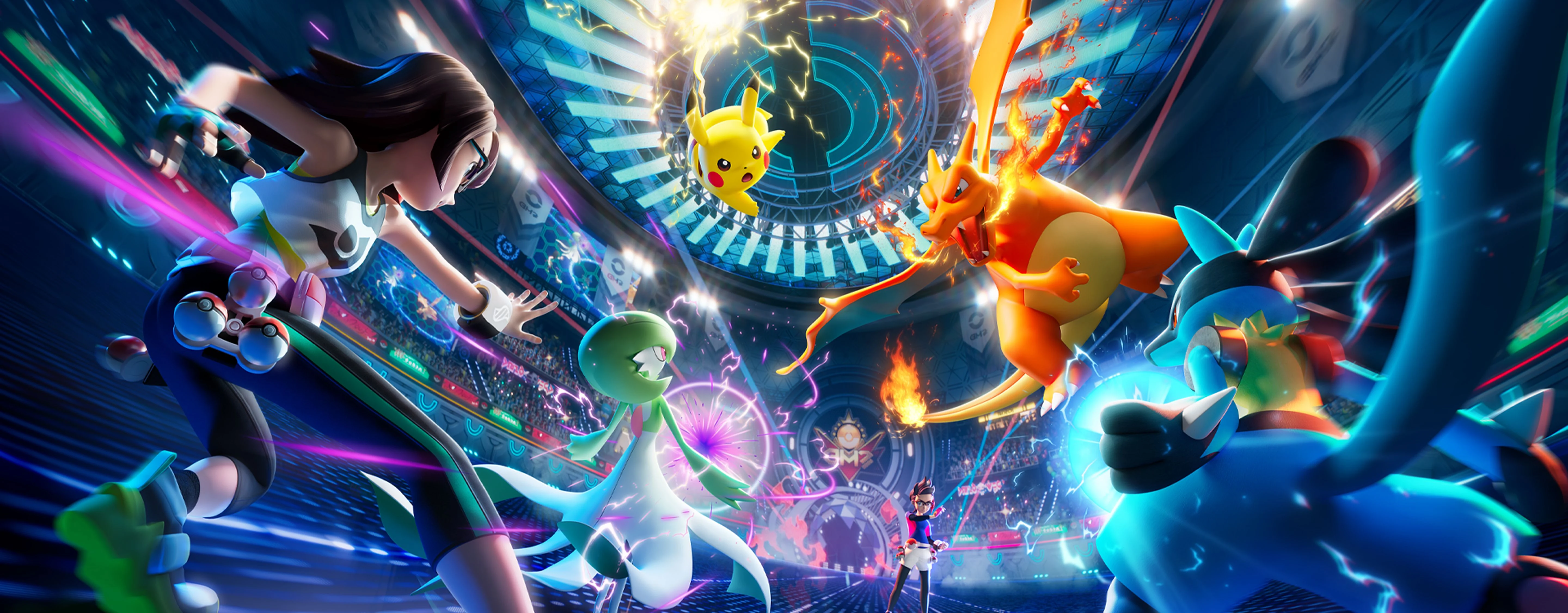
About Pokémon Champions
Both releases landed in 2026: Nintendo Switch on 8 April, iOS and Android on 17 June. It is a free-to-start game with optional purchases rather than a full-price box.
What you are buying, and what you are not
Pokémon Champions is a battle-focused game. It keeps the mechanics that make a Pokémon fight work — types, abilities and moves — and drops almost everything else. The official description promises rich and varied strategies for newcomers and experienced Trainers alike, but it is upfront about the scope: this is a game about battling, and the content around the battling is limited on purpose.
The versions are cross-platform, and Nintendo says so plainly: mobile players can battle Trainers who are on Nintendo Switch or Nintendo Switch 2. Linking the same Nintendo Account carries your progress between devices, so this is the sort of game that fits into a train journey and then picks up on the television when you get home.
Three modes, two formats
Every battle is either a Single Battle or a Double Battle, and each of those is offered in three modes. Casual Battles are the low-stakes version. Private Battles let you set up a room and play against someone specific, with a room ID you share. Ranked Battles put you against Trainers of a similar skill level, move your rank with your results, and are the mode that pays out properly.
Double Battles are the more interesting of the two formats and not simply singles with an extra body. Two active Pokémon on each side turns every switch, every protection move and every spread attack into a decision about both of your team members at once, and it is the format that most rewards knowing your opponent's likely team before the first turn.
Ranked rules are not fixed forever. The game runs regulation sets, and each one defines what is legal and which mechanics are switched on for the competitive season, so the ladder you learn in one regulation is not the ladder you get in the next.
Victory Points and paid shortcuts
Victory Points are what you spend to recruit and train Pokémon, and they arrive from Ranked Battles and other parts of the game. The detail everyone repeats is that VP cannot be bought directly, and that part is true — there is no VP bundle on the shop screen. What money buys is everything around it. Teammate Tickets let you permanently recruit a Pokémon without spending VP, Training Tickets cover the cost of training, and Quick Coupons cut the waiting. On top of that sit the paid membership, which widens your box and the number of battle teams you can keep, a Premium Battle Pass, and a Starter Pack bundle. So the honest version is narrower than "you cannot pay to win". You cannot buy the currency, but you can buy away a lot of the earning, and a paying player is not on the same curve as one who is not.
The flip side is friction. Training and recruiting both draw on the same pool, so the first decision after any session is what to do with a limited currency, and bringing a specific Pokémon up to the level the ladder expects means committing VP you earned rather than VP you could buy. The shortcuts exist, but they are earned through missions or paid for, so the free route is a grind by design rather than by accident.
Mega Evolution, the Omni Ring and the current regulation
The first ranked ruleset brought Mega Evolution into the game, activated through the Omni Ring the player characters wear, and the official page already talks about the ring being researched for other capabilities later. Mega Evolution reshapes a format rather than decorating it: a Pokémon that can Mega Evolve gives your opponent two versions of the same threat to plan around, and some Mega Stones also turn up as rewards on the Premium Battle Pass or in the shop for VP.
Regulation sets are updated on a schedule — the current one is M-C — and each carries its own legality list and its own answer to which mechanics are live. If you are arriving late, check the active regulation before you build anything, because the team you read about last season may no longer be legal this one.
Bringing your own Pokémon in with HOME
The roster is built from two sources. You recruit Pokémon inside the game, from the Roster Ranch, using VP or a ticket, and you can also bring some of your past partners across from Pokémon HOME as visitors. The limits are tight and worth knowing before you plan around them. Only Pokémon that already appear in Champions can visit, a visitor that knows moves Champions does not support has to be retrained through the game's own training feature, and nothing you obtain inside Champions can be sent back out to HOME. This is a place your older Pokémon come to fight, not a new home for them.
It also means the launch roster is a starting point rather than a finished list. The collection grows with updates, and the game is being used for official competitive events, which is a good sign that the regulation schedule will keep moving.
Should you play it
Yes, if what you want from Pokémon is the fight, and you like the idea of a ladder that fits into a train journey. It is free to start, the Double Battle format rewards planning rather than reflexes, the regulation schedule keeps the ladder from settling, and the HOME connection gives the Pokémon you already raised somewhere to visit and something to do.
Skip it if you want a Pokémon adventure. There is no region to walk and almost nothing to do outside the battles, the game makes you read before it lets you play, and the VP economy makes team-building a project, with paid shortcuts alongside the earned route. That is the whole product: a ladder, a roster, and a schedule of regulations that keeps moving under you.
Go deeper with V4mp
- Developer
- The Pokémon Works
- Genre
- Turn-based strategy
Explore Pokémon Champions further
Explore the wiki for detailed reference pages on the game's world, systems, items and locations.