
About Fallout 4
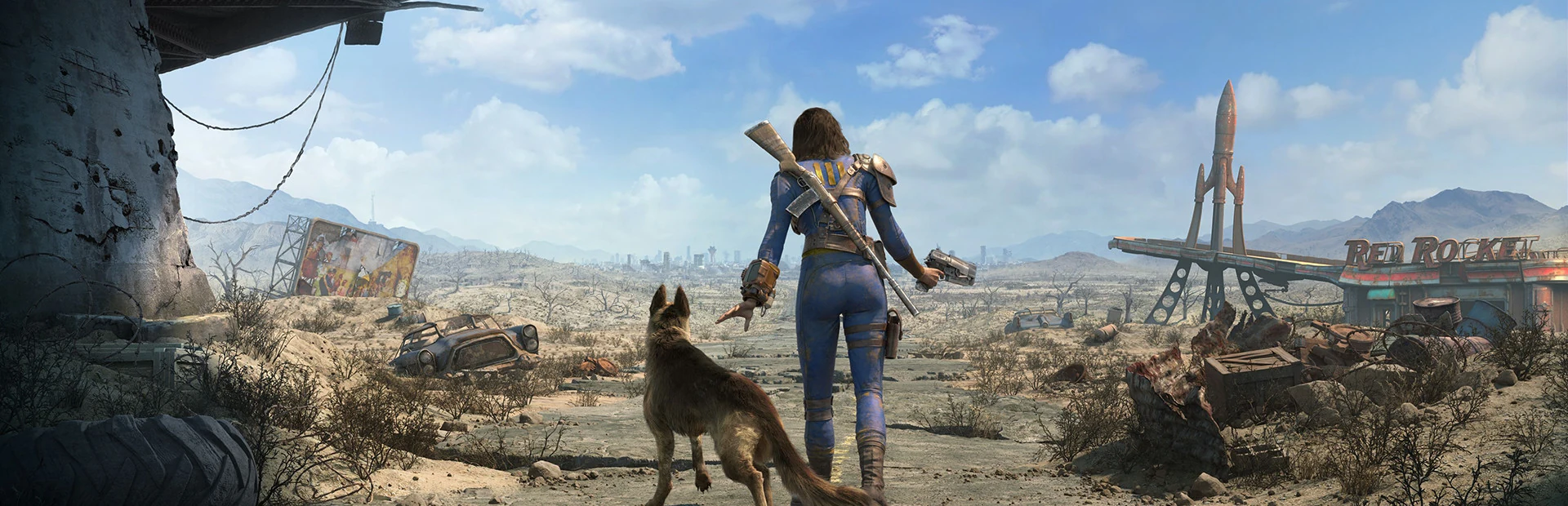
After a nuclear attack tears apart a quiet morning in pre-war Boston, the Sole Survivor emerges from Vault 111 into the ruined Commonwealth centuries later. Searching for a kidnapped son becomes an entry into a larger struggle over synths, competing communities, and the future of the region, alongside exploration, combat, crafting, and settlement building.
Fallout 4 opens in a version of 1950s-inspired America that has advanced toward nuclear war without losing its bright domestic optimism. The player creates the Sole Survivor, whose family is rushed into Vault 111 as the bombs fall. Cryogenic suspension preserves the protagonist while the world outside changes over centuries. When the character wakes, their son has been taken and Boston has become a dangerous, irradiated landscape. That personal search supplies the initial direction, but the wider Commonwealth soon becomes a place to explore, survive, and influence through choices made across its settlements and factions.
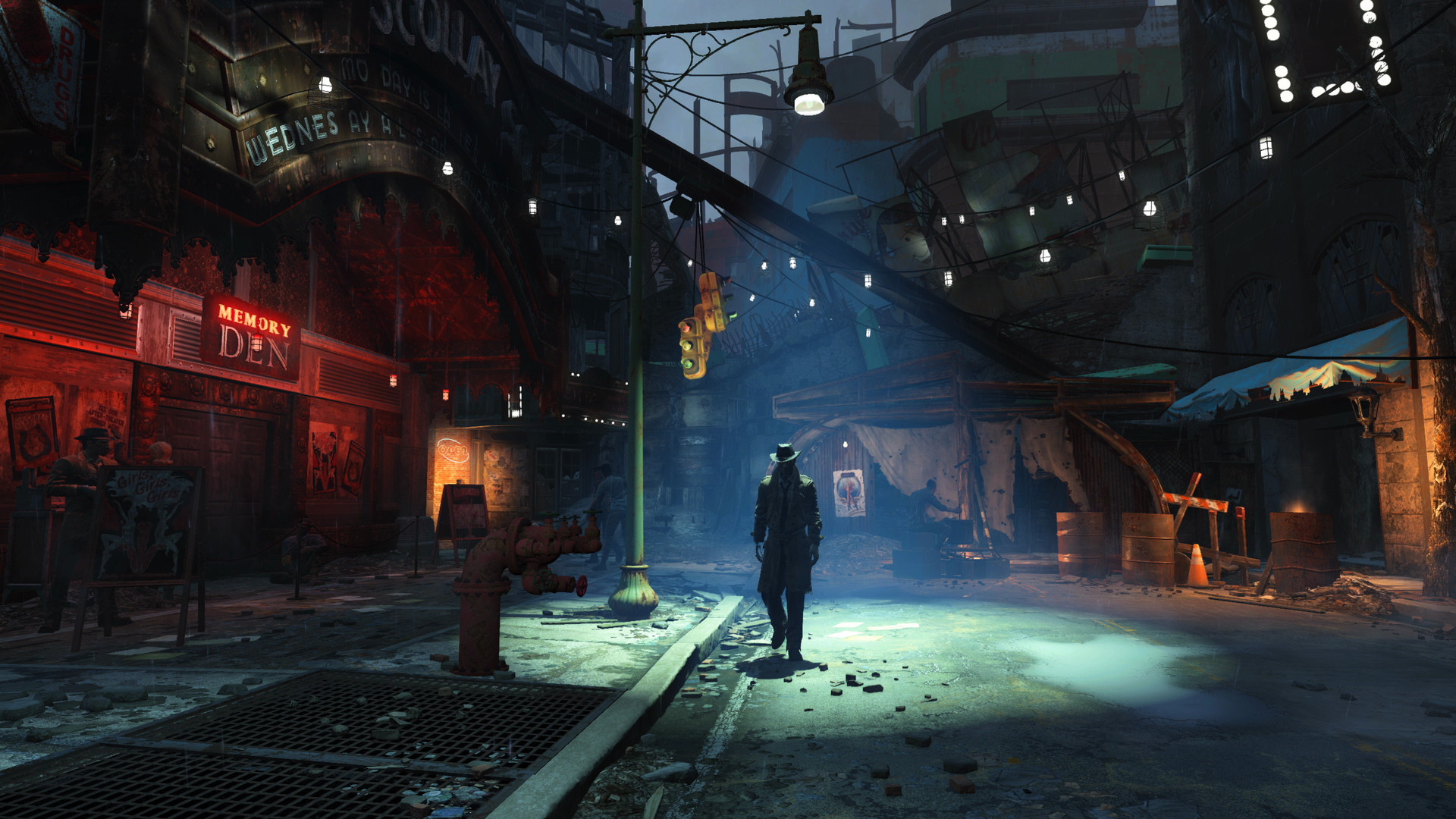
The Commonwealth turns familiar parts of Boston into remnants of a much older society. Fenway Park houses the crowded town of Diamond City; streets, stations, industrial sites, and half-collapsed homes offer routes through an environment where scavengers and mutated creatures can make travel dangerous. Exploring is more than moving between quest markers: buildings contain supplies and equipment, but also environmental clues about the people who lived or fought there. A radio signal, a note, or an unexpected resident can redirect a journey toward a new task. Returning to a location after gaining better equipment can also change what the player is prepared to tackle.
The central conflict expands from the search for the missing child into questions of identity and control. The Institute produces highly lifelike synths, artificial people whose presence complicates the boundary between human and machine. Other groups in the Commonwealth have sharply different ideas about how to respond, and the player becomes involved by accepting work, building relationships, and choosing whom to support. No single decision explains every settlement: local leaders and residents have their own immediate problems, while larger political loyalties influence the consequences of helping them. The storyline repeatedly places personal goals beside competing visions of what the region should become.
Combat combines real-time shooting with the Vault-Tec Assisted Targeting System, or V.A.T.S. In ordinary first-person play, the player aims and fires directly; activating V.A.T.S. slows the action rather than freezing it, and presents body parts as separate targets with calculated hit chances. This creates a deliberate option during a firefight, but threats can still move and attack while time is slowed. Weapons, ammunition, armor, and character perks influence how an encounter unfolds. The player may rely on careful aim, use cover, or select targets through V.A.T.S.; these systems work together without forcing every fight into one pace or method.
Character growth is built around S.P.E.C.I.A.L. attributes and a perk chart. As the Sole Survivor advances, perk choices can support different weapon types, resilience, stealth, technical skills, or social abilities. Equipment can be modified at workbenches, turning collected components into changes to a weapon or piece of armor. This gives junk and scavenged objects a practical role: materials gathered during a trip can become improvements when the player returns to a settlement or crafting station. The available options depend on character development and resources, so exploration feeds back into both combat preparation and the identity of the build.
Settlements add a construction and management loop to the journey. At a workshop, the player can scrap suitable objects for materials and build structures, furnishings, crops, generators, lighting, water purifiers, and defensive equipment. People can be assigned to tasks such as farming, while power connections determine whether electrical devices function. Defences matter when settlements come under attack, and a community can become more useful when it has beds, food, water, security, and services. Instead of treating every ruin only as a place to loot, the player can turn selected locations into inhabited footholds in the Commonwealth.
Settlement links extend that work beyond a single site. With the relevant Charisma perk, settlers can establish supply lines between workshops so resources are shared, while additional investment can unlock shops and workbenches. These local projects intersect with the Minutemen storyline and can establish a network of places to return to during longer expeditions. The game therefore alternates between outward exploration and decisions about what to maintain at home: gather materials and meet people in the field, then use what was found to equip the character or improve a community. The Commonwealth’s future is shaped through both major faction choices and these smaller acts of rebuilding.
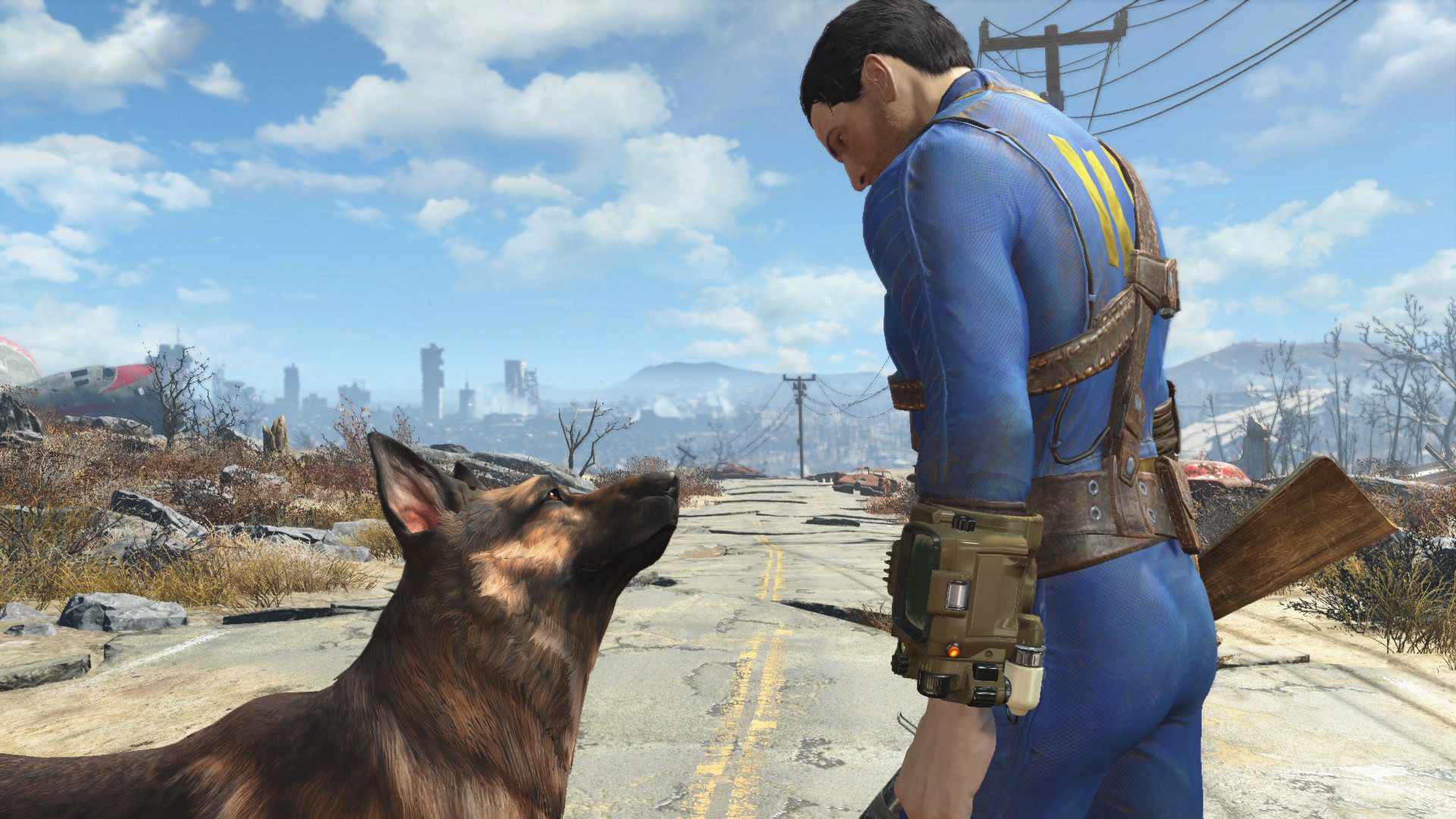
Companions bring individual stories and useful assistance into that journey. Dogmeat can carry items and fetch nearby objects, making the dog a practical partner while the Sole Survivor searches ruined buildings. Other companions include Piper, Preston Garvey and the ghoul Hancock, whose lives connect the player to different communities in the Commonwealth. Travelling with someone gives the expedition a relationship to develop alongside the search for supplies and answers. Power Armour adds another recognisable piece of preparation: its suit can be maintained and customised, extending the equipment choices beyond an ordinary weapon or outfit. Between companions, personal gear and rebuilt settlements, exploration produces several different forms of lasting progress.
The six add-ons, the 150-plus Creations and the base game sit in different packages, while the free updates have already changed the copy you own. Here is what is free, what is paid, and where the settlements fit.
What the free updates already gave you
One free update delivered native PlayStation 5 and Xbox Series X|S versions, and it also brought quest content rather than only a new shell. Nine Creation Club items became free at the same time, among them Enclave Remnants with the Echoes of the Past quest, the Tesla Cannon, Hellfire Power Armor, the X-02 Power Armor, the Heavy Incinerator, the Halloween Workshop and its own quest, and the Makeshift Weapon Pack. A follow-up patch then handed console players a frame rate target of 30, 40 or 60, with 60 as the default, alongside a choice between prioritising visuals or performance, both changed from the main menu.
A later update added the in-game Creations menu, and five Bethesda-themed Creation Club items became free at the same time: Morgan's Space Suit, the Doom Classic Marine Armor, the Doom BFG, the Quake Thunderbolt and the Fantasy Hero Set. Free Creations began arriving alongside the paid ones, starting with Tale of the Beast Hunter and The Varmint Rifle.
That is the shape of it: the base game you can buy today comes with the Creations menu and whatever is currently free in it, and the paid part of the system is the catalogue on top. Owning any copy of Fallout 4 means you already have the menu and can already claim those free items.
Which edition to buy
Beyond the base game there are four ways to buy the same material. The Season Pass covers the six official add-ons. The Game of the Year Edition bundles the base game with those six add-ons. The Anniversary Edition bundles the base game, the same six add-ons and more than 150 Creation Club items. The Creations Bundle listing is the route for someone who already owns the Game of the Year Edition and wants only the Creation Club material.
The line to draw is between the two things on offer. If you own the standard edition, the Anniversary Edition Upgrade is the purchase that brings the six expansions and the 150-plus items; if you own the Game of the Year Edition and want only the Creation Club material, the Creations Bundle covers that on its own. That is the difference between paying twice for the same expansions and paying once.
The six add-ons are Automatron, Wasteland Workshop, Far Harbor, Contraptions Workshop, Vault-Tec Workshop and Nuka-World. The Anniversary Edition arrived for Xbox Series X|S, Xbox One, PC, PlayStation 5 and PlayStation 4, and it is available on Nintendo Switch 2 as well.
Settlements are the game's second job
You rebuild the wasteland as well as crossing it. The building layer runs from individual parts — armour, weapons, food and structures among them — up to whole settlements managed across the Commonwealth, and the same tools serve as hidden sanctuaries, roadside stops for the locals or workshops for upgrading your gear.
It is a supply problem rather than a decoration menu. Materials come out of the world, so what you can build depends on where you have scavenged, and the parts you can place are tied to the perks you took. That is the reason to plan a character before you start: a build aimed at the crafting side plays a different game from one aimed at pure combat, and the settlement layer is where the difference shows up.
Combat offers a second choice in the same spirit. The Vault-Tec Assisted Targeting System slows time so you can take a fight apart target by target; the alternative is taking the fight into your own hands with real-time gunplay. S.P.E.C.I.A.L. and the perks are the shared ground under both, since the same character sheet is what makes either approach work.
Factions sit on top of all of it. The Commonwealth holds hundreds of locations, characters and quests, and joining factions, forging alliances or going it alone are all open to you.
Should you play it
Yes, if you want an open-world shooter-RPG where the wasteland is something you rebuild rather than only cross. Which add-ons are worth having depends on what you want from a Fallout 4 run: Far Harbor, Automatron and Nuka-World are the ones with their own places and their own stories, and the workshop packs are the ones that widen the building side, so the Season Pass and the edition bundles both make sense depending on which half you are short of.
If you already own the base game, install it before you spend anything else, because the free updates are already in your copy. One thing is worth knowing before you enable a large collection: creations take storage on console and the ceiling varies by platform, so check what yours allows before you build a big load order.
Go deeper with V4mp
- Developer
- Bethesda Game Studios
- Genre
- Open-world RPG
Explore Fallout 4 further
Explore the wiki for detailed reference pages on the game's world, systems, items and locations.