
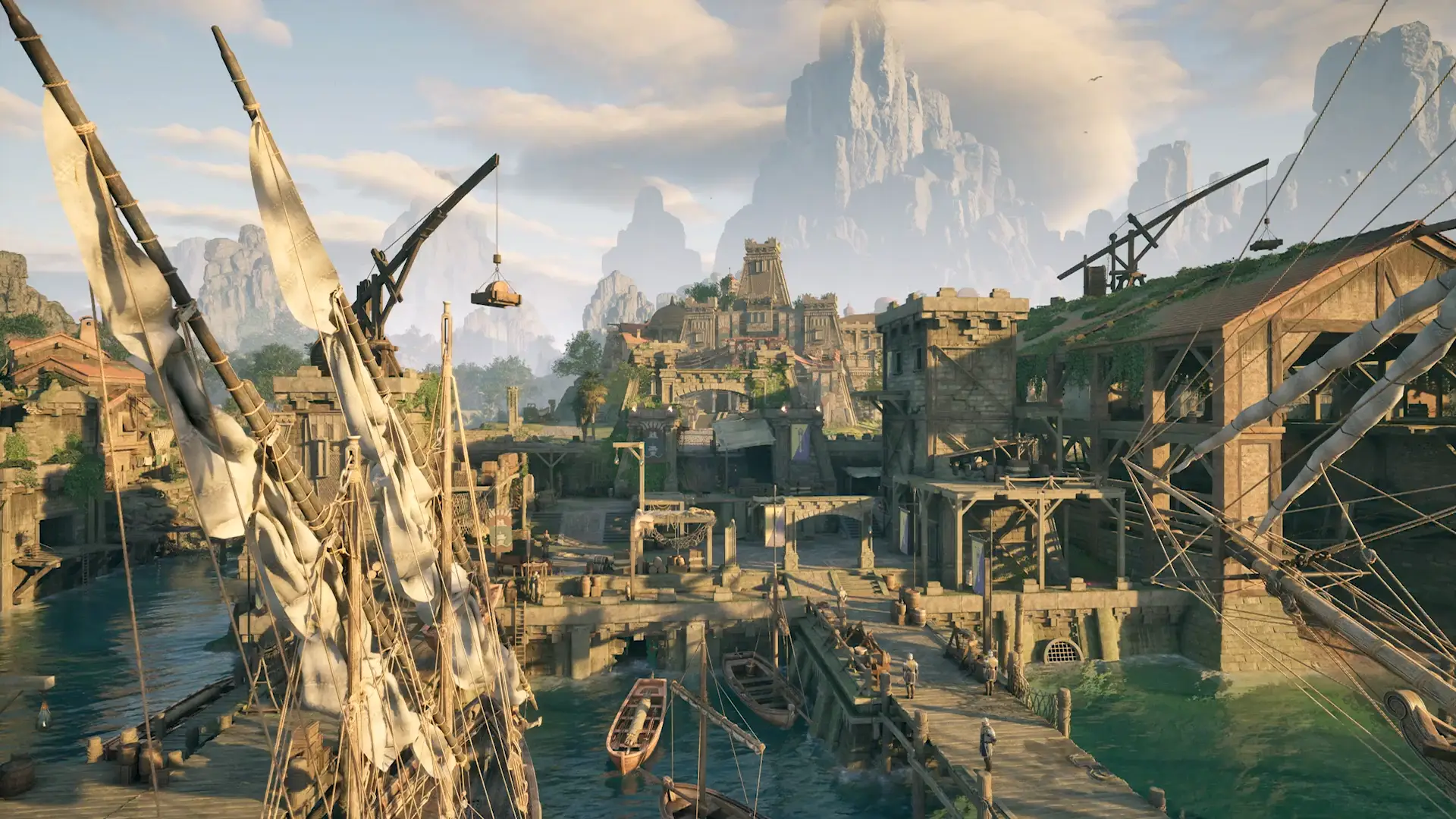
About Avowed
You are an envoy of Aedyr sent to investigate a plague in the Living Lands, an island in the world of Eora. Between you and the answers are a combat system built on mixing weapon types, companions who react to what you do, and an upgrade economy with one quiet trap in it.
You fight with two loadouts, not one
Avowed gives you two weapon loadouts, each with a main hand and an off hand, and you can switch between them during a fight. That switch is the visible half of the build: it sits on top of the abilities, attributes and perks you spend points on, and it is the part you use in every fight. On the default controller bindings it is a single button, which means the comparison you want to make is available without opening a menu.
The combinations are deliberately loose. Swords, spells, guns and shields are all mixable, and a grimoire in the off hand grants its spells without demanding that you commit to a mage build. A sword and shield in one set with a wand and grimoire in the other covers a lot of situations, and it is the first pairing we would suggest to anyone unsure, because it lets you compare a defensive round against a spell round without respeccing anything.
Companions are a second character sheet
Companions fight alongside you with their own abilities and their own ability points, and they are drawn from a spread of species rather than one archetype: the description ranges from a former mercenary to an eccentric wizard. What matters more is that your choices shape them as you help them with their own quests, so the companions you end the game with reflect decisions you made about people rather than only about damage types.
It is worth knowing what Avowed is: action-driven, closer to a fantasy adventure with role-playing choices layered through it than to a party-based tactics game where you take a turn for each character. Companions travel and fight with you and can be directed, but you are not running the whole squad move by move.
Upgrades are the real economy, and the difficulty menu touches it
Equipment improves at a Workbench, where you read an item's current quality and the materials the next step needs before confirming anything. Unique items can also want Adra to move up a quality tier, which is the material people tend to be short of. If an upgrade is greyed out, compare what you are carrying against the list the workbench shows rather than assuming the item is permanently locked or that a single missing ingredient is the whole answer.
The part worth flagging is that custom difficulty settings include a control for equipment upgrade material costs. Turning that down is a legitimate way to spend your play time fighting rather than gathering, and there is one real cost: the developer's own note is that the custom options will not negate most achievements but will invalidate the Path of the Damned achievement, which has to be earned without them. That setting and that achievement are mutually exclusive in a run, so decide which of the two you want before you touch it.
The anniversary update expanded the character and then the ending
The anniversary update added three playable species, Dwarf, Orlan and Aumaua, alongside Humans and Elves, so all five of Eora's kith species are now selectable, each with its own stat bonuses, and your background choice adds another bonus on top. It also added a mirror at the Party Camp that lets you change your appearance, species included, at any point rather than only during character creation. The same patch added Photo Mode and a new weapon type, the quarterstaff, a two-handed bludgeoning weapon with wand-style stun finishers, which gives the spell side of a loadout something with weight behind it.
It also added New Game Plus, and the rules are strict enough to be worth reading before you start one. You keep all unlocked abilities except the godlike ones, which come from story progression and world exploration, plus your spent attribute points, your unique weapons and armour, your gloves and boots, and your unlocked enchantments, though unique gear resets to level one. Almost everything else goes: common and uncommon weapons and armour, gold, resources, upgrade and enchanting materials, food and potions, quest items, god totems and trinkets, and your fast travel points and explored map. Companions have to be picked up again through the story and start at level one with their talent points intact, and enemies come back with higher stats and a chance of modifiers that make them immune to an element while also hitting you with it. The attribute cap rises from fifteen to thirty.
Should you play it
Yes, if you want a role-playing game that trusts you to build your own answer out of two weapon sets and a party. The loadout switch is a decision you make in every fight rather than once in a menu, and Obsidian has kept working on the game: the anniversary update added the remaining kith species, New Game Plus, Photo Mode and a new weapon type.
Two things to check first. The PC version wants a 64-bit Windows 10 or 11 machine, 16 GB of RAM and about 75 GB of space, and these guides use the default Xbox bindings. The platform list has also widened since launch: Obsidian's own roadmap puts the PlayStation 5 release in the same update wave as New Game Plus and Photo Mode, and PlayStation 5 now appears among the studio's own support options, so this is not a PC and Xbox exclusive any more. And if you finish one run and move on, the New Game Plus rules matter less than the upgrade economy, so decide early whether you are gathering materials or lowering the price of them.
Go deeper with V4mp
- Developer
- Obsidian Entertainment
- Genre
- Action RPG
Explore Avowed further
Explore the wiki for detailed reference pages on the game's world, systems, items and locations.