
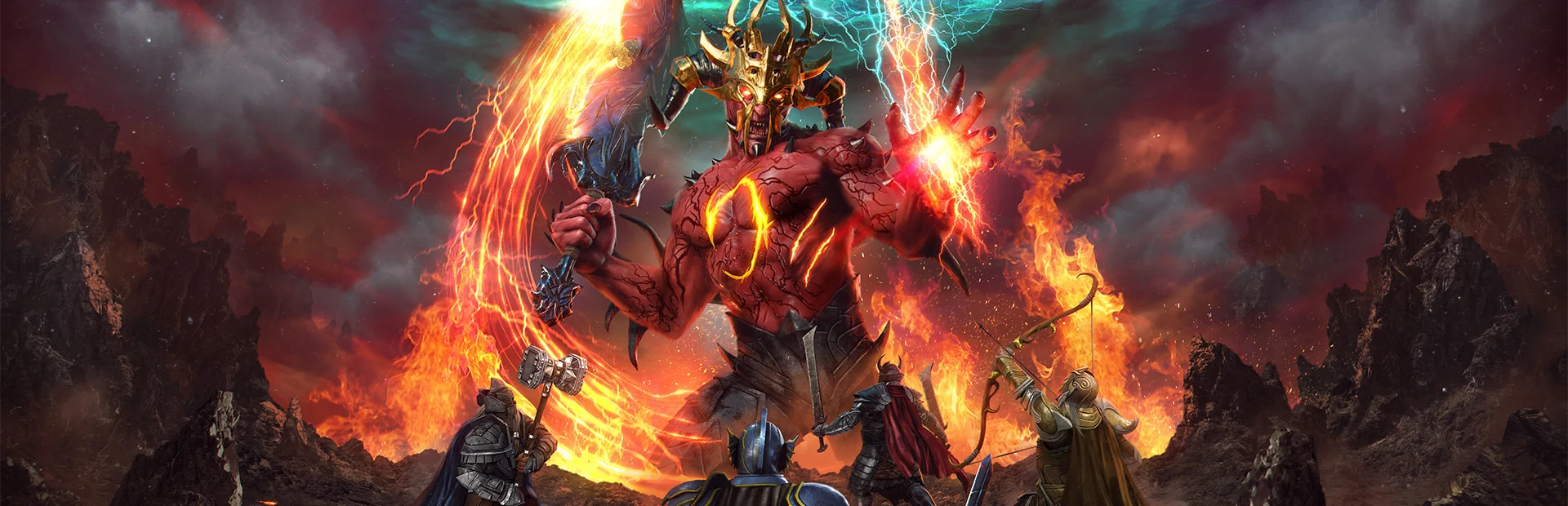
About Alaloth: Champions of The Four Kingdoms
Alaloth: Champions of The Four Kingdoms is an isometric action RPG set in Plamen, a fantasy land divided by rival kingdoms and threatened by the god Alaloth. Create a champion, explore a world map, recruit companions, and enter demanding fighting areas where careful real-time combat drives character progression.
Alaloth casts the player as a champion in Plamen, a world unsettled by old rivalries and the influence of Alaloth, a malevolent god imprisoned in the mortal realm. The land is divided among four kingdoms, each with its own cultures and conflicts, while corruption and dangerous creatures spread through the frontier. The player creates a character from one of four playable races—human, dwarf, elf, or orc—and chooses a fighting style and alignment. These choices shape the champion's starting identity and can affect how non-player characters respond, giving the journey a role-playing structure alongside its action combat.
Character creation establishes a starting city, background, alignment, and preferred approach to fighting. Human, elven, dwarven, and orc champions begin from different cultural contexts, while good, neutral, or evil alignment affects which companions may be recruited. Fighting styles include one-handed weapons with a shield, dual wielding, polearms, and heavy weapons. The game also uses Ways of Power and professions to develop a character's abilities, so progression is not limited to replacing equipment with higher statistics. Choices made at the beginning can influence the kind of allies who will travel with the champion and which skills become central to a build.
The world map presents Plamen as a network of places to visit rather than one continuous battlefield. Movement advances time, and travel can expose the champion to enemies that may be fought or avoided. Cities, settlements, and other landmarks supply quests, characters, services, and information about the region's history. Goldport is one starting city, while Thilaris is associated with elven characters; other locations extend across forests, mountains, and harsher frontiers. Quests can be hand-authored or generated, and their rewards may include gold, items, or access to a new thread of the broader conflict. Exploration therefore supplies context and preparation before the next dedicated combat challenge.
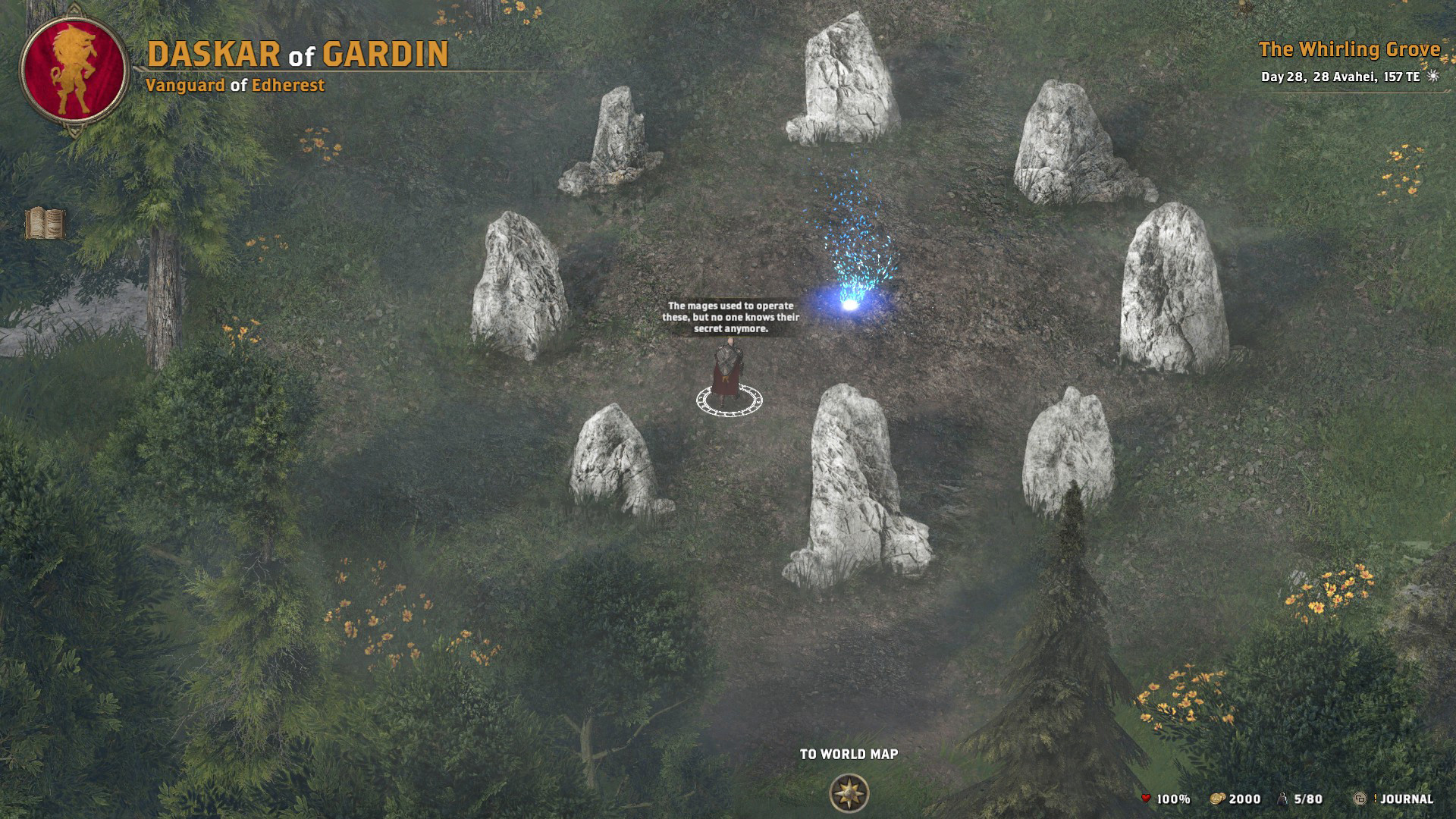
When an encounter begins, combat takes place in a compact arena viewed from an isometric angle. Attacks, dodges, parries, stamina management, and positioning demand deliberate timing; a careless action can leave the champion open to a quick defeat. Different weapons use distinct ranges and rhythms, while skills and magic add tools for handling groups or controlling space. The player can bring companions into combat, and their abilities can complement a champion's weapon choice. Enemy encounters are not simply cleared by clicking through crowds: reading attack openings and avoiding overcommitment are important when several foes close in at once.
Fighting areas are the main structured combat challenges and the route to character levels. These dungeon-like locations are ranked by difficulty and may be connected to quests, with enemies and rewards arranged around a deeper expedition than ordinary travel encounters. Failure sends the character back to a sanctuary and requires the area to be attempted again. Equipment durability makes repeated deaths consequential: weapons and armour can degrade, so repair kits and replacement gear matter. Potions and ingredients also require preparation, which makes the choice to enter a difficult area a question of supplies as well as skill. Completing these challenges advances the champion in ways that wandering encounters alone do not.
Companions add both tactical support and character-driven quest lines. The world contains twelve potential companions with their own backgrounds, and alignment influences which of them may join the party. Some have combat abilities that can change the difficulty of a fighting area; for instance, Iln-Ashah uses a spell that sends small whirlwinds into a battle. Finding allies involves exploring locations and speaking with their inhabitants, rather than selecting a roster from a menu at the start. Companion stories can yield rewards and deepen the party's place in the kingdoms, while the option for local co-operative play lets another player command a companion during supported play.
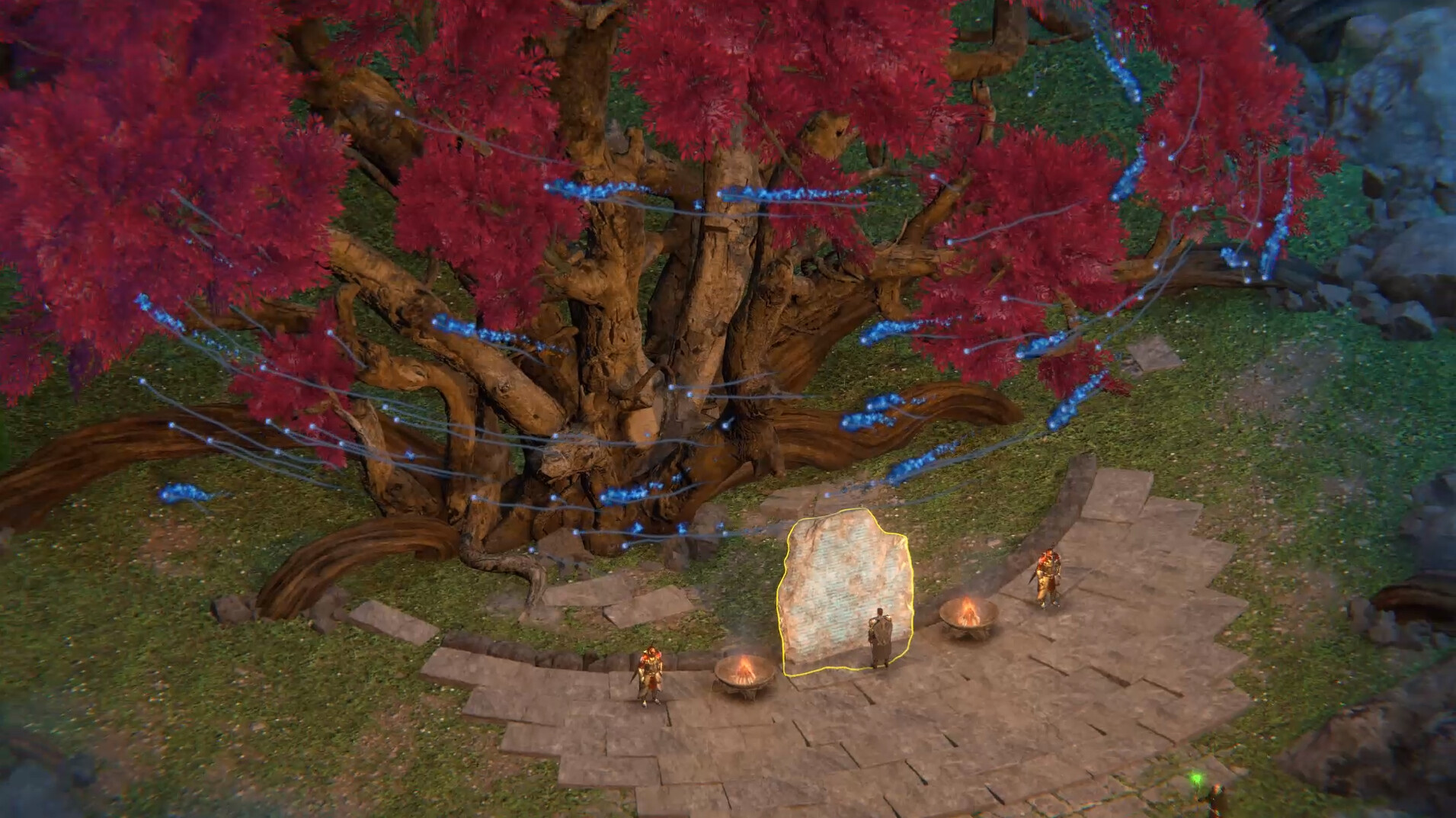
A separate competitive campaign changes the stakes of exploration. The single-player campaign lets the champion pursue quests and artifacts at a measured pace, while competitive play pits the player against three AI champions who are also seeking the artifacts central to the story. That race can turn a familiar journey into a contest over who reaches a goal first, and rivals may hold something the player needs. Across either mode, the artifact search draws the champion toward the larger conflict with Alaloth. The overview leaves that outcome open and focuses on the systems that carry a champion from the world map into its dangerous fighting areas.
The enemies of Plamen reflect the supernatural conflict around the imprisoned god. Elemental mages wield powers such as fire and lightning, while necromancers draw on dark realms; corrupted beasts and legendary monsters also appear as threats in the wild. These foes place different demands on a champion's weapon, defensive timing, and companion support. Ancient ruins and sacred places add a second layer to the journey, connecting the battles to the lost civilizations and rivalries that shaped the four kingdoms. The setting's history is delivered through locations, quests, and characters encountered while traversing the map rather than through one uninterrupted linear sequence.
You are a champion in the world of Plamen, facing the corruption of a god imprisoned in the mortal realm. Your race, your class and, since version 2.0, your difficulty are all choices you make before the first fight.
Four races, and the world notices which one you picked
You can play as a human, a dwarf, an elf or an orc, and non-player characters react to that choice with different dialogue and different attitudes. The store description states that outright rather than leaving it to flavour text, which makes race the first decision the game asks you to take seriously, before you have picked up a weapon.
Beyond race, you build by choosing from different Ways of Power, classes and skills. The number of moving parts is large enough that it is worth deciding what you want the character to be before you start spending, because the game gives you a long game to play with those choices and then starts applying pressure.
Combat is real-time, and the store sells it as unforgiving
The fight system combines an isometric view with skill-based action, and the store's own pitch is blunt about it: you must carefully plan each move, because one reckless action, and you die. Treat that as the marketing line it is rather than a rule you can measure. The more useful reading is that this is an isometric action game first: you are timing swings, holding your spacing and reacting to what the enemy is doing, and the character you build decides how much room you have for a mistake rather than whether you are allowed to make one.
Twelve companions with their own backstories travel that road with you, and they are not guaranteed allies: the store description has them ready to join or fight you as the journey goes, so a familiar face is not automatically a friendly one.
2.0 changed the spells and finally let you choose a difficulty
The 2.0 update, which Gamera calls Spellcraft, is the biggest systems pass the game has had. The developer's own words are that they reviewed virtually every spell, revisiting values, scaling and interactions; endgame magic was toned down in several areas, and underused abilities were improved to offer more meaningful choices. Summons got a substantial rework rather than a numbers nudge, which is the part of the patch most worth trying again if you bounced off summoners the first time.
It also added difficulty selection at character creation, which the developer describes as a long-requested feature. There are four levels: Story, Adventurer, Champion, and a top tier the changelog calls Legend of the Kingdom and the announcement calls Legend of Plamen, so expect to meet both names. Hardcore Mode and Permadeath are separate, and the developer's own caption says they are activated by finishing the game once. New quests with their own characters and quest items, two ranged vendors and a set of new socketed unique items filled out the same update.
The free-update history explains the version you are buying: a progression revamp and combat balancing in 1.1, further content in 1.2 and 1.4, and then 2.0. The game has changed a lot since release, so an opinion from a couple of years ago is worth re-checking against the game as it stands now.
Should you play it
Yes, if you want an isometric role-playing game with real-time combat and a build system that expects you to know what you want. If the old difficulty curve is what put you off, the new selection is the point: start lower and work up. Read each training prompt before committing to a specialisation.
Two more things worth knowing up front. Co-op here is the store's own line: a local cooperative mode for up to three players, run online through Steam Remote Play Together with no extra copies needed, which is shared-screen play over a stream rather than everyone owning the game and connecting over the internet. There is also a competitive mode against other champions, so the game is not purely solitary. And gear wears down, with durability restored at a blacksmith: check the repair selection before you pay, because a bill covering more than the item you meant to fix is easy to ring up by accident.
Go deeper with V4mp
- Developer
- Gamera Interactive
- Genre
- Action RPG
Explore Alaloth: Champions of The Four Kingdoms further
Explore the wiki for detailed reference pages on the game's world, systems, items and locations.