
About Rust
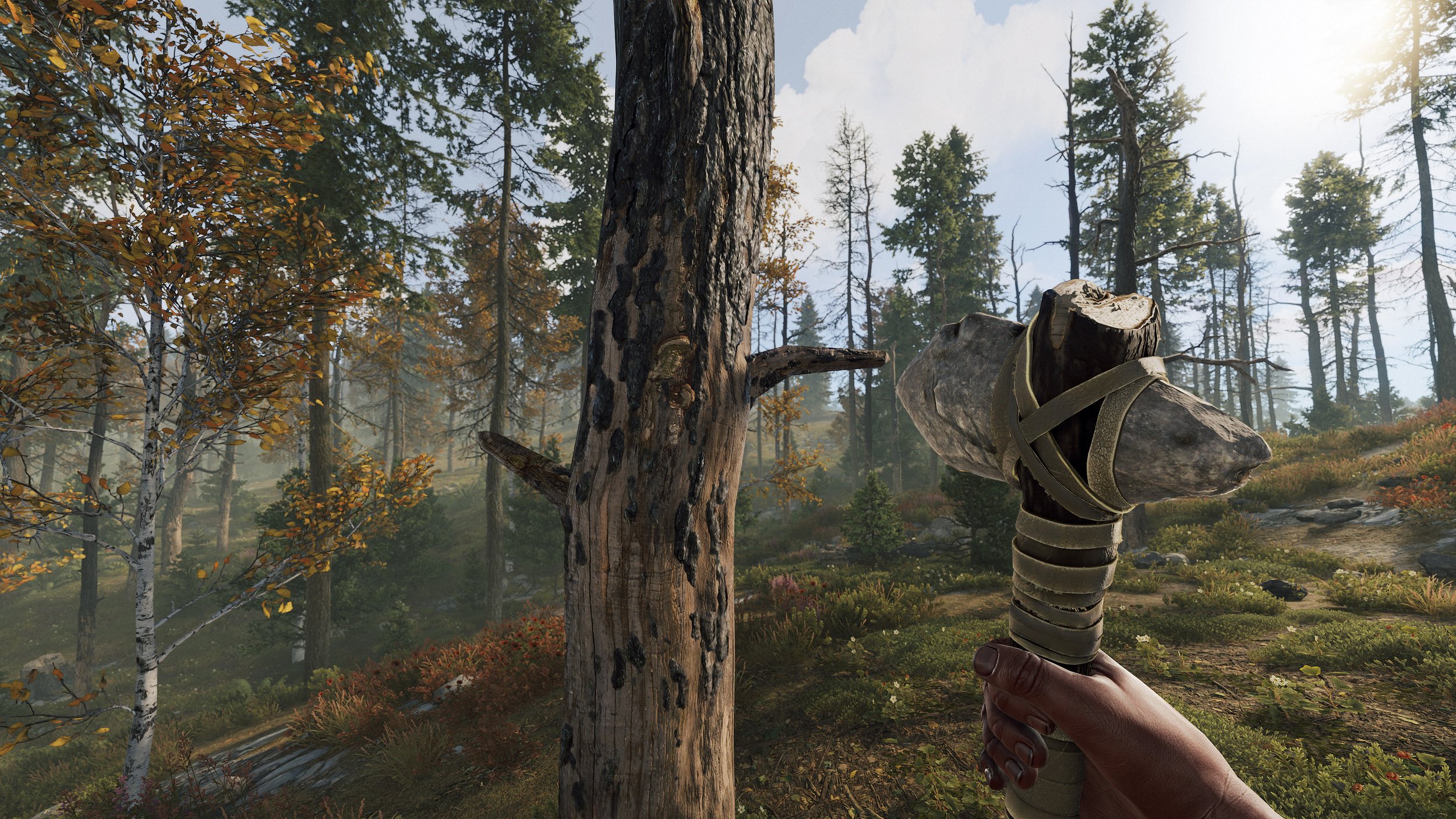
Rust drops a survivor onto a hostile, shared island with little more than a rock and torch. Gather materials, build a shelter, learn blueprints, and decide whether to cooperate, trade, or raid as wildlife, weather, and other players threaten each attempt to establish a foothold.
Rust begins with a vulnerable survivor on a procedurally generated island. The immediate problems are practical: find food and water, gather resources, avoid wildlife and environmental hazards, and stay alert to other inhabitants. The island is populated by abandoned settlements and monuments as well as other players, so a trip to collect materials may also become a negotiation or a fight. There is no fixed protagonist or scripted campaign to follow; each server creates a shared survival story through the settlements people build and the risks they take to keep them.
The first tools are crude, but gathering wood, stone, metal, and other materials opens up more ways to work. Players craft tools, clothing, armor, and weapons, then use them to gather faster or defend what they own. Hunger, thirst, temperature, and health make preparation relevant: food can restore condition, clothing helps manage exposure, and carrying enough equipment matters when a route takes a long time. A player who leaves home without planning may have to abandon collected items or improvise when the weather, wildlife, or a hostile group cuts off the return path.
Building changes survival from a temporary camp into a claim on the island. Players place a building plan, construct foundations and walls, and expand rooms to store supplies and shelter workstations. A Tool Cupboard controls building privilege and upkeep near a base, tying construction to an ongoing need to maintain materials. Doors, locks, and layout choices affect how easily another group can enter, while structural materials influence how well a base withstands attacks. Bases can be raided, so the challenge is not simply creating a large home but making it useful, defensible, and affordable to keep standing.
Progression centers on discovering and learning blueprints for equipment. Scrap collected from exploration and activity at monuments can be used through workbenches and research systems to unlock items. Workbench tiers provide access to more advanced crafting, while the tech tree offers a route through related plans. These systems turn a successful excursion into future capability: a group may decide to research a needed weapon, build a better tool, or save resources for a more distant branch. Server wipes can reset parts of that progress, making each cycle another push from basic survival toward stronger infrastructure and gear.
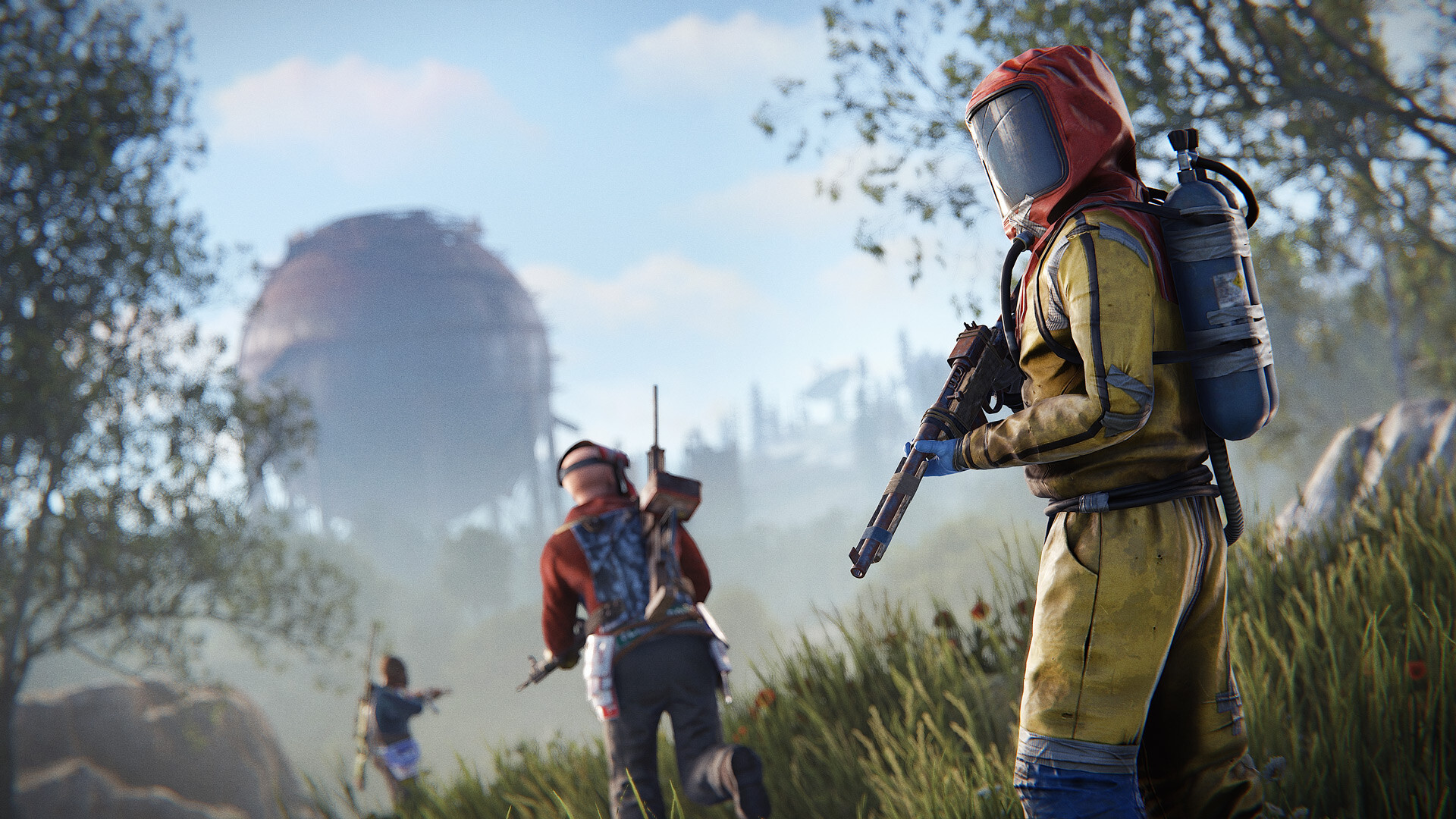
Monuments are prominent locations that draw players away from their home territory. They include abandoned industrial or research facilities and other places to scavenge, solve access puzzles, recycle components, or encounter other groups. Some routes involve keycards, switches, and doors that make reaching a reward a sequence of decisions rather than a simple container search. The cost is exposure: time spent inside a facility or managing collected loot can give another squad a chance to approach. Returning safely is part of the task, since materials lost in a death may be recovered by someone else.
Rust also supports systems that reward groups for making a settlement more than a storage bunker. Farms can produce food, electricity can power lights and devices, and automation can connect sensors or machines into practical setups. Vehicles such as boats, cars, helicopters, and trains provide alternate ways to cross the island, but they require resources and add their own exposure. These projects create different goals within the same open world: one group may focus on farming and trade, another on electrical infrastructure, while another uses transport to reach distant monuments or move supplies between outposts. A Wire Tool connects electrical inputs and outputs, while batteries store power generated by solar panels or wind turbines. Wiring turns a base into a circuit: a switch can control a device, and distributing power requires checking what each connected component needs. This gives a builder a different problem from placing another wall, since a useful layout has to accommodate both the equipment and the network that runs it.
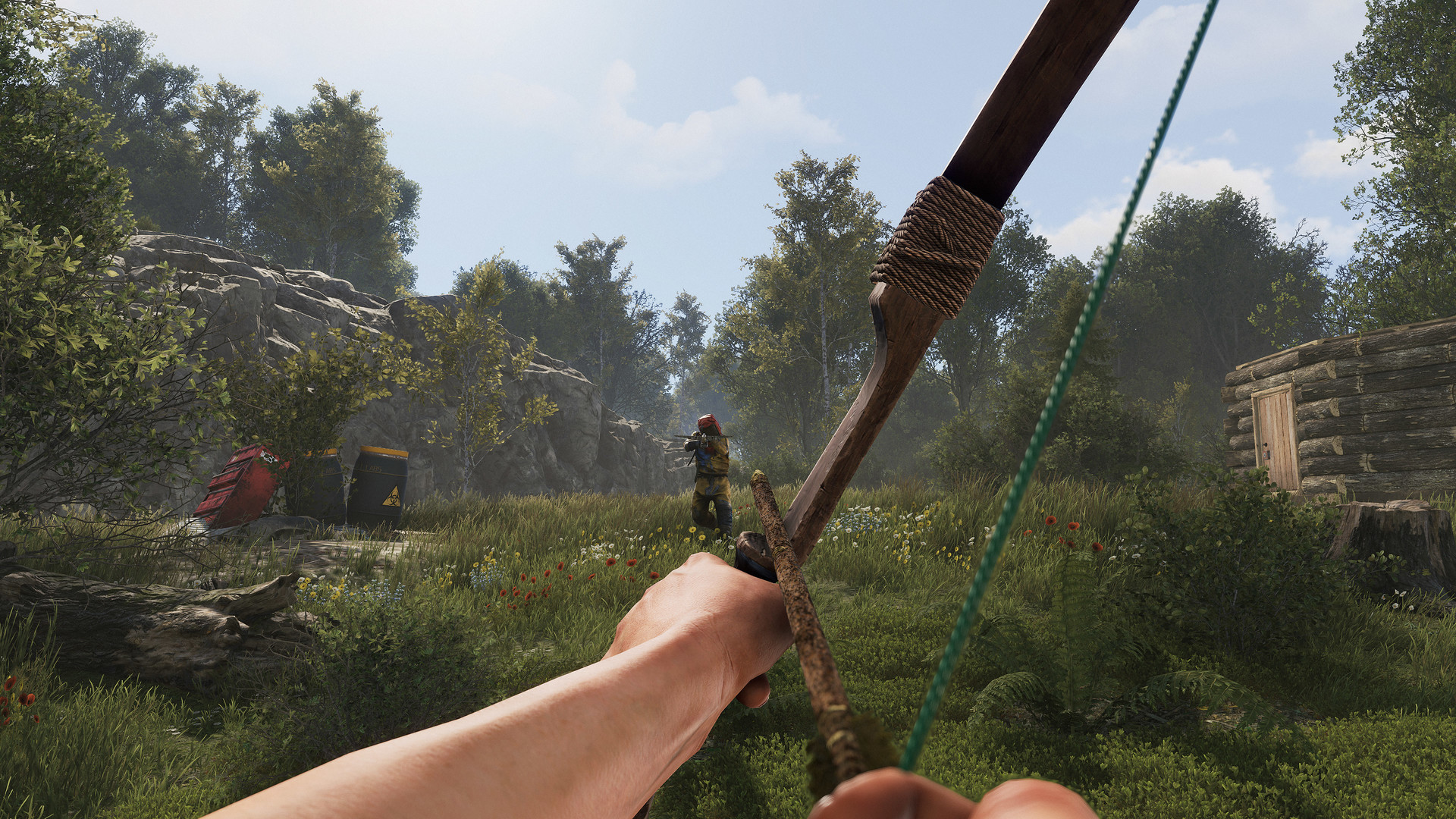
Human relationships are an unpredictable survival system. Friends can form a team, divide work, and build a shared base; temporary allies may exchange resources or agree to leave one another alone near a monument. Those arrangements exist alongside the possibility of betrayal, ambush, or a raid. Players communicate through voice and text, and the island does not enforce a single moral code or role. Choosing whom to trust affects the practical shape of a run: a cooperative group can defend more territory, while a lone survivor may travel quietly and avoid drawing attention.
Server wipes create a recurring reset point for that long-term competition. A map wipe clears player-built structures and restarts the scramble for territory, and individual server rules can determine how frequently these cycles occur. The result changes who controls the roads, monuments, and nearby resources: established groups can lose a fortified position, and a new group can claim space before the island becomes crowded again. Players decide whether to invest in durable infrastructure, research plans early, or keep a mobile camp that is easier to rebuild after a reset. These cycles make each server’s history temporary but consequential.
Wipes, upkeep and blueprint knowledge decide how a session actually goes. Aim matters, but the player who brings the right materials home is the one still playing next week.
Read the server before you read the game
Rust is sold as a single game and plays very differently depending on where you log in. The official description sets the tone plainly: everything on the island, from wildlife to the environment to other survivors, is trying to end your run. What it does not advertise is how much a server's own rules change that.
Before joining, check the wipe announcements, the population and any group limits, and decide whether the server is the shape of game you want. A quiet server gives you room to practise, though fewer players does not mean a safer map. Modded servers can change upkeep, progression and raid rules outright, so advice written for vanilla Rust should be treated as advice for vanilla Rust only.
Wipes are the thing to understand properly, because they are two separate events. A map wipe resets the world and your structures. A blueprint wipe resets what you have learned to craft. Long-term planning on a server that is about to wipe blueprints is a different exercise from planning on one that only resets the map, so read both announcements rather than one.
The Tool Cupboard and the daily bill
Building in Rust comes with a maintenance cost. The Tool Cupboard, or TC, is placed inside your base and is crafted for 1,000 wood. Once it is locked it becomes the ledger for everything around it: its inventory shows the upkeep cost per 24 hours, the amount of protected time you have bought, and it pays those costs out of the materials stored inside it. Walls, foundations, ceilings, roofs, doors and window pieces all add to that bill while a Sleeping Bag does not, so expanding a base is a decision you make with the cupboard screen open.
Authorization is part of the same screen. You are authorized automatically when you place the cupboard, and teammates have to walk up and authorize themselves, which is the difference between a shared base and a base your friends cannot build in. Shared access also costs: the TC now applies an upkeep tax based on how many players are attached to the base. The first four count for nothing, the next six add two percent each, later players add four percent each, and the count includes cupboard authorization, code-lock access including guest codes, and anyone removed from either in the previous 24 hours. Server owners can tune or disable that scaling, which is another reason to read the server description.
Privilege has boundaries
Building privilege is projected by the foundations of the connected structure rather than by the cupboard's own position, so the shape of the base is the shape of the privilege. A workshop across the yard is a separate building and needs its own cupboard or a foundation connection, because being nearby is not enough on its own. Privilege is not a shield either: players without authorization can still place twig floors and wooden ladders, which is exactly how an approach to your roof begins.
The practical base for a first session is small and finished: one enclosed space, a working entrance you can practise walking through, a bag to respawn at and a cupboard supplied for the time you intend to be offline. A two-door entrance buys you a moment, not immunity, and the honest expectation is that any base can be taken by someone with enough patience and explosives.
Progression is a budget, not a ladder
Crafting runs through three workbench tiers, and each one costs more than the last. Level 1 asks for 500 wood and 100 metal fragments and can be built by hand. Level 2 needs 500 metal fragments, 20 high quality metal and five Basic Blueprint Fragments and must be crafted at a Level 1 bench. Level 3 needs 1,000 metal fragments, 100 high quality metal and five Advanced Blueprint Fragments at a Level 2 bench. The recipes themselves take wood, metal fragments and high quality metal rather than scrap; scrap is what you spend on learning recipes and on the tech tree.
Learning is its own set of choices. A blueprint teaches one recipe, a Research Table turns a found item into its blueprint for scrap, and the tech tree lets you buy a recipe you have never held. Knowing a recipe only helps if you can supply the materials to craft it again, which is the mistake that turns a good unlock into a permanent debt. Fragments come from monuments, locked crates and scientist loot, and extras can be converted upward at twenty Basic to one Advanced.
Should you play it
Yes, if you want the version of survival where you cannot read the threat. Rust's tension comes from not knowing what the noise outside your wall is — it might be another player deciding where to hit — and no amount of gear removes that. The monthly devblog rhythm means the game keeps moving as well, so last month's balance change is this month's habit.
Two things to weigh before you start. Expect to lose everything you own, repeatedly, and pick a server whose wipe schedule suits how often you can log in. And decide early whether you want the vanilla rules or a modified server, because switching later means relearning the rules that the guides you read were written for.
Go deeper with V4mp
- Developer
- Facepunch Studios
- Genre
- Survival
Explore Rust further
Explore the wiki for detailed reference pages on the game's world, systems, items and locations.