
Plan Workbenches and Blueprints Before Spending Scrap
On this page
Choose an item you want to make before spending your scrap. Check whether you know its blueprint, which workbench it needs and which ingredients you will use each time you craft it. A learned recipe is much more useful when you can make a replacement. This guide covers vanilla Rust on PC; modded servers can change progression.
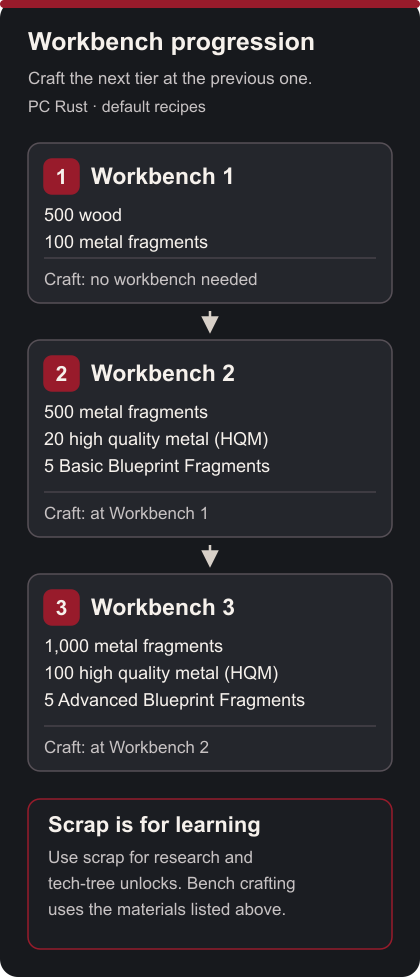
Build the bench your recipe needs
The three standard workbench recipes form a sequence:
| Workbench | Materials | Where to craft it |
|---|---|---|
| Level 1 | 500 wood, 100 metal fragments | No workbench required |
| Level 2 | 500 metal fragments, 20 high quality metal, 5 Basic Blueprint Fragments | Workbench Level 1 |
| Level 3 | 1,000 metal fragments, 100 high quality metal, 5 Advanced Blueprint Fragments | Workbench Level 2 |
Workbench Level 1 is known by default. Higher tiers need the listed blueprint fragments as well as metals. Keep those requirements in mind before recycling materials from a successful trip.
Scrap is no longer a workbench crafting ingredient. You still spend it on learning recipes. Facepunch removed workbench scrap costs while retaining blueprint-fragment requirements, and also removed the tech-tree tax. The progression changes explain the distinction.
Go out with a fragment target
For Basic Blueprint Fragments, plan a green-card puzzle run; the Dome, Ferry Terminal and Radtown have green-keycard puzzles. Basic fragments spawn in green puzzle rooms and blue-card puzzle rooms. Bring the required keycards and any Electric Fuses your chosen monument needs, and learn its power-switch sequence before committing your kit. The fragment overview and puzzle explanation cover that route. A spawn source does not mean the loot will still be there when you arrive.
Basic fragments can also appear in Military Crates, Underwater Advanced Crates and Road Scientist loot. Advanced fragments come from locked crates, including Oil Rig locked crates, and can appear in Elite Crates. Treat those as later objectives with a kit and an exit plan. As a fallback, you can combine 20 Basic fragments into one Advanced fragment. Keep the five Basic fragments for your Level 2 bench before converting your extras.
Choose how to learn the item
A blueprint teaches an individual crafting recipe. A Research Table uses a found item and scrap to produce its blueprint; the workbench tech tree offers another way to learn items for scrap when you have not found the item itself. Before researching, check whether you already know the recipe: the table can still create a duplicate. The blueprint guide describes both routes.
Open the relevant tech tree and look at the path to your chosen item before spending. Compare the displayed unlock costs with what you have available, then check the crafting ingredients too. Avoid learning several recipes just because they are affordable if you cannot supply the materials for the one you actually wanted.
Having a higher-level workbench does not mean you have learned every recipe associated with it. Treat knowledge, bench access and ingredients as separate checks whenever a craft is unavailable.
Keep bonus upgrades separate from bench levels
Workbench bonus upgrades are found items that add effects through the workbench’s inventory. They cannot be crafted. They are separate from progressing through Levels 1, 2 and 3, so finding an upgrade does not replace the materials for your next bench. Facepunch’s upgrade overview introduces that system.
Plan around your server’s resets
A map wipe and a blueprint wipe are different resets. World-save data and learned blueprint data are separate, as described in the server documentation. Check your server’s map-wipe and blueprint-wipe announcements separately before planning a long unlock run. A map reset alone does not tell you what happens to your learned recipes.
Keep enough materials for the next kit and base upkeep alongside your unlock budget. If you still struggle to bring supplies home, work through the first-session routine before committing everything to the next workbench.