
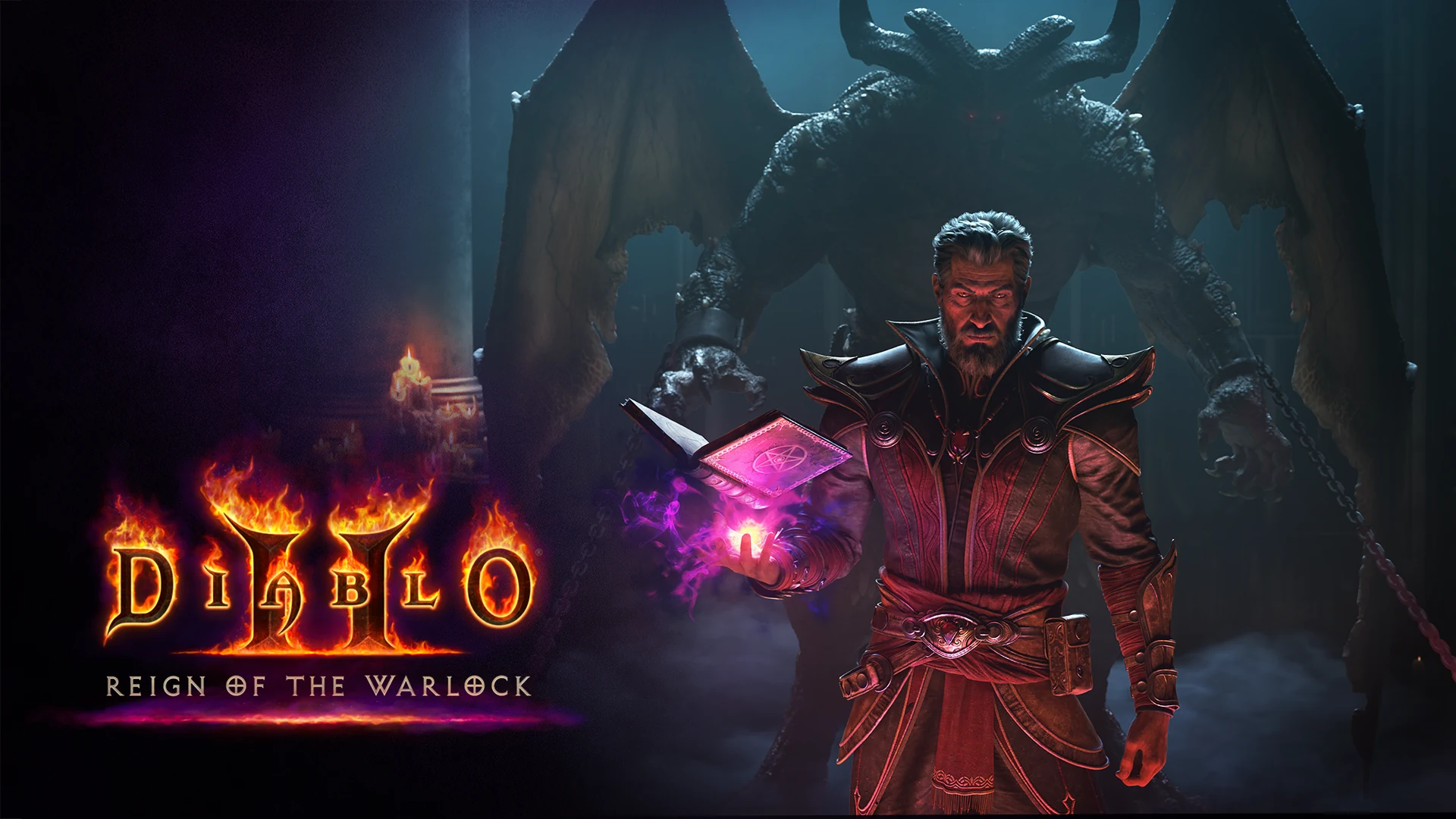
About Diablo II: Resurrected
Diablo II: Resurrected follows a pursuit across Sanctuary as demonic corruption spreads after the Dark Wanderer’s arrival. Players choose a class, build skills and equipment, and travel through acts of increasingly dangerous enemies, using loot, runes and mercenary support to prepare for deeper challenges.
Diablo II: Resurrected returns to Sanctuary, a world caught in a conflict between the forces of Heaven and Hell. The campaign follows the Dark Wanderer’s trail as demonic influence spreads through settlements and wilderness. Characters begin in a refuge, take quests from townspeople and move outward into hostile territory, where each objective leads toward another act of the story. The remaster rebuilds the visuals and audio while preserving the original action-RPG structure: the player controls one hero, defeats groups of monsters in real time, collects equipment and develops a character through skill choices. The story’s journey provides the frame for a repeated cycle of combat and preparation, as each region introduces stronger enemies and new rewards that can change how a chosen class fights.
The base Resurrected campaign with Lord of Destruction includes seven character classes: Amazon, Assassin, Barbarian, Druid, Necromancer, Paladin and Sorceress. Each has distinct skill trees and a different combat vocabulary. An Amazon can specialize in bows or javelins, an Assassin uses traps and martial skills, and a Necromancer can summon skeletons and command curses. A Barbarian relies on weapon attacks and shouts, while a Sorceress focuses on elemental spellcasting. The Druid combines nature magic with shapeshifting, and the Paladin pairs melee combat with auras. Class identity comes from how players spend skill points, not just the equipment found along the road. A build may focus on one branch and support it with complementary skills, or split points to cover weaknesses.
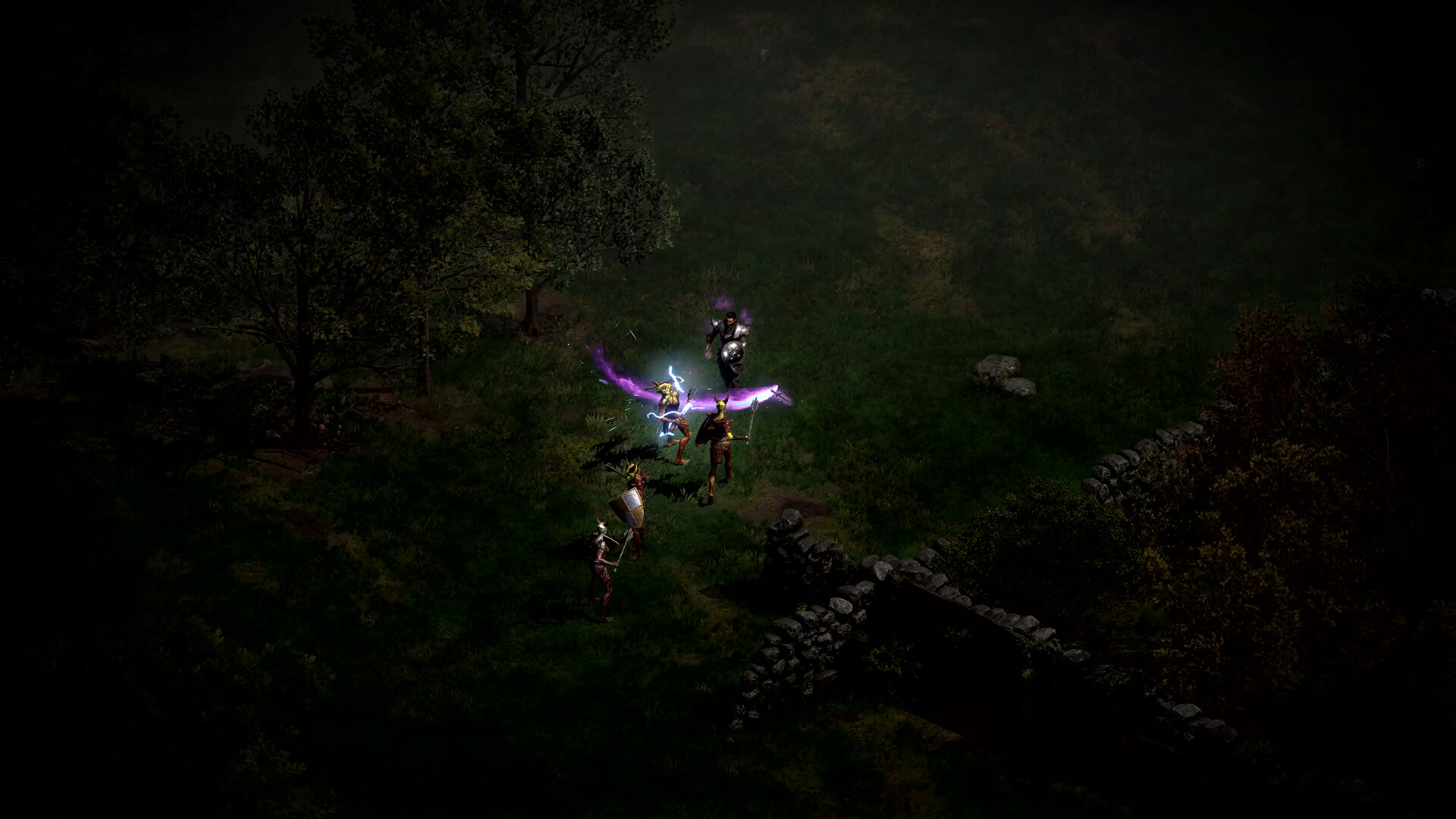
Combat takes place in real time from an overhead view. Enemies surround the hero in groups, projectiles cross the screen and several monsters can threaten from different angles at once. The player assigns active skills to controls and manages health and mana while moving between targets. Skill points unlock stronger abilities and require earlier skills or character levels in a branch, so choosing where to invest has long-term consequences. Attribute points affect basic needs such as strength for equipment or vitality for survivability. Resistances, enemy immunities and crowd control become more important as the campaign progresses through higher difficulty tiers. A Sorceress may clear space with elemental area spells, while a summoning Necromancer can let minions absorb pressure; the character’s mercenary can add another body and specialized support.
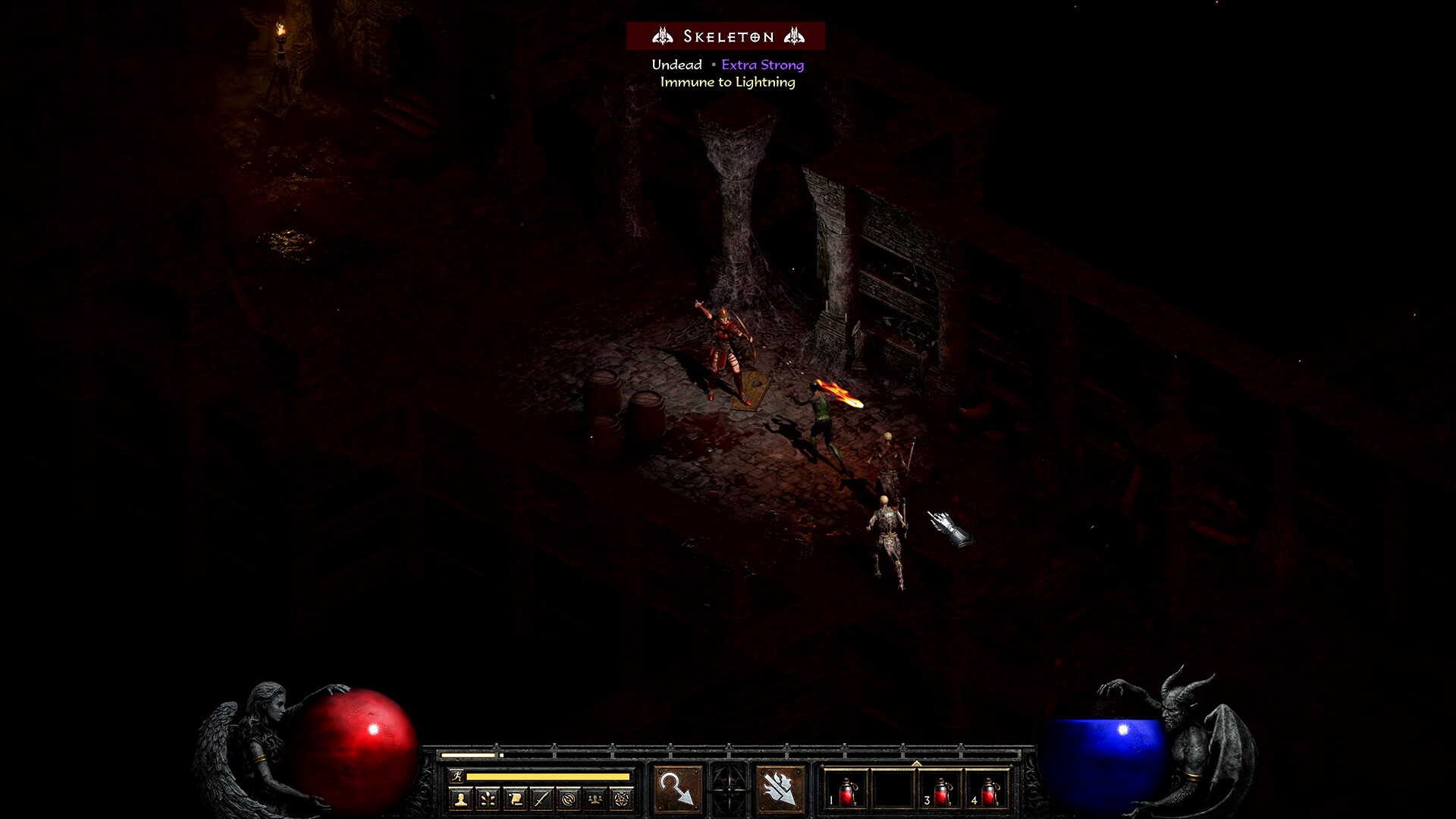
Loot is the other half of progression. Weapons and armor carry qualities, sockets and bonuses, and a replacement item can change damage, defense or skill access. Runes found during exploration can be placed into a socketed item in a particular sequence to create a Runeword, turning an ordinary base item into a specialized build piece. The Horadric Cube offers recipes that transform selected combinations of items, while gems and other materials have their own uses. These systems reward inspecting more than the weapon’s damage number: sockets, item type and bonus skills can matter to a future plan. Towns provide repair and trading services, while the stash gives a place to hold materials and gear for another character. The chase continues through five acts, with optional detours and bosses offering further chances to find equipment.
Mercenaries add a persistent support character recruited from a town in different acts. A Rogue Scout attacks from range, an Act II Desert Mercenary can supply an aura such as Holy Freeze or Might, an Iron Wolf uses elemental spells, and a Barbarian can serve as a close-range fighter. Mercenaries gain experience, can be equipped with armor, a helm and a weapon, and must be revived if defeated. Their role can patch a character’s weakness or complement its damage type, which is useful when enemies resist the hero’s main element. Edition scope matters: Diablo II: Resurrected’s base game includes the original campaign and Lord of Destruction, while Reign of the Warlock is separately identified DLC. The Warlock and its associated endgame additions are not part of the base-game class roster described here.
Play mode determines how a character can be used. An Offline character’s save is stored locally and can continue in single-player without a continuous connection after periodic authentication, while Online characters use Battle.net features and can join other players. The two pools are separate, so an offline hero cannot simply be invited into an online party. Online play includes friends and party-finder options for activities such as quests or boss runs, and players can choose Ladder or non-Ladder characters; Ladder is unavailable to offline characters. Hardcore is another character mode with a single life, which makes risk management part of progression: a death ends that character’s run. These modes sit alongside the separate Expansion and Non-Expansion choices. That distinction matters because Lord of Destruction adds the fifth act and two classes, while Classic remains the original four-act campaign. Each choice shapes the environment in which a build and its collected gear can be used. At a Ladder season's end, participating characters move to their corresponding non-Ladder group. Seasonal shared-stash items become withdraw-only storage, with a limited opportunity to recover them rather than permanent extra space. That transition allows a hero's journey to continue outside the new season while preserving Ladder as a fresh progression race.
The version on Steam is the Infernal Edition, which bundles the remaster with Lord of Destruction and Reign of the Warlock. On Battle.net and the console stores the base game and the add-on are also sold on their own, so the edition you get depends on where you buy it.
What you are actually buying
Diablo II: Resurrected is sold in two pieces. The base remaster of Diablo II and its Lord of Destruction expansion is one purchase, and Reign of the Warlock is the add-on that sits on top of it. If you already own the remaster, the add-on on its own is the thing you want. If you do not, the standalone add-on is not a shortcut to the game: it is a separate purchase from the base game rather than a bundle that contains it.
Steam sells the game as a single listing, the Infernal Edition, and that bundle holds the remaster, Lord of Destruction and Reign of the Warlock together. The pieces are also sold separately on Battle.net, Xbox, PlayStation and Nintendo Switch, so the PC split is not one shop: Steam is the bundle, while Battle.net sells the base game and the add-on apart. On PC the game runs on Windows.
Three paths, one Warlock class
The Warlock is one new class with three paths, and they are not cosmetic branches. Demon enslaves hellspawn and turns them into allies. Eldritch channels magic through your weapons so they become the damage. Chaos attacks from range with Hell, fire and shadow. Each path leans on a different part of the skill tree, which is what makes the class read as a summoner, a weapon platform or a caster depending on how you build it.
The class lands in a game that now advertises over two hundred skills across eight classes, with co-op for up to eight players. Eight players is a lot of screen, and a class that brings its own allies with it changes what a party composition looks like.
The endgame is the part that moved
Terror Zones now put you in control: you decide where to fight and how to progress, with reworked enemy difficulty scaling and new mechanics that reward strategy and class mastery. That change belongs to the Reign of the Warlock content, and it turns the farming loop into a route-planning problem rather than a wait.
Colossal Ancients add an endgame challenge, while new items give Reign of the Warlock characters further rewards to pursue.
The Chronicle is the other addition worth knowing about. It tracks the items you have collected account-wide, which is the kind of log that quietly becomes a goal of its own once you have run out of characters to level.
The Ladder, and what the season end does
The established Ladder options include Pre-Expansion Ladder and Pre-Expansion Hardcore Ladder, which stop at the original four acts, and Ladder and Hardcore Ladder, which run five acts because they include Lord of Destruction. Hardcore is one life, so the mode you pick decides how much of the game you are willing to lose.
The season end is where new players get caught. When a season finishes, your Ladder characters are transferred to their non-ladder group, and the outgoing Ladder shared stash becomes a Withdraw Only set of tabs marked with a check. The previous season's Withdraw Only tabs are overwritten at the same time, so anything you left sitting in them for a full season is gone.
Reign of the Warlock has item changes that do not apply to the older Classic or Lord of Destruction rulesets. Playing an older ruleset is a real option, and it deliberately does not get the new toys.
Quality of life, and one honest caveat
Loot filters, dedicated stash tabs for gems, materials and runes, and the ability to swap between modern and legacy visuals are the conveniences that make a long session comfortable. The legacy toggle is the one to check before you buy in: it is not available for Reign of the Warlock content. The old look is a window into the old game, not a skin you can wear across the new one.
The Infernal Edition also carries cross-game rewards — a pet and a back trophy for Diablo IV and a housing item for World of Warcraft — plus two extra character slots and two extra stash tabs.
Should you play it
Yes, if you want a loot game whose endgame you can plan around rather than wait through. The Warlock gives the roster a different shape, the Terror Zone change turns farming into routing, and the Ladder still offers the thing seasons are for: a clean start alongside everyone else.
Be deliberate about the edition. Buy the bundle if you do not own the remaster and the add-on if you do, and check where you are buying before you assume the game and the Warlock come as one purchase. On PC it is Windows only, and if you play seasons, clear out your Withdraw Only stash tabs before the next reset rather than after it.
Go deeper with V4mp
- Developer
- Blizzard Entertainment, Inc.
- Genre
- Action
Explore Diablo II: Resurrected further
Explore the wiki for detailed reference pages on the game's world, systems, items and locations.