
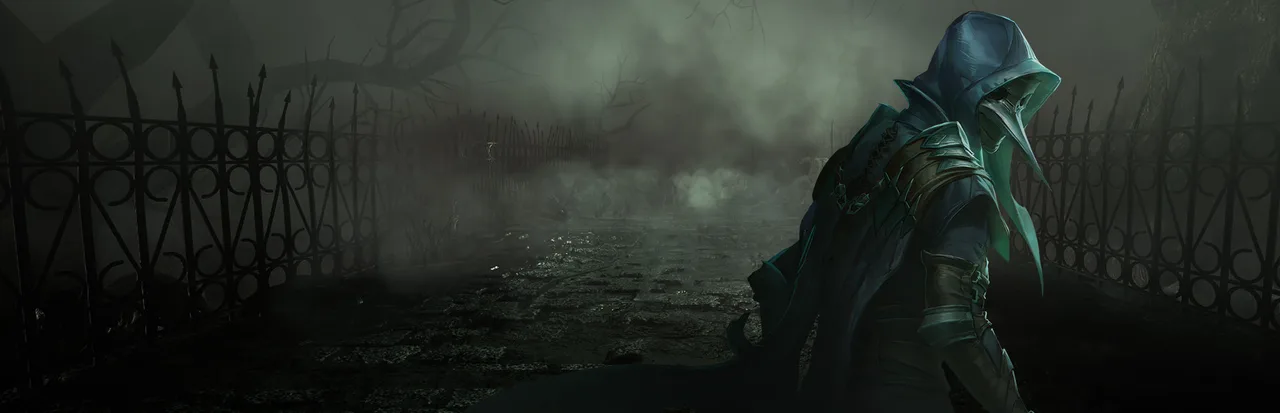
About Thymesia
Thymesia is a single-player action RPG from the Taiwanese studio OverBorder Studio, published by Team17 and released in August of 2022 for PC, PlayStation 5 and Xbox Series X|S, with a cloud version on Nintendo Switch at the same time and an Amazon Luna release the following month. The campaign is arranged as separate levels and sub-quests you drop back into rather than one continuous map, and it would much rather you press forward than hold your ground. This review covers the base game; the only add-ons are a soundtrack and an artbook, so there is no story expansion to wait for.
Two health bars, one decision
Saber attacks reduce the white health bar and leave green wounds behind. Claw attacks deal damage to those wounds before the enemy can recover. Keep pressure on, then switch to the claw when you have opened enough of the green bar to make the hit count.
That exchange gives combat its urgency. Backing away can give an enemy time to recover, while overcommitting leaves Corvus open. Plague weapons add other ways to deal damage, so the saber-to-claw rhythm is a foundation rather than the only possible finish.
What Thymesia does not have is a stamina bar. Attacking, dodging and deflecting are each gated by short cooldowns instead of a shared pool, so you are rarely stopped from acting — you are stopped by your own timing. Deflecting is the skill the combat is built around, and a clean read is worth far more than a trade you win by eating the hit, which pushes the whole game toward active defence instead of a war of attrition.
Steal their tools and use them the same round
A charged Predator's Claw can reave a plague weapon from an enemy. That stolen copy is a single-use attack, giving you a reason to risk the charge instead of relying on quick hits.
For a lasting unlock, collect that weapon's Skill Shards and spend them at a Beacon. More Skill Shards upgrade it, and its equipped version uses energy. Memory Shards are the levelling currency, not the material for unlocking plague weapons. Trying a reaved copy before investing in its permanent version makes the progression easy to understand.
Feathers give you a ranged interruption for critical attacks when the timing is right. They also help you keep pressure on an enemy while closing the gap. They are useful, but throwing one without reading the incoming attack is no substitute for learning its timing.
Talents, potions and the short leash
Skill points arrive quickly, and the useful part is front-loaded. The upgrades that change how the game feels — better dodging, better deflecting — are ones you can take early rather than a reward parked behind the final act, which is the main reason Thymesia's combat opens up within the first few hours instead of at the end of them.
Potions add a second layer most soulslikes skip. Recipes decide what a potion actually does, and one of them feeds directly into extra Memory Shards, so even your healing sits on the build sheet rather than being a fixed number of drinks. It is a small system, but it gives you something to think about between fights that is not just "spend the points".
One practical warning the game never spells out loudly: an enemy pulled away from its area will start healing, and the later patches added an on-screen hint precisely because that rule catches people out. Fights are meant to be finished where they begin, so bring the fight to a corner you can win rather than dragging a boss across the level hoping for an easy angle.
Where the seams show
Thymesia is short, and it knows it. The campaign is a set of levels and sub-quests rather than a country, and the enemy roster runs dry well before the credits do. You will meet the same silhouettes again wearing a different coat, and the best fights tend to be the ones that arrive first.
Deflect timing is the other recurring complaint, and it is fair. The window asks for a read that the animation does not always sell you, and a misread costs more here than in games that let you lean on a health bar. It is the one place where the "commit or lose" idea works against the player instead of for them.
The pulse
Reception landed mixed to warm, with aggregate scores sitting in the sixties and seventies depending on the platform. The appeal lies in the plague weapons and fast exchanges; the short campaign and limited enemy variety make the offer narrower than a sprawling action RPG.
That is also a decent description of who this is for. Thymesia rewards a player who wants a tight, repeatable fight more than a long one, and the game is at its best when you are cycling stolen weapons and closing wounds instead of creeping through a corridor.
Should you play it
Yes, if you like the idea of a soulslike where the fight itself is the reward. Reaving an enemy's weapon and immediately turning it on the next room is a better payoff than a stat increase, and the wound-versus-true-health split gives every exchange a clear ending rather than a slow bleed. The build decisions are small but real, and nothing in the game asks you to grind to enjoy it.
Skip it if you need length, enemy variety or a story to carry you. Hermes is atmospheric rather than populated, the campaign is brief, and the difficulty leans on pressure instead of surprises. Thymesia is a small game with one sharp idea, and it commits to that idea harder than most games three times its size. That is a good trade.
Go deeper with V4mp
- Developer
- OverBorder Studio
- Genre
- Action RPG
Explore Thymesia further
Explore the wiki for detailed reference pages on the game's world, systems, items and locations.