
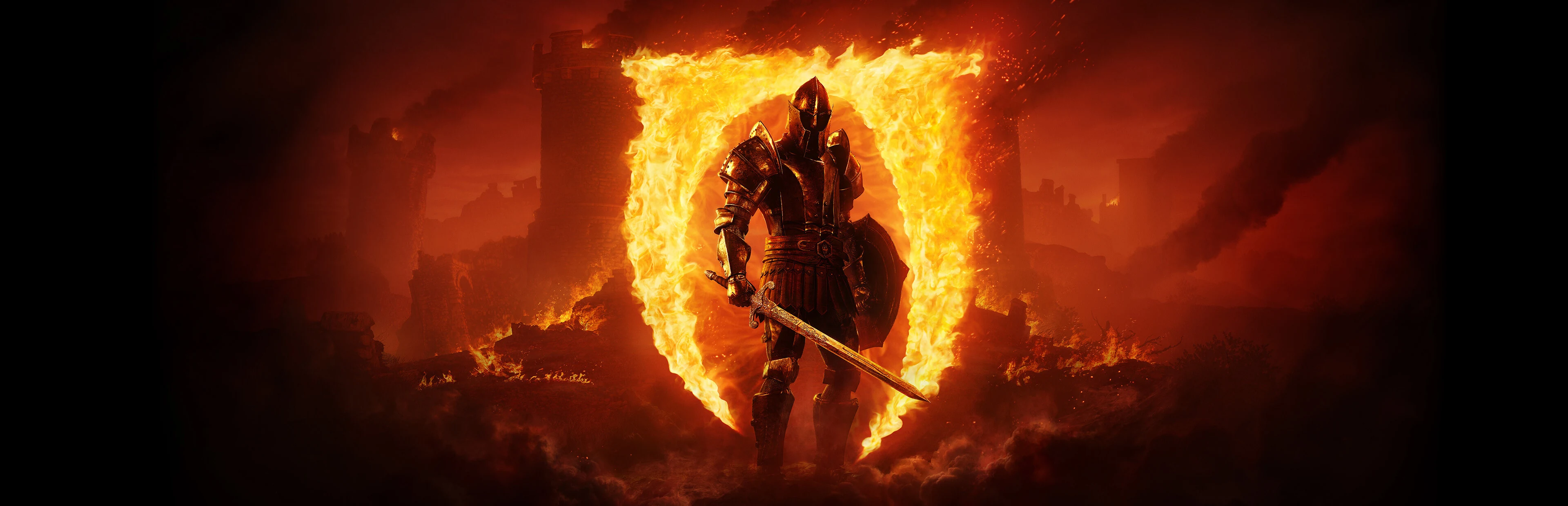
About The Elder Scrolls IV: Oblivion Remastered
Oblivion Remastered returns to Cyrodiil, where an escape from the Imperial Prison draws a new hero into a crisis spreading from the realm of Oblivion. The open-world RPG lets players pursue the main conflict, join local causes, develop skills through use, and build a character around combat, magic or stealth.
The story begins inside the Imperial Prison, where the player’s character crosses paths with Emperor Uriel Septim and becomes involved in a threat reaching beyond the cell. The Daedric invasion is opening the way for forces from Oblivion to overtake Tamriel, and the hero’s part in responding to it grows through encounters with figures such as Martin Septim and members of the Mythic Dawn. The journey leads out across Cyrodiil, an imperial province whose settlements and wilderness can be explored in a different order from the main quest. The remaster retains the open-world RPG structure while presenting the original adventure with rebuilt visuals and refined gameplay.
Cyrodiil is organized around the Imperial City and its surrounding regions, with towns such as Kvatch and Bruma becoming important as the danger spreads. Roads connect farms, forts, caves and settlements, while Oblivion Gates open as dangerous links to Daedric spaces that require a different kind of exploration. The main story can be followed through quest leads, but the province also contains local disputes and independent opportunities that do not need to be completed in one fixed sequence. Travel itself has practical conditions: horses speed journeys, while carrying too much prevents fast travel. The world’s combination of cities, wilderness and hostile gates makes the map a guide to several overlapping kinds of activity.
Character development grows from what the player actually does. Major and Minor Skills improve through use, and enough increases make the character ready to level up; sleeping is required to complete the level. The remaster then awards Virtue Points to distribute among attributes such as Strength, Intelligence and Agility. This means a character who relies on Blade, Destruction or Sneak will develop those skills by practicing them, while choices about attributes refine what the character can carry, cast or withstand. Enemies also scale with level, so spreading development across combat, magic and stealth can prevent non-combat advances from leaving the hero unable to handle a fight.
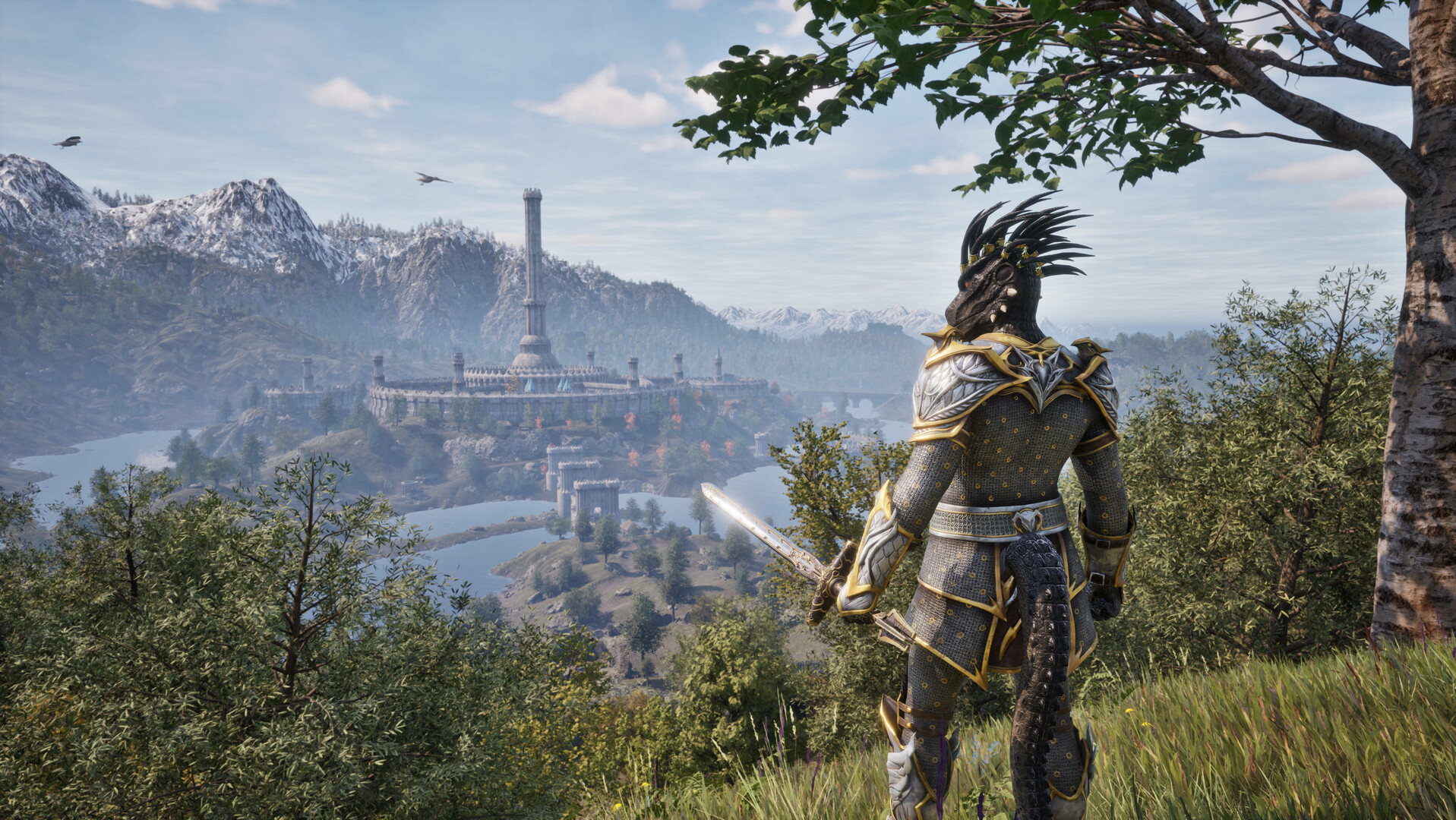
The skill list supports different approaches without forcing one profession. Blade, Blunt and Marksman cover familiar weapon paths; Block and armour skills influence staying power. Magic includes Destruction for elemental attacks, Restoration for healing, Conjuration for summoned creatures or weapons, and Alteration for effects such as water breathing or protection. Sneak, Security, Speechcraft and Mercantile extend the character’s options through infiltration, lockpicking, persuasion and trade. Alchemy turns ingredients into potions and poisons. The result is a character sheet shaped by habits: a player who practices spells and alchemy develops differently from one who solves problems with a blade, bow or conversation. Illusion and Mysticism add further schools to consider, expanding spellcraft beyond direct damage, healing, summoning and protection.
Quests connect the invasion to people and institutions across the province. Following the Mythic Dawn investigation involves Baurus, the scholar Tar-Meena and books called the Mythic Dawn Commentaries; their clues lead the player toward the cult’s hidden presence in the Imperial City. Other stages of the crisis draw attention to Bruma, whose defence depends on work done beforehand, including securing support from the surrounding communities. These named threads show how a personal journey out of prison becomes a province-wide emergency, while leaving room for the player to pause the main conflict and take up other tasks. Characters also move according to time of day, so finding someone may mean returning at a different hour.
The remaster modernizes how the older RPG feels without replacing the underlying Cyrodiil adventure. Sprinting, revised character movement, recreated combat animations, stronger hit feedback and a more usable third-person view are among its refinements. The leveling system has also been redesigned, while the central loop still asks players to improve skills, rest to advance a level and decide where to travel next. A player can pursue the Mythic Dawn trail, practice a craft, investigate a settlement’s local problem or ride toward an open Gate. These parallel routes let the character’s abilities and priorities determine how the larger crisis is approached, rather than requiring every expedition to follow a single prescribed path.
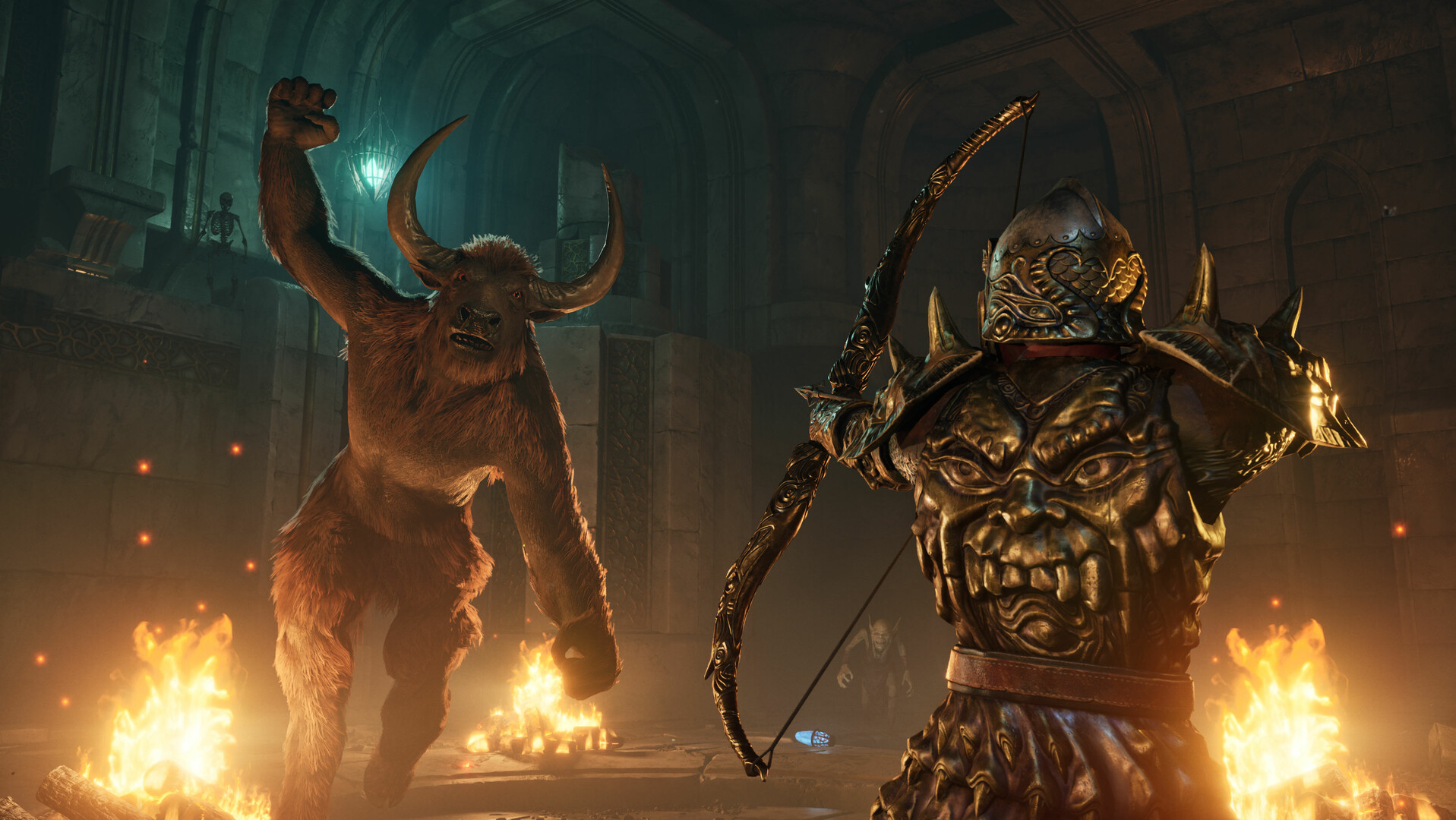
Daily routines shape how the player finds people and organizes a trip. Some characters move to different places as the hours pass, so a missed contact may be a question of timing rather than a broken quest. Clairvoyance can help point toward a quest objective, though it may direct the player back to the location most recently visited when the next destination is not yet clear. The Favorites radial keeps useful spells or items close at hand, but the world does not pause while it is open. Carry weight matters too: excess inventory prevents fast travel, making a horse or a lighter pack a practical choice before leaving a city for a distant region. These small interface and travel rules reward checking a destination, choosing quick-access tools and sorting supplies before heading beyond the walls.
The base release includes Shivering Isles and Knights of the Nine, the Deluxe Upgrade adds two gear quests, an artbook and a soundtrack, and the 2006 build is still sold separately. Here is which one you are actually buying.
What a remaster means here
This is the 2006 game again with new art and a gameplay pass over the top of it, and the original's handcrafted detail was recreated rather than replaced. The design underneath is the one Oblivion players know: you create any character you can imagine, from the noble warrior to the sinister assassin to the wizened sorcerer, and you unravel the main quest at your own pace or wander Cyrodiil and find your own challenges.
Oblivion Remastered revisits the game originally released in 2006. The older Game of the Year Edition is a separate package of that original release.
What that means is that this is the same world and the same quests with a new presentation. Treat it as the version of Oblivion that still receives updates rather than a different game wearing the same name.
What is in the box
The remaster ships with the previously released story expansions Shivering Isles and Knights of the Nine, alongside the additional downloadable content that used to arrive in pieces. That changes how a run is sequenced, because the Knights of the Nine questline and the Shivering Isles are open to you inside the same install rather than being separate purchases to hunt down later.
The Deluxe Upgrade is the only version decision on top of the base game. It takes the digital base game to the Deluxe Edition and adds new quests for the Akatosh and Mehrunes Dagon armour, weapon and horse armour sets, plus a digital artbook and a soundtrack app. Those are quests rather than a costume drop, so the upgrade does add things to do even though nothing in it rewrites the campaign. If you want the campaign itself, the base game already has it.
The 2006 build is still sold
On the Steam storefront the older game is still listed as The Elder Scrolls IV: Oblivion Game of the Year Edition, with Knights of the Nine and the Shivering Isles included, and the storefront also carries an Oblivion Game of the Year Deluxe package that adds Fighter's Stronghold, Spell Tome Treasures, Vile Lair and Mehrune's Razor on top. The Deluxe package is the one carrying the note that it is playable only in English, and its page also carries a publisher note identifying it as the edition released in 2009 rather than as a current release. Scope that comparison to this storefront: it is the listing you are looking at, not a statement about every platform the game has appeared on.
So the comparison is not a visual prize fight. One is a fixed release from the 2006 era, and the other is a later release that has been patched since, including a difficulty pass that changed how the game can be tuned. If you want to play Oblivion, the remaster is the version that still gets updates.
Two difficulty dials
Update 1.2 split difficulty into Player Combat Damage and Enemy Combat Damage, each selectable as Novice, Apprentice, Adept, Journeyman, Expert or Master, and it added Journeyman specifically to sit between Adept and Expert as a better bridge between the two.
That gives you two dials where the original gave you one. You can keep enemies dangerous while raising your own damage, or run the opposite way, which is a useful thing to have in a game whose levelling can leave you ahead of or behind the curve. It is the setting to check before concluding the world has outgrown you.
Update 1.1 came before it with quest fixes, blocker fixes, quality-of-life fixes, crash fixes, two new HUD console commands, and a fix for missing text after installing the Deluxe Upgrade. The PC release carries both updates, so a fresh install does not need any of that history unpicked by hand, and the Switch 2 version is patched separately with its own Patch 1.0 and Patch 1.1.
Where it lives now
The remaster is available on PC, PlayStation and Xbox, and it is available on Nintendo Switch 2 as well, where the publisher's news feed carries a Patch 1.0 and a Patch 1.1 for that version. A physical edition is also listed for anyone who wants a box.
The Deluxe Upgrade is sold as an add-on to the base game, so the split is the same wherever you buy it: the base game is the game, and the Deluxe tier is the two gear quests, the soundtrack and the artbook on top.
Should you play it
Yes, if you want the 2006 role-playing game with a modern presentation and difficulty dials that let you correct for its level curve instead of living with it. The remaster is the version to buy: the expansions are inside it, it is still being patched, and the Deluxe Upgrade is optional in the ordinary sense of the word.
Go in knowing what it is. This is Cyrodiil with the same quests and the same open structure, so the reason to return is to play it again with better art and a better hand on the difficulty, rather than to find a different game underneath.
Go deeper with V4mp
- Developer
- Bethesda Game Studios, Virtuos
- Genre
- RPG
Explore The Elder Scrolls IV: Oblivion Remastered further
Explore the wiki for detailed reference pages on the game's world, systems, items and locations.