
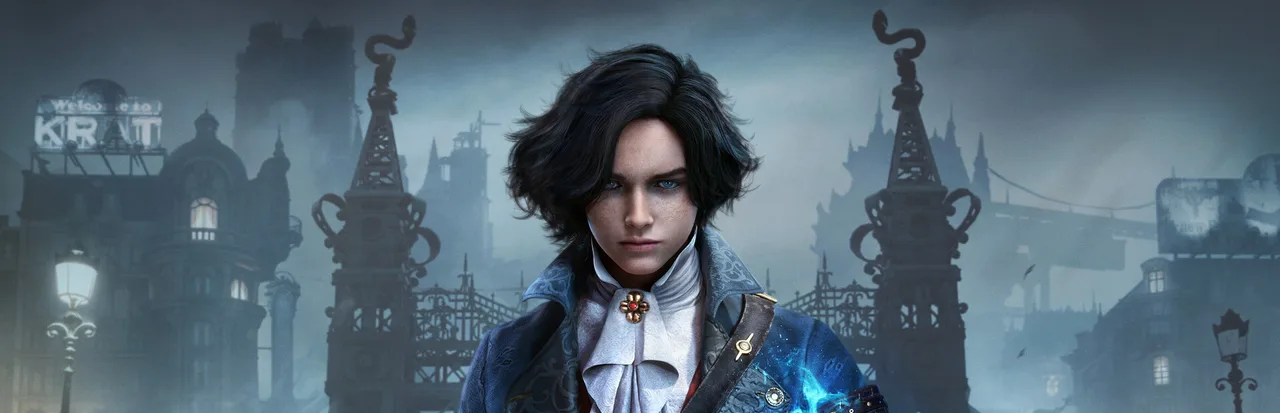
About Lies of P
Lies of P reimagines Pinocchio as a puppet searching for his creator in the ruined city of Krat. Explore its streets and landmarks, fight hostile puppets and other dangers, and shape your approach through modular weapons, a mechanical Legion Arm, upgrades and choices about whether to lie or tell the truth.
Lies of P places the Pinocchio story in Krat, a Belle Époque-inspired city whose prosperity was built around puppet automation. The player controls P, Geppetto’s puppet, moving through a catastrophe that has turned the city’s mechanical workforce into a threat. P sets out to find his creator while travelling through streets, buildings and other parts of a society in collapse. The familiar tale is reworked as a dark action role-playing adventure: the search for a maker becomes entangled with the nature of puppets, human identity and the consequences of the city’s dependence on them.
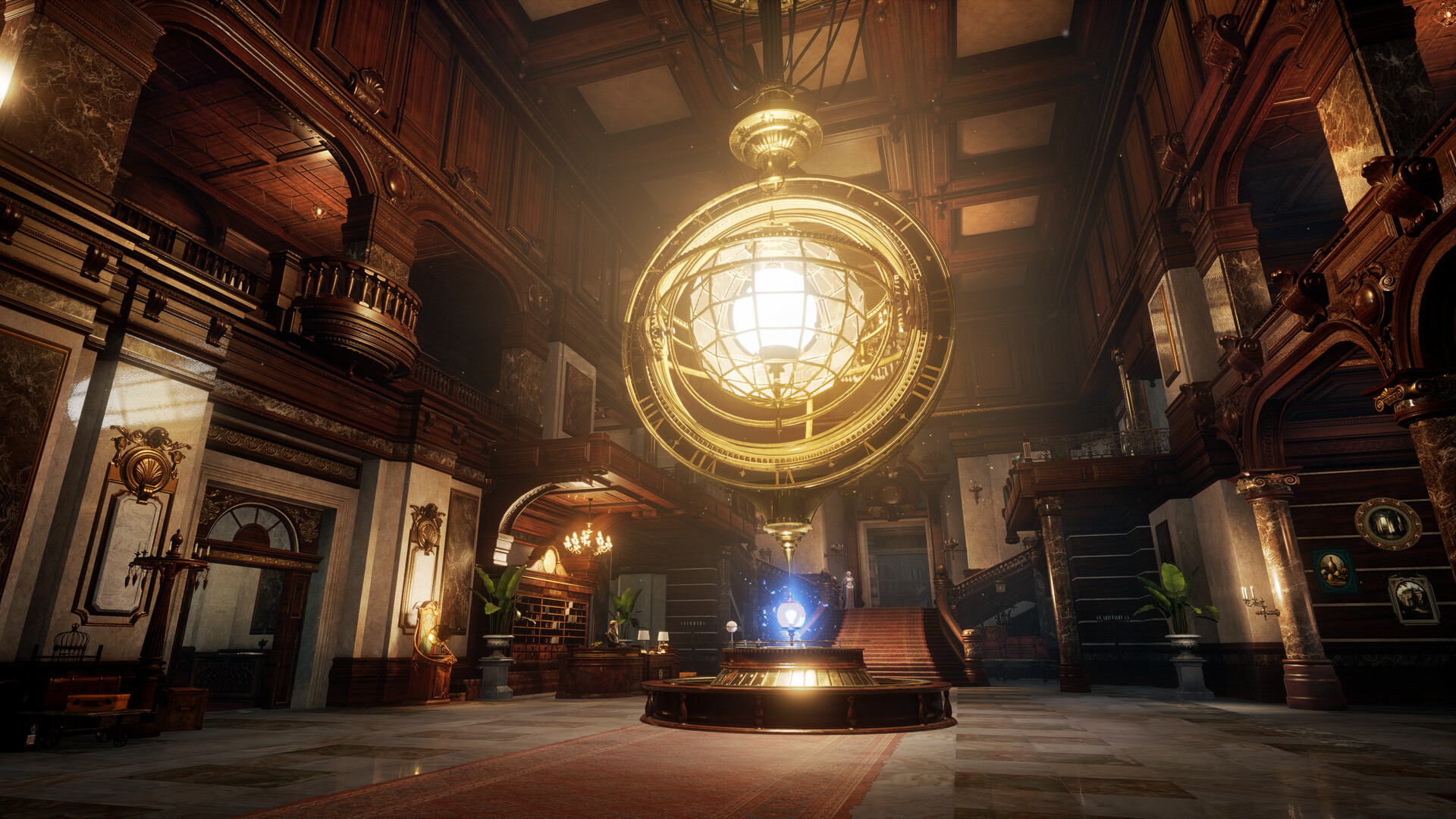
The city’s crisis gives exploration a practical purpose. P advances through connected areas, searching for routes, supplies, characters and clues about what happened in Krat. Stargazers serve as places to rest and manage parts of the journey, while Ergo carried by P is at risk if he is defeated. The streets contain hostile puppets as well as other enemies, and encounters can be approached by learning their reach, timing and openings. The setting’s workshops, avenues and interiors reflect a city organized around its puppet industry, so locations help frame both the immediate danger and the larger mystery. Progress comes from pushing into unfamiliar spaces, then using what is found to prepare for the next stretch.
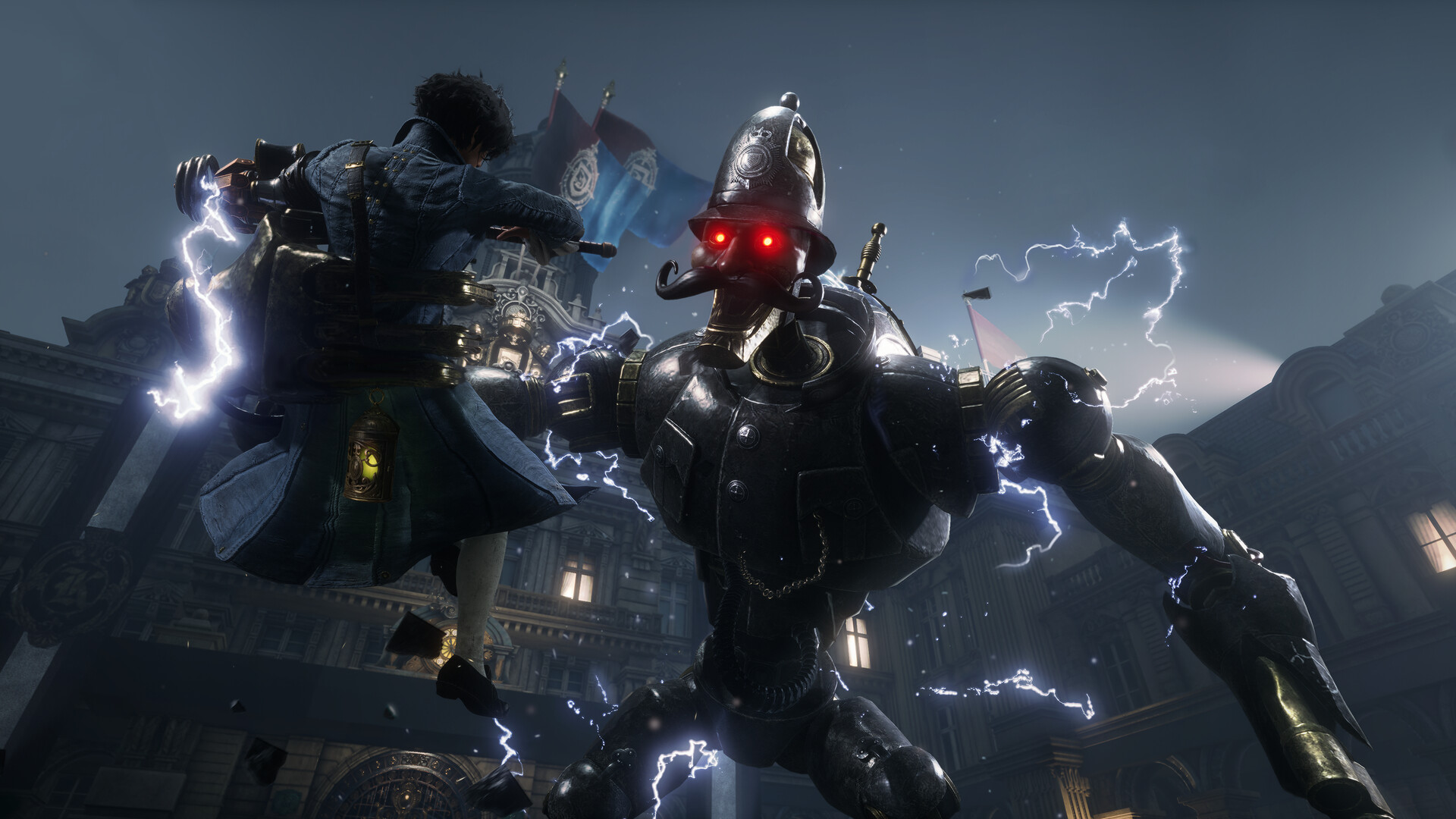
Combat combines deliberate swordplay with several interlocking systems. P can attack, guard and attempt a Perfect Guard at the moment an enemy strike lands; a successful guard can prevent damage and pressure the opponent, while ordinary guarding can leave recoverable damage that P may regain by striking back. Enemies can also be staggered, creating an opening for a more powerful follow-up. Weapon durability falls as weapons are used, including when blocking, so the Grinder is important for restoring an edge during or between fights. The encounter is therefore about more than repeating attacks: the player watches an enemy’s pattern, chooses when to defend or commit, and manages both immediate safety and the condition of the weapon.
Ordinary weapons are assembled from a blade and a handle, allowing the player to pair a blade’s damage profile and reach with a handle’s attack motion and scaling. That separation supports different combinations instead of locking each weapon into one unchangeable form. Weapons also carry Fable Arts, special actions powered by Fable points that build during combat. These can deliver attacks or defensive effects associated with a particular component, giving the player another resource to spend when an opening appears. Choosing a setup means weighing how it handles, how quickly it attacks and which special action it provides. As new equipment becomes available, the player can adapt the build to a preferred pace or to the demands of a particular enemy.
P’s mechanical arm, called the Legion Arm, adds a distinct tool to the weapon setup. Different arms provide abilities such as ranged attacks, traps or close-range force, and their use consumes Legion resources. The player can equip and improve arms, then decide when a special tool is worth spending during an encounter. Weapon assembly and the Legion Arm create separate layers of customization: the weapon defines the regular attack style, while the arm supplies a focused ability that may control space or exploit an opening. Neither removes the need to read an opponent. Their strongest use depends on timing, positioning and the resources available, especially when a fight demands both careful defence and a quick response.
Character growth is organized around Ergo, equipment and the P-Organ. Ergo acts as a currency for leveling and purchases, but it is also at risk when P is defeated outside a safe rest point. After reaching Hotel Krat, P normally spends Ergo on levels by speaking with Sophia; Stargazers remain checkpoints and fast-travel connections. Quartz can be invested in the P-Organ to unlock abilities and linked bonuses, letting progression change how P handles combat and exploration. Weapons and Legion Arms can also be developed, so upgrades affect both basic survival and the options available in a fight. These systems make discoveries valuable in more than one way: an expedition may yield currency, a new component or an upgrade material that changes the build.
Choice is part of P’s story as well as his mechanical development. The game presents moments where P can lie or tell the truth, and the official description frames these decisions as shaping his path through the narrative. The choice system complements the central question of what makes a puppet human, but it does not replace the action-focused loop of exploration and combat. Characters encountered in Krat provide context and requests, while P’s responses influence how events unfold. The player alternates between investigating the city, speaking with its inhabitants, maintaining equipment and facing increasingly demanding enemies. This combination connects the fable’s themes to concrete play: decisions affect the journey, while weapons, guards, tools and upgrades determine how P survives it.
Developed by Round8 Studio and published by Neowiz, Lies of P released on 18 September 2023 for Windows, macOS, Xbox One and Xbox Series X|S, with the PlayStation 4 and PlayStation 5 versions following on 19 September. This review covers the base game campaign; Overture, the prequel expansion that Complete Edition now bundles with it, is noted at the end but not graded.
A weapon you build twice
Most weapons in Krat arrive whole, and most of them can be taken apart. A standard weapon is really two objects: a blade that sets the damage and the reach, and a handle that sets the moveset, the weight and the attribute scaling. Each half carries its own Fable Art, the weapon skill you spend Fable Slots to fire, so choosing a blade and a handle is choosing two abilities as well as a swing. Every rearrangement happens at a Stargazer or with Eugenie back at the hotel, and it unlocks once Geppetto hands you the Enigma Assembly Tool after the Mad Donkey goes down early in Elysion Boulevard.
Boss and special weapons break the rule on purpose. They cannot be split, they arrive with their own skill, and they trade the bench for a stat line you cannot assemble any other way. Handles can be altered with cranks to push their scaling toward the attributes you actually invested in, and a Balanced Crank undoes that alteration when the numbers stop suiting you. Most of the character building in Lies of P happens on the equipment screen rather than in the stat menu, which is why the bench matters more here than in any of its neighbours.
Blocking is a loan
Hold guard and you take reduced damage while stamina drains, and the damage you soaked becomes Guard Regain. That recoverable health is not yours until you take it back: land hits before the window closes and it returns to you, so running, rolling and drinking instead means you paid for the block in full. It is one small rule with a very large effect, because the safest moment to attack is right after you have absorbed something heavy.
Perfect Guards are the sharper version. A guard timed to the instant of impact costs stamina and no health at all, and enough of them will break an enemy's weapon, leaving it swinging a stub with a much shorter reach. The timing is tight and the game does not widen it. Some attacks, the red-lit Fury Attacks, ignore the usual answers completely: a held guard will not stop them and dodge frames will not carry you through them. You meet them perfectly or you are somewhere else when they land.
Perfect Guards also push an enemy toward Groggy. When the health bar flashes white, a charged heavy opens the window and a Fatal Attack closes it. Underneath all of that sits weapon durability. Every swing and every block wears the blade down, a dull weapon does less damage, and a blade pushed all the way to zero breaks outright — past that point the Grinder can no longer save it, so it is a top-up you spend before you get there. Needing it halfway through a boss fight is the price of turtling.
Every tool wants its own meter
Fable Slots sit behind your two weapon skills and refill as you land hits, with consumables and P-Organ passives covering the rest. Legion Arms are the prosthetic on P's other shoulder, and each one draws on its own separate supply, refilled by a Legion Magazine or by resting at a Stargazer. There are more than five of them to find and none of them is the correct one. The arm that discharges electricity and the arm that sprays acid are answers to different bosses.
Quartz feeds the P-Organ, a node graph of passives that widens as you go: extra Pulse Cells, more Fable Slots, faster recovery when you are knocked down. It opens up properly once Geppetto gives you a seat in his workshop after the Scrapped Watchman, and none of it is permanent. A late-game character can reset their level, the P-Organ and the Legion Arms at the Gold Coin Tree, so a build that hits a wall is a build you change rather than a run you restart.
The healing flasks deserve their own paragraph. You begin with three Pulse Cells, and only once you have spent them all does attacking enemies refill the gauge that hands one back. Being aggressive is how you keep healing, which is the guard rule stated a second way.
The lie is part of the build
Puppets in this world cannot lie. P discovers that he can, and the game keeps a quiet record of it. A hidden humanity stat tracks the choices the game reads as human: most often a lie that spares someone's feelings, but sometimes the honest answer, along with the Records you play back at the Hotel and a handful of small kindnesses along the way. That number gates the endings rather than choosing one for you — fall too low and the final scene will not even offer you the refusal, which locks you into the bleak ending, while the best of the three asks for more humanity still before one specific late conversation. Few games in this genre keep a character sheet for your manners, and it gives the choices more weight than a dialogue prompt usually carries.
Where Krat creaks
The loudest complaint at launch was that Krat reads as a tribute act, and it is not a baseless one: the debt is visible in every Stargazer, every Groggy window and every healing flask. What saves it is the work done on top of the borrowing, and how much of it the game expects you to use. Fury Attacks in particular are a rule you are never allowed to forget, and if a frame-timed press is your least favourite thing in games, the campaign will feel like an argument you keep losing.
The world is the other friction. Krat funnels as much as it opens up, and critics were divided on the levels and on the story besides. The pieces are gorgeous and the route through them is narrow, and that narrowness lands hardest late, when the fights want a Perfect Guard and a dull blade punishes you for the block you just made. It holds together, but it is a game that narrows your options at the exact moment you want them widest.
The pulse
Critics were warmer than the genre's reputation suggests. The platform scores landed in the low-to-mid 80s, and players went further: more than 82,000 Steam reviews, with 75,877 of them positive, which is a Very Positive rating from Valve's own summary. It sold through one million copies inside its first month and more than four million by March 2026.
Neowiz has kept working on it, too. The update that shipped alongside Overture in June 2025 added three difficulty settings, a colourblind mode, and two boss rematch modes, one of which strings three or more fights together with limited health and items. A sequel is in development, with Dorothy of the Oz novels expected to lead it. Two and a half years on, the game that looked like a curiosity at launch has quietly become the standard the rest of the field gets measured against.
Should you play it
Yes, if you ever wanted to see what a studio with something to prove does with the Bloodborne template. The assembly bench is the reason: two halves, two skills, and a weapon you can rebuild between attempts without touching a single stat. Put that next to a combat loop that pays you for holding your ground and you have my favourite take on the formula from outside FromSoftware.
Skip it if a tight window is the thing you like least in games. Lies of P answers red Fury Attacks with precision and almost nothing else, and it will grind your weapon down while you learn. Anyone who bounced off Sekiro because of the parry will find the same conversation waiting here.
On the edition question, the base game is the whole story and it stands on its own. Overture is a prequel sold separately, and on a first playthrough it waits until the end of Chapter 9, once the hotel Stargazer is repaired — a repeat run can start it from Chapter 5 instead — so it is a late-game trip into a Krat that has not fallen yet, with its own weapons, two more Legion Arms, and a guide named Lea, the Legendary Stalker. Complete Edition bundles both, and that is the version that reached the Nintendo Switch 2 in 2026; the base game also arrived on the Epic Games Store for Windows the same year. Start with the base game and decide about the prequel once the credits roll.
Go deeper with V4mp
- Developer
- NEOWIZ
- Genre
- Soulslike action RPG
Explore Lies of P further
Explore the wiki for detailed reference pages on the game's world, systems, items and locations.