
About Enshrouded
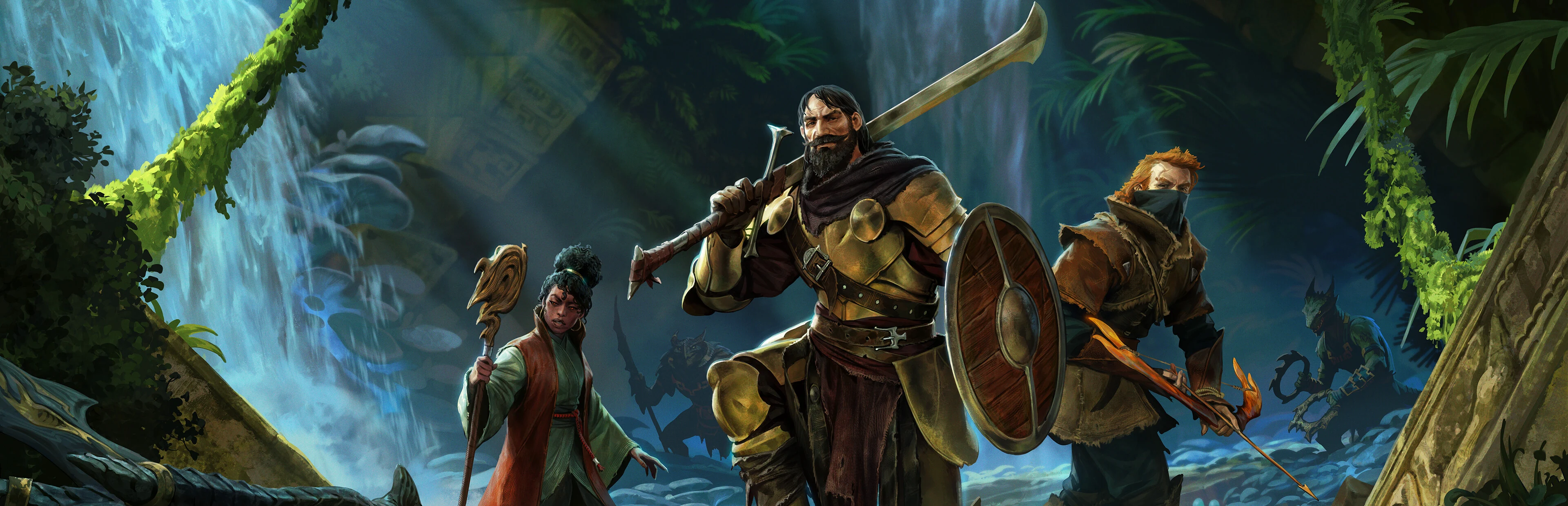
As one of Embervale’s Flameborn, you cross a ruined kingdom overtaken by the Shroud, reclaiming land through exploration, combat and construction. Flame Altars anchor buildable bases, rescued crafters open production chains, and upgrades to the Flame let you withstand deeper regions of the fog.
Enshrouded begins in Embervale, a kingdom brought low after its people pursued an alchemical substance called Elixir and unleashed the Shroud. The player is Flameborn, one of the few able to enter this corrupted fog, and wakes among the remnants of a civilization rather than in a functioning settlement. The world has a fixed landscape of ruins, caves, settlements, towers and ancient vaults to explore. Scavenger bandits and the Vukah warrior clan occupy parts of the surface, while Fell creatures and environmental hazards make Shroud-covered areas especially dangerous. Those factions give the player different opponents outside the fog: camps and settlements are not interchangeable rooms, and exploring the kingdom can mean confronting human groups as well as Shroud-born monsters. Notes and quest discoveries supply pieces of the history without turning exploration into a linear mission corridor.
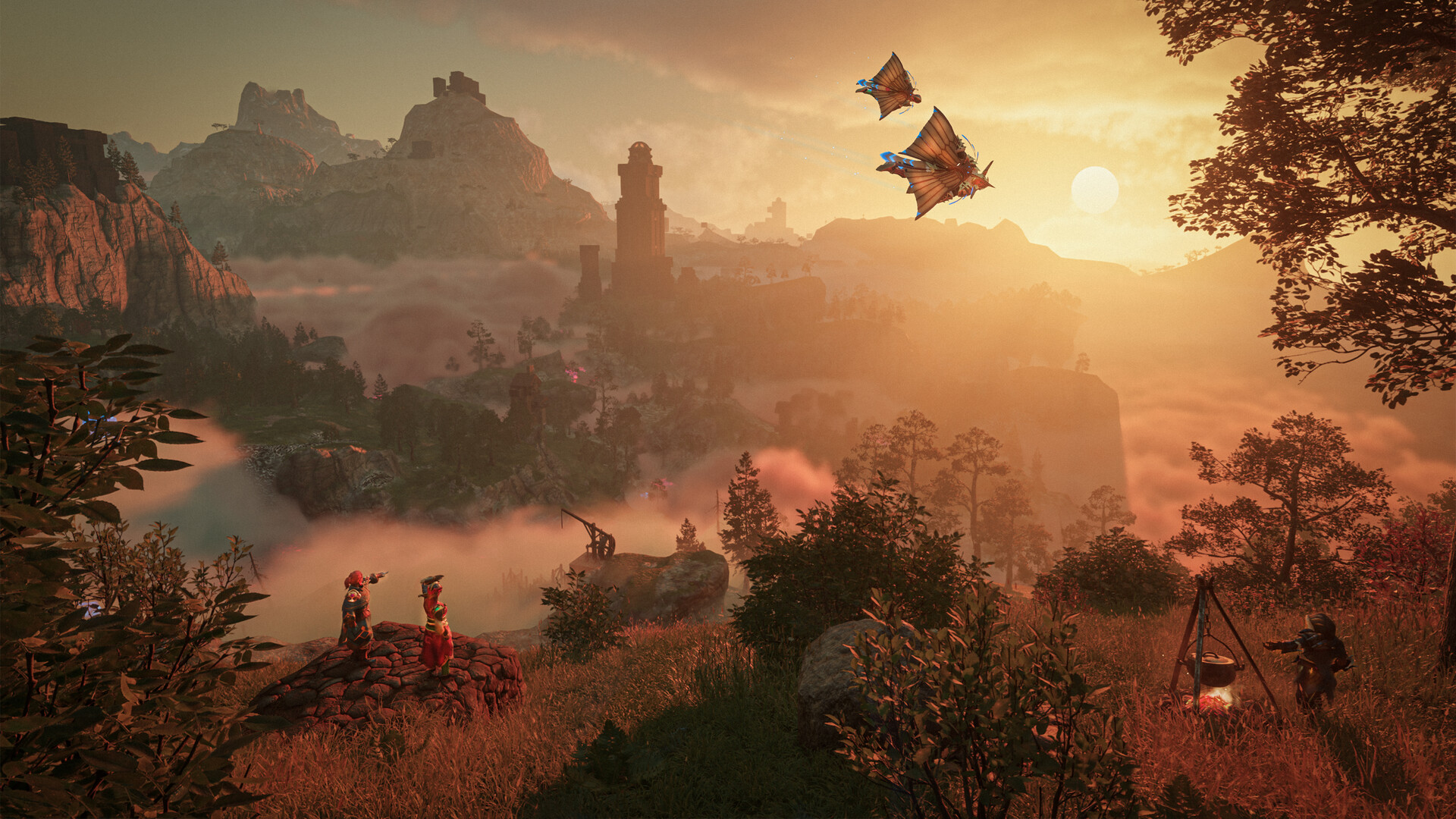
The regular loop is to leave a base, gather resources, uncover a new landmark, fight through its defenders and return with materials or knowledge that improves the next expedition. Movement is part of that loop: climbing, gliding and grappling open routes across cliffs, ravines and tall structures, while stamina affects sprinting, combat actions and traversal. Ancient Spires become valuable navigation points once reached, but reaching their upper levels involves platforming and environmental puzzles. A road is not always the fastest route when the terrain allows a glide into a valley or a climb to a higher ridge.
The Shroud changes exploration into a timed push. Flameborn can survive within it only for a limited duration, so the player chooses when to enter, what to carry and whether to continue farther after finding a resource or an objective. Shroud Roots and Elixir Wells give reasons to penetrate the fog, but enemies and poor visibility make the return trip part of the challenge. Strengthening the Flame at a base raises the world-facing Shroud passage level and extends the time available in the fog; this is distinct from improving an individual Flame Altar’s build area. The distinction means a larger home and broader access to hazardous zones come from separate progression tracks.
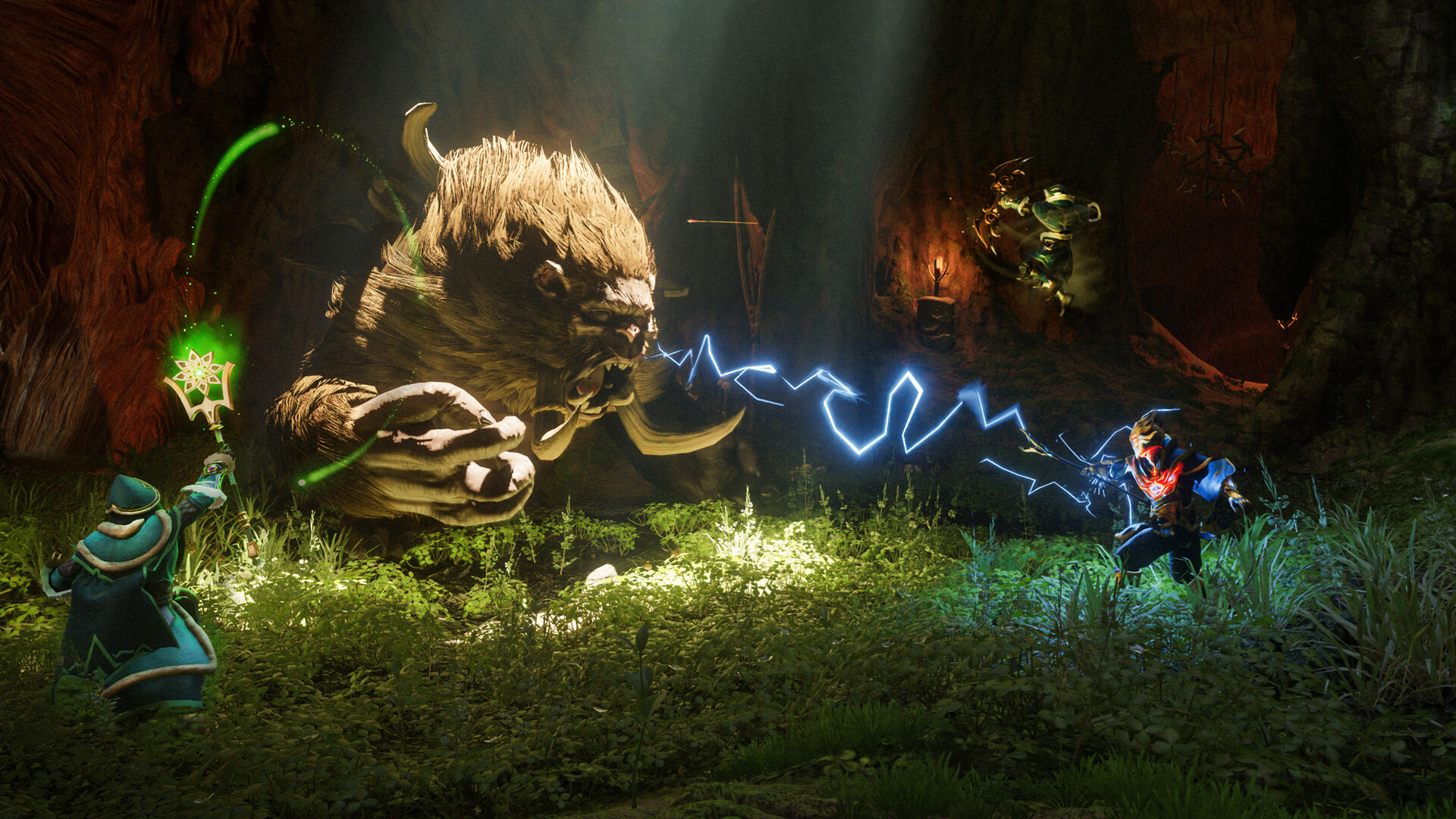
Combat centers on managing health, stamina and equipment against melee enemies, archers and larger bosses. Weapons include one-handed and two-handed options, bows and magical implements; blocks, dodges, charged attacks and spells suit different distances. Food is not a hunger meter: several food-effect slots let the character combine temporary stat bonuses from different categories. Armor and skills further direct the build toward melee, ranged or magic play. Skill points unlock a web of connected talents rather than a fixed class selection, and a character can spend in more than one branch, then reset points at a Flame Altar using Runes.
Flame Altars make both construction and expedition planning part of the same progression. Placing one claims a zone for free-form voxel building, storage and home facilities, while also creating a fast-travel point. Shroud Cores can expand that altar’s local building boundary; Sparks and gathered materials contribute to strengthening the Flame, which grants global benefits and permits higher Shroud regions. These functions are easy to conflate but serve different purposes. The player can build a central home for crafting and place other altars nearer distant areas, turning the kingdom into a network of staging points rather than a single settlement.
Rescued craftspeople make that home productive. The Blacksmith, Hunter, Alchemist, Carpenter and Farmer can be found through world quests and summoned into a sheltered base; each opens recipes and stations tied to a different material chain. The Blacksmith supports weapons and metalworking, the Hunter handles hides and textiles, the Alchemist processes Shroud materials and potions, the Carpenter expands storage and woodcraft, and the Farmer supports food production. Progressing those questlines often requires finding the ingredients or work areas that the next recipe demands. Improving a base therefore depends on exploration rather than only placing blocks or collecting generic experience.
Enshrouded supports solo play and online co-op, letting a group share exploration, combat and base construction. Players bring separate character builds into a shared adventure, giving a group different tools for navigating the same terrain or challenging a guarded ruin. Equipment still matters to each explorer, while constructed homes give the group a common place to prepare. The cooperative structure makes a base a shared workshop and a route network: one person can focus on crafting while others explore, but everyone still contends with stamina, hostile sites and the time limit in the Shroud. The world’s quests, crafters and terrain determine what becomes available, while the player decides how to shape a home and a build. Notes found in ruins, tombs and settlements can add context to a location, reveal points of interest or open a quest thread. That turns reading into part of the exploration loop: a scrap of local history may point toward a hidden room or a missing crafter’s story, giving the player a reason to inspect buildings instead of treating every ruin as a combat arena.
It has been in Early Access since early 2024 and leaves it on 15 October. What is here now is a survival game with a real building sandbox, a rebuilt skill tree, and difficulty settings that let you decide how much surviving you actually want to do.
What Embervale asks of you
Embervale is a fallen kingdom. The people who mined the earth for a magical elixir unleashed the Shroud instead, corrupted creatures came up with it, and most of the kingdom did not make it. You are Flameborn, one of the last, and the loop is straightforward: scavenge the ruins, fight what the fog left behind, and grow strong enough to go deeper into it.
The map runs from the sun-scorched Kindlewastes to the shadowed Revelwood, and later updates opened up more of it. The Water update added a high-level region called Veilwater Basin between the Blackmire and the Albaneve Summits, packed with beaches, forgotten temples and underwater ruins. Exploration is the spine of the game. Mountains, deserts and lakes all hide something, and Embervale is built to be wandered rather than crossed.
Building is half the game
The voxel tools give building a substantial role in Enshrouded. You shape the terrain as well as the structure, so a hall gets carved into a hillside or built out over a lake instead of dropped onto a flat grid. It is also where progression lives: the NPCs you shelter unlock workshops, and the workshops are where better gear comes from.
Gear runs on two kinds of effort. Spare weapons can be salvaged into Runes, and Runes are what upgrade armor, shields, wards, rings and tools. The upgrade specialists are split by class, so warrior gear goes to the Blacksmith, ranger gear to the Huntress and mage gear to the Alchemist. Worn equipment can be repaired at a Workbench without spending anything at all, which keeps the cost of trying a new weapon down to your time.
That combination is why the building half carries so much weight. A workshop is not a menu you unlock once; it is an NPC standing in a structure you designed, and each class specialist lives at the base you made for them. Progress and architecture feed each other, and the terraforming tools mean the answer to a bad hillside is to change the hillside.
Combat, and the freedom to avoid some of it
Combat is dodge, parry, skills and spells, and the game gives you three rough shapes to build inside: Wizard, Ranger or Warrior. Update 8 reworked the physical combat and rebuilt the skill tree from the ground up, so what you play today is well past the version that launched. Sword, shield, staff and bow all have their own upgrade tracks, and the class specialists mean each archetype keeps its own NPC at your base.
What Enshrouded does not do is force you to engage on its terms. Update 3 added difficulty presets, and they change far more than enemy health. Relaxed cuts the number of enemies and hands out more resources and loot, which suits anyone here for the hall rather than the fight. Hard makes what is left more aggressive. Survival is the punishing one, layering hunger on top and dropping your entire backpack when you die. A Custom setting lets you change around thirty separate options, and the presets apply to single-player, co-op and dedicated servers alike.
There is no PvP and none planned, so this is a co-op game in the strict sense. Up to 16 players can raid, build and battle together, solo play works offline, and you can run a persistent world on a dedicated server, including servers rented from inside the game through G-Portal. If you are running one, set a password.
Solo puts the same systems under one player's control. Without other players the fight pacing is yours to set, the difficulty presets do most of the tuning work, and the base becomes a single-player project rather than a shared one. Co-op lets the group divide construction and exploration work, including projects that use the water systems.
What two years of updates added
Eight named updates have landed since Early Access started: Hollow Halls, Melodies of the Mire, Back to the Shroud, Souls of the Frozen Frontier, Pact of the Flame, Thralls of Twilight, Wake of the Water and Forging the Path. Water arrived as a simulated system you can also use at home, flowing through gardens and rooms, and swimming down to the deep parts means watching a limited oxygen supply rather than holding your breath forever. The world gained new biomes along the way, and the social layer grew with it.
The other thing worth knowing is how configurable the whole thing became. Back to the Shroud introduced difficulty presets, and the Custom option exposes around thirty separate settings, from enemy counts to whether dying costs you your backpack. For a game this broad, that range is the difference between a base-building sandbox and a punishing survival run, and both are legitimate ways to play the same map.
Forging the Path is the one that matters if you are buying now, because it is the final Early Access update before release. It added a gear upgrade system, a physical combat overhaul, and the first version of Adventure Sharing, which is about letting players share what they have built. It also reset existing skill trees, so returning players should expect to spend a pile of refunded skill points before their first hunt.
The announced 1.0 release date is 15 October 2026. That means the timing question is really about which version you want: the last Early Access build, or the first 1.0 one a few weeks later.
Should you play it
If you want a survival game with a genuine building sandbox and you have one or two people to build alongside, Enshrouded is easy to recommend at this point. The systems are in place, the difficulty presets cover everything from relaxed construction to full survival punishment, and the co-op holds up to 16 players, giving a group room to divide the work.
Wait if you want a finished game today, or if you need PvP to care about a survival sandbox. Enshrouded is honest about what it is right now: the last Early Access version, weeks away from 1.0, with the systems already in place and one more release still to come. Go in knowing that and the timing question answers itself.
Go deeper with V4mp
- Developer
- Keen Games
- Genre
- Survival action RPG
Explore Enshrouded further
Explore the wiki for detailed reference pages on the game's world, systems, items and locations.