
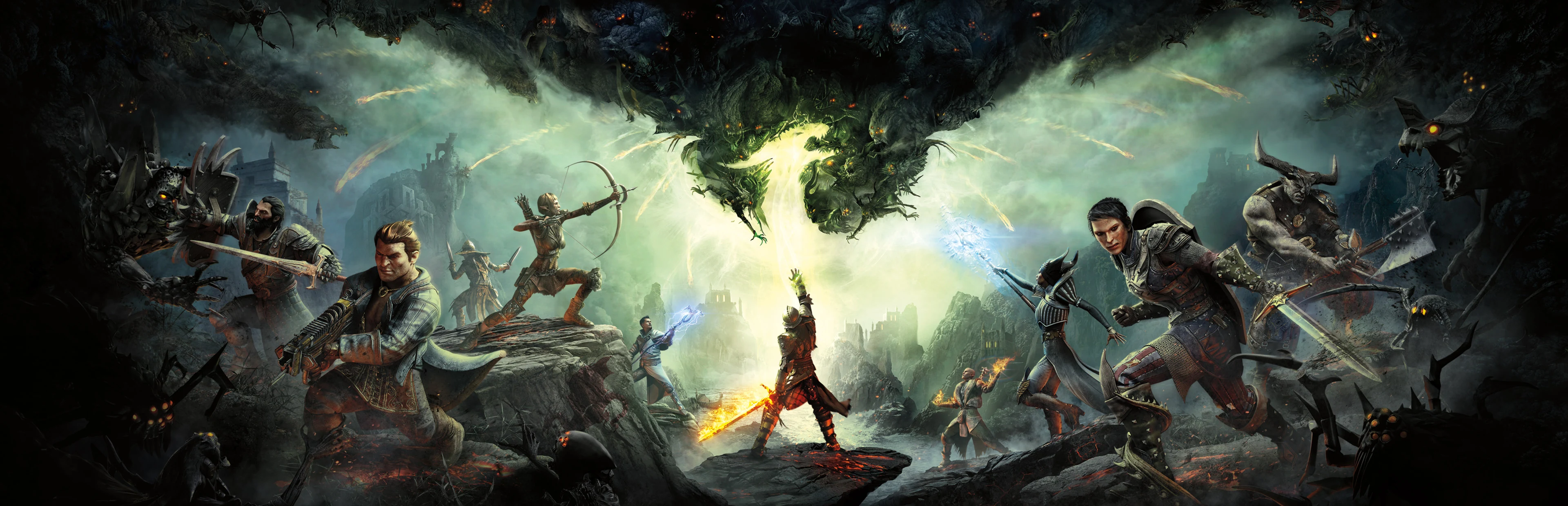
About Dragon Age: Inquisition
A cataclysm tears open the sky above Thedas, allowing demons to flood into a continent already divided by war. As the Inquisitor, you gather companions, investigate the crisis, close dangerous rifts, and build the Inquisition’s influence through exploration, combat, diplomacy, and decisions that affect allies and rival powers.
Dragon Age: Inquisition begins amid a catastrophe that leaves Thedas in turmoil. A breach in the sky allows demons to enter the world, while mages and Templars are already in open conflict and nations are turning against one another. The player takes the role of the Inquisitor, a survivor positioned to lead a new organization against the growing threat. The Inquisition is both a travelling party and a larger institution: the protagonist investigates disturbances in the field while companions and advisors help extend the organization’s reach across southern Thedas.
The campaign moves through a set of broad, distinct regions rather than one continuous continent. The Inquisitor and a small party travel across plains, forests, deserts, coasts, villages, ruins, and contested strongholds. Exploration reveals camps that serve as useful points of rest and travel, as well as rifts where demons emerge. Closing a rift is a recurring task, but each area also contains characters, local disputes, enemies, and paths into deeper locations. The party can encounter apostates, hostile creatures, and powerful dragons, with the surroundings affecting where a fight begins and how the group can approach it.
The Inquisitor’s party is assembled from companions with their own loyalties and perspectives. A small party travels alongside the protagonist, and the player can switch direct control among its members during combat. Warriors, rogues, and mages bring different weapons and abilities, allowing the team to combine defence, close-range pressure, ranged attacks, and spells. Companions respond to the Inquisitor’s choices and can approve or disapprove of actions even when they are not present. Conversations at the organization’s base and during travel reveal disagreements, personal concerns, and the relationships that form as the crisis continues.
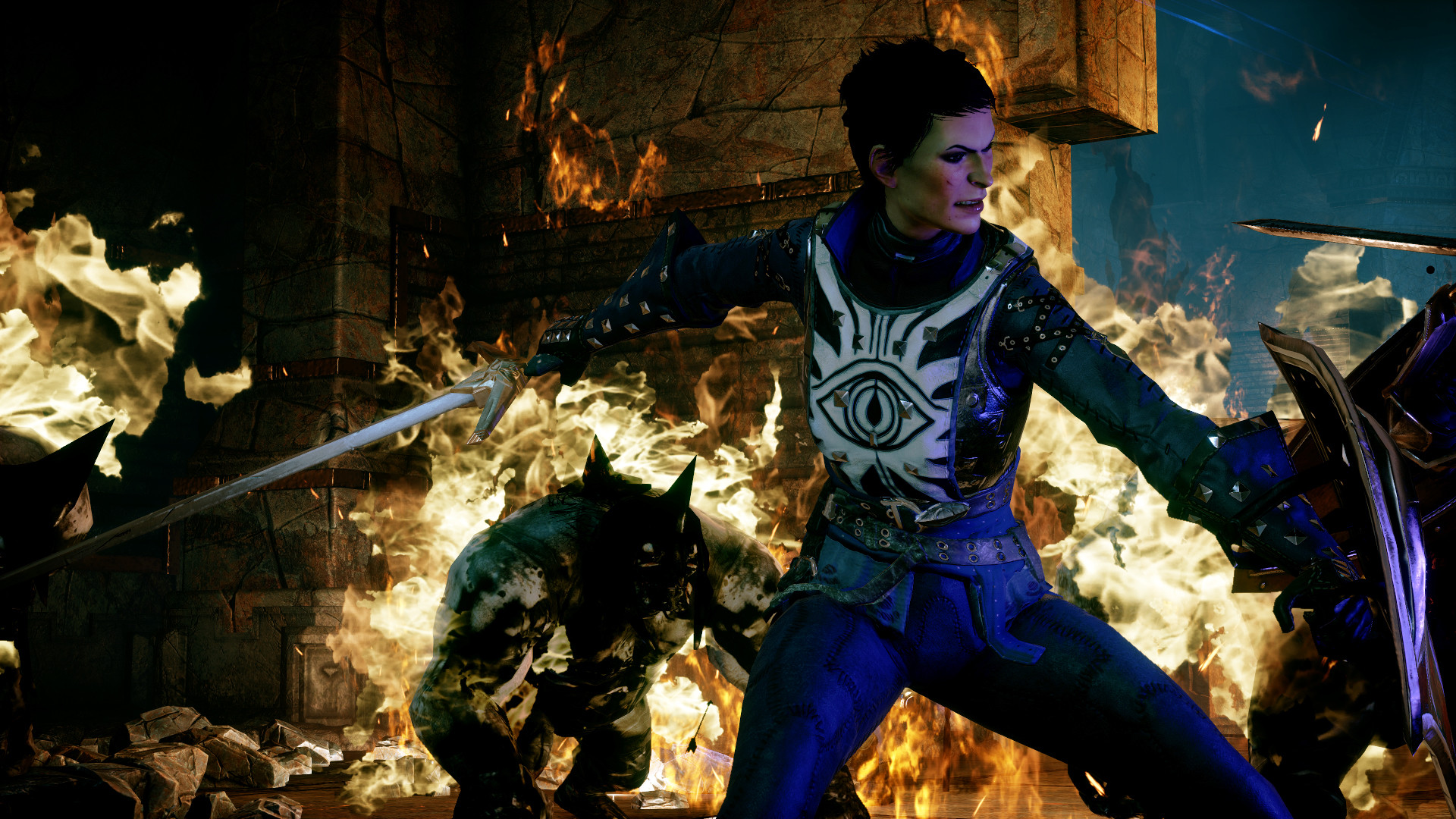
Combat supports both direct action and tactical direction. In the ordinary third-person view, the player can attack, evade, and activate learned abilities while the rest of the party fights under its combat behaviour settings. Tactical Camera pauses the battle and provides a higher view for selecting companions, targets, abilities, and positions; the player can then advance time to see the orders take effect. This is useful when a group faces a dangerous enemy or needs to coordinate its roles. Party members have their own ability sets, and the player can take direct control of any one of them to adjust the response in the middle of a fight.
Character progression comes through experience, ability points, equipment, and crafting. As the Inquisitor and companions advance, ability choices shape how each class contributes to the party. Weapons and armour can be created or improved from gathered materials, and crafted equipment can adjust a character’s strengths without changing their class. Potions and other consumables provide additional preparation for expeditions. Returning to a camp or stronghold gives the group a chance to replenish supplies and make equipment decisions before heading back into a region with new objectives.
The Inquisition’s headquarters gives the player a strategic role as well as a personal one. At the War Table, the Inquisitor and advisors review a map of Orlais and Ferelden and assign scouting operations or missions. Scouting can unlock new locations and costs Power, which the organization gains through major story progress and activities such as establishing camps, closing rifts, capturing keeps, identifying landmarks, or defeating dragons. Missions send an advisor and their network to resolve a problem, gather information, or use military force; the chosen advisor affects the approach and may influence the reward. Some missions take real time to complete, and their reports can provide resources or follow-up opportunities.
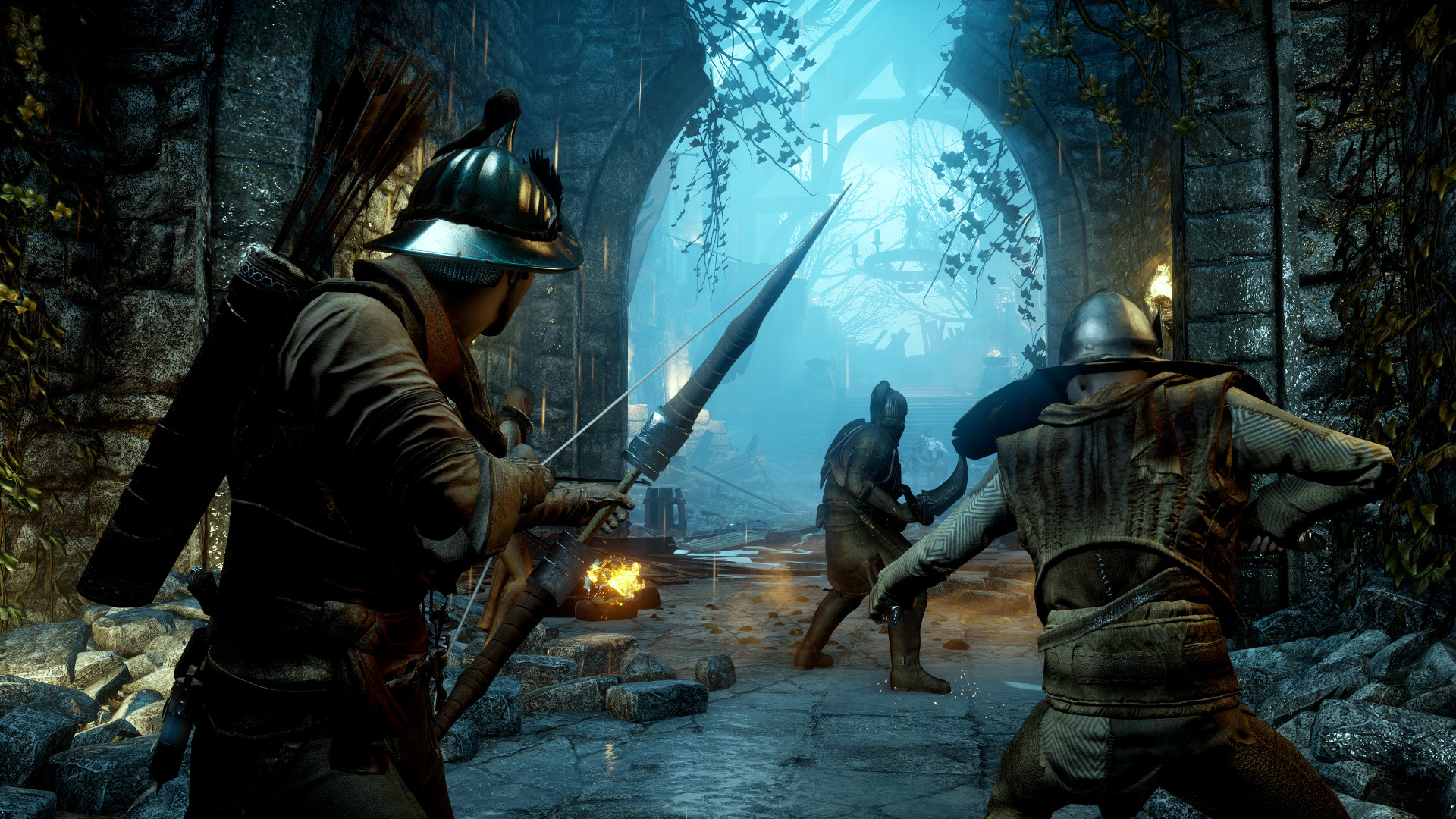
Dialogue and political decisions are part of the Inquisitor’s work. Meetings with local leaders, judgments at the stronghold, and conversations with companions ask the player to decide how the organization should act. These choices can affect relationships and how groups respond, while the protagonist’s race and class can shape some conversations. The campaign balances field operations with moments of negotiation: a leader may need to decide whether to offer clemency, pursue a diplomatic solution, or use the Inquisition’s authority. The resulting organization reflects both the allies it gathers and the methods it uses to face the crisis.
Ability trees make party development more specific than adding larger damage numbers. Active abilities spend stamina or mana and have cooldowns; passive abilities provide ongoing benefits, while upgrades alter techniques already learned. Some branches require an earlier ability before a later option becomes available. Class specialisations open further skills as the campaign progresses. The player can also adjust how companions behave without controlling every movement: settings include whom to follow or defend, how much stamina or mana to reserve, and when to drink a health potion. Choosing a potion reserve can stop a companion from consuming the party’s last supplies automatically. These settings let a group retain its planned roles between moments of direct control, while the player can still intervene when an encounter changes.
The three add-ons are inside the Game of the Year Edition, the old Deluxe extras come with it, and Trespasser is the one that closes the story rather than extending it. Here is how the pieces separate, and what the strategic view actually changes.
What the Game of the Year Edition includes
The edition gathers what used to be sold separately: the base game, the Flames of the Inquisition arsenal, armour and armoured mount, the Skyhold Throne with the Red Hart Halla and the Bog Unicorn, the three add-ons, Spoils of the Avvar with five mounts and two armour sets, and Spoils of the Qunari with an armoured war mount, armour sets and Skyhold items. On PC there is no separate add-on to buy alongside it, because the add-ons are the edition.
It is not the only package on every storefront, though. The PlayStation Store still lists a Deluxe Edition beside the Game of the Year Edition, so if you are buying on a console, check which one carries the add-ons before you pay. That is the difference that matters: the edition with Trespasser in it is the one that carries the whole story.
What each add-on is for
The three add-ons answer three different questions. Jaws of Hakkon follows the fate of the last Inquisitor and the powerful dragon he hunted. The Descent goes underground to find the source of the earthquakes threatening Thedas. Trespasser is the one that closes the story: you decide the Inquisition's final fate as new threats emerge.
Only the last of those is a finale, so treat the other two as places to go during the campaign rather than as chapters you must finish first. If the story is the reason you are here, the add-on order to care about is the one that puts Trespasser at the end, because it is the piece that resolves the Inquisition's standing rather than adding another region to it.
The co-op mode is a separate game
The edition carries multiplayer Deluxe Edition chests alongside the campaign gear; those chests belong to the separate co-operative mode. That mode was designed for up to four players, with PlayStation Plus required on PlayStation. Its current service availability has not been verified here, so treat this as a campaign recommendation. Online play is optional for the campaign.
Two practical points follow. Online features need an account and the code that comes with the licence, and online features can be retired after notice is posted. The edition also includes optional purchases of virtual currency, which is a multiplayer economy rather than a campaign one. Buy Inquisition for the campaign and treat the co-op as something extra that lives beside it.
The strategic view is the real choice
Combat hands you an optional overhead view: a god's-eye vantage on the battle where time stops while you plan, or the alternative of staying in the action and fighting in real time. It is a view rather than a mode, so the same fight can be taken either way, and nothing in the campaign forces you to slow it down.
What that buys you is the ability to place a party deliberately rather than react to whatever the camera gives you. If you enjoy reading a fight before committing to it, the strategic view is where Inquisition gives you the most control; if you would rather play it as an action game, the game will let you, and choosing that is a fair way to play.
You are the Inquisitor, not a distant commander
The campaign casts you in the title role rather than above it. You create your character, you lead a team of unique heroes through an open world, and you are in the fights with them rather than sending them off and reading the result. What the leadership framing adds is weight: the choices you make about the Inquisition decide who stands where in the story, and the roster you build is part of that rather than a separate resource list.
The three add-ons are where those decisions get their coda. Jaws of Hakkon follows the last Inquisitor, The Descent takes the Inquisition underground, and Trespasser is the one where the campaign reaches its end and the Inquisition's fate is settled. The rest of the content that came with editions past is in the box as gear, mounts and Skyhold fittings rather than as story.
Should you play it
Yes, if you want a long party role-playing game where the interesting choices are about the people around you and the fights can be planned as slowly as you like. Buy the edition that includes the three add-ons and you have the whole campaign in one purchase, since the base game's own conclusion is there and Trespasser is the ending that follows it.
Two things to know first. The Game of the Year Edition dates from 2015 and came to Steam in 2020, so its systems are of that era. And the co-operative half depends on an account and a service the publisher is entitled to switch off, so treat it as a bonus rather than as the reason to buy.
Go deeper with V4mp
- Developer
- BioWare
- Genre
- RPG
Explore Dragon Age: Inquisition further
Explore the wiki for detailed reference pages on the game's world, systems, items and locations.