
About Counter-Strike 2
Counter-Strike 2 is a round-based team shooter in which Terrorists and Counter-Terrorists contest objectives across compact maps. Players buy weapons and equipment between rounds, use movement and utility to control routes, and develop a public CS Rating through Premier matches.
Counter-Strike 2 is a competitive first-person shooter built around two opposing teams and short, objective-focused rounds. On bomb-defusal maps, Terrorists attempt to plant a device at a bombsite and protect it until it detonates, while Counter-Terrorists try to stop the plant or defuse the device. Winning a round through the objective or eliminating the opposing side contributes to the team’s overall match result. The game has no continuous single-player campaign; its settings are multiplayer maps where players repeatedly approach the same objectives from different sides, with weapons, money and team coordination changing each round.
Maps such as Dust II, Inferno and Nuke give those objectives distinct layouts and routes. A bombsite may be reached through a narrow corridor, an open lane or a connecting middle area, so teams have to decide where to make contact and how many players to commit to each route. Attackers can split their approach or use grenades to cross exposed ground, while defenders decide which angles to watch and where to leave room for a rotation. A successful push often depends on making defenders respond to one threat before committing to another. Map familiarity is not simply memorizing rooms; it includes understanding how timing and sightlines connect the routes.
The round economy links one fight to the next. Players earn money through the match and spend it between rounds on weapons, armour and utility such as grenades or a defusal kit. A team that wins can afford to maintain its equipment, while a lost round may force a more limited purchase or a coordinated decision to save resources for later. This creates a strategic layer outside the immediate gunfight: choosing to buy rifles and utility can strengthen the current round, but spending everything may leave the team poorly equipped if it loses. Team members often coordinate purchases so they enter with complementary tools rather than several mismatched individual loadouts.
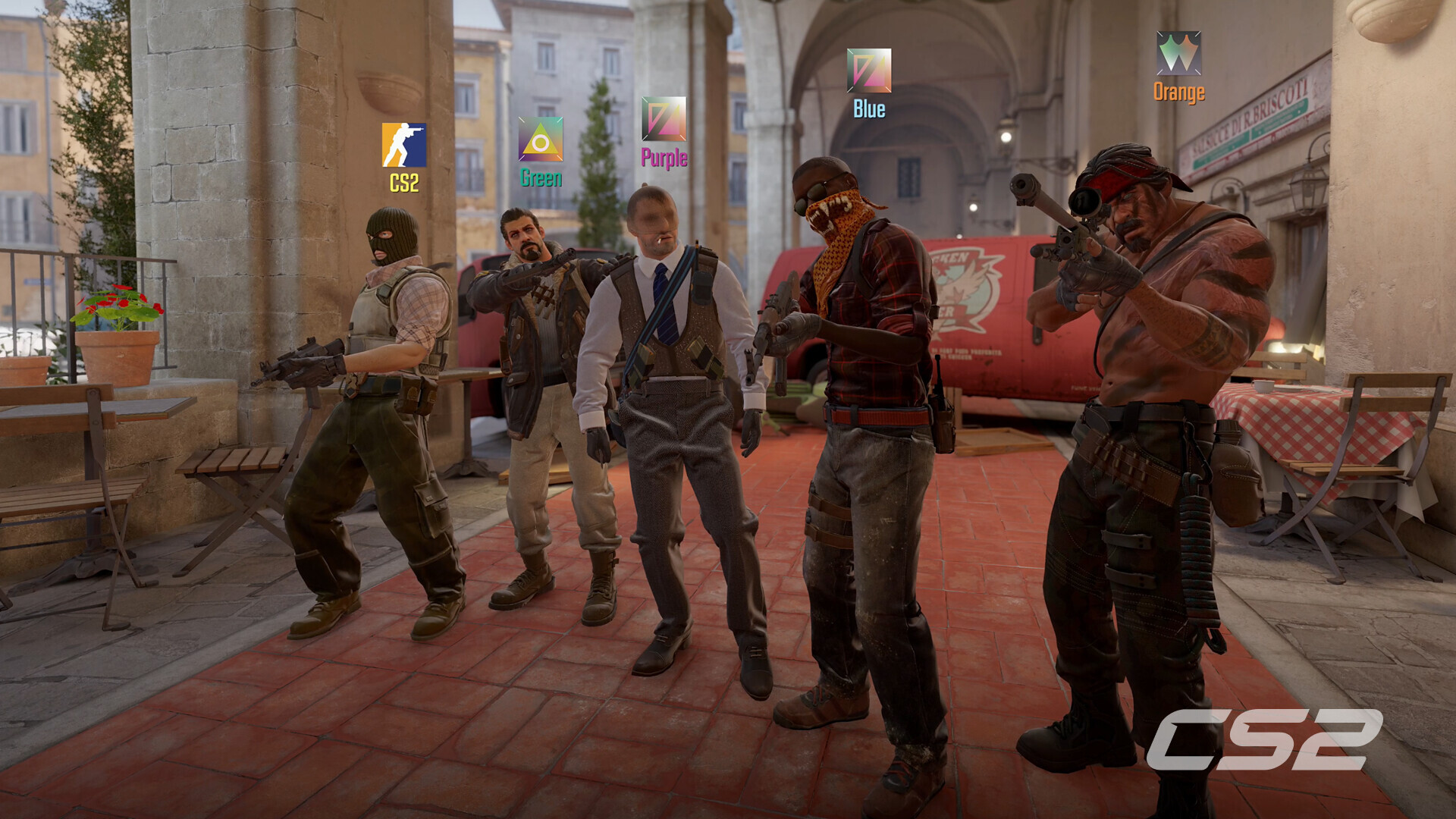
Gunfights reward accuracy, deliberate movement and awareness of sound. A player has to control when to fire, where to hold an angle and whether to move across an opening or wait for a teammate. Weapons have different roles and costs, so teams balance their available funds against the map and the task in the round. Grenades add another way to shape contact: smoke can obscure a route, while other utility can force opponents from cover or help deny a planted bomb. Counter-Strike 2’s smoke grenades are volumetric and interact with the environment, gunfire and explosions, making them temporary pieces of cover that can shift during a fight rather than fixed visual barriers.
For Counter-Terrorists, a defuse kit can shorten the time needed to disarm a planted bomb, making it a purchase with direct round consequences. For Terrorists, the plant changes the defenders’ priorities: they must retake the site or reach the device in time, while attackers use remaining utility and positions to make that approach difficult. A player may win an engagement and still lose the round if the objective is left unattended; likewise, protecting a teammate who is planting or defusing can matter more than chasing a distant opponent. The objective therefore gives each duel a practical context.
Premier is Counter-Strike 2’s competitive mode, with CS Rating and public global and regional leaderboards providing a visible competitive measure. Other match types offer a different commitment: the classic defusal structure rewards coordinated rounds, while faster formats and community-created content provide ways to practice or experiment. Faster formats and custom settings let players work with weapons and movement outside a full competitive match.
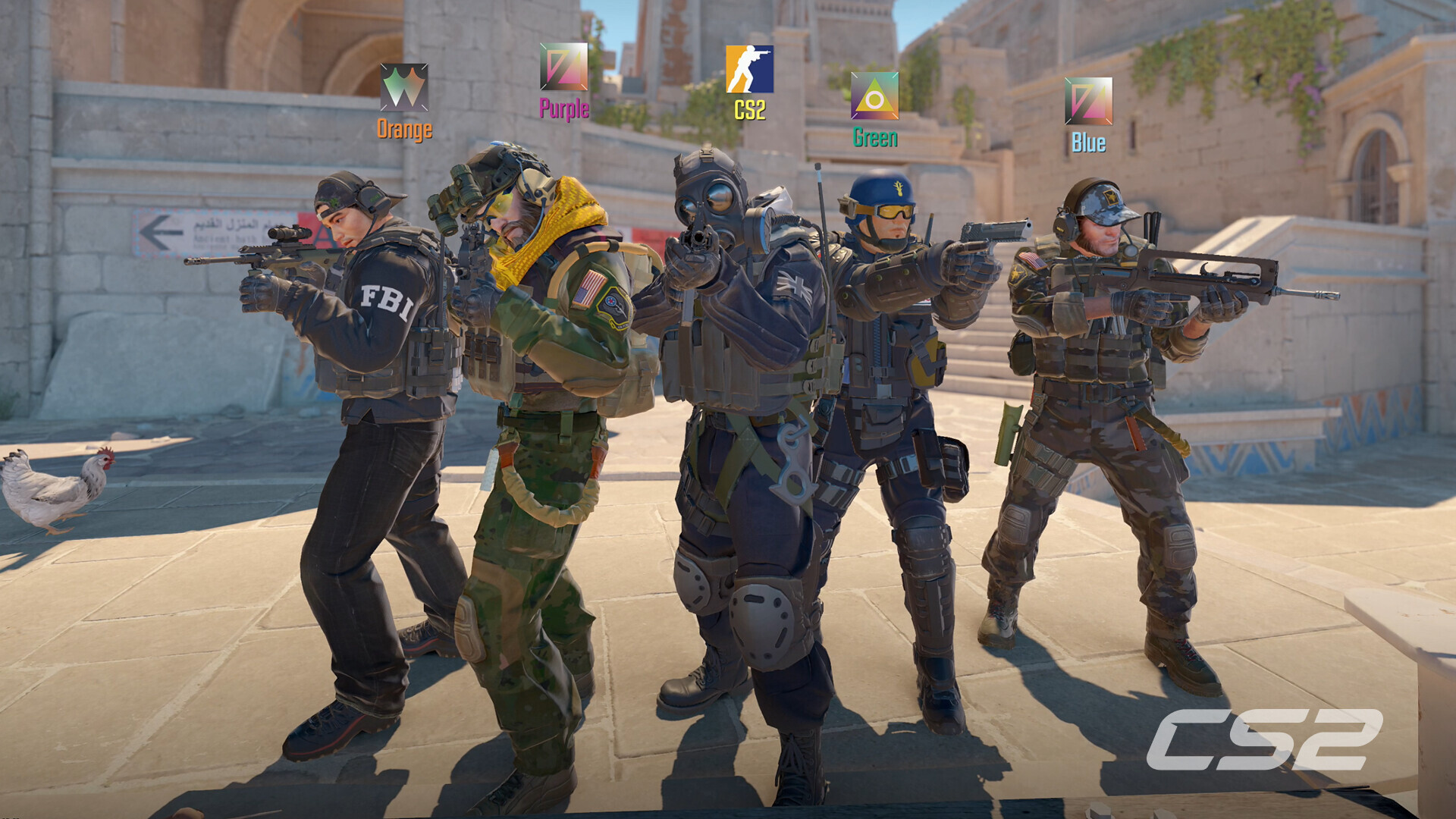
The selected loadout determines which weapons are available in the buy menu, adding preparation before the first round to the spending decisions made during it. Pistols, mid-tier weapons and rifles occupy separate categories, with side-specific availability shaping the options for each team. A player can choose a set that covers several price points rather than depend on being able to afford one preferred rifle. The buy interface shows teammates’ purchases, helping a squad coordinate equipment, and an unused purchase made in the current round can be refunded. Those features support the same shared economy described by the match: preparation establishes the available tools, while the money earned or saved determines which of them can actually be brought into a round.
Counter-Strike 2 also has a community-content layer beyond its standard matchmaking. Valve lists upgraded Community Workshop tools alongside the Source 2 changes, giving creators a way to work with maps and other game content. That supports a different kind of engagement from competitive play: a player can study routes on a community map, experiment with a custom setting, or build material for other players to explore. Workshop content sits alongside Valve’s standard matchmaking, not in place of the objective rounds and rating system. The distinction lets the game serve both players focused on measured competition and a community interested in creating or sharing new environments.
Most of what you play day to day is free, including the practice tooling. Prime Status is what changes who you are matched with and what you can be rewarded with.
What the free download includes
Counter-Strike 2 arrived as a free upgrade to Counter-Strike: Global Offensive on the Source 2 engine, and it kept the shape of the game people already knew: two teams, bomb defusal on maps with an A site and a B site, and round-by-round buying. Valve's own store description lists the technical changes that came with it, including dynamic smoke grenades, tick-rate-independent gameplay and redesigned effects and audio. Items from Global Offensive carried forward, so old inventories did not reset.
Prime Status is the purchase worth understanding before anything else. Valve's description is specific: Prime players are matched with other Prime players, and they are eligible for Prime-exclusive souvenir items, item drops and weapon cases. There is also a Premier mode that Valve's own update notes treat as the competitive headline, with seasons and a rotating Active Duty map pool. What the store description does not spell out is every mode gate, so check what your account can queue for in the client rather than trusting a figure from a guide.
The PC version runs on Windows and Linux, and the storage requirement is not small: Valve lists 85 GB of space for the Windows build, alongside Windows 10 and a DirectX 11-class card as the minimum. That 85 GB is a disk-space figure rather than a verdict on how the game runs; the processor, memory and graphics lines in the same listing are the ones to read if you are checking whether a machine can handle it.
Practice is part of the product now
Play, then Practice, gives you a map you can walk alone with Load Map Guides switched on, so grenade line-ups come with a teaching aid rather than a spreadsheet. In Competitive and Retakes, the official guides are limited to the first five rounds of each half, which is exactly where a default line-up is worth the most.
Retakes is a shorter, after-plant scenario with its own loadout cards, and it puts you in the situation a round often ends in: a planted bomb, a handful of players, and a decision about whether to hold or clear. It is a reasonable first stop if Competitive feels like a lot, but its economy is not a normal round's economy, so treat it as rehearsal rather than the real thing.
The economy is the mode
Every round begins with a spending decision that the last few rounds already made. The buy menu is the only price list worth trusting: it shows what you can afford now and what your team is actually holding, and Valve has changed individual weapon prices as well as the Competitive CT-side award for each Terrorist eliminated, so a chart copied from an older season can quietly give you the wrong answer.
The team calls matter more than any individual loadout. A full buy equips for this round, a save conserves for a later one, a light buy keeps a reserve, and a force buy commits money you will feel next round. None of those words has a universal price tag, so the useful question is where your team's money sits rather than where yours does.
Being well-equipped personally is not the same as your team being equipped, and the buy menu shows that mismatch before you commit to it. Reading that panel before you spend is the habit that separates a team that loses rounds to its own economy from one that does not.
Shooting, smokes and the moving parts
Valve keeps changing the parts of a fight that are easy to mistrust. Reloading was refactored so that the rounds left in a removed magazine are discarded rather than returned to your reserves, which turns topping up after a few shots into a real cost. Smokes react to gunfire and explosions, which means a smoked sightline can open or close mid-round rather than sitting still.
Maps keep moving too. Valve's update notes regularly promote community Workshop maps into the game and then revise them in place, and Cache replaced Overpass in the Active Duty pool when the current Premier season began. Practising one route properly is more durable than memorising a pool you cannot name.
Should you play it
Yes, if you can accept a game that will punish you for a decision you made three rounds ago. There is no campaign, but Prime accounts are eligible for item drops and weapon cases, with weekly rewards changing over time. These rewards should not be treated as guaranteed income. The core loop is unusually honest: better buying, better positioning and better crosshair discipline all show up as rounds you win.
Two things to sort out before you settle in. If you want the ranked ladder, sort out Prime Status early, because the pool you are matched in depends on it. And if you have bounced off the game before, start with Retakes and a practice map instead of queueing straight into Competitive, where the price of the bad habit you have not noticed yet is paid by four other people.
Go deeper with V4mp
- Developer
- Valve
- Genre
- Tactical shooter
Explore Counter-Strike 2 further
Explore the wiki for detailed reference pages on the game's world, systems, items and locations.