

About ARC Raiders
Become a Raider in a future Earth overrun by ARC machines. Scavenge a dangerous surface, weigh risks against loot, complete quests and improve gear in Speranza, then decide when to extract before machines or rival players turn a promising run into a costly loss.
ARC Raiders is a multiplayer extraction adventure set on a future Earth where a mechanized threat called ARC has driven survivors underground. Players become Raiders who leave the underground settlement of Speranza to scavenge the surface, bringing back supplies that help them endure and improve their next expedition. The world combines remnants of Italy's built environment with infrastructure tied to space travel, so a ruined town, open fields and industrial sites can all become routes through the same dangerous landscape. The central tension comes from two kinds of opposition: autonomous ARC machines patrol the surface, while other human Raiders may cooperate, ignore one another or compete for the same loot.
An expedition begins with a loadout choice and an objective, but the player must decide how far to push before extracting. Search buildings, containers and machines for materials, complete quests, and watch the surrounding activity for signs of enemies. Useful items can support crafting, workshop improvements and later runs; rare finds become a reason to take greater risks, while a full pack makes retreat more attractive. Extraction points provide the route home, yet reaching one safely requires crossing exposed ground and responding to threats that may change during the run. The game therefore turns a short scavenging trip into a sequence of judgments about noise, visibility, inventory space, healing supplies and how much progress is worth putting at risk.
ARC machines demand different responses, even when two encounters begin with a similar warning. The Firefly is an airborne attacker that closes in and uses a flamethrower to flush Raiders out of cover. An exposed fuel tank gives it a vulnerable point, while solid shelter or a Photoelectric Cloak can offer a way to escape its pursuit. The Comet presents another problem: it is an armored rolling explosive that tries to reach a position where its detonation can harm several squad members. Shooting can expose its inner machinery, giving a Raider an opportunity to damage what the armor protects. Spreading out changes how much of the group is threatened by one blast. These enemies make target recognition useful before the first shot; a corner that helps against distant gunfire can become a trap when a machine actively forces its way toward it.
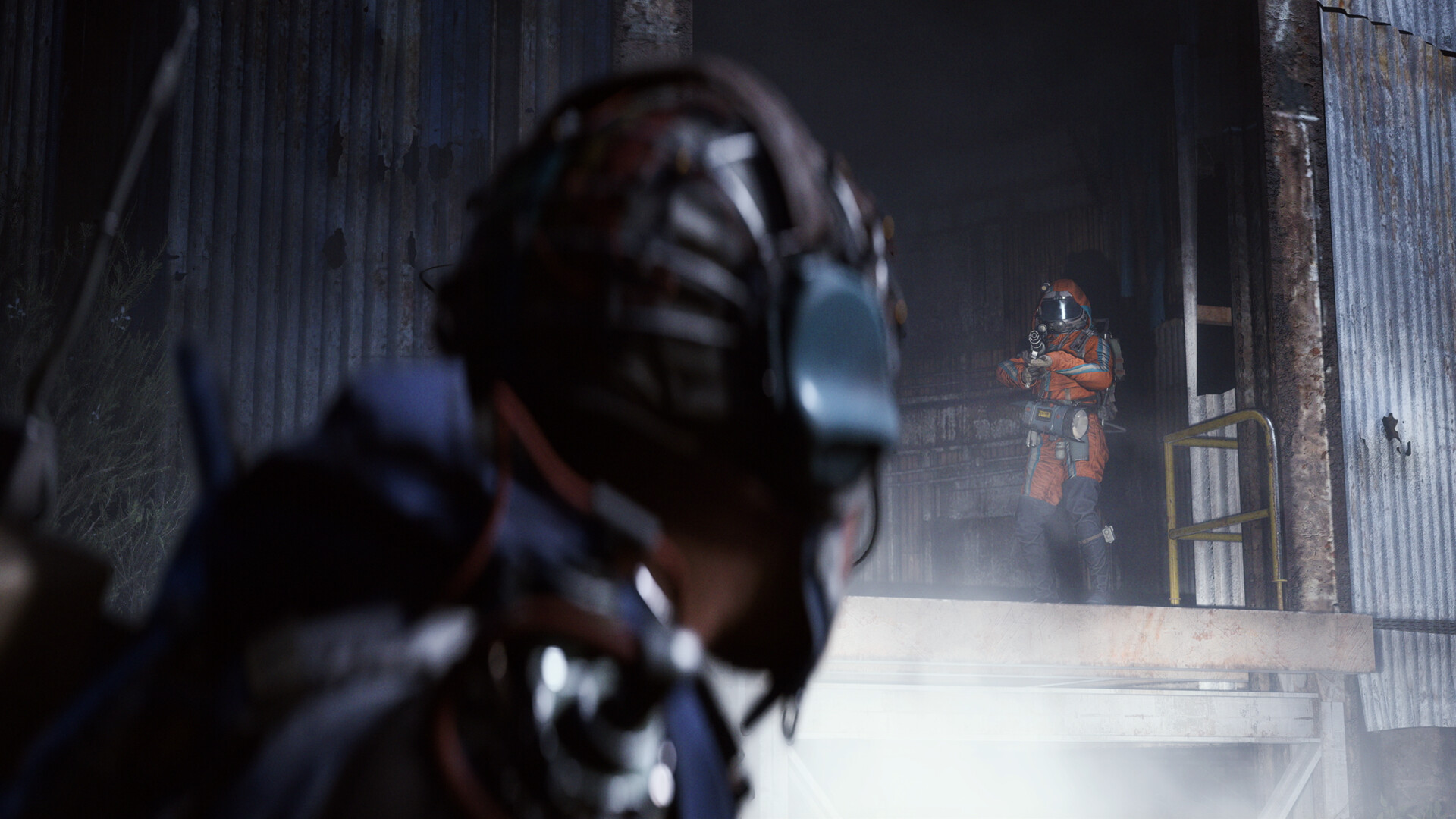
Surface journeys take place around the Rust Belt, whose locations give scavenging different surroundings. Dam Battlegrounds combines forests and swamps with apartments and old research facilities. Buried City puts hospitals, a mall and town squares among architecture covered by sand dunes, while Spaceport is a derelict launch facility with industrial sites and old technology. Blue Gate extends the landscape into mountain settlements, tunnels and underground complexes. These environments let a route move between exposed ground and constructed interiors rather than staying in one continuous arena. Map conditions can change the same location: Night Raids bring darkness and increased ARC danger alongside better loot, while events such as Harvest Season alter what a visit can yield. A familiar area can therefore become a different expedition without its streets or buildings being replaced.
Speranza provides the social and preparation layer. Quests from its residents introduce objectives, direct players toward new parts of the world and provide rewards that feed longer-term progression. Collected materials support workbench upgrades and gear crafting, while the companion Scrappy brings back resources over time. Players can tune a Raider's equipment and skills to match a preferred approach, whether that means carrying a dependable weapon, improving mobility or investing in survival. These choices do not remove the uncertainty of a surface run; they change the tools available when the plan meets a patrol, a locked route or another squad. The settlement thus turns extracted loot into options for future risk-taking.
Skill progression develops through three broad areas that shape physical capability, combat readiness and scavenging. The available skills can affect movement, stamina, weapon handling and resource gathering, letting players invest around their habits rather than follow a fixed character class. Quests and expeditions grant progress, and workbench tiers expand the equipment a player can build as needed materials are delivered home. Because a lost expedition can cost carried items, upgrading a workshop and keeping a usable loadout stocked are meaningful priorities. Squad members can divide responsibilities by bringing different weapons or tools, while solo Raiders must cover more needs themselves and rely on quiet routes or careful disengagement.
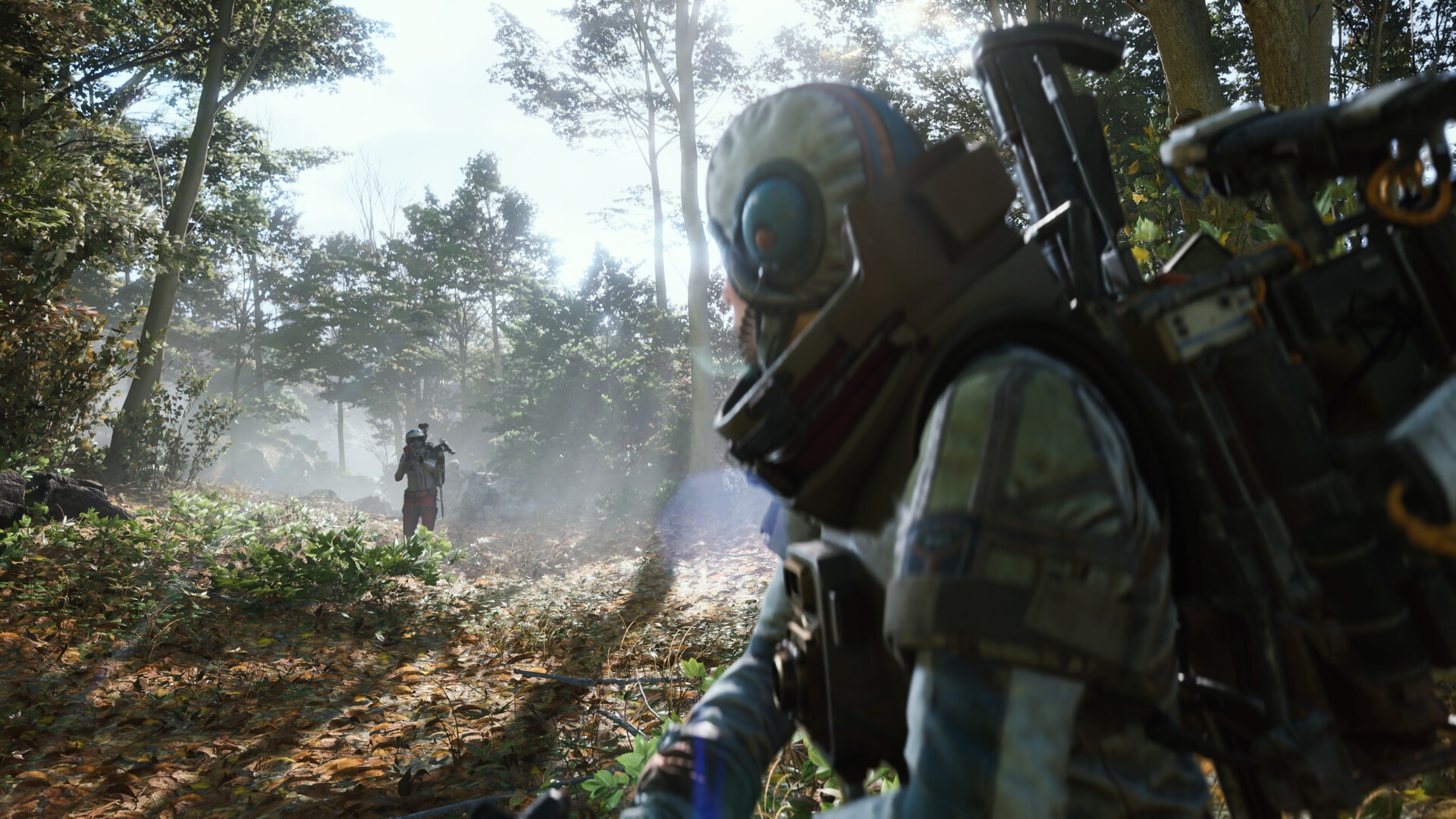
ARC Raiders also makes the human encounter part of its world rather than a separate match mode. Players may hear distant gunfire, see machines drawn toward activity or meet a rival team near a valuable location. A brief truce can allow groups to pass or coordinate against an immediate threat, but no encounter guarantees that agreement will last. Cross-platform social play supports parties across PC, PlayStation and Xbox, and the game can be approached alone or in a squad. Every run connects a personal decision about trust with the practical question of whether fighting is worth the noise and supplies it will consume.
The game also uses Expedition for a longer-term departure system, distinct from an ordinary trip to the surface. Raiders can contribute to a Caravan and sign up during a departure window to begin again with a new Raider and earned bonuses. The timing and rewards vary between departures, so completing preparations does not itself mean a player has signed up. Some account progress survives: cosmetics, Raider Deck progress, unlocked map regions, Codex entries and Raider Tokens are among the retained elements. The fourth departure introduced a reward change for returning participants, offering Blueprints and Raider Tokens instead of further challenge Skill Points. Permanent stash bonuses and previously earned benefits give that fresh start a different purpose from losing a loadout during combat. It is a choice about restarting character progress over a longer cycle, alongside the immediate work of scavenging and extraction.
Embark Studios released it at the end of 2025 on PC, PlayStation and Xbox. Since then the game has grown on free content updates and a store that refreshes most weeks, so the question is less whether there is new stuff than whether the trip itself is worth the gear you bet on it.
What you are actually playing
ARC Raiders is a multiplayer extraction adventure from Embark Studios, and the whole game sits in one idea: the action flows between the surface, ruled by lethal machines, and Speranza, the underground city where the Raiders live. You go up, you scavenge, you come back, and everything you carried is part of the bet.
It is a paid game rather than a free one, and the edition split is a straightforward one. The Deluxe Edition adds a Wanderer Set (the Valente outfit, the Pathfinder backpack and the Blanket Roll backpack attachment), a character cosmetic, a rapid-fire Finger Gun emote, a Cowboy Scrappy body type and skin, and 2,400 Raider Tokens. It is out on PC through Steam and the Epic Games Store, on PlayStation 5 and on Xbox Series X|S.
You can go in alone or with up to two friends, and the game supports cross-platform play across PC, PlayStation and Xbox, so a mixed squad is a normal way to play rather than a workaround.
The half of the game you play indoors
The loop has two halves, and the quiet one matters as much as the shooting. Back in Speranza you craft, repair and upgrade in your own workshop, which means many of the decisions that shape a raid are made before you leave the city. Scavenged loot has two destinations: sell it for coin, or feed it into crafting. Blueprints unlock new gear, and the workshop stations themselves are upgraded over time.
Progression reaches further than a gear treadmill. A skill tree branches into Survival, Mobility and Conditioning, Traders hand out quests with their own agendas, and Raider Projects are personal, staged goals: you work through a short track of objectives — hunting a set of machines, salvaging a list of parts — and claim the reward at the end of it.
Expeditions are the strangest of those systems, and the one worth reading twice before you sign up. Departing means starting again as a new Raider on a fresh run through the game — a voluntary reset you complete in order, inside a scheduled departure window. Not everything goes with it: cosmetics, Raider Deck progress, unlocked map regions, leaderboard position, Trials standing and Raider Tokens all carry over, and you can now choose to keep your quest progress instead of resetting it too. Departure rewards include extra stash space and bonus skill points. Check the current Expedition terms before committing to a reset. The fifth Expedition closed in September, and the studio has paused the system until early 2027 to rework the reward structure and the departure windows.
What a raid actually costs you
The stake in a raid is the kit you carry. Get knocked out far from home and you do not get to keep it: the fight is loud, and the Raiders who hear it are eager to claim what you leave behind. A successful extraction is what turns a run into progress; without one, the gear you brought is the price of the trip.
Getting out is its own choice. Maps run ordinary extraction points — the elevators and metro routes some of them open — and they also carry Raider Hatches that need a key you brought with you, so the quick exit is only quick if you planned for it.
Being downed and being eliminated are different outcomes. A downed Raider may still be revived, but remains vulnerable to other players. Once you are eliminated, the run is over. Choosing whether to attempt a rescue means weighing your teammate against the equipment you are both risking.
There is one small place your kit can sit outside the worst of it. The safe pocket is a slot treated separately from your backpack: keys you place there stay there even when you unload the backpack, and a weapon only fits if you are running the Safekeeper augment. That is a narrow protection for a few items, not insurance on the whole loadout.
If you would rather not risk your own gear at all, the game also offers a free kit — the free loadout a Raider can take instead of carrying in their own equipment. Two map conditions, Night Raid and Close Scrutiny, currently switch that option off with a "No Free Loadout" requirement, so those runs ask you to bring something you would miss.
Machines, and the other people
Two threats share the surface. ARC is the obvious one: the machines range from drone swarms to mechanical giants, each with its own tactics, and learning their weak spots helps you decide where to aim and when to commit. The other threat is a Raider with a rifle. The noise of battle carries, and the players who hear it are often there to claim what you leave behind.
Matchmaking is worth understanding, because it is not a simple skill ladder. Fairness is the stated goal — matching Raiders who have a similar likelihood of succeeding, and prioritising equal squad sizes where the game can — alongside enjoyment, which comes from grouping people whose recent playstyle sits close to yours on a continuous scale. A few common assumptions do not hold: there are no PvE-only lobbies where nobody can attack you, your loadout does not influence who you meet, looting a body does not either, and switching crossplay changes who is in the pool rather than the mood of the round.
That makes the solo question easier to answer honestly. Solo is a supported way to play, and equal squad sizes are prioritised where the system can manage it. If you want the harder version, there is a Solo vs Squad toggle that opts you into the squads queue for a bonus at the end of the round, win or lose. Either way it is the same dangerous map with the same players on it.
Maps and conditions
Four maps shipped at launch, and the world has grown since. Stella Montis, a research site in the mountains, arrived with the first November update, and the coastal Riven Tides map came with the sixth free content update.
Maps do not sit still once you know them. Evolving conditions change weather, enemies and mechanics between sessions — Hurricane, Cold Snap, the Locked Gate state, night raids and Riven Tides' Beachcombing sweep for buried loot are all states a map can roll — so a route you learned last week is not one you can run on autopilot.
The next update, Frozen Trail, is announced for 8 October: a frozen settlement at the edge of the Rust Belt, a large new ARC Operation aimed at experienced Raiders, and new machines at both ends of the size range.
What it costs, and what it gives back
You buy the game once, and the paid extras sit on top of that. The store refreshes most weeks, sometimes with something as small as two colour variants of an outfit already on sale, and Raider Tokens are the currency behind the Raider decks, bundles and other cosmetics it carries. Raider Decks have a separate progression system: they are progression tracks you unlock with the earned currency, Cred, and their pages can hold gameplay rewards as well as cosmetics. The free deck includes gameplay rewards; that does not mean those rewards are being sold for money.
New content, meanwhile, has been free. Riven Tides was the sixth free content update since launch, and the things around it — new maps, condition states, ARC types, projects, events and quality-of-life work — arrived at no extra charge. Events and Expeditions also hand out Raider Tokens and cosmetics for playing, so the paid currency is not the only route to a new look.
The tradeoffs are the live-service ones, plus a few specific to this game. Content updates now land twice a year, with smaller live updates for fixes, balance and the store in between. Trials runs in seasons, with a reward outfit you earn by climbing the ranks before the season's window closes. Cred is being retired with Frozen Trail, and any balance left on the account expires when that update lands. Expeditions are on hold until early 2027. If you like to set your own pace, the calendar here is one you will occasionally run into.
Should you play it
Yes, if the tension is the appeal. The machines are worth learning, the workshop gives extracted materials a purpose, and each loadout asks you to decide how much equipment to risk.
Skip it if losing a kit you spent an evening assembling sounds like punishment rather than tension, or if live-service calendars put you off. ARC Raiders runs on its own clock — Expedition windows, Trials seasons and a store that refreshes every week — and it is built on the assumption that you will make time for it.
Go deeper with V4mp
- Developer
- Embark Studios
- Genre
- Extraction shooter
Explore ARC Raiders further
Explore the wiki for detailed reference pages on the game's world, systems, items and locations.