
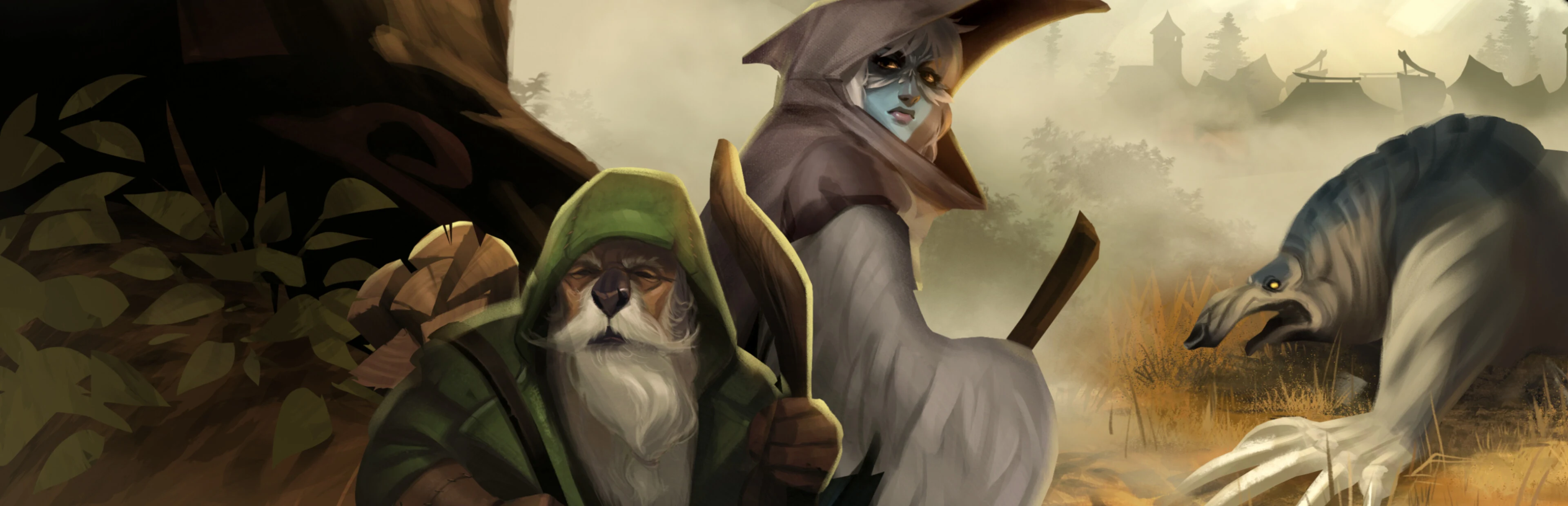
About Against the Storm
The base game is the whole roguelite loop, and two expansions have added species and biomes on top of it. Here is what the current purchase covers, and the rules a settlement actually runs on.
What you are buying
The base game is the loop: as the Queen's Viceroy you build a network of settlements, carrying the resources, upgrades and experience of past expeditions into the next one. That carried-forward progress is the meta-progression that upgrades the Smoldering City, not a warehouse you keep: the settlement is the round, and leaving it behind is the normal way one ends.
Two expansions sit on top. Keepers of the Stone adds the Frogs, a species that works well with stone masonry and rainwater and that refuses ordinary shelters, wanting its own upgradeable Frog houses, along with two biomes in the Coastal Groves and the Ashen Thicket and a set of new buildings, orders and risks. Nightwatchers adds the Bats, a metallurgy species that grows more resolute when its companions falter, plus the Rocky Ravines and the Bamboo Flats, and new deeds and world events. A Supporter Pack carries the soundtrack, 4K wallpapers, profile pictures, emoji packs, world-event illustrations and a 300-plus-page digital artbook.
The expansions and the free content updates that came with them have shipped on PlayStation 5, PlayStation 4, Xbox Series X|S, Xbox One and Nintendo Switch.
A city builder where the city is meant to end
The distinction between a settlement and the world-map cycle matters. A settlement is won by collecting Reputation, not by outlasting the weather. Reputation points unlock blueprints as well as progress, and they arrive from several sources at once: high Resolve is one source, so meeting a species' needs can directly advance victory.
The clock is the Queen's Impatience. It climbs over a settlement, it has a maximum, and filling it starts a Grace Period rather than ending the run on the spot. Villagers dying or leaving push it up. The Blightstorm is a different thing again: it is the cycle that closes around the whole expedition and reshapes the world map between settlements. That is why the same game can promise the destruction of everything except the Smoldering City and still be a roguelite rather than a one-city survival game.
Hostility is the third pressure, and the one you steer directly. It is the forest's answer to what you do, fed by the woodcutters you assign, the years that pass, your population and the glades you open, and the Storm is the season where that pressure lands on Resolve. Low Resolve is how you lose people, and lost people become Impatience. Hostility is a dial you manage, not the timer that ends the run.
Species, needs and the hostility of the forest
Humans, beavers, lizards, foxes and harpies make up the base roster, and each species brings its own specialisations and demands, from housing and culinary preferences to taste in luxuries and recreation. Species have distinct production and comfort bonuses, so a job can offer an efficiency benefit or help a worker's Resolve. Keeping several of them content at once is the core balancing act, and favouring one raises its Resolve at the expense of the others.
The wilderness is the other pressure. Assigned woodcutters contribute hostility alongside opened glades and elapsed time, the forest holds ancient threats as well as treasure, and the Ancient Hearth needs a firekeeper and usable fuel to keep spirits from collapsing when the Storm arrives. Sacrificing wood or coal at the hearth holds hostility down while it burns, which is a real decision rather than free relief: it spends the same fuel the hearth needs to keep running.
Blueprints, seasons and the run
You do not get every building. Blueprints arrive through Reputation rewards and offers, so each settlement is assembled from the rosters and perks you happen to hold. Cornerstones are a separate choice, a yearly decision about how the settlement will work rather than what you can build, and the Queen's orders are objectives you take on rather than structures you place. The three systems are deliberately distinct, and a run can go badly wrong by treating them as one.
The weather gives the year its shape: Drizzle to plant, Clearance to harvest, Storm to plow and prepare for the next cycle. A farm finished in the wrong season is a plan for next year rather than food now, and crops need workers available when harvest arrives.
Difficulty runs from Settler through Pioneer and Veteran to Viceroy, and the Prestige ladder stacks modifiers on top of that, with additional restrictions and pressures at higher levels. Our own Against the Storm guides are written for ordinary base-game settlements on the standard ladder; they are not written for Prestige runs, which change the terms you start on.
Should you play it
Yes, if you like the decision-making in a city builder more than the part where you look after one city forever. Against the Storm is built around short, sharp settlements, and there are several ways to get out of one: Reputation from Resolve, from orders, from events and from the glades you open, plus the Sealed Forest's own win condition of reforging the Seal instead of collecting everything.
Go in knowing it is a roguelite. You will lose settlements, the map will hand you problems you did not choose, what the Trader brings next year is not something you can plan around, and the point is how well you adapt rather than whether you can build one perfect town.
Go deeper with V4mp
- Developer
- Eremite Games
- Genre
- City builder
Explore Against the Storm further
Explore the wiki for detailed reference pages on the game's world, systems, items and locations.