
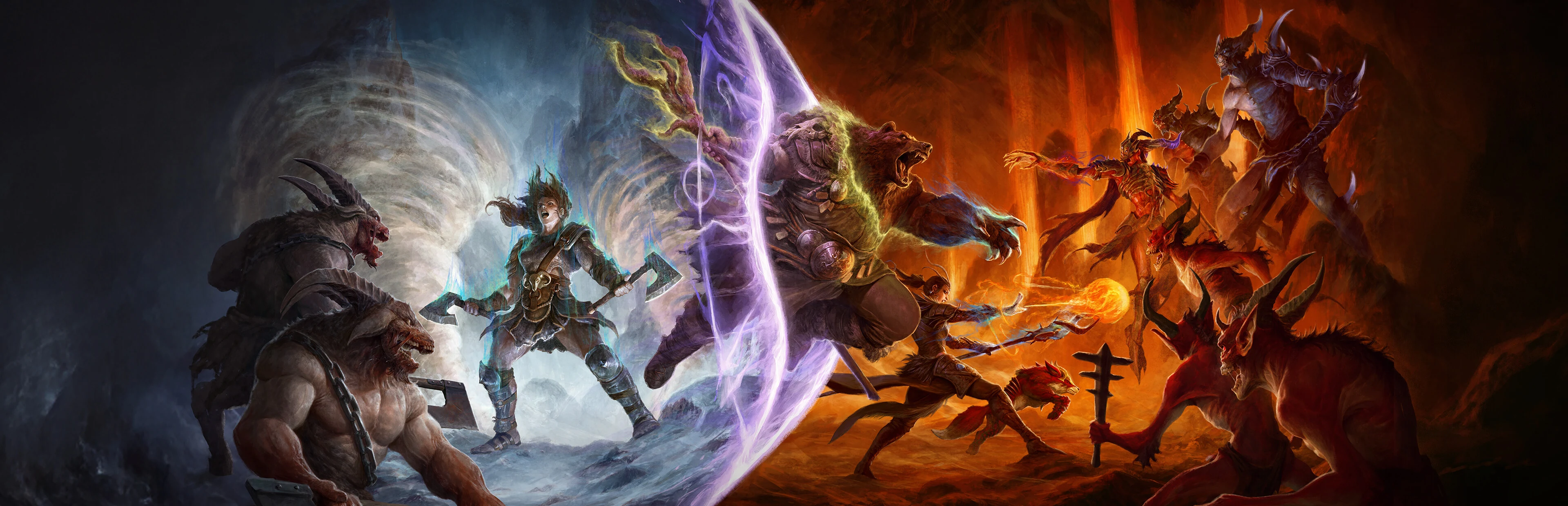
About Diablo IV Season 15
Season 15 went live on 15 September 2026 with patch 3.2.1, timed to thirty years of Diablo. Most of what it offers is history, recreated. One part of it isn't, and that's where the season earns its keep.
What you're doing this season
The seasonal questline opens with the dead rising out of Pandemonium and Deckard Cain's soul returning with bad news. Three dark wanderers have come back, each one a former vessel of a Prime Evil, and each leaving a trail behind them. You follow those trails into their pasts and fight the things that shaped them.
That thread runs through the series' own landmarks, which is the anniversary conceit made literal: an echo of Diablo beneath Tristram Cathedral, Baal at Arreat Summit, Mephisto inside the Durance of Hate. If you have played any of the earlier games, you'll recognise the geography before the fight starts. If you haven't, the season will explain enough to keep up but won't hit the same way — and it's worth being honest that a good chunk of this season's appeal is aimed squarely at people who were there.
The Splinter is the actual season mechanic
Finishing the questline nets you three Splinters of Evil, and you pick one Prime Evil's power to carry. That choice is what the season is built on. Taking a Splinter makes you a dark wanderer yourself — an Iconic Power tied to that Prime Evil erupts periodically — and your reputation grows through the activities associated with whichever one you chose. Modifiers and upgrades come through War Plans.
What makes it more than a themed buff is that the choice is reversible on your terms. You can switch which Splinter you bear by returning to the largest Waking Nightmares, so committing to one path doesn't lock you out of seeing the others. That's a better arrangement than most seasonal identities, which tend to be a single global modifier you either like or endure. Choosing between Diablo's, Mephisto's and Baal's power and being able to change your mind is the most interesting thing here, and it's the part we'd point at if you asked what Season 15 does that the last few didn't.
The supporting changes are mostly plumbing
Around that, the season adds quality-of-life rather than new modes. Rebirth lets an existing hero begin again in the Seasonal Realm. There's a Horadric Post reward track, new Unique Charms for buildcrafting, and Legacy Uniques returning in some form. Outside the season proper, Runewords have been added, Solo Self-Found mode is available again after being switched off briefly, and gold is easier to come by than it has been. The 30th-anniversary package includes a Witcher 3 crossover and the usual cosmetic avenues through Twitch and Game Pass.
The patch notes are where the balance story sits, and they read like a correction pass. Barbarian's core stat scalar drops from 1.1 to 0.8 — damage per ten points of Strength falling from 1.1% to 0.8% — with the notes saying outright that the class has been strong for a couple of seasons. The rest is a long list of fixes to specific Uniques that weren't behaving: Stone of Jordan's interaction with Holy damage, Leoric's Crown's enchanting and transmog, Crown of Lucion's activation, Nemesis Bracers failing to spawn elites at shrines, In-Geom's cooldown sitting at 12 seconds instead of 15. There's also a fix for Waking Nightmare portals appearing during prologue quests and letting players skip campaign content by accident. None of it is glamorous, and it's the sort of list a season needs more than it needs another mechanic.
The pulse
It's early — the season is days old as we write this — but the shape of the reaction is already visible. The class to watch is the Warlock, which was putting up Pit 150 clears within the first days and has had to be treated as the benchmark rather than a novelty. Gold being easier has been read as a deliberate correction to a longstanding complaint rather than a problem, and the Tree of Whispers fix and restored Solo Self-Found option were both greeted as overdue. The sceptical reading of the season is that it's a greatest-hits tour that leans on recognition, and that judgment will depend entirely on how much the Splinter mechanic changes a run after the first week. Nobody has settled that question yet, including us.
Should you play it
Yes, if you have history with the series. The locations are the point, and seeing Tristram, Arreat Summit and the Durance of Hate rebuilt inside Diablo IV is worth the trip on its own. The Splinter system is a genuine improvement to how a seasonal identity works, and the patch notes are doing real housekeeping rather than moving numbers around to look busy.
Less urgent if the anniversary angle means nothing to you. Without that hook, this is a competent season with one good idea, a reward track and a lot of bug fixes — which is a normal season, not a landmark one. If you were hoping the 30th anniversary would bring something structurally new, the honesty is that it brings a themed questline, a switchable power, and a tidy-up.