
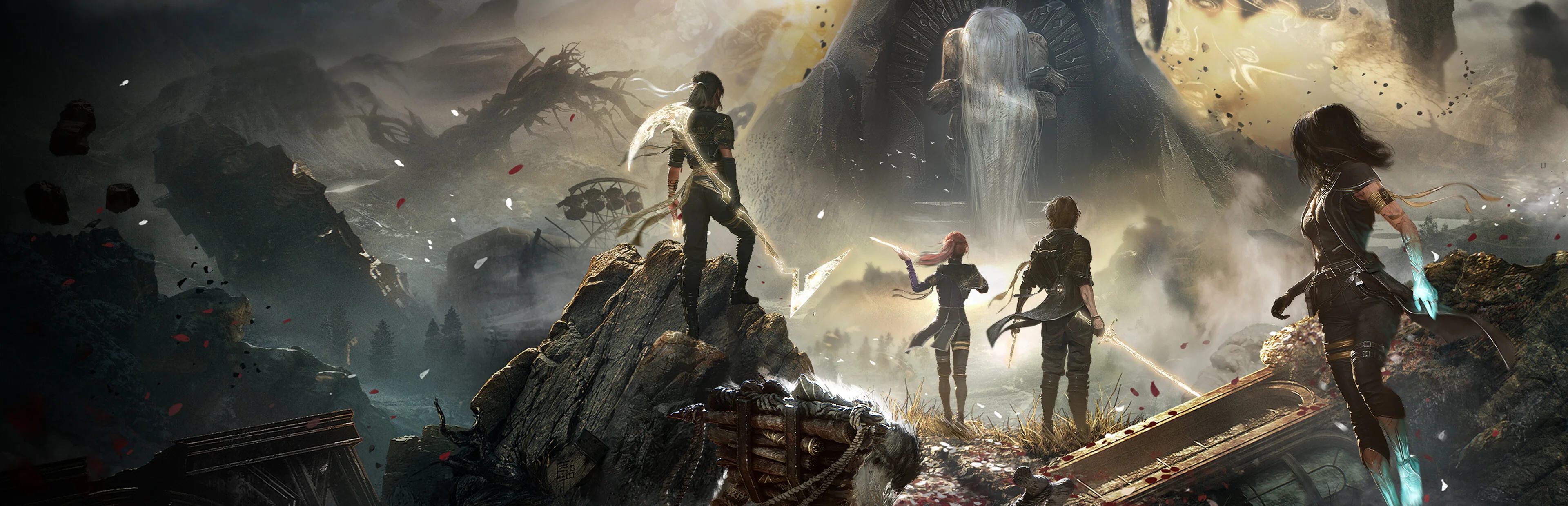
About Clair Obscur: Expedition 33
Sandfall Interactive's debut splits the turn in two: your half is a command menu, and their half is a reaction test. Both have to work for the fights to make sense.
The turn is not a pause
Your turn is for spending: a basic attack that earns you a point of the action currency, a skill that spends several of them, a free-aim shot from your weapon, or an item. Free aim is where the aiming lives, and every shot costs a point, so picking out an enemy's weak point is a purchase rather than a free bonus. The enemy's turn is where your hands are. Dodging, parrying and the occasional jump all happen in real time, and they are not equally hard. Dodging has the widest window and is the one to learn first. Parrying uses a tighter timing window, refunds a point when it lands, and counters for a heavy hit if you parry an entire combo. Some ground attacks cannot be dodged or parried at all and are asking for a jump instead. The studio's own description of all this is that real-time actions enhance the heart of turn-based combat.
That has a knock-on effect on how the game feels to lose. If you drop a fight, the usual questions apply, but so does a new one: whether you read the pattern or your build was wrong. The rhythms are part of the kit, which means practice counts alongside levels and gear, and the two halves of your turn feed each other, because a parried combo hands you the action points that your skills run on.
A roster you choose from
The party layer is where the numbers live. You build a party out of a roster of six playable characters rather than fielding all of them, levelling them and equipping gear, stats and skills, with character synergies as the thing to chase. The group you take changes as the story goes, so the same question keeps arriving in a new shape: who is actually earning their place, and what does the rest of the group lose if that changes.
Pictos, Luminas and the build layer
Pictos are the equipment that carries a build. Each one grants a passive ability and a bonus to two stats, and a character can wear three at a time. Fight four battles with a Picto equipped and its passive is learned as a Lumina, a version that drops the stat bonus but can be worn by anyone in the party who has the points to afford it. Those points come from levelling and from a resource you can trade for more of them at camp, and the cost of a Lumina depends on how strong the passive is. Two rules keep it honest: a Picto can only be etched onto one character at a time, while its learned Lumina can be used by several characters; the same character does not gain the passive twice by combining both forms.
What that produces is a build layer where the interesting decision is not which item is strongest but which small effects you can afford to stack. Pictos also have levels, climbing well past what a first playthrough will see, and the higher-level versions drop from harder fights, so the same passive can be worth chasing twice.
What the free updates added
The substantial post-launch addition is Verso's Drafts, a new playable environment on the world map beside Lumière that opens up late in the story and needs one of your companion travel abilities to reach. It arrived in a free update alongside photo mode, new costumes for every member of the expedition, new boss fights at the top of the Endless Tower, and a second chance to collect journals that were previously missable once you left the prologue. The game has also been localised into more languages since launch.
There is also a useful quality-of-life layer that speaks to how heavy the fights can get: you can retry a battle from the pause menu or abandon one entirely.
What you are buying
The base game is the whole story and the whole roster. The digital Deluxe Edition adds the Flowers collection of outfits and hairstyles plus two character-specific costumes, so the difference between versions is cosmetic rather than structural. On PC the listing asks for a 64-bit Windows system, 55GB of storage and an SSD, and states plainly what the two specification tiers are for. The publisher sells the game on Xbox Series X and S, PlayStation 5, Steam and the Epic Games Store. It also flags adjustable difficulty, which matters more here than in most turn-based games, because what you are tuning is how tight the dodge and parry windows feel and how much of your own turn the timing prompts ask for. Those prompts are on by default and can be switched off, but defensive dodges and parries still require timed input.
Should you play it
Yes, if you like turn-based combat but want the turn to demand something from you. The command menu and the real-time defence layer share the fight rather than taking turns off each other, and the Picto and Lumina rules underneath are deep enough to keep rewarding a second look.
Skip it if you want a turn-based game you can play at reading pace, because the defence asks for your hands on every enemy turn. Skip it as well if you want a party you can ignore, since building around a roster of six rather than a fixed group is the ongoing homework.