
About Zombie Army Trilogy
Zombie Army Trilogy is a third-person horror shooter set in a World War II Germany consumed by an occult undead army. Its three campaigns combine two remastered chapters with a new conclusion, while solo play or four-player co-op pits survivors against zombies, armoured skeletons, and supernatural soldiers. Horde mode adds five maps of escalating waves.
Zombie Army Trilogy takes place in an alternate version of the Second World War after occult power turns the conflict into an undead catastrophe. The campaign setting is Germany in ruins: irradiated streets, shattered buildings, demon-infested districts, and other spaces where the dead have overrun the remaining human world. The story follows the effort to halt the force behind the outbreak, with the demonic Führer as the ultimate threat. The enemy force is a legion of undead super soldiers whose danger threatens to overwhelm the whole of Europe, giving the movement through ruined Germany a continental scale. Rather than a single new sequel chapter, this edition gathers three connected campaigns: remastered versions of the first two Zombie Army games and a new third campaign that brings the series’ original arc to its apocalyptic conclusion. The collection therefore moves through a fifteen-mission progression, returning to earlier parts of the struggle before continuing into the added final chapter.
Each mission is a linear third-person combat journey through a succession of threatened spaces. The player advances through ruined streets, interiors and defensive positions, fighting through groups that can arrive in overwhelming numbers. Rifle fire and careful shots remain central, but the encounter design also asks the squad to manage close-range pressure, use explosives and exploit traps rather than rely on one weapon at every distance. The four-player format lets a group tackle any campaign mission together, while the same missions remain playable as a solo experience. The shared structure is built around moving forward under pressure: clear a route, keep the advancing horde from surrounding the survivors, and continue deeper into the campaign’s occupied territory.
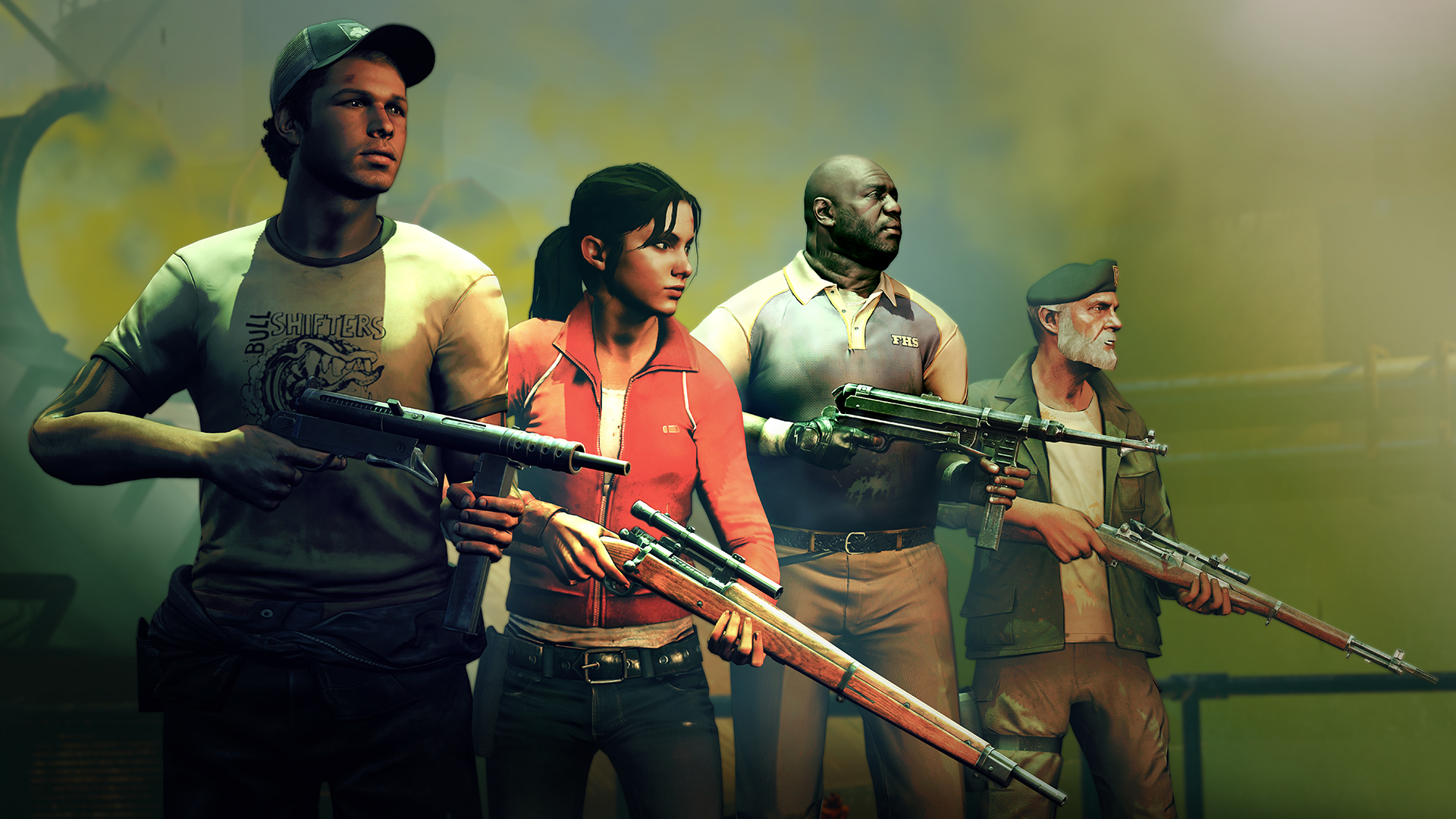
The roster and enemy mix give those encounters different problems. Players choose among sixteen characters, including the original survivors from Left 4 Dead 1 and 2, while the undead ranks include ordinary soldiers, armoured skeletons, Zombie Snipers, Chainsaw Elites and Fire Demons. These enemy types bring different threats into each fight: distance, armour and close-range pressure all matter when a group advances. The game’s tactical dismemberment lets players remove limbs to slow or disarm zombies, while stomping on an exposed cranium can finish a target. That means a wounded enemy may still need attention as other attackers approach, and squads must decide when to stop one threat and when to keep moving.
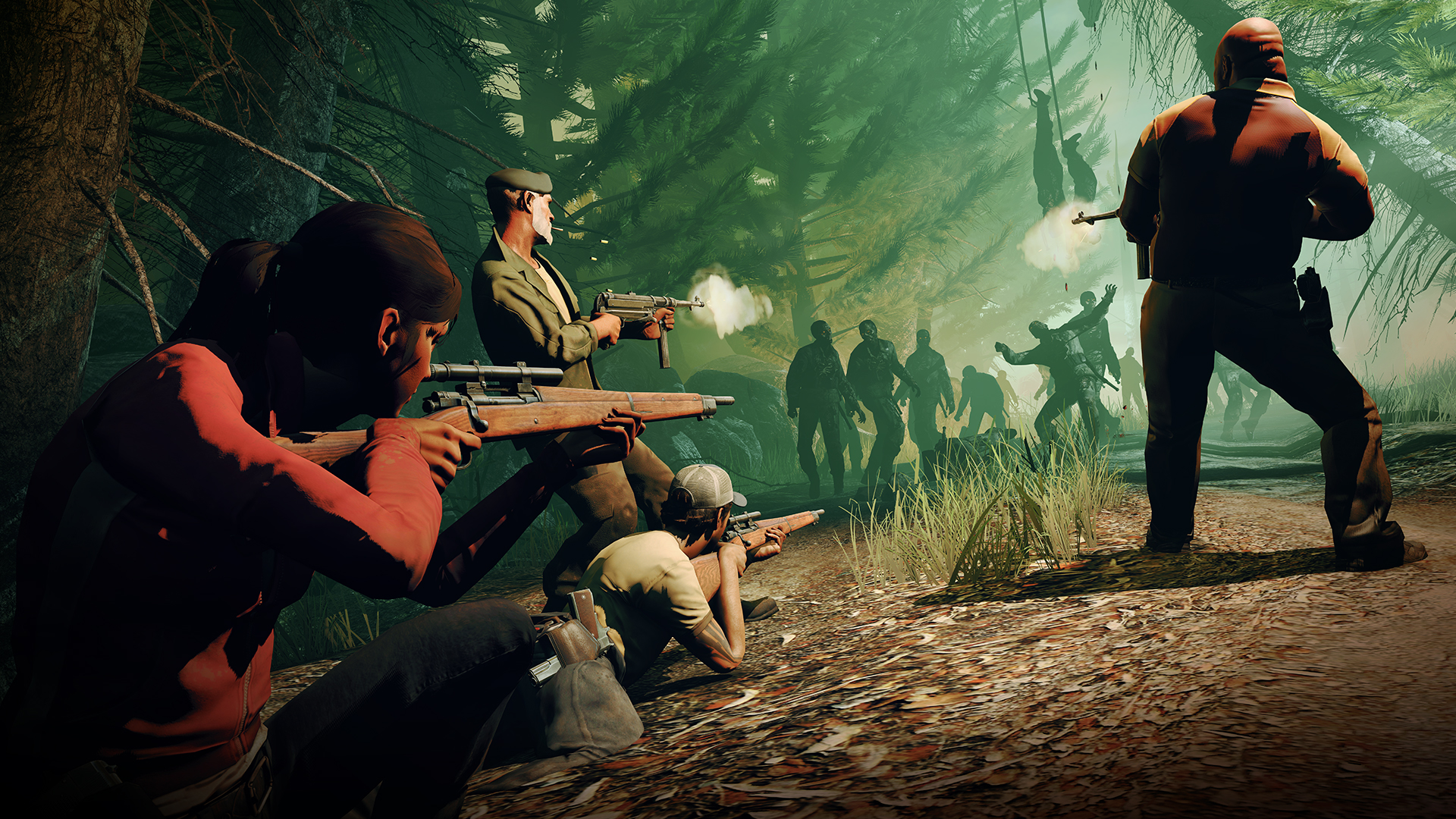
Weapon handling builds on Rebellion’s Sniper Elite ballistics and the series’ X-ray kill camera. A shot can be followed in slow motion through the target’s body, showing the impact on bones and organs as the bullet passes through the undead. This visual feedback accompanies a functional need to control threats: a well-placed rifle round can stop an enemy before it closes, while explosive traps and the wider firearm selection help manage a packed approach. More than twenty-five weapons are available, alongside explosives and placed hazards. A player can shift between long-range targeting and the faster response needed when zombies breach the line, making ammunition and the moment of engagement part of the combat rhythm. Challenge is adjustable through four difficulty settings and an additional enemy multiplier, which can raise the usual number of zombies up to four times. Together, the settings provide two levers to tune a run: one for general challenge and another for enemy population. A higher population means more simultaneous threats compete for attention, while the guns and traps retain their familiar roles in the fight.
The package also separates campaign progression from an endurance mode. Horde mode places one to four players on five dedicated maps and sends continuing waves of enemies against them, shifting the objective from reaching the next mission space to surviving as the attack continues. The campaign missions can likewise be entered from different points across the trilogy rather than demanding one continuous linear run through every chapter. In online co-op, the unified mission selection allows players to join any mission from any campaign, and the game tracks combinations, scores and leaderboards. That structure supports both a story-led run through the three campaigns and shorter returns to a chosen encounter or horde arena.
Zombie Army Trilogy combines ten missions from the first two Zombie Army campaigns with five new missions in its third chapter. The earlier campaigns are remastered across their ten returning missions with updated animations, dynamic physics, and improved lighting, shadows and visual effects, so the collection brings both returning chapters and new material together. The final five missions continue the outbreak into the series’ apocalyptic conclusion. The edition also adds four female sharpshooters, each with an individual backstory, expanding a roster of sixteen playable characters that includes eight survivors from Left 4 Dead 1 and 2. Those additions give the assembled collection a clear shape: two updated campaign arcs lead into a new concluding chapter, with an expanded character choice available across solo play and co-op.
- Developer
- Rebellion
- Genre
- Third-person shooter; horror action