
About Zombie Army 4: Dead War
Zombie Army 4: Dead War is a third-person shooter set in an occult undead version of 1940s Europe. After the resistance casts Zombie Hitler into Hell, the dead rise again and the Survivor Brigade follows a threat across Italy and beyond. Fight alone or with up to three companions through campaign missions, then customize weapons and abilities for the horde.
Zombie Army 4: Dead War continues the series’ alternate history after the resistance defeats Zombie Hitler and casts him into Hell. That victory does not end the outbreak: the dead return, and the Survivor Brigade is drawn into a new plan that spreads across Italy and beyond. The campaign moves through a deliberately lurid 1940s Europe of corpse-filled canals, a zombie zoo and other locations shaped by occult forces. Its tone mixes wartime ruins with supernatural horror, while its third-person shooting puts the player in the middle of each advance rather than above it. The base game’s campaign is built for solo play or groups of up to four, so the same story can be fought alone or as a team.
Campaign missions take the Survivor Brigade through large environments where routes, sightlines and incoming groups shape how a fight unfolds. A passage through a canal or enclosed building can compress the distance between a marksman and the horde; a wider space gives the player room to line up rifle shots and watch for threats approaching from other angles. Objectives keep movement directed through these spaces, but encounters create pauses in which the team must clear a route before pushing on. Up to four players can cover different approaches, divide attention between ordinary undead and special enemies, and help a surrounded teammate. Solo play uses the same campaign spaces and threat mix, leaving the player responsible for both controlling the horde and deciding when to move. The result is a mission loop of advance, hold, shoot through an attack and continue toward the next stage.
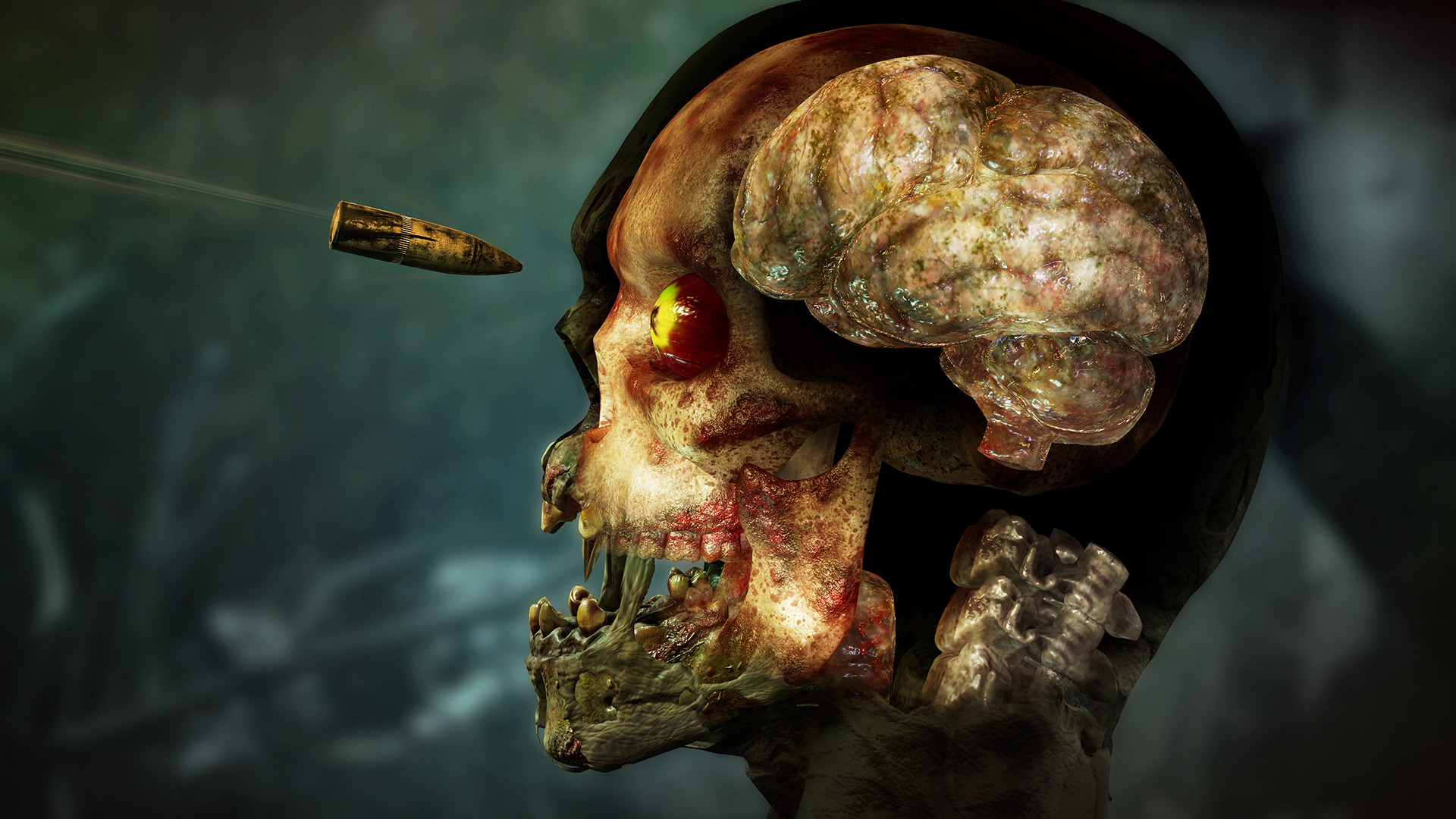
The shooting model emphasizes precise ballistics, with rifles, secondary firearms and pistols serving different ranges and situations. The X-ray kill camera returns in an upgraded form: a successful shot can travel through the target in slow motion, exposing damage to bones and organs, while dismemberment can tear away a limb. Those effects make the impact visible, but each shot still has a tactical purpose. A distant enemy can be stopped before it reaches the group; an approaching crowd may call for faster fire or an explosive response. Ammunition, weapon handling and enemy distance all matter when the number of attackers grows. Rebellion also lets players set up their weapons at workbenches, where upgrade effects draw on fire, lightning or divine essence. The modifications alter what a gun can do, from elemental damage to combinations such as a pistol fitted with a flaming bayonet.
Fighting at close quarters has its own tools. If zombies press into arm’s reach, the player can barge through a crowd, stomp on a head or finish a target with a takedown instead of trying to solve every encounter with a rifle. These moves give a surrounded survivor options for disrupting the immediate threat and continuing to move. A stomp targets the head, while the barge pushes through nearby bodies; a takedown provides another close-range way to dispatch the undead. Because the campaign still sends other enemies into the same space, melee sits alongside firearms, explosives and workbench upgrades as part of the combat vocabulary. The player can use a close-range response when a horde reaches the firing position, then return to aimed shots as space opens. In co-op, melee also gives a teammate under pressure a way to break free while others cover the surrounding approach.
Perks and equipment let a player shape a role around the squad. One perk lets its user take damage on another player’s behalf, while another allows a turret to travel with the player. Both change how the group can respond when a crowd closes in: protection can help a companion survive a dangerous approach, and a carried turret adds a defensive tool that can move with the fight. These options sit alongside the elemental weapon upgrades and close-range moves, so a player can tune a loadout around the demands of a mission. Ranking up also unlocks outfits, emotes and taunts as the slayer develops. The progression therefore combines practical choices in weapons and perks with character customisation. In co-op, players can choose complementary tools, protect the same route from different angles and decide who is equipped to absorb pressure when the horde reaches the group.
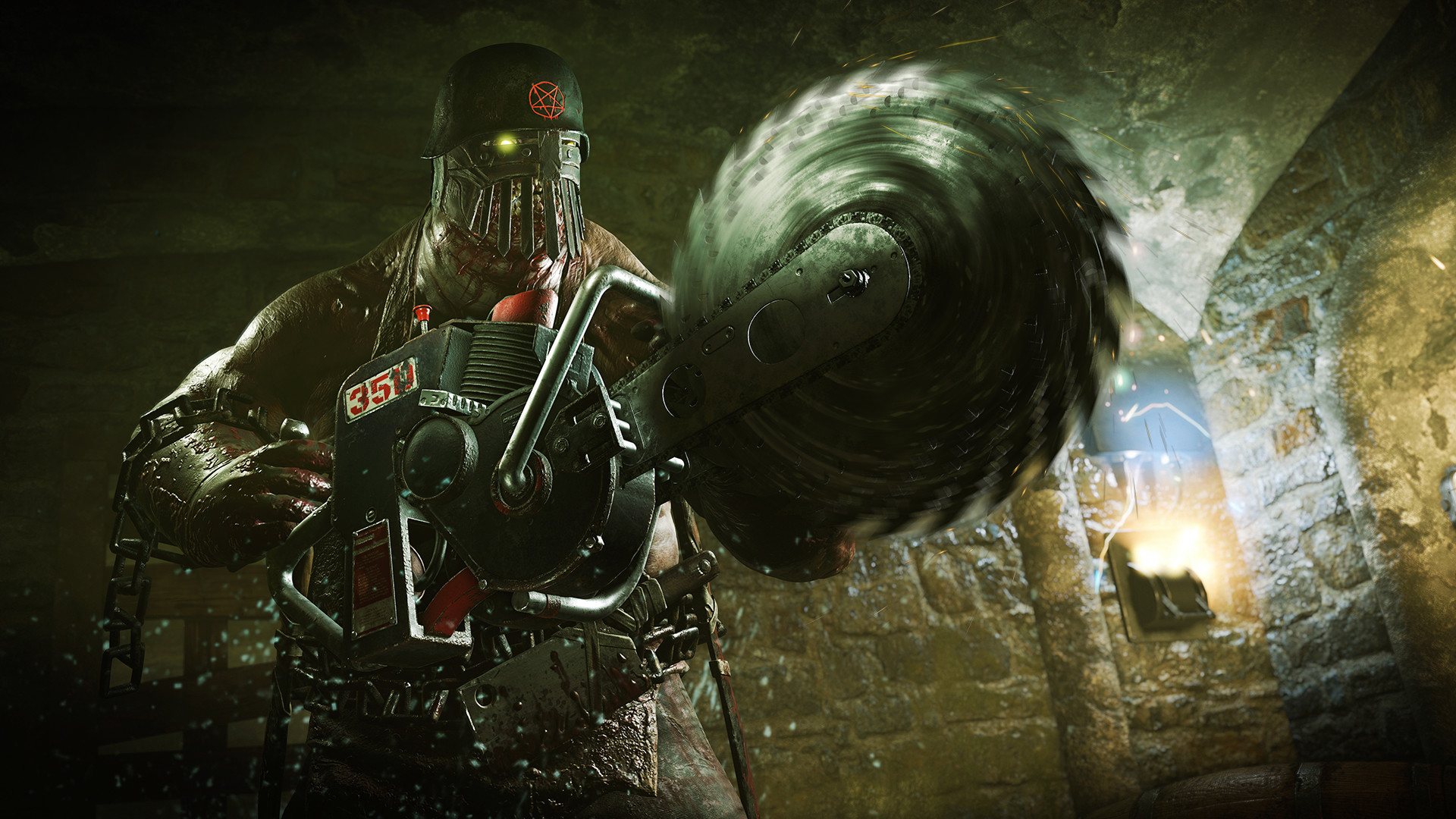
The enemy roster includes ghoulish grabbers, armoured elites, shadow demons, explosive suicide generals and the Zombie Tank. These names point to distinct kinds of pressure, from attackers crowding the survivors to armoured, occult, explosive and much larger threats. Their presence changes which enemy deserves attention first and how the group should use its available tools. The Zombie Tank in particular raises the scale of an encounter beyond the ordinary undead crowd, while the other named types add different hazards to the same campaign spaces. A team may need to watch several kinds of enemy at once, choosing between aimed fire, melee responses and explosive weapons according to the immediate danger. The dead keep coming even after individual targets fall, so target selection and movement remain part of each fight.
Outside the campaign, Horde mode turns survival into the objective. The mode expands on earlier entries by enlarging the playable map the longer a team remains alive, so maintaining a position and choosing where to fall back become part of the challenge as the space opens. That creates a different tempo from moving through a story mission: players stay alert to the changing arena, preserve space for the next wave and make their upgraded weapons and team abilities last against continuing attacks. The campaign and Horde mode use the same recognizable ballistics, enemy families and melee tools, but ask for different decisions about movement. One carries the Survivor Brigade through the latest outbreak; the other tests how long a chosen loadout and squad can withstand the dead. Both keep the action centered on aiming, reacting to threats and adapting the group’s tools to the pressure in front of it.
- Developer
- Rebellion
- Genre
- Third-person action shooter; horror