
About Ys VIII: Lacrimosa of DANA
After the passenger ship Lombardia is lost near the Isle of Seiren, adventurer Adol Christin searches for scattered survivors and helps them build a settlement against the island’s dangerous wildlife. His recurring dreams introduce Dana, a blue-haired woman whose life in a distant civilization intersects with the island’s mysteries.
Ys VIII: Lacrimosa of DANA follows Adol Christin after the Lombardia, a passenger ship travelling across the Gaete Sea, is wrecked near Seiren. The island lies off the coast of Greek and has a reputation for causing ships to vanish; its name recalls a local legend of a song that lures sailors to their deaths. Adol wakes on a beach and begins searching for other passengers, while the island’s strange wildlife and scattered ruins turn a rescue effort into an investigation of the place itself. The survivors include Laxia, Sahad, and Hummel, among other passengers with different backgrounds and reasons for travelling aboard the Lombardia. Their practical need to find food, shelter, and a route home gives the central mystery a grounded counterpoint. Adol also dreams of Dana, a blue-haired woman who inhabits a civilization unlike the castaways’ world. The story alternates its attention between the island survival narrative and Dana’s separate circumstances, gradually connecting the two without making her simply another person Adol meets on the beach. On the island, each person found changes the prospects of the entire group, so the mystery of Seiren develops alongside the practical work of making a place to live.
Seiren is designed as a connected wilderness rather than a sequence of unrelated arenas. Forests, coastlines, caves, cliffs, and old structures form routes that Adol can revisit as the search for survivors and the party’s capabilities grow. The island’s creatures, called Primordials, resemble huge reptiles, birds, and fish, but the official setting describes their ecology as distinct from mainland life; some accounts suggest isolation shaped their evolution. That gives exploration a specific natural-history texture: the castaways are not moving through a populated kingdom with familiar roads and supply shops, but mapping an environment whose dangers and traces of an older civilization need to be understood. Reaching a landmark can reveal a new route, a survivor, a resource point, or an obstacle that demands another tool or more village support. As the party moves through these spaces, gathered materials and treasure support equipment and item preparation, while side activities such as fishing create a slower rhythm alongside combat. The changing map and return paths make knowledge of the island part of progression: finding a survivor can matter as much to access and support as another combat level does.
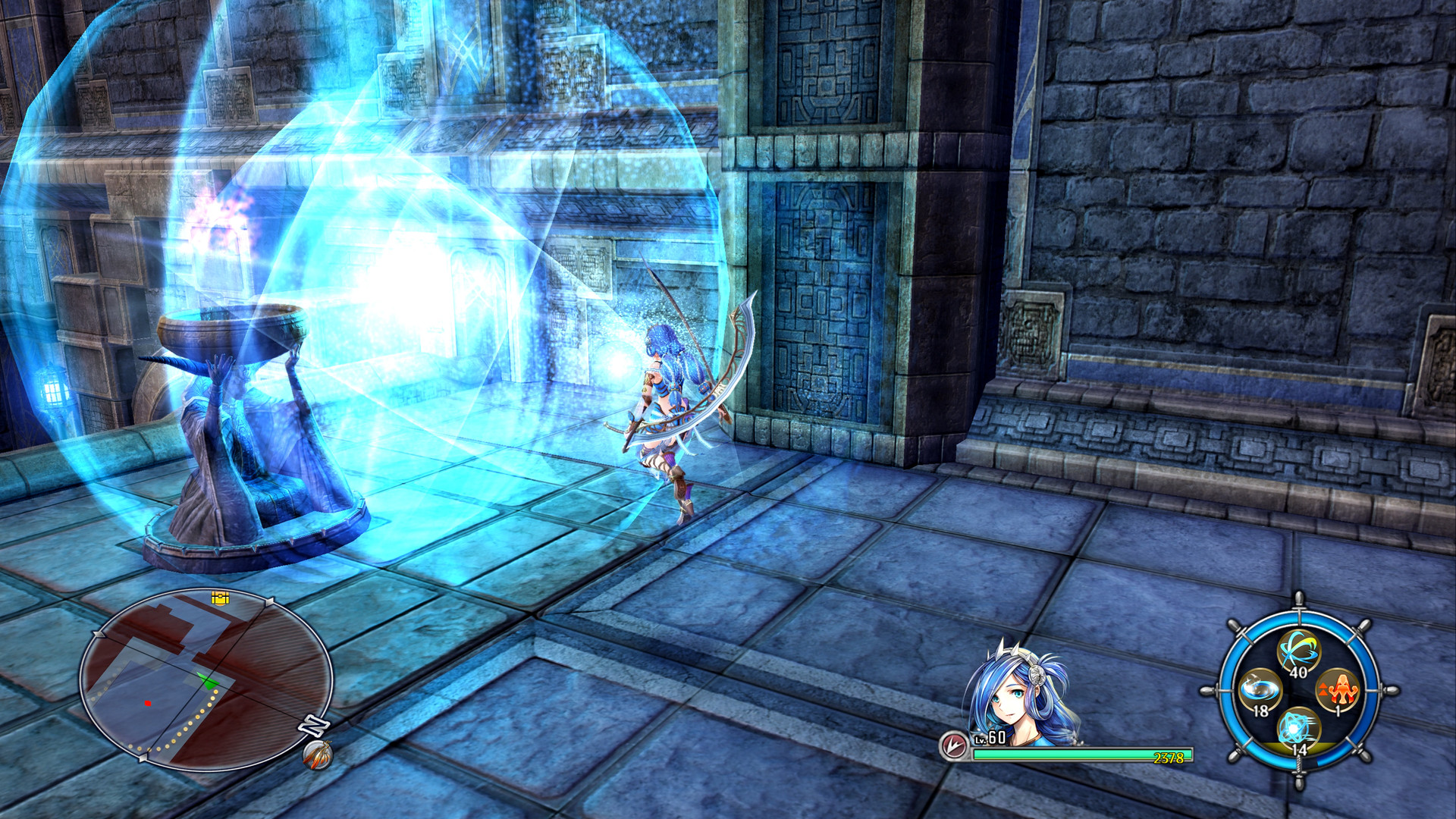
Movement is built around navigating connected fields and dungeons, with Adventure Gear serving as one system for dealing with barriers and hazards. The official game site lists this gear alongside location points and sub-dungeons, indicating how route-finding, local discoveries, and optional spaces sit together in the exploration structure. Dana’s PS4-derived sections make the relationship between traversal and character ability especially clear: her three styles each have a different role in dungeon interactions, from extinguishing flames to breaking cracked walls or revealing hidden objects. These abilities change which obstacles can be addressed and encourage the player to consider the active style as part of navigating a space. Across Adol’s island routes, the practical pattern is to push into unfamiliar terrain, find survivors or materials, and bring people or knowledge back to the village. The island is not a populated kingdom with familiar supply routes; the party’s understanding of its geography and its growing outpost give the journey its structure. Optional sub-dungeons and location points provide additional places to investigate beside the main path. As the expedition develops, exploration expands through both newly accessible routes and the settlement’s increasing ability to support Adol’s search.
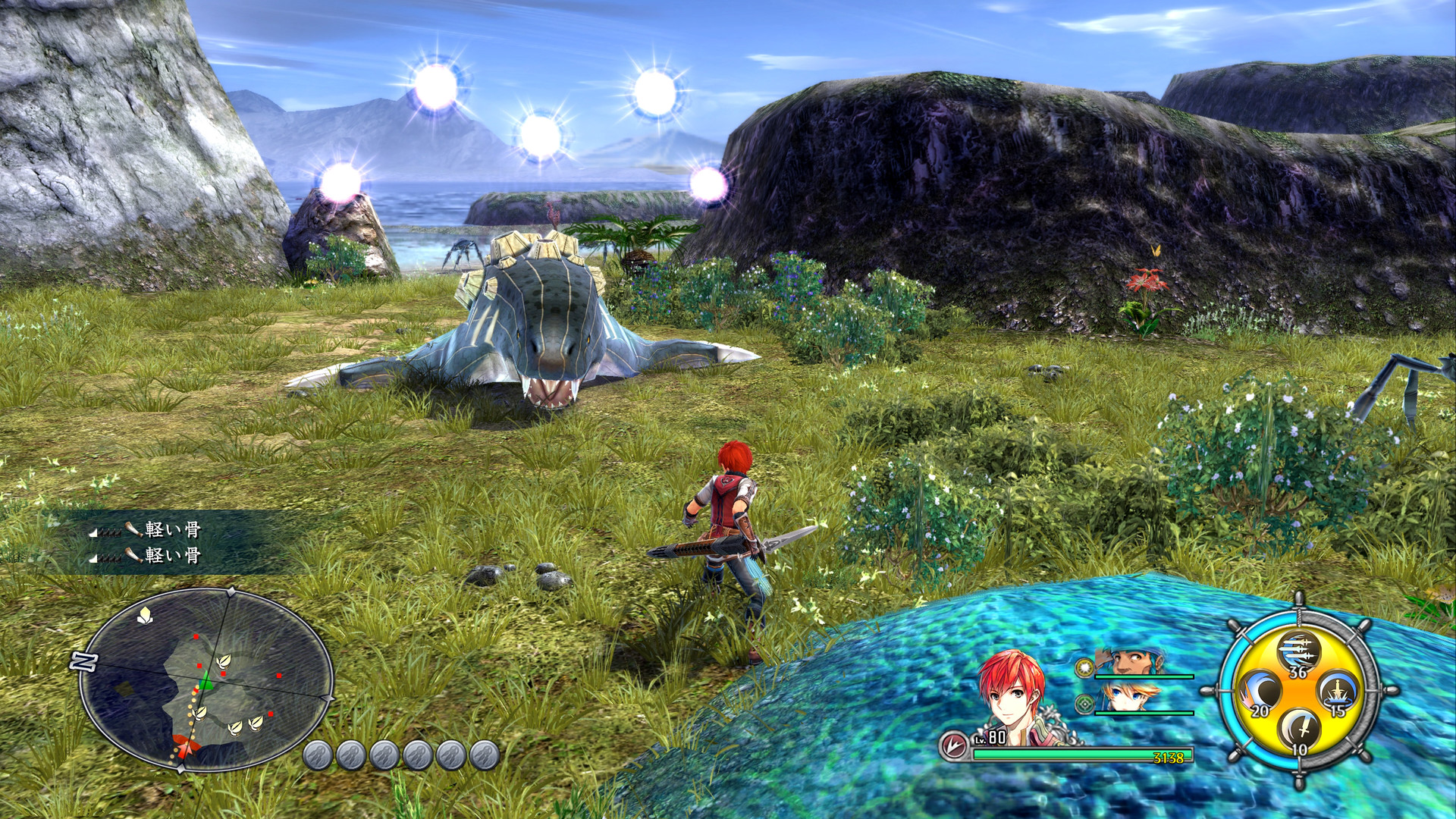
Combat takes place in real time, with a small active party whose members can be switched directly during a fight. NIS America’s description emphasizes the different abilities each member brings; Falcom’s battle material further distinguishes slash, strike, and pierce attacks and shows Break as a result of exploiting enemy vulnerabilities. Switching characters is therefore a tactical response to the target as well as a way to change the feel of an encounter. Skills spend SP, while the separate Extra gauge enables a stronger special attack when ready. Defensive timing adds another layer: a precisely timed guard triggers Flash Guard, while a well-timed evasion triggers Flash Move. These actions reward reading enemy attacks and create brief opportunities to respond, so ordinary attacks, skill expenditure, character choice, and defense interact instead of operating as isolated menus. Dana’s sections add a distinct combat system in the PS4-derived version represented by the Steam release. Falcom describes her three styles as balanced Icrucian, slower and sturdier Grattica, and fast but less durable Luminous. Their differences affect SP or Extra-gauge gain as well as attack reach and force, so changing style changes how she handles groups and individual threats.
Progress is tied to the people Adol brings back as much as to the battles he wins. Captain Barbaros and Dogi help lead Castaway Village, a refuge assembled from driftwood and materials found on the island. Recruited castaways contribute skills and knowledge, gradually establishing places and services that help the group survive and assist further exploration. NIS America describes the village as growing from the passengers Adol rescues; the official setting details facilities built for shelter, defense, and the expedition. This community structure gives side quests a practical role: survivors have their own circumstances, and helping them strengthens the shared settlement. Materials gathered in the field feed into the island’s economy and equipment preparation, while new facilities change what the party can do between expeditions. The village also connects to combat beyond ordinary encounters. In Interception battles, creatures attack the settlement and the player controls the active characters against waves pressing toward a defensive barrier. Before an attack, village defenses such as decoys can be added or improved, and non-active castaways contribute individual support skills automatically. A successful defense awards items according to its score, making the settlement’s growth relevant both to daily preparation and to protecting the people gathered there.
The two protagonists create a second progression thread. Adol’s chapters are framed by the immediate questions of survival, rescue, and escape, while Dana’s episodes take place in a society separated from the castaways’ present. The official descriptions emphasize a connection between Dana’s actions and Adol’s world, but the premise can be understood without disclosing the later revelations that explain that relationship. Her playable sections are not merely interludes: the PS4-derived presentation gives her distinct styles and dedicated dungeon interactions. Icrucian can extinguish flames with water, Grattica can break cracked walls and move through areas where strong wind restricts others, and Luminous can reveal invisible objects and melt ice. These abilities make her style changes useful outside of combat too, turning a character-specific move set into a way to read and pass environmental puzzles. The parallel viewpoints therefore ask the player to solve different immediate problems: Adol needs to keep the castaways alive on Seiren, while Dana uses abilities rooted in her own world to pass obstacles that his party cannot encounter.
Beyond exploration and standard fights, the Steam release includes a second village-related battle format called Suppression, presented by Falcom as a PS4-version addition. The party advances into creature-held territory with the castaways’ help. Players place a bonfire at marked spots; nearby enemies are weakened, and the villagers can provide supporting fire while the bonfire remains intact. The party then attacks large enemy nests to reduce the creatures emerging in the area, repeating the process to extend the controlled zone. Destroying every nest or allowing enough time to pass brings out a boss whose defeat completes the operation. Unlike a straightforward series of arena waves, Suppression asks the player to manage a forward position while continuing to fight, because enemies can damage the bonfire and the battle does not pause between interim score displays. It extends Castaway Village from a refuge the party protects into a force that helps reclaim dangerous ground. The same growing community that defends the village during Interception now contributes to a mobile operation beyond its walls; keeping its forward bonfire standing has a direct effect on how the surrounding creatures can be fought.
- Developer
- Nihon Falcom
- Genre
- Action RPG