
About Yakuza: Like a Dragon
After serving eighteen years for a crime committed by another man, Ichiban Kasuga returns to a Kamurocho transformed by a power struggle and is cast out by the patriarch he trusted. In Yokohama, he gathers unlikely allies and pursues the truth through a role-playing adventure that pairs street-level drama with party battles and city diversions.
Ichiban Kasuga begins as a young member of the Arakawa Family, a subsidiary of the Tojo Clan. When patriarch Masumi Arakawa asks him to accept responsibility for a crime involving fellow member Jo Sawashiro, Ichiban agrees and spends eighteen years in prison. He returns to Kamurocho in 2019 expecting to meet the man he calls his father, but the city and its criminal order have changed. The Tojo Clan has disappeared, the Omi Alliance holds power, and Arakawa’s actions no longer fit the loyalty Ichiban remembers. After a violent encounter leaves him unconscious, he wakes in Isezaki Ijincho, Yokohama. From there, the story follows his attempt to understand the betrayal, rebuild a place in the world, and keep faith with the people he chooses as family.
The new setting puts Ichiban among people living outside the structures that once defined him. Yu Nanba, a former nurse now homeless in Ijincho, is the first to help him; Koichi Adachi, a former police officer, brings knowledge of the city’s institutions, while Saeko Mukoda manages a hostess club and becomes involved through a local scam. Their different histories shape both conversations and party roles. The Seiryu Clan, the Liumang, and the Geomijul are among the organized groups whose rivalries influence Ijincho, while the Omi Alliance and the fractured Tojo legacy connect the local conflict to wider changes in Japan. The narrative alternates between earnest crime drama and Ichiban’s playful, Dragon Quest-inspired way of interpreting the people and fights around him.
Isezaki Ijincho is the main place to travel on foot, linking waterfront stretches, commercial streets, entertainment areas, and poorer districts that have their own rhythms. The map is larger than Kamurocho in earlier entries, and moving between neighborhoods means crossing from familiar city amenities into places where local power and hardship are more visible. Shops supply food, equipment, and recovery items; restaurants let the party share meals, while taxis provide quick travel between stands once they have been found. Enemies occupy the streets, and approaching them starts combat without leaving the city setting. Side stories and small diversions sit alongside the main route, so progress can include checking a side street, talking to residents, or stopping at an arcade before returning to Ichiban’s investigation.

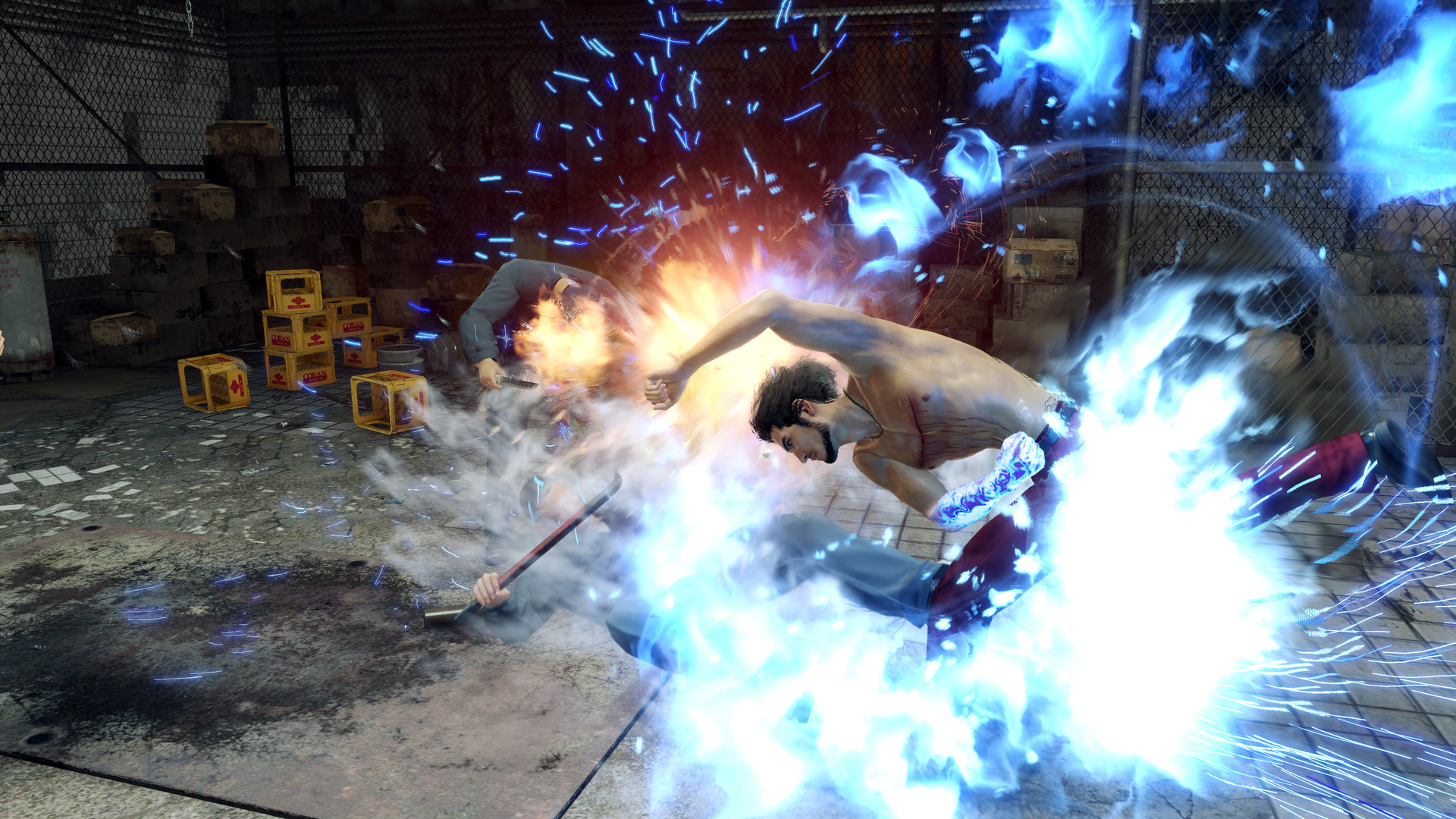
Fights use the Live Command RPG Battle system: each party member takes a turn, and the player chooses attacks, skills, healing, support actions, or guarding from command menus. The combat space remains active, with characters and enemies shifting position; nearby objects can become improvised weapons, and a good angle can let a character kick an object into another opponent. Position also determines whether another foe blocks a targeted move or a selected command catches several enemies around its target. Timed inputs during many special attacks add damage. Skills consume MP, so the party’s decisions involve balancing strong attacks with healing and support. Enemies can resist or be vulnerable to different damage types, making a mix of physical moves, elemental abilities, and status effects more useful than repeating one attack. Battles reward character and job experience, money, and items.
Jobs are the party’s class system, with distinct weapons, abilities, and combat emphasis. Ichiban’s Hero role uses his bat and includes ways to encourage and heal allies; Nanba’s Homeless Guy job turns his street survival into fire and pigeon attacks; Adachi’s Detective role leans on grapples and a baton, and Saeko’s Barmaid skills can hinder enemies while offering support. Once the job-change system opens at Hello Work during the story, changing a character’s occupation changes their active skill set and equipment needs. Jobs become available through character level, personality attributes, and in some cases the bond between a teammate and Ichiban. Winning fights raises job rank and unlocks new techniques; selected skills learned from earlier jobs remain available after switching, letting each member retain a few useful tools while growing into a different specialty.
Dragon Kart gives Ijincho a separate racing loop, taking Ichiban around custom street circuits in upgradeable karts. The races mix cornering and drifting with item boxes that supply boosts or weapons such as rocket launchers and gatling guns, so players can focus on clean driving or disrupt rivals. Winning events opens higher Grand Prix tiers, while paying to tune a kart improves performance and the number of uses available for weapon items. The tracks also place obstacles and hazards into the route, including jump ramps, explosive barrels, dirt that slows a kart, and electrified damage zones. Rings collected during races can be exchanged for items that raise party stats or job ranks, connecting this optional competition to character development as well as race progression.
Outside the main investigation, Ichiban can take on Part-time Hero work, helping residents through requests that range from finding people to fighting threats in the streets. These tasks connect everyday problems to money, items, and growth in Ichiban’s personality, turning the city itself into a source of optional objectives. A separate business-management activity centers on Ichiban Confections, a senbei shop near collapse. The player takes responsibility for the company by hiring and developing staff, buying and managing properties, securing capital, and running sales. Property potential and employee ability affect revenue; periodically, dissatisfied shareholders challenge management in a timed meeting where staff respond to their complaints. Winning support improves the company’s stock ranking and earns Ichiban a personal executive reward. This creates a different progression loop from combat: business funds stay inside the company, while Ichiban’s meeting reward becomes money he can spend on the broader adventure.
- Developer
- Ryu Ga Gotoku Studio
- Genre
- Role-playing game with command-based party combat