
About Yakuza Kiwami
After spending ten years in prison for protecting his sworn brother, Kazuma Kiryu returns to Kamurocho as the Tojo Clan struggles over a vanished fortune. His search for Haruka’s mother draws them together amid clan infighting, street battles, Majima’s relentless challenges and the everyday diversions of the city.
Yakuza Kiwami retells the first Yakuza story through the return of Kazuma Kiryu, a former Dojima Family lieutenant advisor who accepted responsibility for the murder of his patriarch to protect his sworn brother Akira Nishikiyama and childhood friend Yumi Sawamura. After ten years in prison, Kiryu finds Kamurocho changed and the Tojo Clan fractured by internal conflict. A missing ten-billion-yen fortune draws him into the search for Haruka, a girl whose connection to the money leads him to look for her mother, Mizuki. Nishikiyama has risen within the clan during Kiryu’s absence, while Majima, a feared Shimano Family captain, keeps turning up to challenge the man he calls Kiryu-chan. The story is set in 2005, with events in 1995 establishing the relationships Kiryu returns to. Its central movement is a search through a city where old loyalties and current clan power struggles collide.
Kamurocho is the main place to travel, investigate and fight. Main-story markers lead Kiryu between meetings, searches and confrontations, while the streets connect shops, restaurants, arcades, nightlife venues and quieter back alleys. Speaking to certain people or visiting particular locations starts optional Substories: Kiryu takes on local requests, sees them through and collects money, experience points or items. The pause menu tracks active objectives and marks completed stories, so these episodes can be followed between chapters. Restaurants restore health and also grant experience according to what Kiryu orders; shops sell recovery items and equipment, while pay phones let him save and manage stored items. The compact district encourages short detours because a side request, a useful store and a new fight can all sit close to the current objective. Exploration supports the central search without replacing it with a separate open-world campaign.
Fights use four styles that can be changed during combat. Brawler is Kiryu’s all-round option for strikes, grabs, defense and counters; Rush emphasizes fast punches and evasive footwork; Beast trades speed for broad, powerful attacks and can automatically work nearby street objects into combos; Dragon of Dojima is his signature style, weakened by the decade he spent in prison. Quick attacks build strings that can be finished with heavier blows, while grabs, throws, dodges and weapon attacks offer different ways to control a group. A street weapon has limited durability, so using it can provide a burst of damage but will not last indefinitely. Heat builds through attacking, and when its gauge and the situation allow, Kiryu can trigger a Heat Action. Those actions vary by style and context, including moves against a grabbed foe, with a weapon or beside a downed enemy.
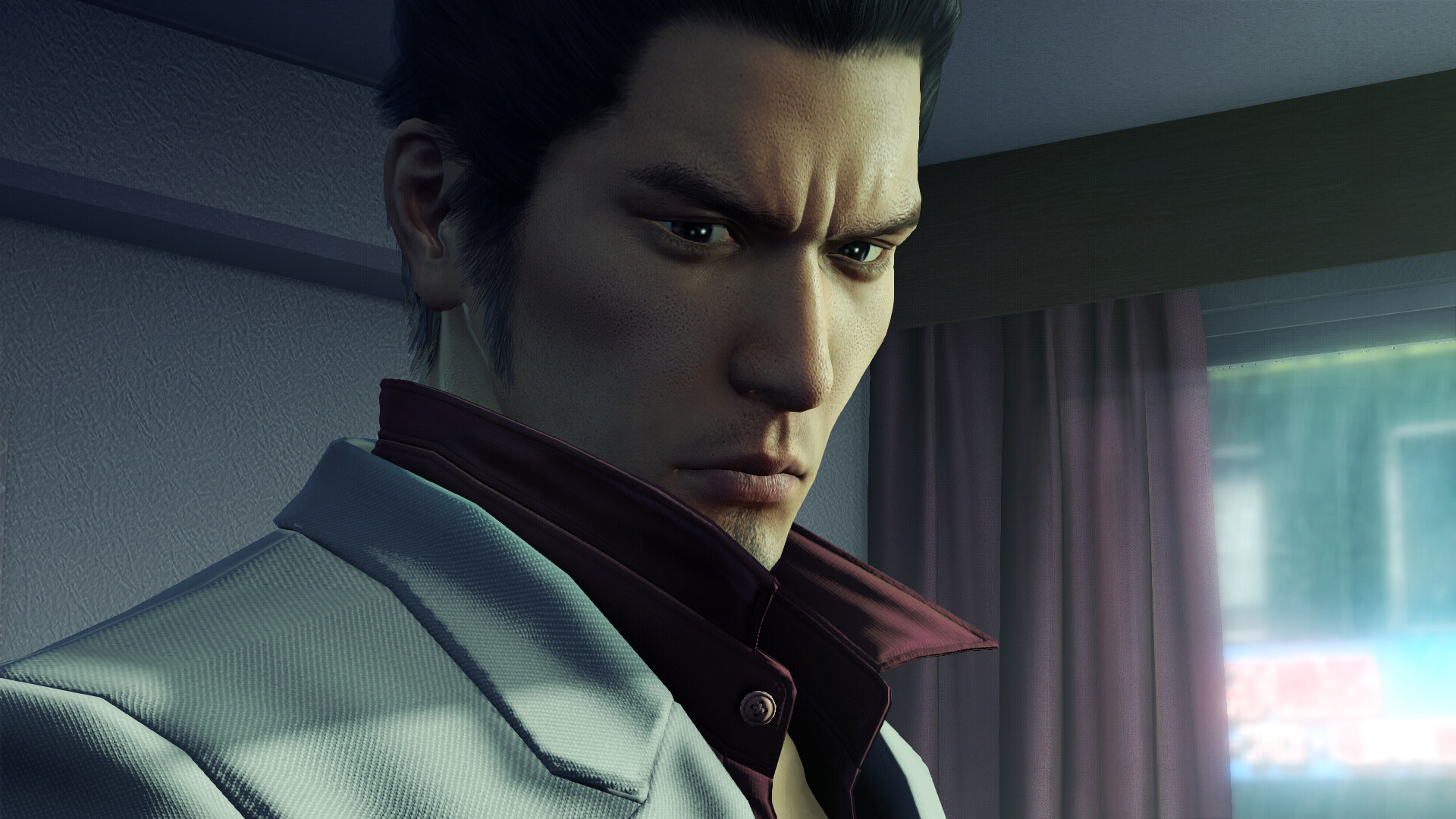
Character growth uses experience earned from defeating enemies, clearing Substories, eating and using Heat Actions. Kiryu spends it on four connected ability categories: Soul expands Heat Actions, Technique adds battle moves, Body improves his attack and health, and Dragon strengthens his signature style. Abilities unlock along connected paths, so purchasing one can make linked upgrades available. The Dragon tree follows a different rule: Kiryu has to regain that style through challenges rather than buying its entire development with ordinary experience. He can seek out martial-arts master Sotaro Komaki for additional techniques, and shops around Kamurocho offer gear that protects him in fights. This system makes ordinary activity feed into combat growth, while Dragon progression gives a particular recurring character interaction its own role in Kiryu’s development.
That interaction is Majima Everywhere. After the two men meet, Majima begins appearing around Kamurocho—in the street, at stores and at nightlife spots—to force Kiryu into fights and restore his former strength. Winning these encounters fills the Majima gauge; when it reaches a threshold, a special rank-up event becomes available, and completing it raises Majima Rank. Each rank unlocks abilities in the Dragon of Dojima tree, making the encounters the route to recovering that style’s moves. Majima can approach in several fighting styles and situations, so his appearances interrupt routine travel with a challenge that also advances Kiryu’s growth. The system is tracked separately from the main story in the city’s records, giving players a way to see what they have completed. It connects a running rivalry to a concrete upgrade path without making the broader story depend on clearing every encounter.
The chapter-by-chapter investigation also leaves room for several activities built into Kamurocho. Pocket Circuit has Kiryu assemble a miniature car from parts such as motors, tires and gears, then race on courses where limited boosts and mid-race stabilization can determine whether the car stays on track. MesuKing: Battle Bug Beauties uses an Insect Card with three Skill Cards; the selected cards affect damage, and each exchange is decided through a rock-paper-scissors contest, with a Super Move available when its condition is met. Karaoke, billiards, darts, bowling, batting cages, mahjong, the Coliseum and casino games offer other breaks, while coin-locker keys and scattered MesuKing cards reward searching the district. These are optional diversions with their own scores, opponents or unlocks, not additional story chapters.
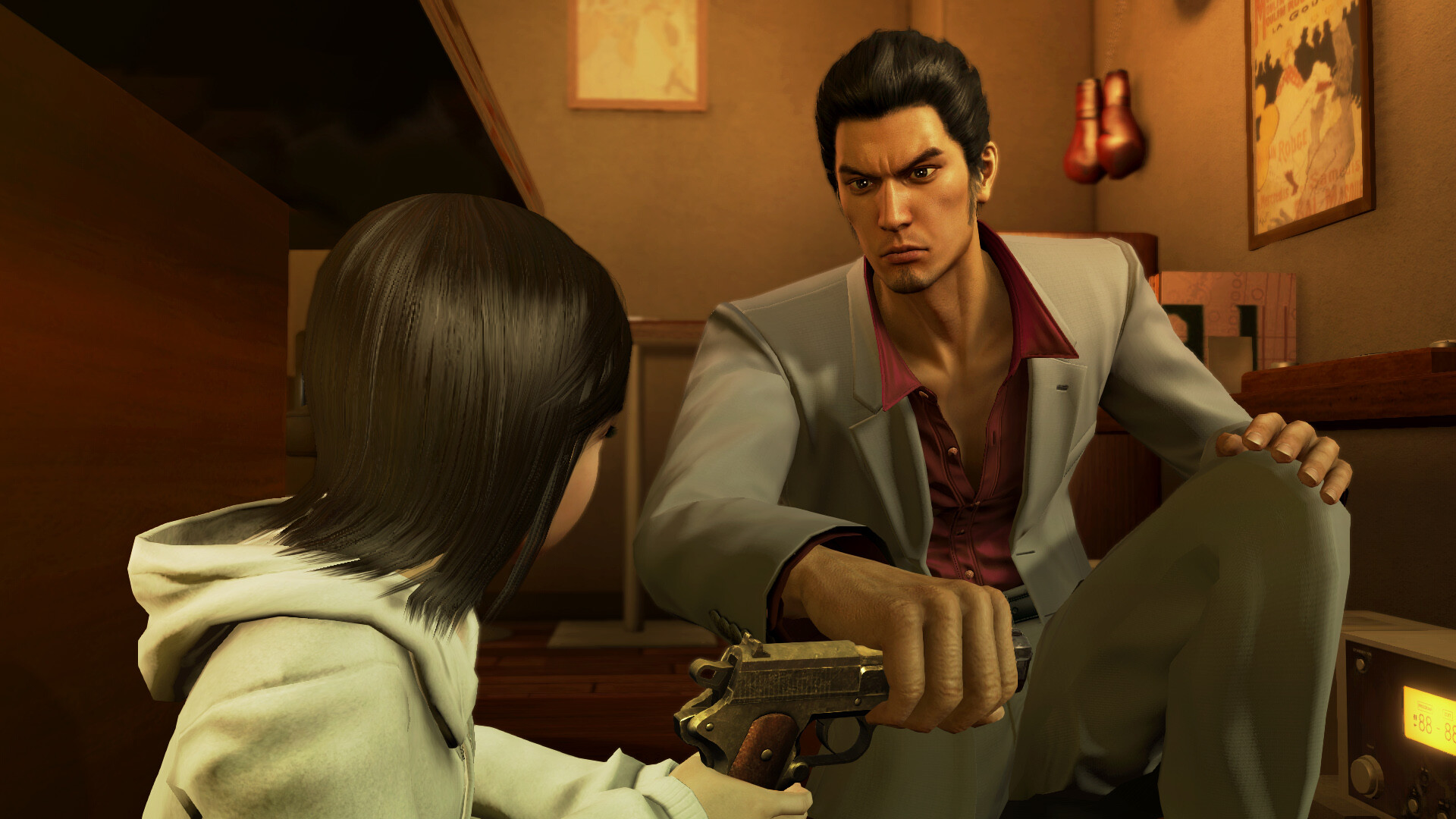
The current Steam PC release is titled Yakuza Kiwami, while the earlier PC listing is identified as Yakuza Kiwami (Legacy). The newer Steam edition adds text languages, but the basic game content and specifications remain the same, and saves from Legacy do not carry over. This release therefore keeps the remake’s focus on Kiryu, Haruka, Kamurocho, four fighting styles and Majima’s citywide challenges without introducing a separate story or battle system. Across both PC listings, the adventure follows the same search through the Tojo Clan’s crisis, the same streets and substories, and the same combat progression built around experience, style upgrades and Majima encounters.
- Developer
- RGG Studio (also identified in the assigned Steam appdetails snapshot; current direct Steam page could not be read during this pass).
- Genre
- Action-adventure crime drama.