
About Yakuza Kiwami 2
After a killing shakes the Tojo Clan, former chairman Kazuma Kiryu returns to the criminal underworld to prevent a war with Kansai’s Omi Alliance. His journey between Tokyo’s Kamurocho and Osaka’s Sotenbori brings him into the orbit of detective Kaoru Sayama and rival Ryuji Goda, while street fights, side stories and club management fill the districts around the central conflict.
Yakuza Kiwami 2 retells the second main story around Kazuma Kiryu, the former Tojo Clan chairman known as the Dragon of Dojima. After Yukio Terada, the Tojo’s fifth chairman, is assassinated, Kiryu is drawn back into a weakened organization’s affairs and travels west to negotiate with its rival, the Omi Alliance. The attempt to contain tensions brings him face to face with Ryuji Goda, the Dragon of Kansai, and Kaoru Sayama, an Osaka police detective whose investigation runs through the same unstable criminal world. Their conflict connects the Tojo’s leadership struggle with older secrets, while Kiryu’s commitment to protecting Haruka keeps the personal stakes close to the clan politics.
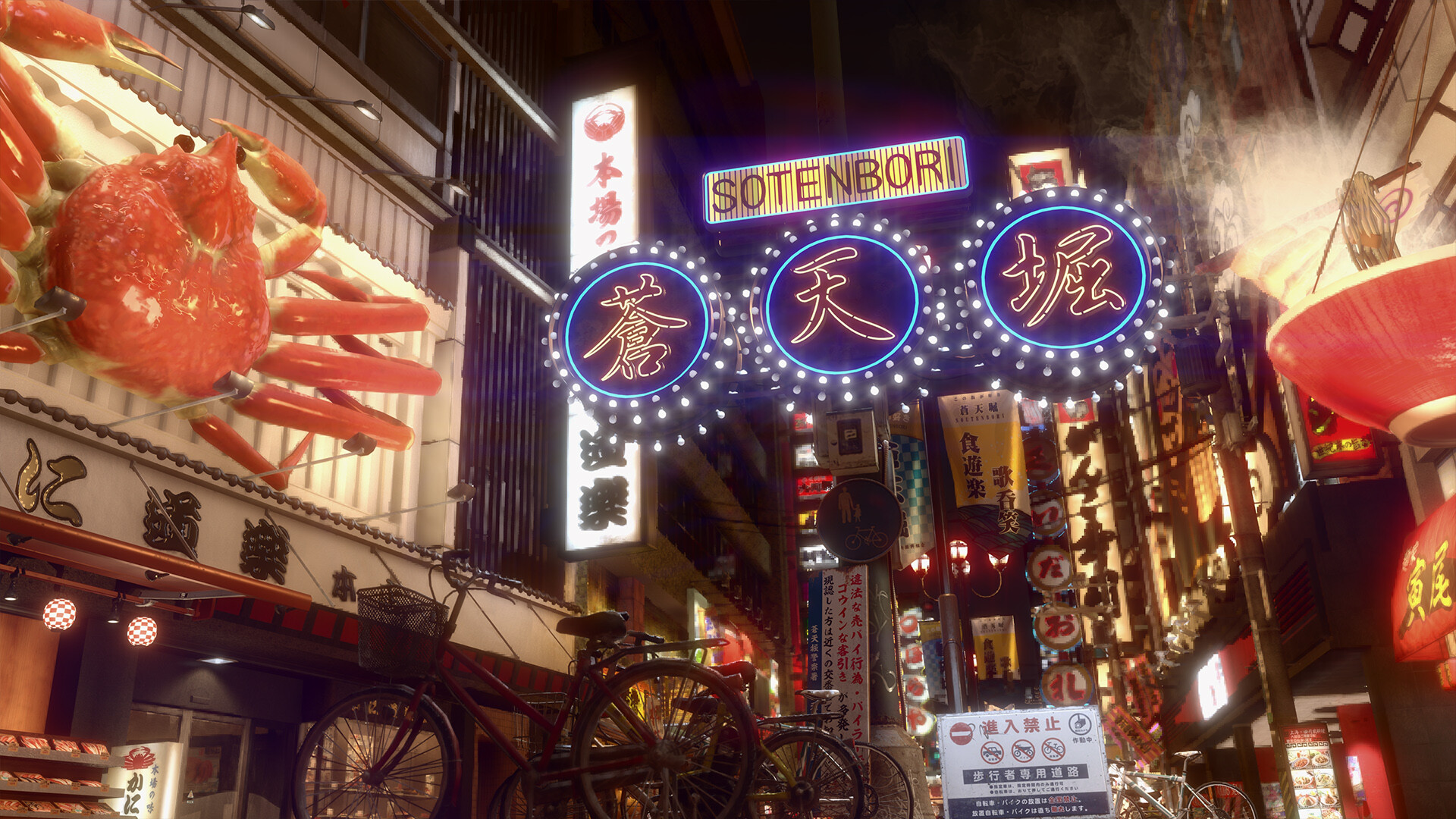
The story moves between Kamurocho in Tokyo and Sotenbori in Osaka, two compact entertainment districts that serve as places to investigate, fight and take a break. Kiryu travels on foot, enters shops and restaurants, and can be drawn into street encounters or optional substories by people he meets. Side stories range from local troubles to unusual requests, giving the neighborhoods recurring characters and small self-contained situations alongside the central Tojo–Omi dispute. Eating at restaurants restores health and also feeds the game’s experience progression; shops supply recovery items, equipment and weapons. The result is a loop in which a trip across town can turn into a brief fight or detour before Kiryu reaches the next story scene.
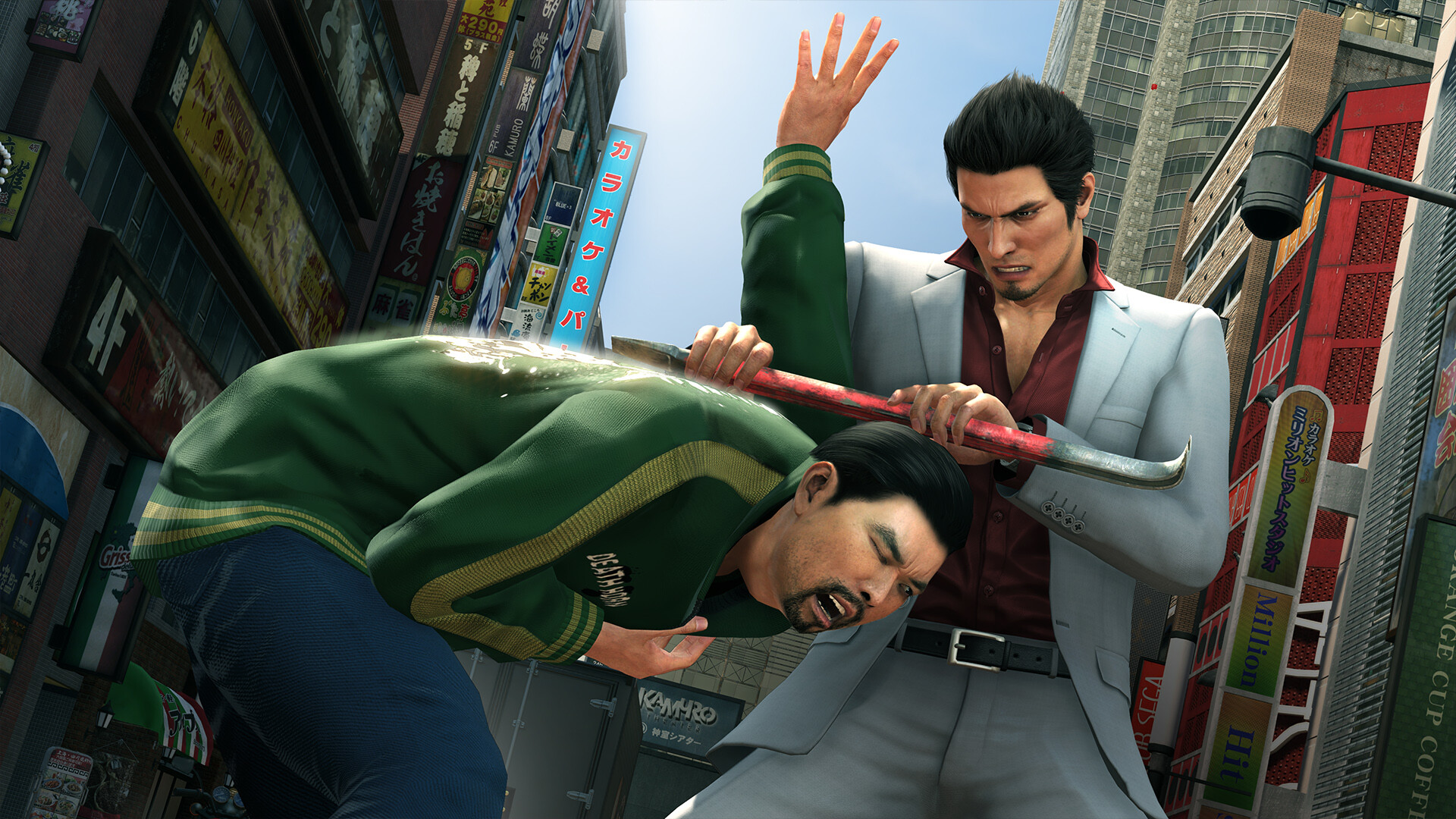
Kiryu’s combat uses a single, direct fighting style rather than a roster of selectable styles. Light attacks build strings that can end in heavier finishing blows, while grabs let him pummel, throw or redirect an opponent. The player can quickstep around attacks, guard, use weapons and charge certain strikes by holding an attack button before releasing it. A blue Heat Gauge fills as Kiryu lands hits and supports Heat Actions when their contextual prompts appear; spending more of that gauge can activate Extreme Heat after the relevant ability is learned. Weapons and nearby objects add different reach and effects, while Heat Actions can use the surroundings to turn a fight into a short, animated finisher.
Progression keeps experience and money in separate roles. Combat, meals, minigames, substories and completion rewards provide several colour-coded experience types, which are spent in the abilities menu to raise health, attack, defence or Heat capacity and to unlock moves. Skills can also improve functions such as quicksteps, charged attacks and Extreme Heat. Yen instead pays for food, medicine, equipment and other purchases; it is not the currency used to buy Kiryu’s core abilities. This distinction gives optional play more than one return: a restaurant visit can replenish health and contribute experience, while successful fights and business activities provide money for supplies and separate experience toward character growth. Each skill lists its experience requirements before purchase, so Kiryu's varied activities can feed the specific colours a desired upgrade calls for.
In Sotenbori, Kiryu can help Yuki rebuild Club Four Shine through the Cabaret Club Grand Prix. During a shift, the player assigns hostesses to customer tables according to their preferences, responds to orders or problems, and works to keep guests spending. Hostesses have different abilities and potential, so training the roster improves how well they handle the demands of a night. Recruiting can happen through advertisements, people met in substories or relationships with local businesses; those business partnerships also bring customers to the club. The competition advances through four leagues before its final rival, making roster development, customer matching and the club’s earnings part of a separate management campaign within the larger story.
A second substantial side mode follows Goro Majima and the construction company he forms after leaving the Tojo Clan. In Clan Creator, the objective is to defend the Kamurocho Hills construction project from attacks by rival forces. Missions play as real-time strategy battles: Kiryu’s side can field up to nine employees, place them to guard key facilities and use their individual special skills as enemy waves arrive. The named storyline pits Majima Construction against the Muto Real Estate company and the Colors gang; the five real-life New Japan Pro-Wrestling stars appearing as opponents are also identified on SEGA’s site. It is a tactical deployment loop, distinct from Kiryu’s close-range street combat and from Four Shine’s customer-management shifts.
The included Majima Saga is a separate story about Goro Majima set between the events of Yakuza and Yakuza 2, rather than another chapter in Kiryu’s main campaign. Its first chapter unlocks after main-story Chapter 5; two more unlock after Chapters 8 and 11, and the scenario is selected from the title screen outside Kiryu’s regular save file. Playing Majima changes the feel of encounters: SEGA describes his combat as faster and more unpredictable than Kiryu’s, with his dagger always available and a different reach and rhythm. Around both districts, the game also offers karaoke, darts, golf, arcade machines, casino and gambling games, plus other short diversions. These activities sit beside the two business modes and let the city visits take a different shape from the main plot’s fights and negotiations.
- Developer
- Ryu Ga Gotoku Studio; published by SEGA
- Genre
- Story-driven action adventure with real-time brawler combat