
About Yakuza 5 Remastered
Four men and Haruka Sawamura pursue their own ambitions as a conflict spreads through Japan’s criminal underworld. Travel between five city districts, switch among distinct combat styles, and follow character-specific activities: Kiryu’s taxi driving and racing, Saejima’s mountain hunting, Haruka’s idol work and dance battles, and Shinada’s baseball contests.
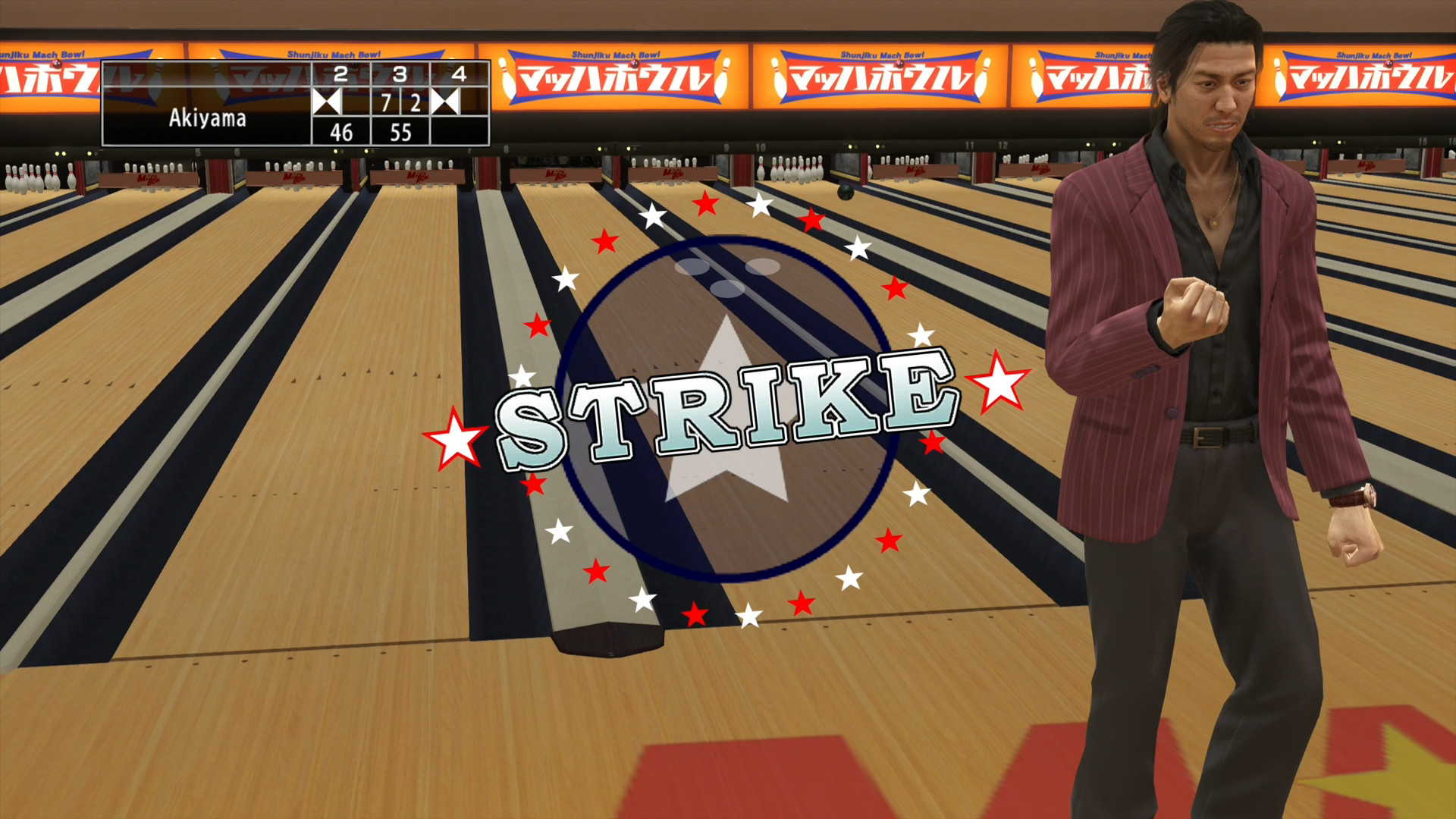
Yakuza 5 Remastered follows five people whose ideas of a dream pull them through a widening conflict in Japan’s criminal underworld. Kazuma Kiryu is living under an assumed identity in Fukuoka, working as a taxi driver; Taiga Saejima is drawn into a story set around a snowy mountain community; Haruka Sawamura pursues a career as an idol in Osaka; and Tatsuo Shinada, a former professional baseball player, is living in Nagoya. The fifth playable protagonist is Akiyama, whose story brings the cast back toward Kamurocho. Their sections are connected to a growing struggle involving the Tojo Clan and rival organizations, but each character has a personal problem and a distinct setting. The game’s scale comes from moving among five entertainment districts—Nagasugai, Tsukimino, Sotenbori, Kineicho and Kamurocho—rather than treating Tokyo as the whole world.
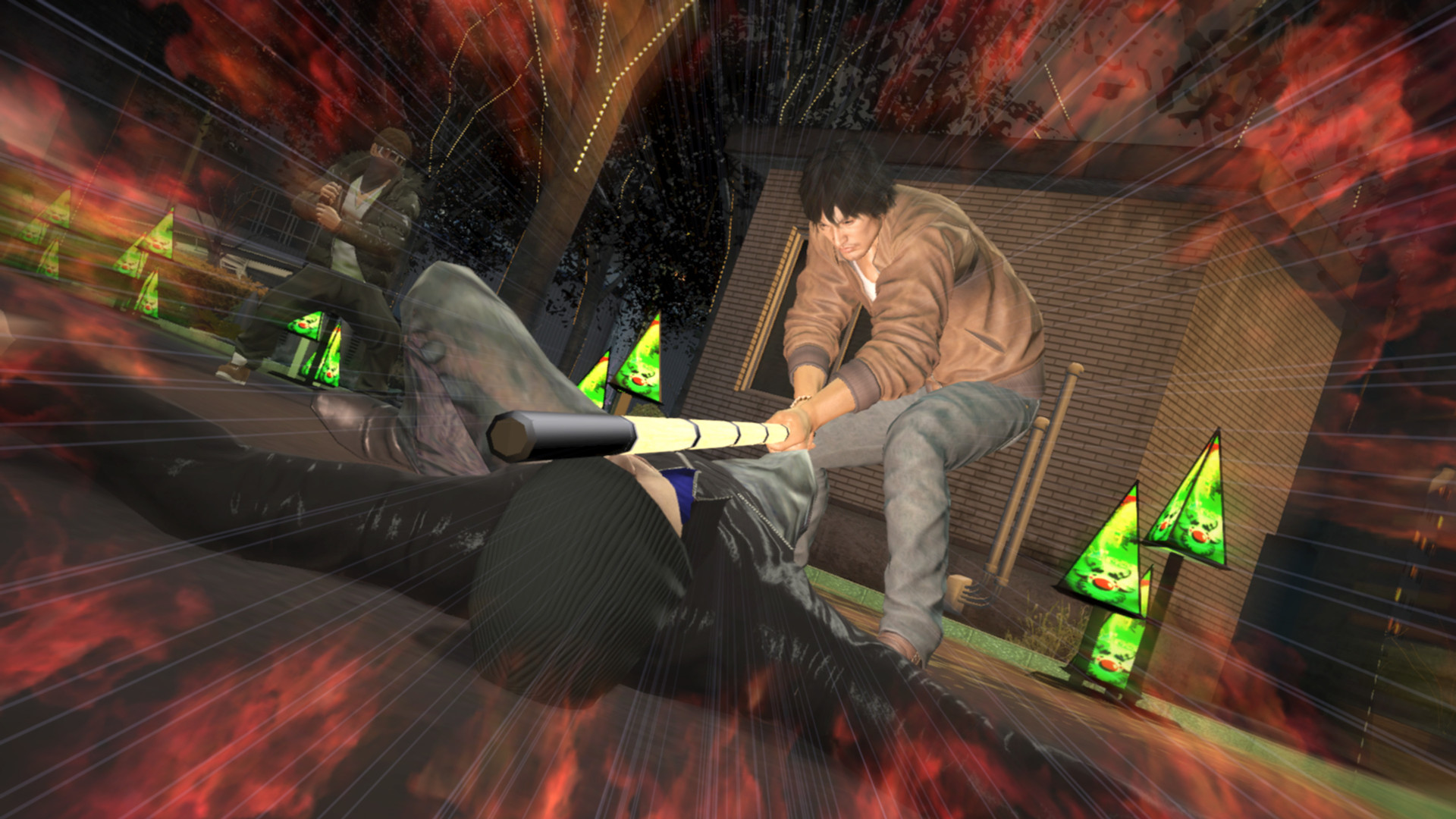
The series’ real-time street combat remains central for the four men. Fights begin during story events or when hostile groups approach on the street, then shift into close-range exchanges built from strikes, heavy attacks, grabs, throws, weapons and Heat Actions. Each fighter has his own move set, and the campaign’s combat sections are broken up by abilities earned through experience. The standard growth system awards Soul Points as characters level up; abilities are arranged into four categories covering Heat, new techniques, health and grappling, and Heat Actions. This creates a direct loop between exploration and fighting: street encounters and plot battles build experience, points unlock combat options, and those options broaden how a character handles later groups. Haruka is the deliberate exception to the men’s brawling chapters. Her performances use rhythm-game battles, so the campaign changes its core action language when it follows her idol work.
Kiryu’s Fukuoka chapter makes his taxi job the centre of an extended side story. Passenger requests turn ordinary driving into small tests of attention: a customer may ask for a careful ride, a fast trip or for Kiryu to follow another car. These missions reward staying aware of the road and the request instead of treating every trip as a race. A separate thread pits him against the Devil Killers, a dangerous street-racing group, in highway races. The car can be tuned by changing parts such as its tyres, giving those races a preparation layer before the player takes on rivals. The contrast is intentional within the game’s structure: Kiryu’s public routine requires him to drive customers around and keep a low profile, while the racing encounters turn the same vehicle into a way to confront the group threatening that life.
Saejima’s section leaves the urban streets for a remote settlement and the surrounding snow country. Its survival-flavoured hunting activity asks him to track and hunt wild animals using a rifle or traps, with prey and conditions shaping the approach. Hunting supplies food in the mountain setting, so the activity is tied to survival rather than presented only as a score challenge. The weather changes in real time, making the landscape itself part of the routine as Saejima moves between the settlement and hunting grounds. The people he meets there, including the hunter Okudera, are part of a self-contained story about a community protecting its secrets and an elusive legendary bear. Hunting and the settlement’s drama share the same space, giving this chapter a slower rhythm than the city brawling elsewhere in the game.
Haruka’s Osaka story turns the familiar question of how to progress into idol training and work. A schedule board presents jobs such as handshake events, interviews and television appearances. Completing work develops her abilities and brings in money and fans, which in turn expands the work available to her. Lessons, practice with teachers she meets through idol activities, and dance battles provide other routes for improvement. When rivals challenge her, the encounters are rhythm-based live battles rather than fistfights. This changes both the inputs and the stakes: performance, audience response and popularity become the measures of progress, while Haruka’s work creates a separate personal story within the wider ensemble plot. It is a management and rhythm-game path with its own activities, rewards and character development.
Shinada’s Nagoya chapter is built around baseball and the life he has led since leaving the professional game. His Another Drama is not the same as the batting centre minigame found elsewhere in the series. Instead, it stages batting contests against a range of opponents, with dramatic sequences around the matches and a training relationship with his former coach, Igarashi. Some of that preparation takes the form of unusual lessons, including fishing, and develops Shinada’s abilities ahead of later contests. The opponents include former rivals and younger players, so the activity links skill challenges to the chapter’s story about people whose sporting ambitions were interrupted. Its progression is consequently different again: the player follows a sequence of training and batting confrontations rather than earning gains through the men’s standard street-fight routine or Haruka’s idol jobs.
The five districts are given local character through their weather, dialect and streets, with shops and venues reflecting the different parts of Japan represented in the story. Each also houses familiar diversions such as karaoke, batting, fishing, gambling and arcade games, giving the player activities to pursue between plot chapters. Substories introduce residents and local problems that can be followed alongside the central conflict, while restaurants and shops let the player stop and move through the neighborhoods at a quieter pace. That shared city layer connects the otherwise different protagonist routes: the player can leave a chapter’s central activity for a local story or pastime, then return to its main objective. The broader structure allows the five settings to function as more than backdrops, since the player can spend time in each city, meet its residents, and decide when to resume the main story.
- Developer
- Ryu Ga Gotoku Studio
- Genre
- Action-adventure