
About Yakuza 3 Remastered
Kazuma Kiryu leaves Tokyo to raise Haruka and a group of children at Morning Glory, an orphanage beside the Okinawan coast. When development plans threaten their home, he is drawn into a dispute involving local yakuza and powerful outside interests. The story shifts between Okinawa and Kamurocho, mixing real-time brawling with side stories and city pastimes.
Yakuza 3 Remastered follows Kazuma Kiryu after he steps away from the Tojo Clan and moves with Haruka to Okinawa. They run Morning Glory, a small orphanage where several children have found a home, and Kiryu hopes to build a quieter life around caring for them. That plan is challenged when the government and criminal organizations take an interest in the beachfront property around the facility. What begins as a local land dispute links Okinawan development plans with the wider yakuza world Kiryu tried to leave behind. The story’s central tension is therefore close to home: his past gives him the experience to confront danger, while his new responsibilities give him a reason to resist being drawn back into it.
Morning Glory gives the opening stretch a domestic rhythm that differs from the series’ usual city streets. Kiryu and Haruka share daily life with the children, and conversations, requests and individual side stories show their personalities through school worries, disagreements and play. The player can speak with people around the home, respond to situations involving the children and spend time with Haruka outside the orphanage, building her trust through outings. These quieter interactions establish what Kiryu is protecting before the story’s conflicts widen. They also place the orphanage itself in the world: the children are a household with separate needs and relationships, rather than a backdrop to the adult dispute over the land.
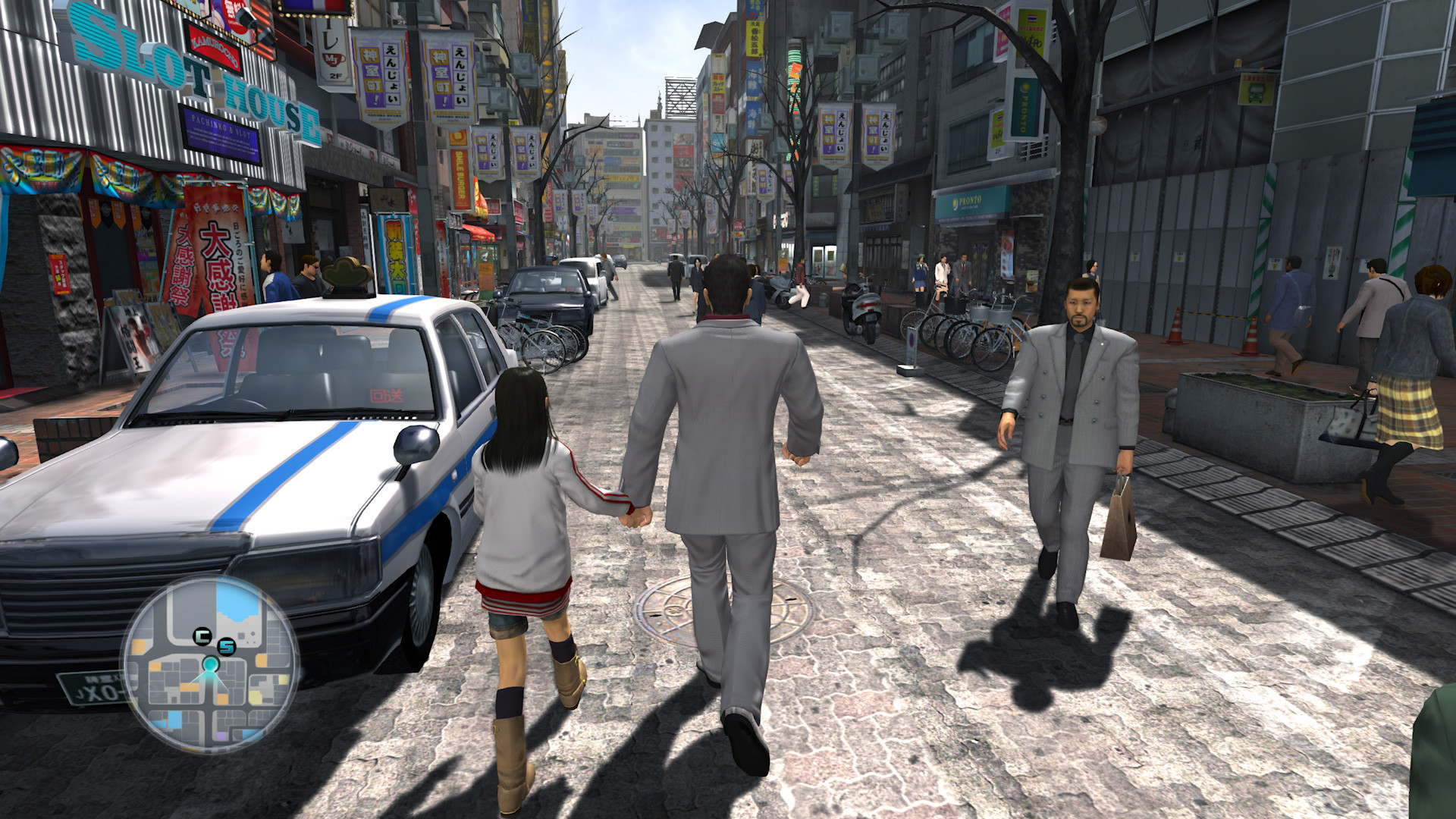
Okinawa is represented by the Ryukyu district and the beachside neighborhood around Morning Glory. Kiryu’s move from Kamurocho changes the local cast as well as the scenery. The Ryudo Family is the Okinawan yakuza group tied to the land dispute, led by Shigeru Nakahara; its young lieutenant Rikiya Shimabukuro initially distrusts the mainlander Kiryu. As the two men deal with the same pressure on the orphanage, Rikiya and his friend Mikio bring a local perspective to the conflict. Players move through the district on foot, visit shops and public spaces, take on substories, and encounter people whose requests can become short narrative detours. The setting connects everyday neighborhood life to the larger political and criminal struggle without revealing its later turns.
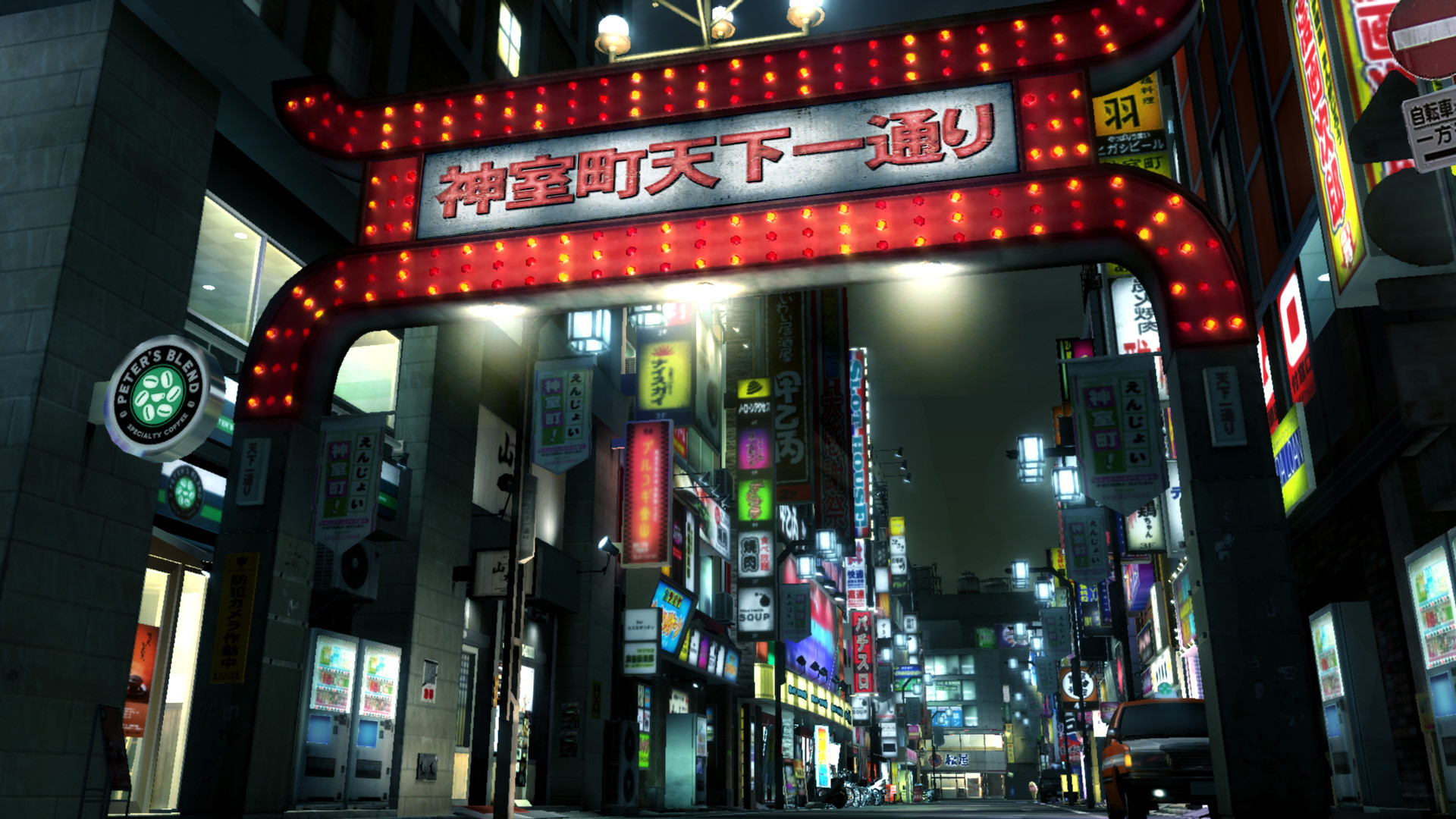
The plot eventually brings Kiryu back to Kamurocho, the familiar Tokyo entertainment district, where the Tojo Clan’s leadership and its internal divisions again become part of the story. The cast includes chairman Daigo Dojima and senior figures with competing interests, while the mystery around the Okinawa land plans follows Kiryu into the city. The shift between the two locations gives the investigation a different texture: Ryukyu’s beachfront and local businesses sit alongside Kamurocho’s busier streets, bars and entertainment venues. In either district, story scenes, substories and unscripted fights break up movement through the city. Talking to residents can lead to a compact personal episode, while other encounters turn exploration into a direct fight.
Combat is a real-time brawler system built around Kiryu’s punches, kicks, grabs, quicksteps and Heat Actions. A light-attack string can be extended with heavier finishing blows, and a grab can hold, strike or throw an enemy; quicksteps create space or help Kiryu move around an opponent. As attacks build the Heat Gauge, the player can spend Heat on contextual finishers, including moves that take advantage of a nearby object or a vulnerable enemy. Ordinary street opponents, armed foes and bosses demand different responses, so guarding, evasion and positioning matter alongside attacking. Some transitions from confrontation into combat are seamless, and chase battles add a pursuit sequence in which the player follows a fleeing target through the streets.
Experience, rather than yen, is the resource that advances Kiryu’s abilities. Fighting and other activities fill an experience meter; each 1,000 points grants a level point that can be spent in one of four branches. Soul skills change how Heat builds or expand its gauge, Tech skills add offensive and defensive moves, Body skills improve health and grapples, and Heat skills add Heat Actions or related effects. Side stories also provide experience, making them one path to new abilities as well as narrative episodes. Money has a separate practical role: Kiryu spends yen on food, recovery items, weapons, gear and other services. Keeping the systems distinct matters here: purchases do not replace the level-point ability tree, and experience is not simply cash for upgrading stats.
The districts also contain play spots and training that extend beyond street fights. Karaoke, darts, billiards, fishing and golf are among the named activities, while cabaret-club work asks Kiryu to help develop a hostess through customer service and presentation. Combat training with masters can add techniques outside the ordinary ability branches. Revelations add another route to moves: photographer Mack Shinozuka messages Kiryu about an unusual scene, the player observes and photographs it, then selects the insight that corresponds to a new technique. The system turns comic or striking moments in the cities into combat lessons, complementing experience-based upgrades with discoveries tied to specific observations. Together these modes let time in Okinawa and Tokyo alternate between the main investigation, personal side stories, training and independent activities.
- Developer
- Ryu Ga Gotoku Studio; published by SEGA
- Genre
- Action adventure with real-time brawler combat and city activities