
About XCOM: Enemy Unknown
XCOM: Enemy Unknown is a turn-based strategy game about directing an international defence force during an alien invasion of Earth. As commander, you manage the headquarters, research recovered technology, protect Council nations and lead soldiers through tactical missions where movement, cover, class abilities and survival determine whether a squad can complete its objectives.
XCOM: Enemy Unknown places the player in command of a secret multinational project assembled to defend Earth from an extraterrestrial invasion. The campaign moves between two connected views: a global operations layer tracking the emergency and a ground-level tactical layer where soldiers engage alien forces. The player is the commander rather than a single protagonist, directing research, engineering, recruitment, aircraft and battlefield decisions. Missions emerge as alien activity spreads, and the consequences of responding or allowing a threat to continue feed back into the organisation’s resources and international support. The central task is therefore broader than winning an individual firefight: XCOM must remain capable of answering the next alert while member nations continue backing the project.
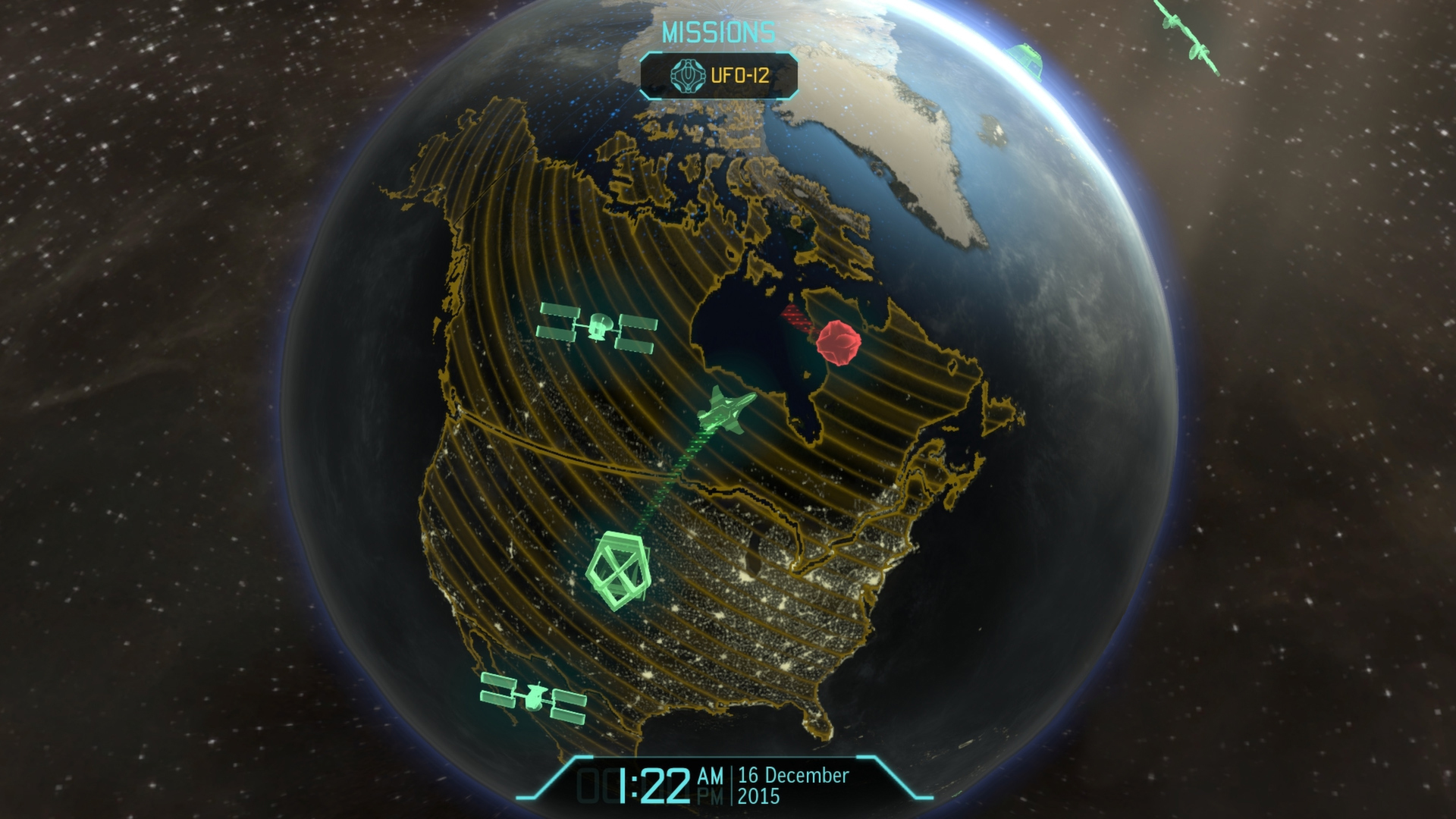
Mission Control presents Earth on the hologlobe and uses XCOM’s satellite network to scan for alien contacts. Detecting an incident creates an operation to launch from the global map; when departments are busy, scanning also advances time while research and construction continue. The Situation Room tracks the Council nations that finance the project, with a panic gauge for each country. If panic becomes critical, a nation can withdraw with its funding and material support, and losing too many members ends the project. Launching satellites expands coverage and increases funding, so their placement is a strategic commitment with consequences for both income and regional protection. The player weighs an immediate deployment against the need to keep the organisation’s worldwide network intact.
Research and Engineering turn recovered alien material into practical capacity. The Research Lab lets the team pursue one project at a time, with new options appearing as the campaign uncovers further subjects; changing projects halts work on the current one. Engineering then fabricates items and weapons, orders vehicles that take time to manufacture, and builds headquarters facilities such as power generators and satellite uplinks. Construction is not immediate, so a new room or piece of infrastructure represents a decision made ahead of a later need. The headquarters also has limited space: the player excavates deeper as it fills, while some same-type facilities gain an adjacency bonus. These linked systems make scientific discovery only one part of progress; research must be translated into equipment and a functioning base.
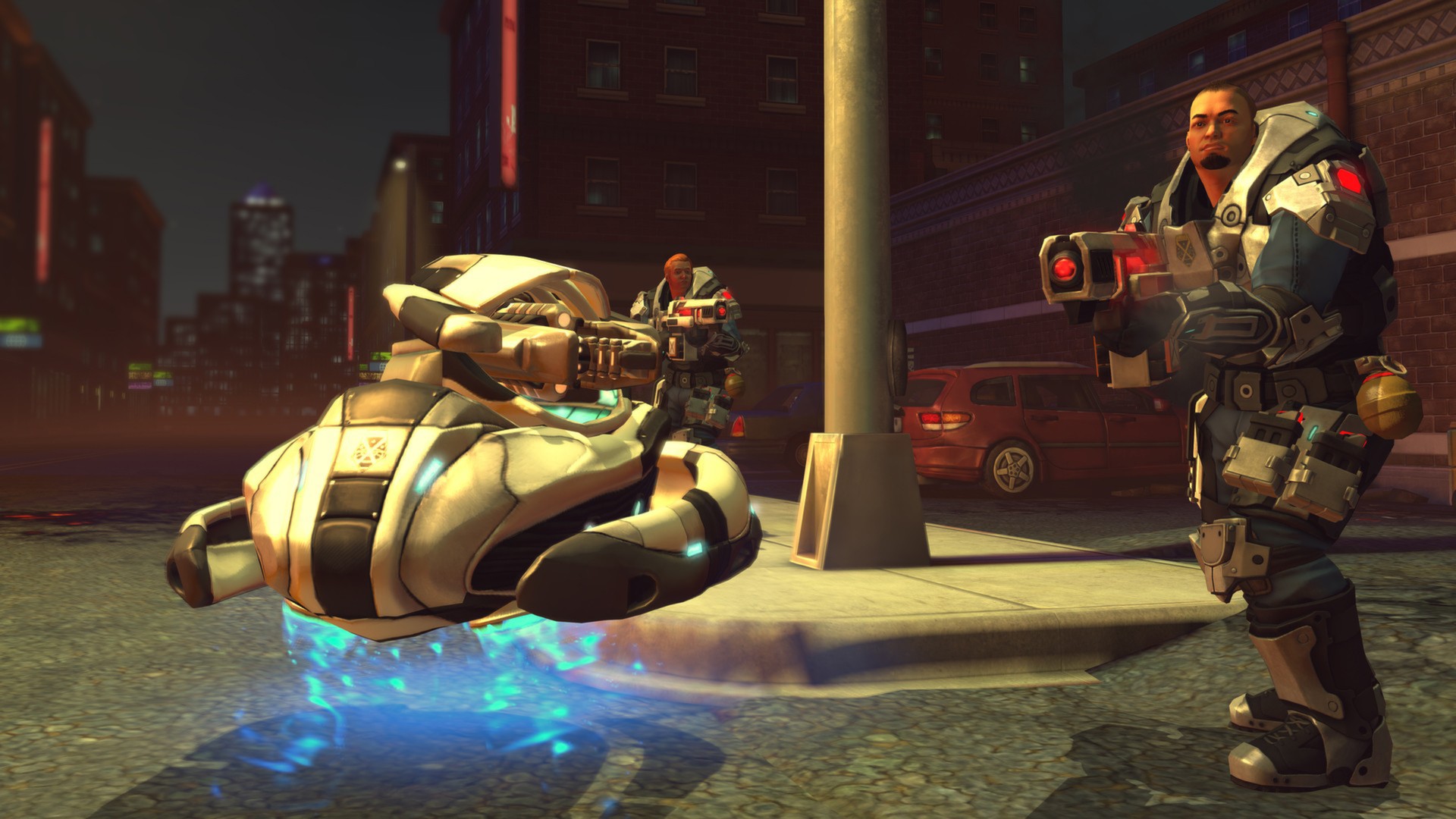
The Barracks hold the roster, allow additional soldiers to be hired and provide appearance, voice and tone customisation. On missions, each soldier has a limited movement range and normally receives two movement actions; a Dash spends the available movement at once to reach farther. Position matters because the map’s cover is graded as low or high, while a yellow shield warns that an enemy is flanking a soldier. A protected position can help a unit survive, but staying behind the same obstacle may leave the squad vulnerable if an alien gets around it. Soldiers killed in combat are permanently removed from the roster, making extraction, healing and careful placement part of force preservation rather than an optional cleanup after a successful objective.
Combat is organised around squad turns, movement, weapon attacks and soldier abilities. Each class has specialised abilities that become available as its soldiers gain ranks, and equipment choices can add further combat options. An action can end the soldier’s turn even when movement remains, which makes the order of movement and attack important. Run and Gun is a named exception that lets a soldier move and fire in the same turn. Overwatch allows a unit to hold position for a shot when an enemy moves into view, while Hunker Down trades a soldier’s immediate contribution for increased defence. Together, those commands let the squad control lanes, respond to advancing enemies and make measured attempts to break a dangerous position.
Between deployments, Officer Training School upgrades become available according to the highest rank reached by any soldier, while the Hangar manages the Interceptor fleet. Interceptors engage hostile craft detected through Mission Control and protect areas where satellite coverage has been established; commanders can station aircraft on different continents and modify their weapons. A soldier’s field rank and an organisation-wide upgrade therefore develop on separate tracks from aircraft readiness and base facilities. The campaign asks the player to distribute limited attention among these layers: personnel need time to gain experience, projects need uninterrupted research, construction takes days, and international support can deteriorate while those plans are underway.
A soldier who survives a dangerous mission may still need recovery before the next deployment. Medikits fabricated by Engineering can restore health or stabilize a critically wounded unit in the field, provided a soldier carries one into battle. A fatal loss cannot be reversed: the fallen soldier leaves the active roster, and the Barracks maintains a memorial to those killed in combat. The player can hire replacements, but the new arrival does not bring back the abilities and ranks that were lost. These consequences give equipment preparation and extraction a purpose beyond the immediate mission objective. Enemy Within is a separate expansion; the satellite, base-management and tactical systems described above belong to the original Enemy Unknown campaign.
- Developer
- Firaxis Games
- Genre
- Turn-based strategy and tactical combat