
About Wytchwood
Wytchwood is a crafting adventure set in a storybook countryside of gothic fables and strange creatures. As the old witch of the woods, gather unusual ingredients, devise spells, solve puzzles, and meet characters whose troubles invite a judgment shaped by the world’s fairy-tale logic.
Wytchwood casts the player as the old witch of the woods, travelling through an expressive countryside built from gothic fables and fairy tales. The setting is not presented as a single realistic kingdom with one historical account; it is an allegorical storybook world populated by colourful characters, creatures and familiar moral patterns. The witch’s role is active and practical: she explores, gathers what the land provides, and uses magic to affect the people and problems she encounters. That premise gives the adventure a clear rhythm. A meeting or puzzle suggests a need, the need points toward materials or knowledge, and a new spell or enchantment helps move the story onward. The game frames those encounters through the witch’s capacity to pass judgment, giving its central fantasy a mischievous edge while keeping the focus on discovery and making things.
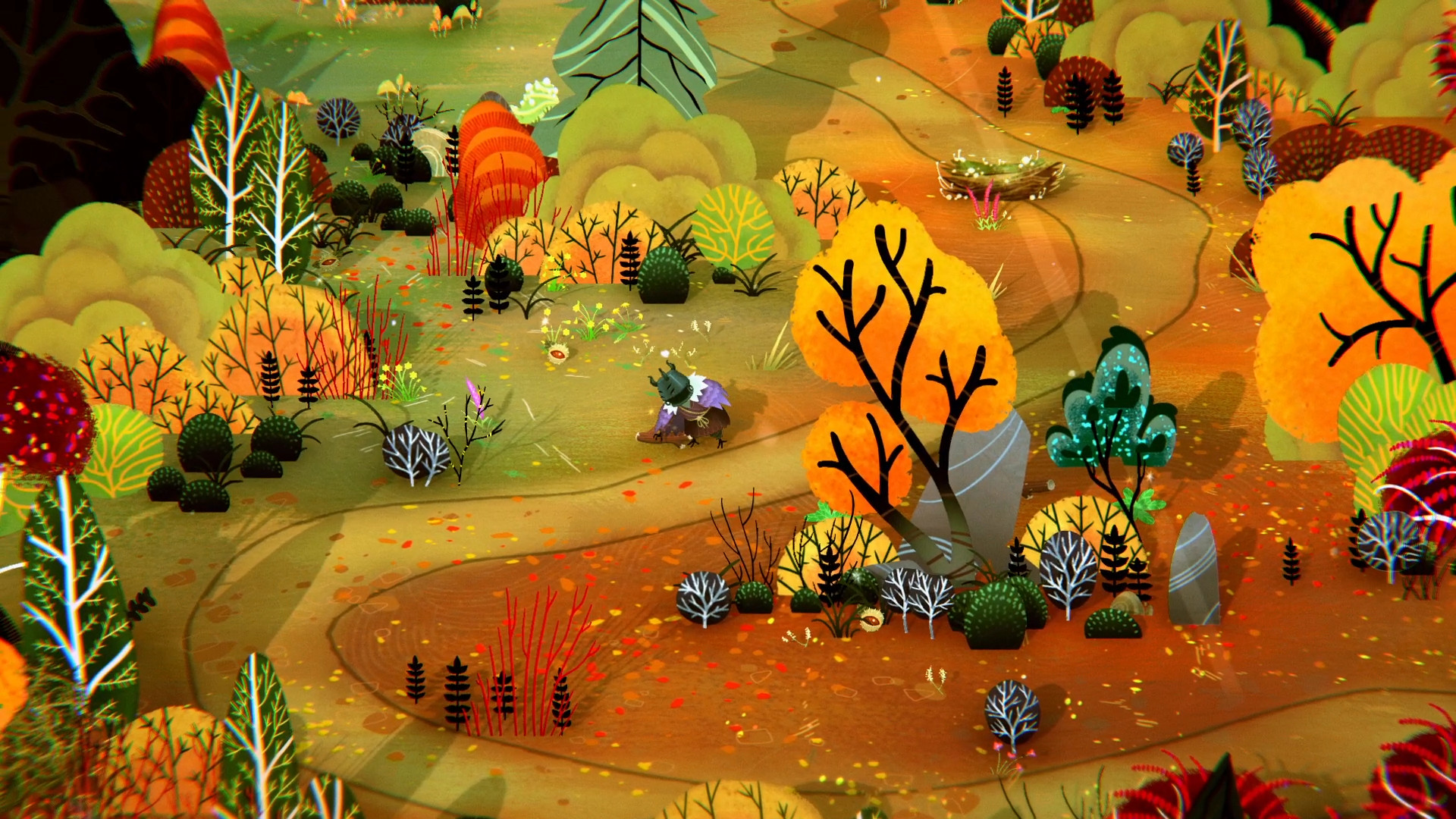
Exploration takes the witch across a strange countryside whose small details matter because ingredients are part of the route forward. The game asks you to gather, collect and grow unusual materials, with examples ranging from toxic toadstools and eye of newt to bottled fear. These are not simply decorative curiosities: they belong to the crafting vocabulary that supports the witch’s spells and sorceries. Looking over a place for useful components therefore has a purpose beyond sightseeing. The art direction presents the world as a lovingly rendered storybook, with dense ground detail, foliage and objects arranged to create a hand-composed sense of place. Alientrap’s development notes describe how the team shaped scenes so the witch could find useful objects while the layered environment remained readable. In play, that combination makes the countryside feel like a space to inspect, forage through and interpret rather than a backdrop passed between set pieces.
Crafting is the bridge between what the witch finds and what she can do. Ingredients can be gathered, collected, grown and crafted into spells and enchantments. The imagined components give recipes a folkloric character: botanical oddities sit alongside stranger substances such as fear in a bottle. Researching and concocting sorceries is a core activity, so progress involves assembling ingredients and considering how a crafted effect can address a situation. The game highlights transformations and curses, including turning the greedy into frogs and tricking the wicked. These examples establish the tone without reducing every encounter to a direct attack. Magic is a tool for changing circumstances, creating an opening or answering an obstacle with cunning. The play comes from connecting the problem in front of you to the ingredients and effects available in your repertoire.
Puzzles and strange forest monsters provide tests for that practical imagination. The witch is not framed as a conventional action hero who overcomes every threat through force; the official materials instead emphasize wit and guile. Alientrap’s development update describes a sequence in which a dog is too much for the witch’s old bones, so the solution depends on what the animal wants: meat can become bait when infused with a sleeping potion. That small example shows how observation, ingredients and spellcraft can combine to solve a problem. It also helps explain the game’s approach to creatures: they are part of the environment’s logic, with habits that can matter as much as their ability to obstruct the route. Other puzzles ask you to consider the resources at hand and use them in a way that fits the particular situation. The emphasis stays on working out a response rather than relying on reflex combat.
Conversations make the world’s inhabitants part of the adventure’s central activity. The witch encounters a capricious cast of characters, and the developer describes a dialogue system through which she can converse, curse or cure the people she meets. These interactions connect narrative and mechanics: a character’s predicament may point toward a puzzle, an ingredient or an enchantment, while the witch’s response expresses the game’s playful idea of judgment. The source material presents an allegorical world of tall tales and fantastical narratives, so its characters belong to a broad fable tradition rather than a documentary setting. Their troubles and choices give the witch reasons to intervene, but the premise leaves room for the game’s own crooked sense of fairness. The result is a story built through encounters and consequences at a local scale, as the witch learns about the countryside by dealing with the personalities who inhabit it.
The overall structure brings these pieces together in a cycle of movement, observation and making. You explore, notice what can be collected or grown, and use those materials to craft a spell. That spell can help solve a puzzle, outwit a creature or alter an encounter with a character. New situations give ingredients and enchantments further context, encouraging you to think about their uses instead of treating crafting as an isolated menu activity. Exploration has a narrative purpose: the witch responds to the needs and complications she discovers in a fable-like landscape. Wytchwood blends adventure, crafting, light investigation and storybook problem solving, held together by one protagonist whose magic is tied to the natural oddities around her.
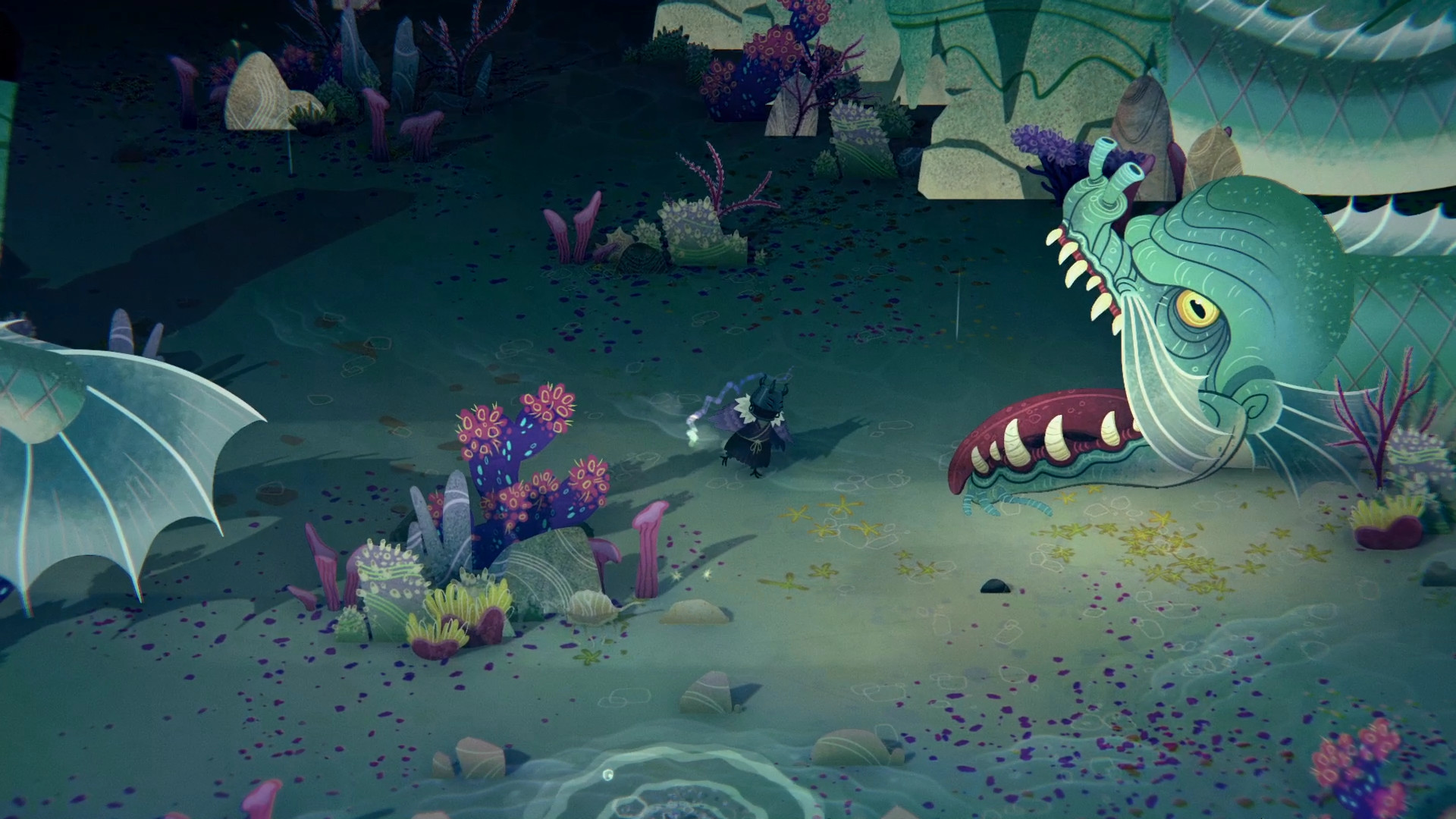
Wytchwood’s visual and thematic identity supports that blend. Its world uses storybook imagery, gothic fairy-tale motifs and colourful personas, allowing comic, eerie and fantastical details to share the same countryside. The witch’s unusual ingredients and spells make the setting feel tactile: the world is something to search, harvest and transform, not only observe. At the same time, the emphasis on conversation and allegorical characters keeps the adventure tied to stories about choices, trouble and judgment. Each part reinforces the others. The art invites close attention to the environment; exploration supplies the components for crafting; crafted magic gives puzzles and encounters more than one possible angle; and those encounters reveal more of the game’s cast and its fable-shaped outlook. Wytchwood is a single-player adventure whose distinctive center is this connection between gathering and storytelling, with the old witch moving through a handmade world by turning what she finds into ways forward.
- Developer
- Alientrap
- Genre
- Crafting adventure