
About Witchy Life Story
A young von Teasel witch is sent to Flora after a series of mishaps and given two weeks to help the village prepare its harvest festival. Customize the witch, tend a garden for spell ingredients, answer neighbors’ requests, and build relationships as personal choices shape this coming-of-age story.
The player takes the role of the youngest member of the von Teasel family, a magical lineage with an illustrious name and high expectations. After several mishaps, the protagonist’s grandmother sends them to Flora with one last chance to continue their witch training: help the villagers make their harvest festival a success. A crow familiar named Ramsey accompanies the witch. The two-week assignment ties a personal test of responsibility to a community event, giving the story both a clear deadline and a practical goal. The protagonist arrives with something to prove, while the village needs help preparing for its celebration. Their work in Flora connects everyday problems with magical solutions, from gathering garden ingredients to meeting the people who live there. Sundew frames the story as a humorous coming-of-age tale about a troublesome witch finding their place in the world. The family’s reputation, the grandmother’s ultimatum, and the festival preparations all feed that theme: the witch must turn a difficult start into a chance to show who they can become. The central question is whether they will help the village and earn another chance at training.
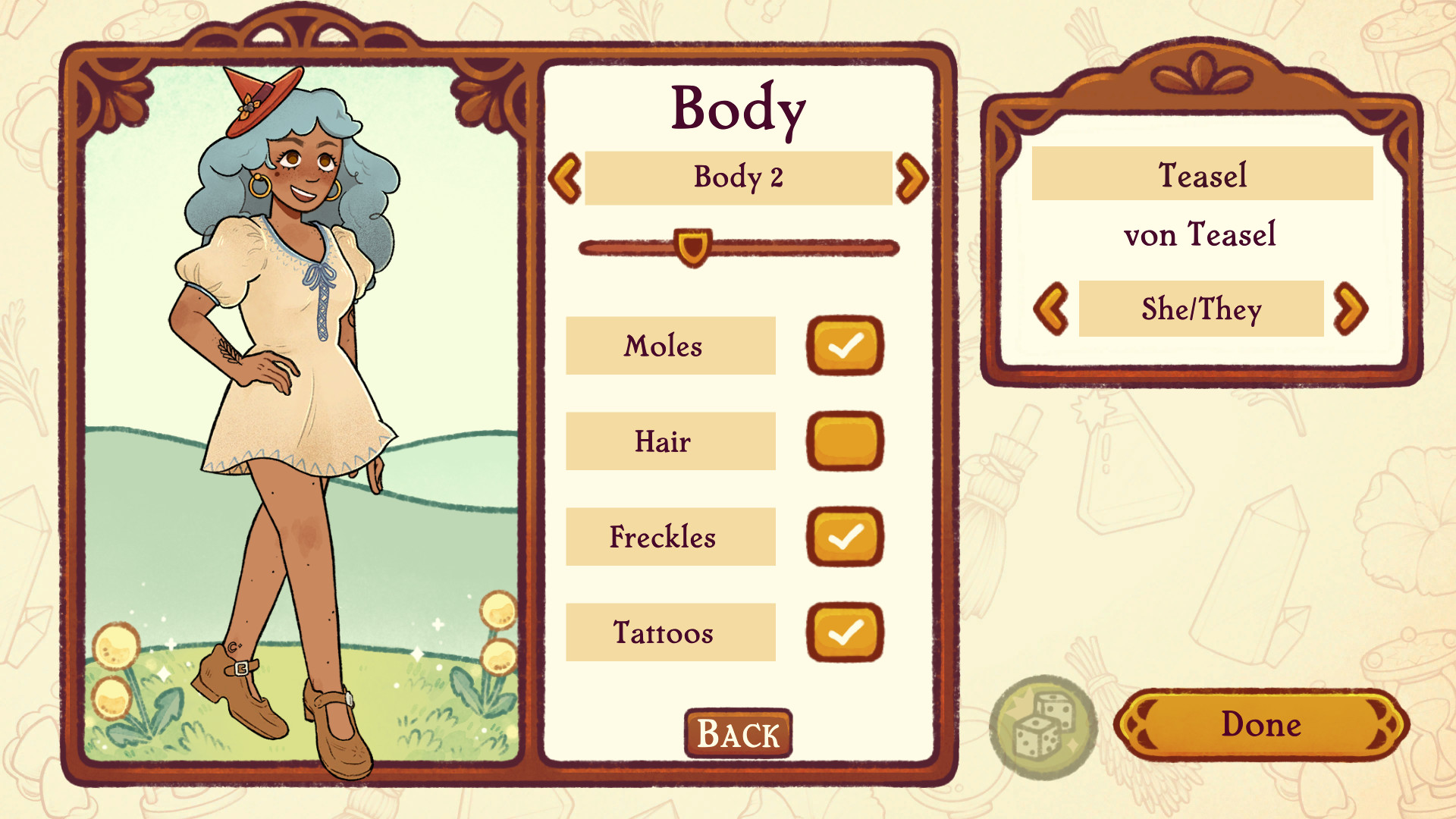
Character creation lets players design the witch’s appearance, with many customization options and an expressive, fully emotive character. The protagonist’s personality can also take shape through questionable life choices, so customization continues in the way the witch responds to Flora and its residents. Appearance establishes an individual look; dialogue and decisions give that character a manner during the visit. The player follows the witch as they meet villagers, answer requests, and work toward the festival, combining conversations with magical tasks. Ramsey travels with the protagonist as their crow familiar, adding a companion to the story’s village setting. The core assignment remains constant: this is a von Teasel witch sent to Flora by their grandmother, trying to prove themself through the festival preparations. Within that situation, the player can shape a troublesome personality and decide what sort of impression the witch makes. The character creator and life-choice system therefore complement each other: one defines the witch’s appearance, while the other gives their coming-of-age story a personal voice.
Flora’s six villagers are central to the witch’s stay. The player can befriend them and get to know their lives while helping with the harvest festival; three of the residents are romanceable, creating the possibility of a date for the celebration. Social encounters connect the community goal with the protagonist’s personal growth. The witch arrives as an outsider carrying the von Teasel name and a last chance from their grandmother, then spends the two weeks building connections in the village. Choices that shape the witch’s personality also influence how they present themself to the people they meet. Neighbor requests for small magical services give those relationships a practical dimension, while friendship and possible romance provide a more personal one. The festival gives these threads a shared destination: the villagers are preparing an event together, and the protagonist’s place among them develops during that work. The story pairs the witch’s responsibilities with opportunities to know the locals, making community life part of the main premise rather than a separate activity. The relationship possibilities include both friendship and romance, with the festival serving as a natural occasion for the latter.
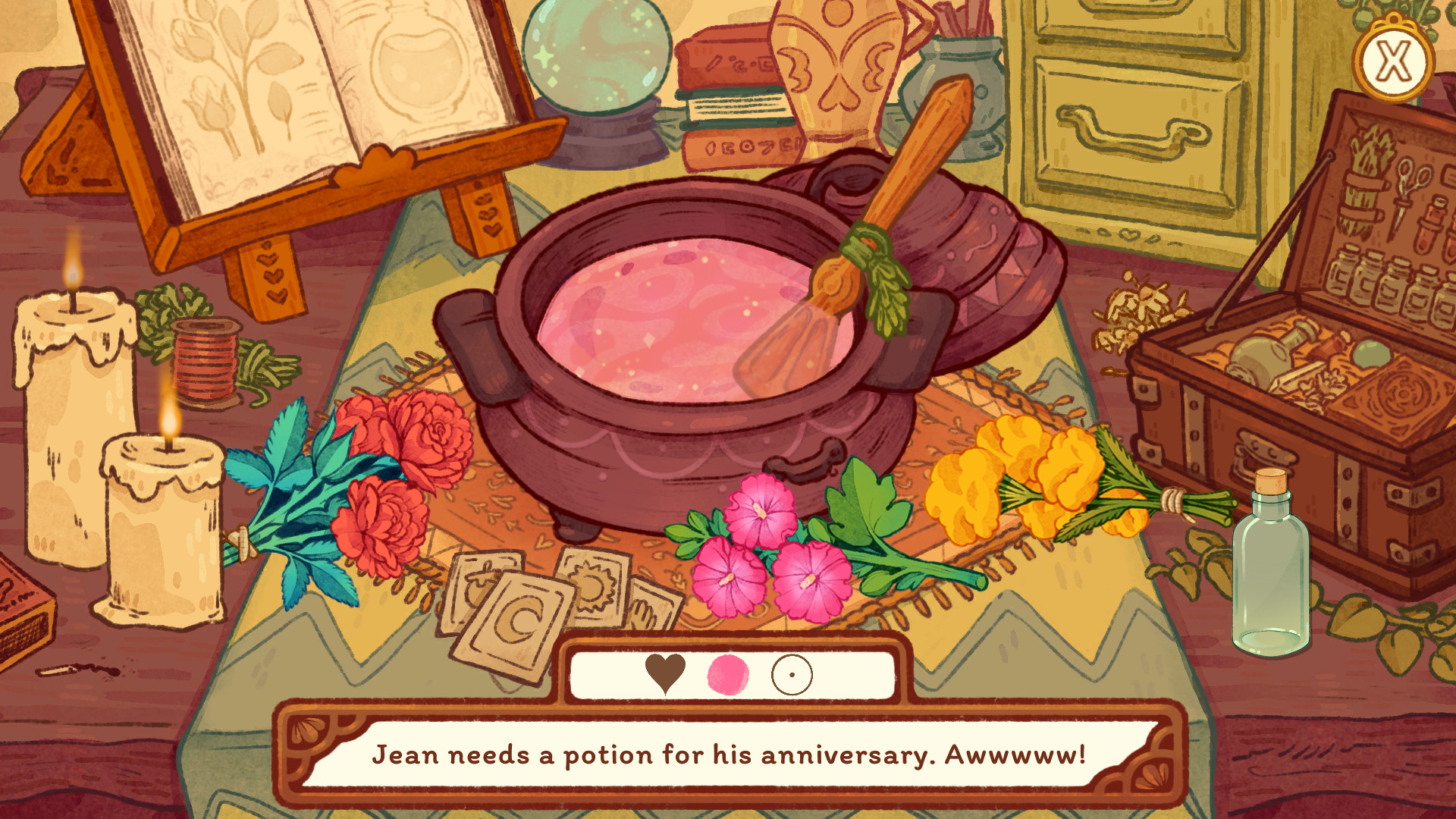
The garden supplies ingredients for the witch’s magical work. Players water, grow, and harvest ten varieties of flowers and herbs, then collect those plants for spells and rituals. Tending the plot therefore feeds directly into serving Flora: garden care produces materials for recipes and for the requests neighbors bring to the village witch. The same ingredient loop continues in Endless Mode, where players can keep collecting plants after finishing the main story. Gardening also connects with altar decoration, since plants gathered during the stay can be used alongside crystals and spells to personalize the witch’s altar. These activities make the garden both a source of materials and a place to shape the witch’s magical practice. In the main story, tending plants supports the larger two-week effort to prepare the festival, while also giving the player recurring work between conversations and magical services. The flowers and herbs are not an isolated farming feature; they become the raw materials that connect daily garden care with spellcraft, rituals, neighbor requests, and the altar.
Magic takes several forms, from practical neighbor services to readings and rituals. Requests include small spells such as relaxation incense and chitchat potions, turning ordinary social needs into reasons to use the witch’s craft. The game includes 30 spells, alongside tarot readings, incantations, aura readings, and guided meditations. Players can add an extra rune to make a spell more potent, with the possibility that the experiment may backfire. That option gives spellmaking a playful edge: a player can pursue added potency while accepting that magical tinkering may have consequences. The grimoire also supports enchanted-object crafting, letting players choose an item to enchant in Endless Mode. Together, these activities give the witch multiple ways to help Flora’s residents and develop a personal magical routine. Some tasks involve preparing a useful object or potion, while others involve performing a reading or guiding a meditation. The different forms of magic sit alongside the garden system, since plants are gathered for recipes and rituals, and the altar provides a place to arrange collected magical objects and ingredients.
The harvest festival organizes the main story and gives the witch’s two weeks in Flora a shared objective. Helping prepare the event is tied to the protagonist’s chance to continue training, so the village’s needs carry a personal consequence as well. Growing ingredients, making spells, meeting residents, and choosing how the witch behaves all contribute to this short stay before the festival. The descriptions allow for trouble and chaos as well as success, reflecting the protagonist’s troublesome reputation and the story’s emphasis on questionable choices. The festival also brings the relationship thread into focus: the player gets to know the villagers while working toward an event that belongs to the whole community, and a date for the celebration is a possibility among the romance paths. The story’s scale stays close to the village and its people. Rather than assigning the witch a distant quest, it asks them to help a local gathering succeed and decide how to relate to the people they meet. Their family background sets the pressure; their actions in Flora determine how they approach it.
After the main story, Endless Mode opens from the title screen once the game is complete, regardless of the festival ending. It moves the focus from the two-week deadline to continued witch activities: players can craft the main game’s spells and enchanted objects, make custom spells from ingredient combinations, tend the garden for more supplies, decorate the altar, perform tarot readings, and return to the character creator. The mode also uses a 28-day moon clock for players who want their magical practice to follow lunar cycles. This gives the garden and spellcraft a continuing role after the festival story ends. Custom spell combinations extend the ingredient system, while enchanted objects add another outlet for the grimoire and altar. The player can keep collecting plants, experimenting with recipes, and arranging the witch’s magical space without the village celebration as the immediate objective. Endless Mode thus carries forward the game’s crafting, gardening, readings, and customization into a relaxed post-story format, where those systems can be revisited as ongoing activities.
The game’s presentation puts the customizable witch at the center of its scenes and interfaces. The character creator supports an expressive, fully emotive protagonist, while the altar can be decorated with collected plants, crystals, and spells. Sundew’s credits list separate character and background art, objects, backgrounds, and interface art, reflecting the variety of visual elements around the witch: the residents of Flora, garden, magical items, and the spaces used for crafting and readings. The player can also return to character creation in Endless Mode, carrying the customization feature beyond the main story. Sundew Studios developed and published the Steam PC release, and the game later arrived on Nintendo Switch and Xbox consoles. The developer announced controller support alongside the console releases. The platform editions center on the same witch, village, festival, and magical activities, presenting a narrative about a customized protagonist finding a place in Flora while tending a garden and helping its residents.
- Developer
- Sundew Studios
- Genre
- Narrative simulation / visual novel with gardening, crafting, and relationship systems