
About Wildermyth
Wildermyth is a procedural, character-focused tactical role-playing game set in the Yondering Lands. Guide a company of heroes through story campaigns or randomized adventures, making choices that shape their relationships, abilities, transformations, and fates. Completing a campaign can carry surviving or retired heroes into a legacy available for future adventures.
Wildermyth frames fantasy adventure as a collection of campaigns in the Yondering Lands, a hand-painted world where heroes face strange creatures and changing threats. Some campaigns follow authored stories and recurring themes; others assemble chapters and major encounters in a randomized order. The game draws on tabletop role-playing conventions, but the player directs the whole company rather than a single protagonist. A new group begins with ordinary people who can become celebrated fighters as events and battles shape their lives. Each run gives its heroes generated histories, personalities, appearances, and relationships, while player decisions influence where those personal arcs go. The result is a tactical role-playing structure in which the company’s larger mission and the evolving cast develop together.
A campaign is organized into chapters, with three- and five-chapter formats and a major Keystone event serving as a chapter’s climactic battle. Story campaigns have a set narrative designed by the developers, including Age of Ulstryx, a shorter introduction, and longer stories involving factions such as the Drauven, Thrixl, Morthagi, and Deepists. Generic campaigns instead draw a randomized sequence of chapters and Keystone events; they can be played in three- or five-chapter forms, including with heroes selected from a legacy. These modes give the player different kinds of structure: a fixed campaign develops a specific story, while a generic one recombines parts of the setting. Across either format, the party leaves the overland map to resolve encounters and return to the wider campaign.
On the overland map, the company scouts territories, visits towns and sites, responds to threats, and decides where to spend time. New areas open as chapters progress, and rivers or mountain ranges can constrain travel until the group builds bridges or passes. Some locations hold enemies, while others provide opportunities to improve the region or pursue quests. Travel and other activity advance the campaign clock, and calamities add cards that strengthen enemy forces or introduce further dangers. The company earns legacy points that can be used to recruit heroes, construct stations, or remove calamity cards. Materials gathered during the campaign support crafting better equipment. These systems connect exploration to battle readiness: choosing a detour or construction project may offer a reward, but it also means the surrounding threats continue to develop.
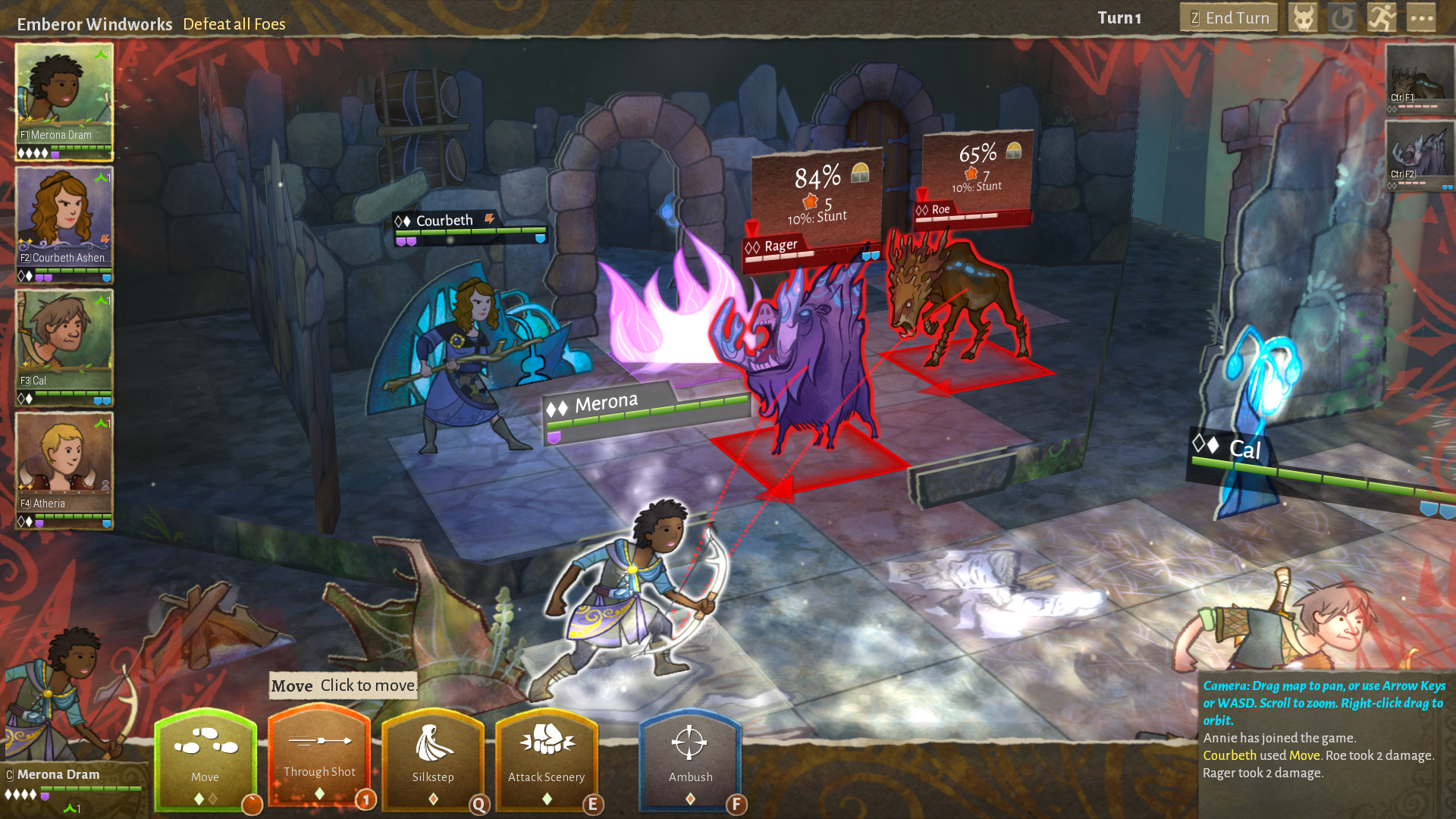
Battles take place on tile-based maps where positioning and cooperation determine what the company can accomplish. Heroes move, attack, use abilities, and interact with the battlefield; taking cover and standing beside allies can provide defensive benefits. Flanking rewards coordinated attacks: once a target has been attacked, a strike from the opposing side during the same turn is guaranteed to hit, and daggers deal increased damage when they flank. The order and angle of attacks therefore matter as much as selecting a target. Terrain can become part of a character’s toolkit as well. Mystics use interfusion to connect with nearby scenery and turn the environment into magical attacks or other effects, so a battlefield with different objects can create different tactical openings. Enemies have distinct abilities, and calamities can make later encounters harder if the company allows the pressure to build.
Heroes grow through combat, events, and decisions rather than following one fixed build. After gaining experience, they can choose from new abilities, with the available options varying as the character develops. Equipment upgrades improve their effectiveness, while relationships and personal histories create further narrative events. Encounters can lead to romance, disagreement, sacrifice, or a supernatural transformation that changes both appearance and combat capabilities. Injury also presents a choice: a hero may fall back from a fight with a lasting maiming and continue along a changed path, or die and be remembered. Retirement and aging mean that the original group may not remain together forever. The company’s story comes from these linked changes, but specific relationships, transformations, and outcomes depend on the decisions and events that occur in a given campaign.
When a campaign ends, its surviving or retired heroes can be added to the player’s legacy, alongside heroes preserved through certain in-game outcomes. A legacy is a roster of characters and accomplishments that can be drawn on in later adventures. Legacy heroes may be selected to begin some campaigns or recruited during others, using legacy points; their saved history, transformations, and some abilities make them recognizable continuations of earlier stories. Promotion preserves a hero’s current equipment, history, transformations, and abilities, while the length of the completed campaign affects how many promotions are available. Returning characters can still age, and recruitment adjusts some parts of their equipment and chosen abilities to fit the new campaign. The legacy therefore links separate adventures without fixing what their next chapter must be.
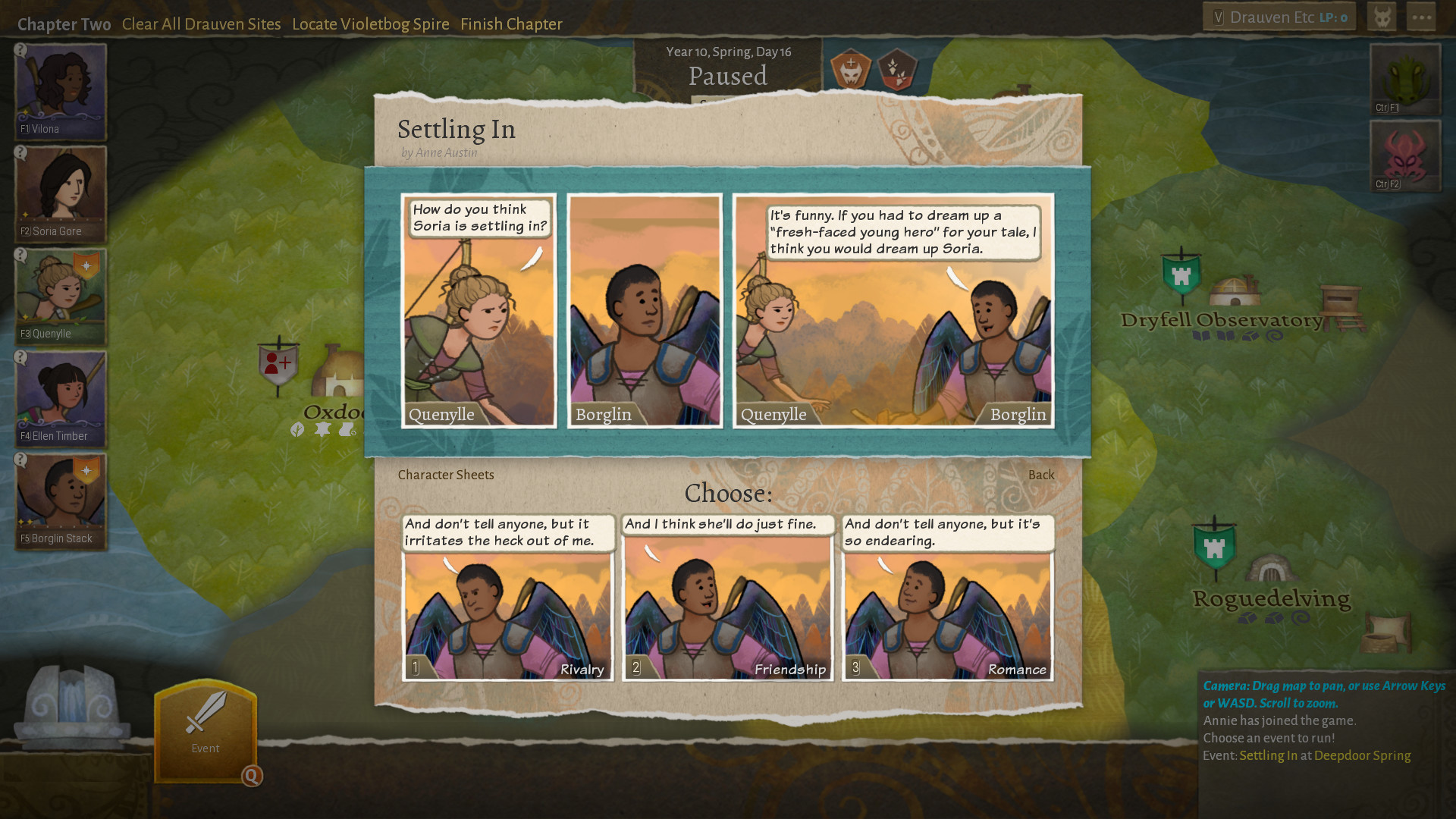
The game also supports cooperative campaign play, where players customize and control heroes together, and includes different difficulty settings for combat and overland pressure. These options adjust how demanding battles and the campaign clock feel while keeping the same broad rhythm of scouting, resolving encounters, improving the company, and preparing for the next chapter. The generated storytelling is shaped by a mixture of authored events and procedural characters, maps, enemies, and story combinations; it does not mean every campaign is wholly improvised or that every plot element changes. The world retains recognizable factions, systems, and story campaigns, while the people who pass through them can accumulate distinct histories. Each completed adventure can thus add heroes and remembered changes to a growing pantheon that the player can revisit.
- Developer
- Worldwalker Games, LLC
- Genre
- Tactical role-playing game