
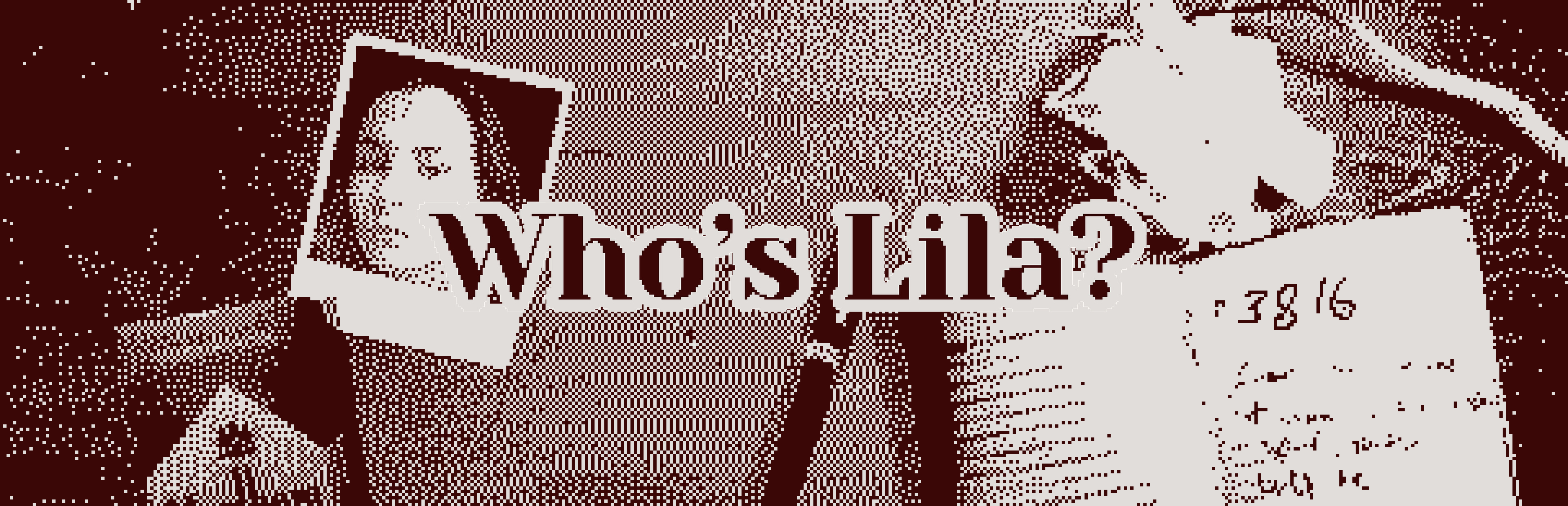
About Who's Lila?
Tanya Kennedy has disappeared, and William was reportedly the last person to see her. Who's Lila? makes his attempts to answer other people into a physical puzzle: the player drags parts of his face into an expression, and the game interprets the emotion. Conversations branch, locations hold clues, and repeated paths gradually expose a stranger mystery.
Tanya Kennedy is missing, and the people around William know that he was the last person reported to have seen her. That suspicion makes ordinary encounters difficult for someone who already describes expressing emotion as a conscious effort. He rehearses the face he intends to show before meeting other people; in Who's Lila?, the player takes on that work directly. The game begins as an investigation in which William's own conduct is among the things being examined. Friends at school, other acquaintances and later investigators respond to what he appears to feel, not just to the words a conventional adventure game would let him choose. It leaves the central facts unsettled. What happened to Tanya? What does William know, and why does a question about Lila keep pressing into the search? The missing-person premise supplies a route through familiar places, but the unease comes from the distance between a face, an intention and somebody else's reading of both. An expression that seems reassuring to the player can appear inappropriate to a frightened speaker. The conversation then becomes another piece of evidence about William's place in the mystery.
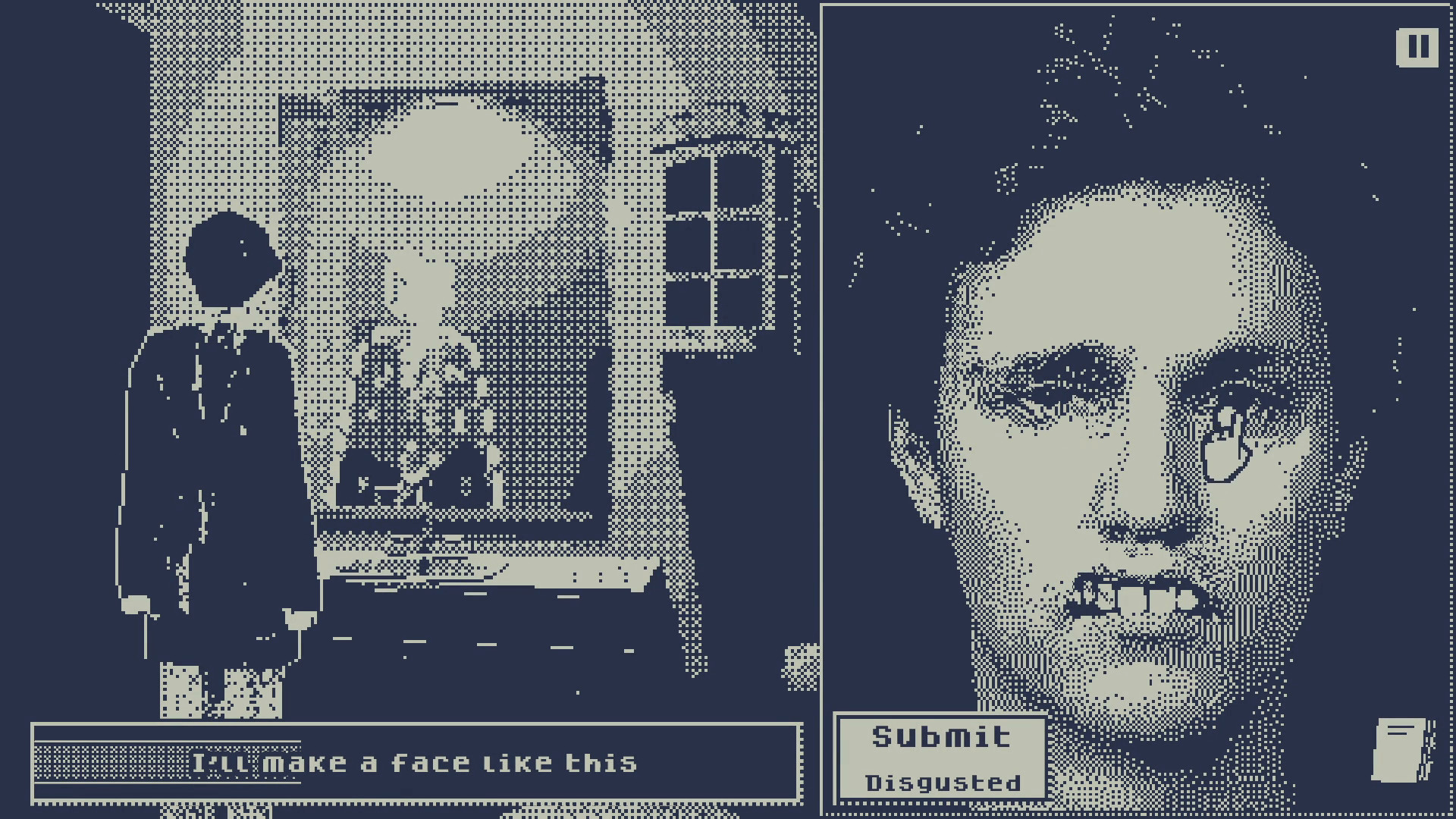
During dialogue, the screen brings William's face close enough for the player to manipulate it. The mouth, eyes and other features can be pulled into a smile, fear, surprise or a less certain combination; a trained emotion-recognition system interprets the final arrangement and selects a response. This is not a cosmetic animation laid over a fixed dialogue tree. The emotion registered by the game can change how a person reacts and which branch opens next. In the normal mode, there is limited time to form a reply, and William's face may move on its own while the player tries to hold an expression. The easy option allows longer to respond and stops that independent movement, changing the pressure without replacing the central mechanic. What matters is the expression the system recognises, which may differ from the one the player intended. That gap is part of the fiction as well as a practical challenge: William does not communicate through a perfectly controlled interface, and a conversation can shift because a face has conveyed the wrong feeling at the wrong moment. Reading another character's mood becomes as important as knowing the next fact to reveal.
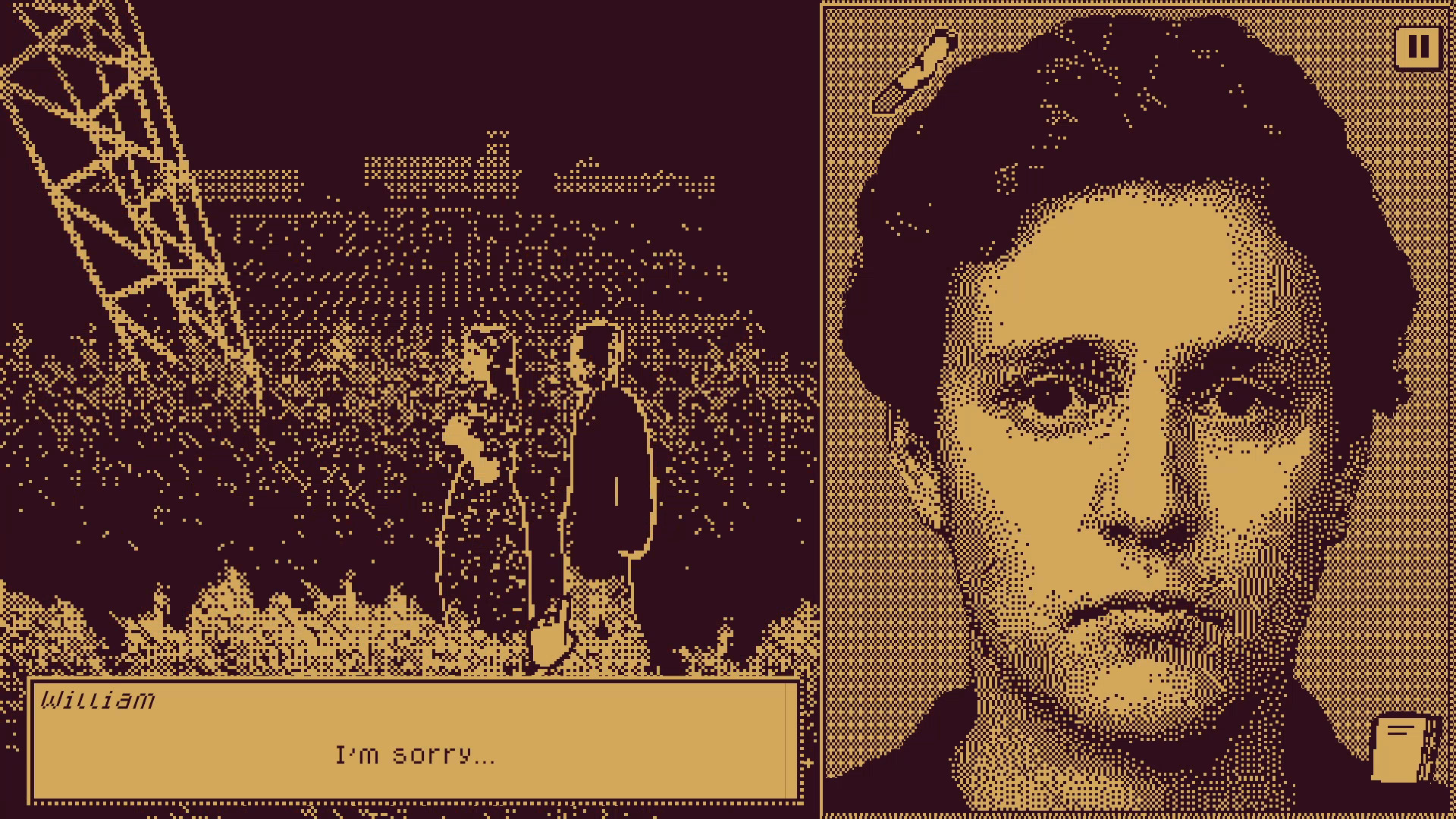
The rest of William's day works as a point-and-click adventure. He can inspect a scene, interact with objects and sometimes retain an item for use elsewhere. A hotspot highlighter helps identify parts of the environment that respond to a click, but it cannot explain how a discovered object connects to Tanya's disappearance. A map handles travel between places. Known destinations appear as choices, while entering an address can become another way to follow a clue to a location that has not yet been visited. School interiors, a house party and the remains of a warehouse are among the spaces the investigation can pass through. Some scenes show earlier events, so movement across the map is also movement through a story that is not being delivered in one straight chronological account. This structure asks the player to remember where a person was seen, which site has an unresolved interaction and what a different emotional reply might reveal there. It is exploration through framed scenes rather than open-world walking or action combat. William can look at the same place more than once, and its meaning may change after another branch gives him new context.
Branches are a central form of progress. Who's Lila? advertises fifteen regular endings, with additional secrets beyond a simple first route. Reaching an outcome does not mean the player has seen a single definitive account of Tanya's case; it gives another angle on the people and events surrounding William. An ending can unlock a tarot card that can be discussed with Detective Yu, who is investigating as well. That conversation gives repeated attempts a place in the wider structure instead of merely returning the player to a menu after the credits. Saving and loading allow a return to an earlier decision, and replaying a conversation with another expression can lead to a path that was closed before. The work of investigation is consequently partly experimental. An emotional choice is both a plausible response in a scene and a test of what that scene will disclose. Some routes depend on more particular combinations than an initial pass suggests. The design rewards comparing different outcomes and remembering their contradictions, while keeping the major answers out of reach for a player who treats the first ending as the whole story.
The mystery does not always stay inside the game's window. Some clues point toward material arranged as if it exists in the surrounding world, and the free Who's Lila? DAEMON add-on is associated with that broader investigation. This is an optional extension of the game's unusual evidence trail, not a reason to pretend that the base game and an external download are one inseparable file. Older web-based pieces of an alternate-reality puzzle may not remain available in precisely their original form, so their presence is best understood as part of how the work was designed rather than a guarantee about every current link. Within the game, the underlying method is consistent: examine an odd detail, try a different route, and use the result to reconsider what seemed settled. Detective Yu and the tarot cards make that process visible as the outcomes accumulate. The player is piecing together testimony, memory and constructed clues, not collecting upgrades for a combat build. That is why a small change in William's expression can have consequences as substantial as finding another address on the map.
Garage Heathen gives Who's Lila? a stark dithered appearance that can make a school hallway or an industrial room feel equally unstable. Faces are often shown in a narrow palette with pronounced shadows, so the close-up that carries a conversation is also an unsettling portrait. The developer calls the style ditherpunk and describes dream-like landscapes, surreal architecture and steam-filled factory interiors. That visual range supports the story's movement between mundane locations and scenes whose logic is harder to trust. Unlockable colour palettes change the look of later play without changing the premise; sound and music add another layer to the shifts between familiar and strange. The game includes a large original soundtrack, with different moods attached to the places William visits. Its severe imagery is not only a disguise for limited production scope. The deliberate difficulty of reading an expression in a coarse image echoes the game's question of what a face actually communicates. A scene can look like a remembered fragment, a present encounter or a disturbing invention, leaving the player to decide which observations deserve confidence as new paths appear.
The full PC game arrived in 2022. Steam currently lists Garage Heathen and IndieArk as publishers and offers a separate demo, soundtrack package and free DAEMON add-on. The developer's older itch.io product page now directs players to Steam for the game itself, so its historical release listing should not be mistaken for a current download route. These editions and extras sit around an unusually focused core: inspect places linked to Tanya, choose William's expressions by moving his face and compare the branches that follow. There is no health bar, weapon set or enemy loop to master. Its challenge is to notice how a person reads William, work out where a clue points and revisit an encounter with a different emotional signal when the first one leaves a question open. The many endings make that repetition part of the subject rather than an afterthought. Each route can sharpen or unsettle an earlier impression of who William is and why Tanya's disappearance has become the point at which these lives intersect. The title's question remains larger than any one expression can answer.
- Developer
- Garage Heathen
- Genre
- Psychological-horror point-and-click mystery