
About What Remains of Edith Finch
Edith Finch returns to her family’s sprawling Washington home to investigate the stories preserved there. Exploring rooms and keepsakes leads into first-person vignettes about different Finches, each with its own tone, perspective and way of interacting with the world. The house and its family history frame a journey through memory, imagination and uncertain explanations.
What Remains of Edith Finch is a first-person narrative adventure set around the Finch family home in Washington state. Edith returns to the house after years away and searches through the family history, trying to understand why so few Finches remain. Her relatives’ stories reach across generations, from the early twentieth century to the present, and the game moves between Edith’s exploration and short interactive episodes centred on individual family members. The framing keeps the focus on how a family remembers its past: rooms, objects, written accounts and Edith’s own narration each offer pieces of context, while the gaps between them leave space for more than one interpretation.
The Finch house is the main landscape to explore. Its crowded corridors, steep stairs, narrow passages and rooms built at different heights make the home feel as if generations have added onto it one space at a time. A room often works like a preserved portrait of the person who lived there: furniture, toys, books, photographs and other belongings suggest habits and interests before the related story begins. Doors, small openings and personal keepsakes guide Edith through the building, so progress comes from looking closely and finding ways into spaces that have been kept private. The house links the vignettes, but its unusual architecture also gives each transition a physical sense of discovery.
The family history is presented through a mix of diaries, letters, photographs and other documents. Edith reads these traces as she moves through the rooms, and the text can appear directly in the environment alongside her narration. Words may follow a wall, cross a doorway or settle near an object they describe, turning reading into part of looking around rather than a separate menu activity. Documents do not always give a complete or neutral account; they capture what someone knew, believed or chose to record. This means the player gathers impressions as well as facts, and the larger family story develops through the contrast between personal memories and the things still visible in the house.
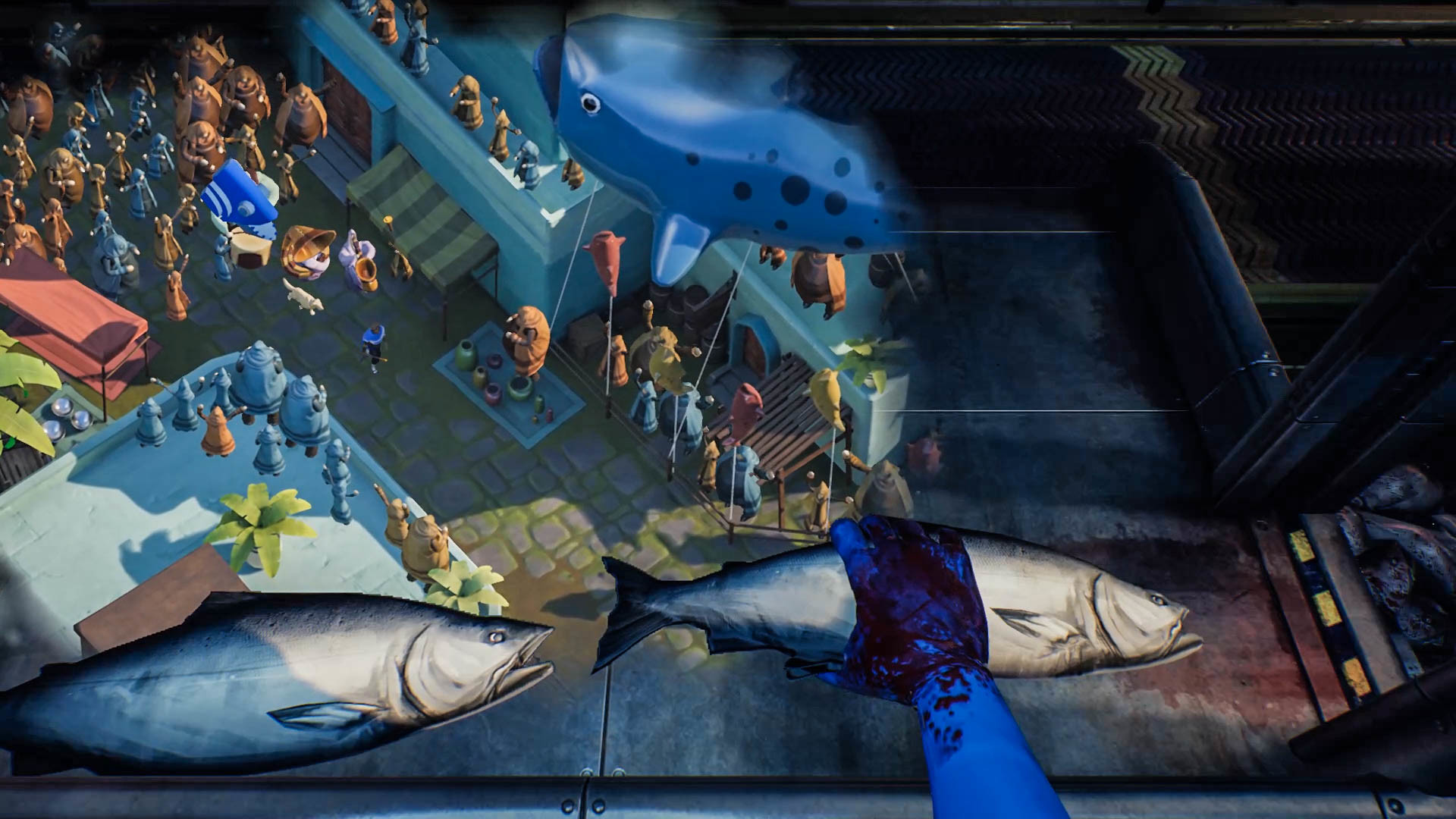
Most of the time, Edith walks, looks around and interacts with selected objects. The basic controls stay deliberately small: movement and looking are paired with a trigger interaction that can open, handle or activate something. The game uses the same limited inputs in different ways across its stories, so the player learns each scene through its actions rather than through a large set of instructions. A vignette can ask for a careful hand movement, a change in direction or a repeated rhythm. The variety is not a separate collection of unrelated minigames; each interaction is tied to the person whose story is being told, making the shift in control part of the change in viewpoint.
The family vignettes vary in tone, visual style and activity while retaining a first-person perspective. In one, the player uses two analogue sticks to coordinate a child’s legs on a swing; another has the player frame events through a camera view. Other sequences draw on the visual language of a comic, imagined animal movement or routine work, with inputs adapted to those situations. A developer interview describes how the team aimed to keep the available buttons consistent while making their responses change from story to story. That design lets the episodes feel distinct without requiring a new control vocabulary each time, and it connects the player’s physical actions to the specific memory being presented.
The stories also shift between the ordinary details of a room and imagery shaped by imagination. A keepsake can lead into a scene whose colours, framing or movement depart from the house’s grounded spaces, then return the player to Edith’s route through the home. The transition makes the vignettes feel like stories remembered or reconstructed rather than detached levels. Written narration remains visible during many sequences, so the voice of a document can share space with the action it describes. The game’s perspective stays close to each character, but the player encounters those lives through traces collected later, creating a deliberate distance between what is experienced in a vignette and what Edith can know.
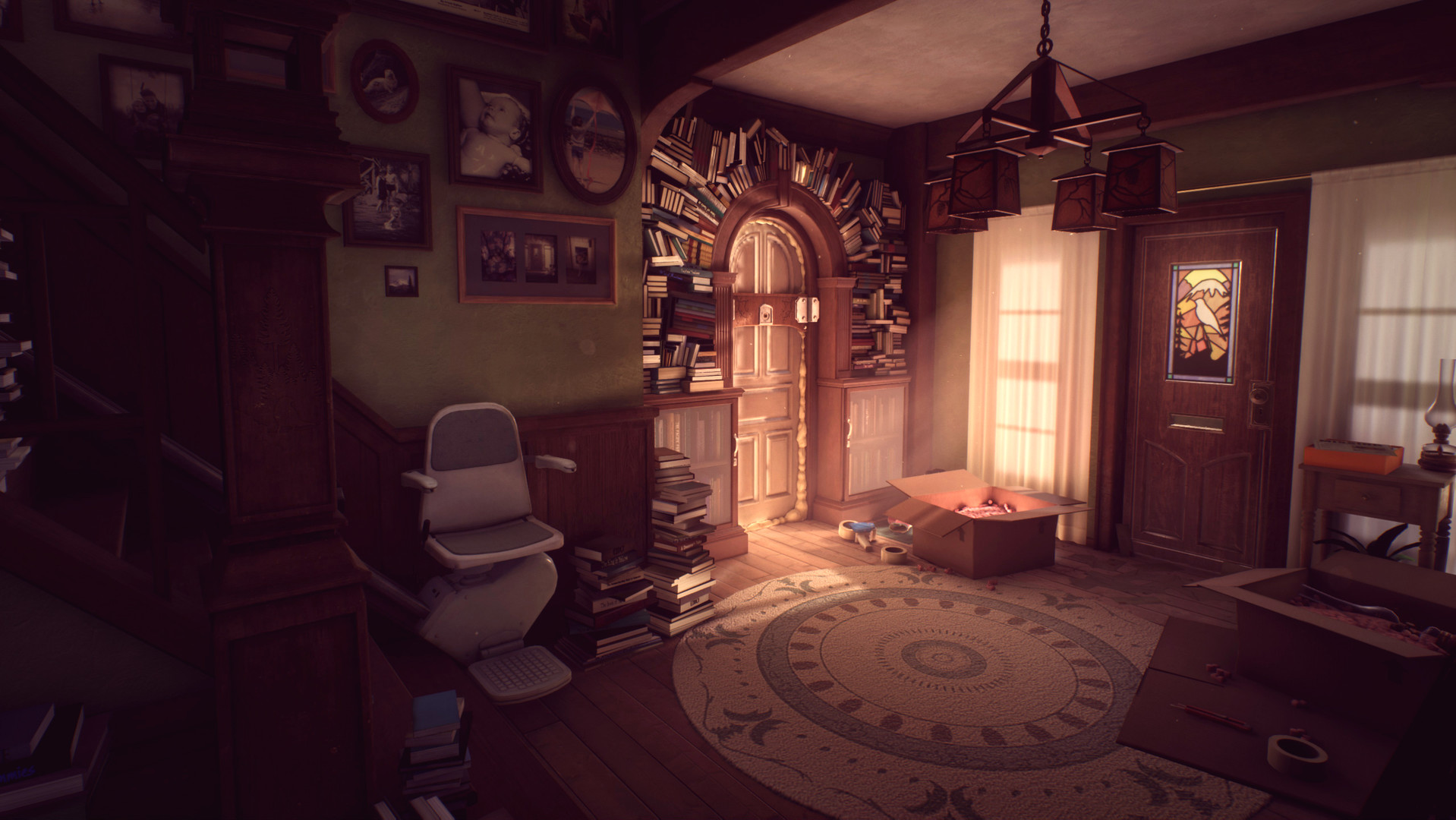
The overall progression follows Edith from one family space and story to another. Exploring is mostly about attention and access: finding the next room, handling the objects that reveal its story, and following the route that opens onward through the house. There is no combat system or broad equipment progression to manage; the central change is from Edith’s measured exploration to the distinct interactions within each account, then back again. The result is a connected tour through a home shaped by many lives, with architecture, objects, documents and altered controls all carrying narrative information. The game keeps its questions about the Finch family in view while leaving room for uncertainty in how its history is understood.
- Developer
- Giant Sparrow
- Genre
- First-person narrative adventure