
About We Happy Few
In an alternate 1960s England, the island city of Wellington Wells masks its ruin beneath bright pageantry and Joy, a drug that helps residents forget. Arthur Hastings, Sally Boyle and Ollie Starkey each confront the city from a different position, using stealth, scavenging, crafting and combat as their interwoven stories trace its collapse.
We Happy Few takes place in Wellington Wells, a retrofuturist city in an alternate 1960s England. Its residents maintain an air of compulsory cheer through Joy, a drug that softens their perception of the world and helps them conform to local expectations. Beneath the colorful streets and smiling masks lie the consequences of a war-torn past, shortages and an increasingly unstable society. Those who refuse Joy become Downers, outsiders vulnerable to suspicion and violence. The player moves between districts and communities where clothing, conduct and apparent conformity affect how people respond. This tension between the city’s presented happiness and its harsher reality frames both the story and everyday decisions about how to move through public spaces.
The campaign follows three playable characters across connected story arcs: Arthur Hastings, a government censor; Sally Boyle, a chemist and social figure; and Ollie Starkey, a former soldier. Each has a personal reason to resist the life Wellington Wells demands, and later perspectives revisit a world already shaped by earlier events. Their stories intersect, so encounters can take on different context as the player learns more about the people involved. The protagonists also approach problems differently. Arthur is the more balanced starting point, Sally’s strengths favor stealth and chemical expertise, while Ollie is built around physical toughness and direct confrontation. This structure lets the same city feel different as control passes from one character to another.
Joy is part of the city’s social rules as well as its altered appearance. Taking it can help a character pass among residents who expect everyone to be cheerful, but it also affects movement and stamina, and its effects do not last indefinitely. Refusing it can make the player conspicuous in places where residents are committed to the drug’s illusion. Suspicion also comes from behavior and appearance: running, jumping, crouching in public or wearing clothes that do not fit the district can draw attention. A well-matched outfit may help in one community while looking out of place elsewhere. Moving through town therefore involves reading the local norms, choosing when to blend in and deciding when a faster or more direct route is worth the risk.

Exploration links the story missions to Wellington Wells’ shifting geography. Players travel through villages, city districts, the Garden District and other connected areas while investigating locations, talking with residents and pursuing objectives. The world combines authored story spaces with procedural elements, giving the districts variation while keeping the campaign’s quests and character arcs in focus. Main and optional tasks send characters to search buildings, retrieve objects, solve environmental puzzles or confront people blocking their path. Safe houses provide places to rest and store items, while hatches and routes between districts help manage longer trips. Exploring beyond the immediate objective can uncover useful materials and information about how the city’s inhabitants live under its rules.
Stealth offers ways through places where a fight would attract more danger. Characters can crouch to reduce noise, use tall grass or other cover, watch patrols and throw objects such as bottles to draw attention elsewhere. Unaware opponents can be taken down quietly, but a failed approach may raise an alarm and bring more people into the encounter. Patrol routes and the placement of cover can open short windows for movement, while clothing and the character’s status also matter: avoiding notice depends on looking as though one belongs, not simply staying outside an enemy’s sightline. The player can use these methods to cross guarded spaces, reach an objective or create distance from a suspicious crowd before it turns hostile.
Searching houses, containers and outdoor spaces supplies materials for crafting, which turns scavenging into preparation for later obstacles. Recipes create useful objects such as weapons, lockpicks, healing supplies, bandages and tools. Items have several possible uses, and weapons wear down, so carrying everything or fighting every opponent can consume resources quickly. Shops provide another source of supplies in some areas, where money can be exchanged for goods. Characters can craft from their available materials without needing to return to a dedicated workbench, keeping the process tied to what they have collected. The resulting inventory choices affect whether a character is ready to open a locked route, recover from an injury or handle an encounter without relying on a single approach.
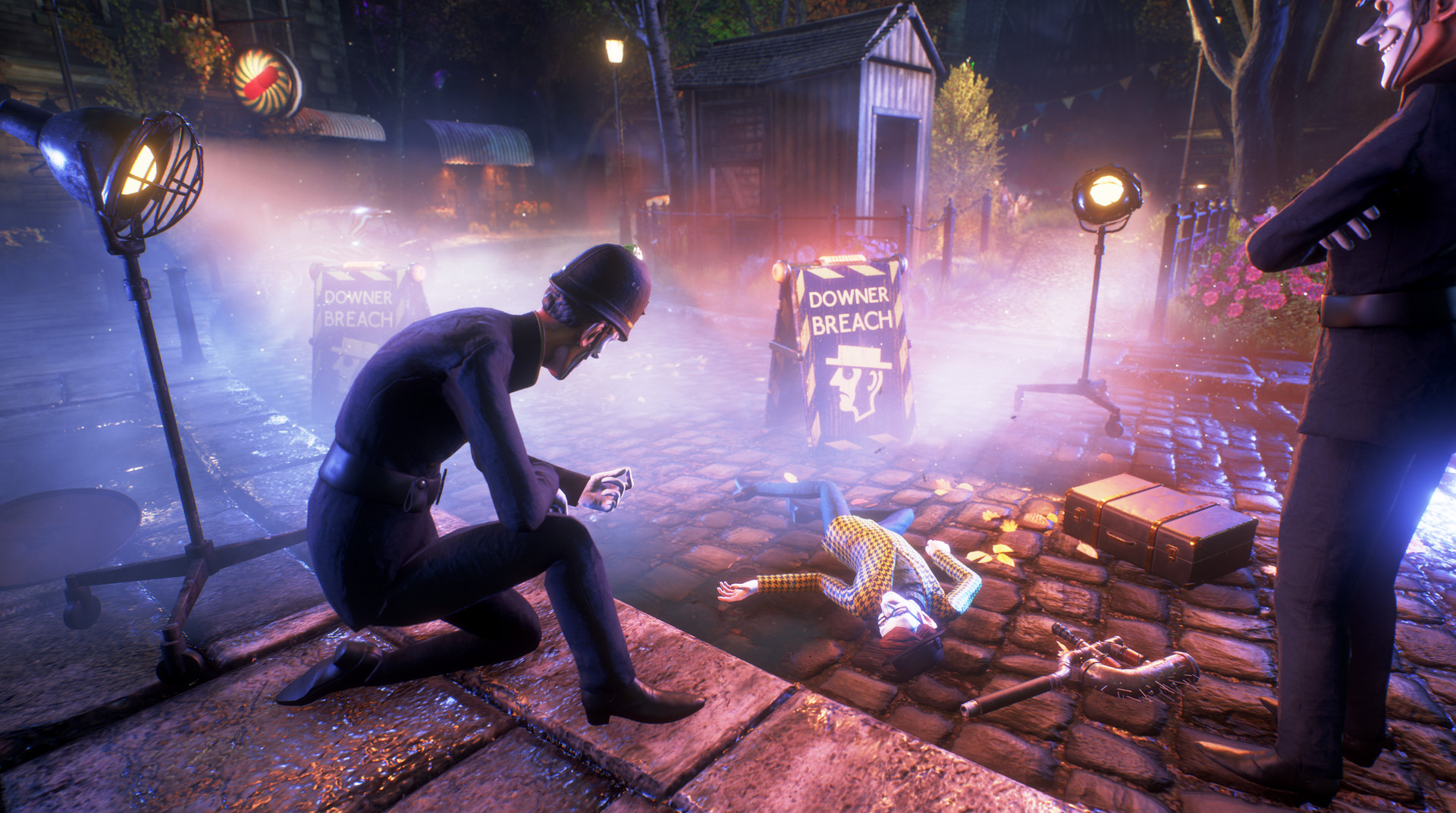
Combat is close-range and resource-conscious. A character can attack, block and shove, with stamina affecting how long they can keep up pressure or defend themselves. Blocking can push an opponent back and create room to act, while weapons offer different options but can break with use. Direct fighting is one way to resolve a confrontation, though it may cost health, stamina and equipment or draw nearby enemies. Skill progression adds another layer, with points spent on abilities in areas such as combat, stealth, survival and character-specific strengths.
Each protagonist’s chapter gives those shared systems a different emphasis. Arthur’s role as a censor and his balanced abilities introduce the city’s rules and the choices involved in moving through its districts. Sally’s chemical knowledge and stealth focus support quieter routes and the preparation of specialized compounds. Ollie’s military background and physical strength make direct encounters more central to his approach; his chapter also adds the need to monitor blood sugar. These differences shape how the player prepares, handles threats and solves obstacles while following each character’s objectives.
- Developer
- Compulsion Games
- Genre
- First-person action-adventure with stealth, crafting and survival systems