
About Watch Dogs
Watch Dogs follows Aiden Pearce, a hacker navigating a fictionalised Chicago whose infrastructure runs through the ctOS network. Use a smartphone to profile people, access cameras and manipulate connected systems while pursuing the story, investigating the city and developing hacking, combat and driving skills.
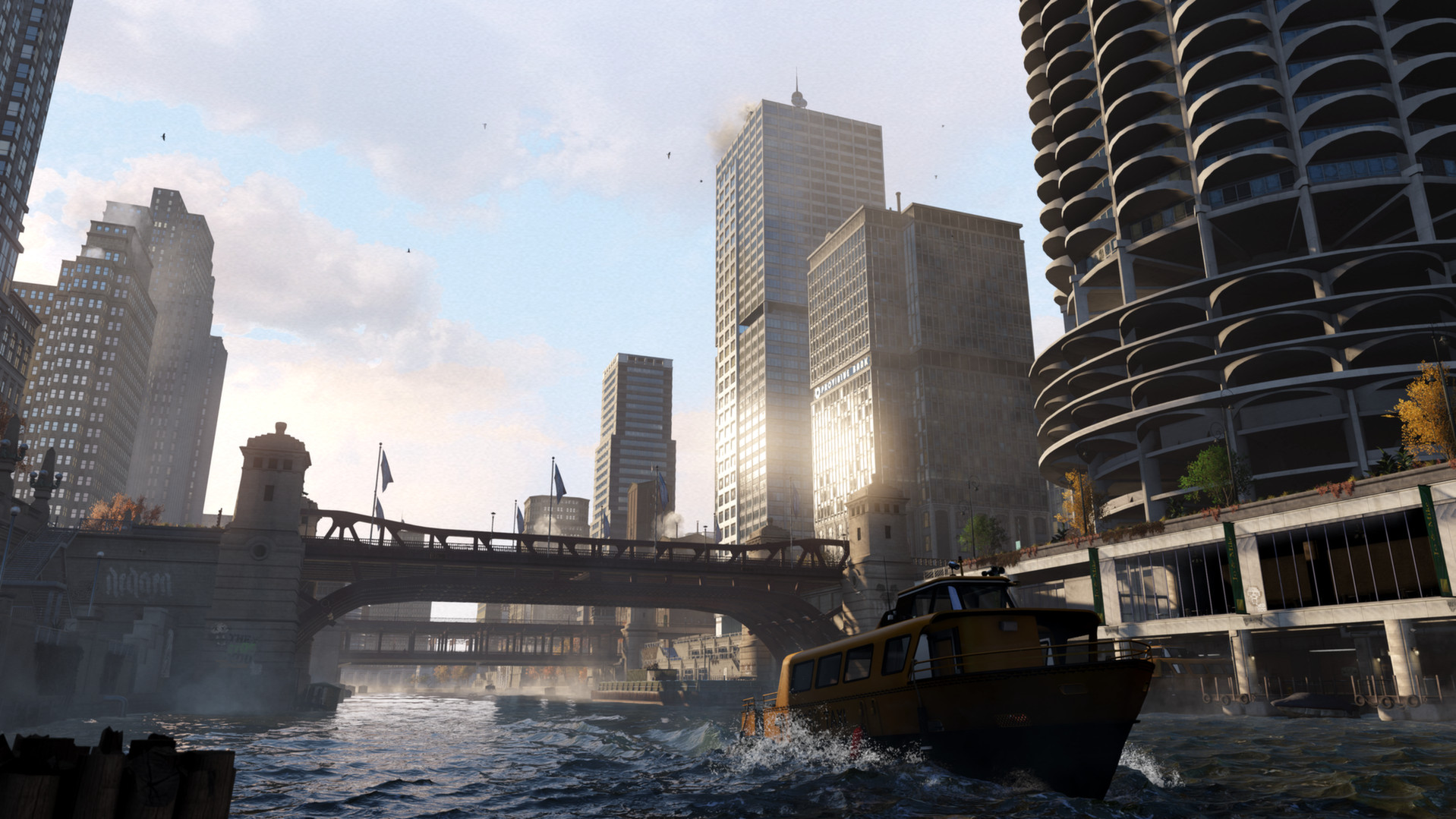
Aiden Pearce is a skilled hacker drawn into a personal conflict that puts his family in danger. The game places that story in a fictionalised Chicago organised around ctOS, a central operating system that links many city services and devices. Streets, bridges, transit infrastructure and surveillance cameras sit within that connected environment, making the city itself part of the action. Aiden carries a smartphone that can access the network, and the game frames his movement through Chicago as both physical travel and access to information. He can move on foot or use the city's vehicles, while the campaign leads him through districts, missions and investigations tied to the people and systems around him. The conflict gives the open city a continuing purpose: pursue the people behind the threat, follow leads and use the tools available in each location.
The Profiler turns nearby residents into sources of information. Scanning a person can reveal identifying details and, for some people, a potential crime or a reward connected to their bank account. Aiden can then intervene in crimes detected around him or hack a phone to access data and opportunities. Citizens may also reveal a song for SongSneak or a vehicle that can be added to Car On-Demand. These discoveries link observation to practical resources: an intercepted conversation can point toward a package, while a bank account can be accessed and its money collected at an ATM. The available profile information depends on network access; early access is limited to Parker Square, and reaching ctOS control centres in other districts expands where Aiden can use the system. Profiling therefore supports both the story's surveillance theme and the moment-to-moment search for useful leads.
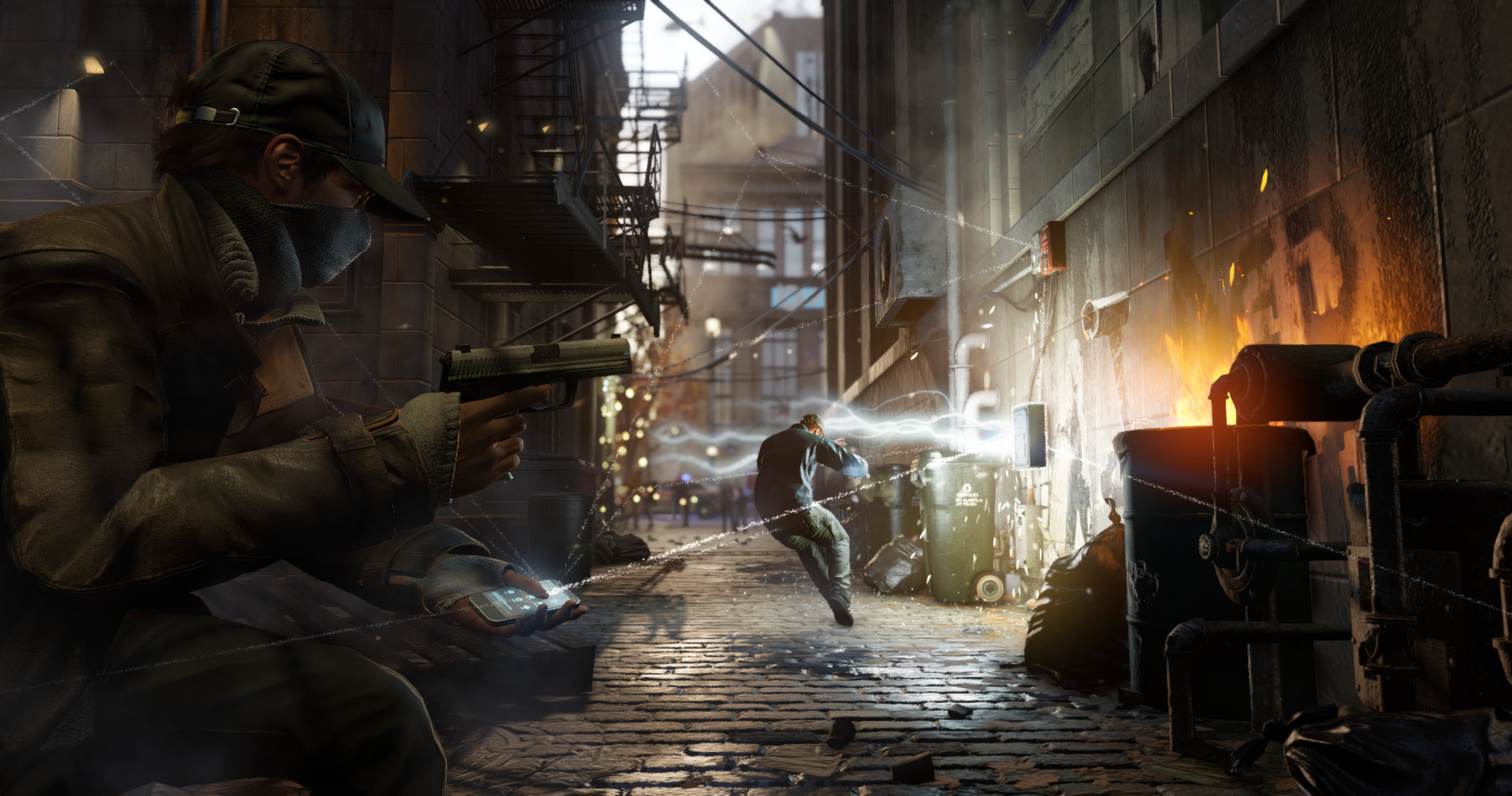
Hacking is used to prepare a route through guarded spaces as well as to affect a fight already underway. Aiden can take control of security cameras and shift between viewpoints, using their angles to inspect patrols or reach a control panel outside his direct view. Other connected objects, including doors, gates, lifts, cranes and junction boxes, can open routes or create distractions. Once the relevant abilities are available, city infrastructure adds more options: traffic lights can disrupt vehicles, while bridges, blockers and steam pipes can be activated during a pursuit. Enemies carry devices that can also be targeted. The same restricted area can therefore be approached by looking for a quiet entry, using cameras to learn where guards are, and triggering an environmental object at the right moment, or by turning those systems into support during direct combat.
When surveillance and diversions are not enough, Aiden can use stealth takedowns, firearms and crafted equipment. The skill system separates growth into hacking, combat and driving disciplines, with skill points awarded through levelling, campaign progress and certain activities. Some advanced abilities are gated behind story or side-content requirements, so the player gradually broadens the set of tools rather than beginning with every option. Crafting uses components and system keys to make items such as lures, explosives and devices that interfere with police communications. A lure can draw attention toward a sound, while an explosive lure adds a triggered blast; a blackout can cut power to connected equipment and reduce visibility in affected areas. Choosing what to carry and when to use it affects how Aiden handles a mission, escape or encounter.
Driving makes Chicago's road network another part of the hacking system. Aiden can take vehicles found in the city or request unlocked cars through the Car On-Demand app, then use streets and connected traffic equipment to navigate or escape. Driving skills improve vehicle handling and defensive or evasive capabilities as they are unlocked. During a police pursuit, a hack such as changing a traffic light or raising a blocker can alter the path of nearby vehicles; a hacked bridge or steam pipe can create a different interruption. Those interventions depend on the local infrastructure and the capabilities Aiden has developed. On foot, he can move between districts and enter mission spaces directly; from a car, the same connected city becomes a route to manage under pressure, with the phone supplying brief opportunities to interfere with pursuers.
Beyond campaign missions, Chicago contains side work and investigations that use the same tools for different objectives. Criminal convoys, gang hideouts and Fixer contracts create encounters built around pursuit, infiltration or combat, while crime detection can lead Aiden to interrupt an unfolding offence. Investigations follow evidence and traces through the city, and the Progression app tracks activity across missions, side missions, investigations, collectibles and minigames. Optional diversions include games such as chess, poker and Cash Run, alongside city discoveries tied to ctOS and residents' devices. These branches give the player additional ways to earn progress and encounter the city between story beats. The result is a structure in which campaign objectives, spontaneous events and optional activities all feed into Aiden's broader skill development and the information he gathers about Chicago.
- Developer
- Ubisoft Montreal
- Genre
- Open-world action-adventure