
About Warhammer 40,000: Mechanicus
As Magos Dominus Faustinius, the player leads an Adeptus Mechanicus expedition into the Necron tombs of Silva Tenebris. Missions combine room-by-room exploration with turn-based battles, where Tech-Priests, support troops and Cognition points are managed against the rising Necron awakening and the need to recover knowledge and resources.
Warhammer 40,000: Mechanicus is a turn-based strategy game following the Adeptus Mechanicus, the Imperium’s order of cybernetic priests and scholars who treat technology as sacred. The expedition is led by Magos Dominus Faustinius aboard the Ark Mechanicus Caestus Metalican, a massive forge vessel sent to the newly rediscovered planet Silva Tenebris. Beneath the planet’s surface lie Necron tombs: ancient structures holding the dormant armies of a machine civilisation. Faustinius directs Tech-Priests into those tombs to investigate, recover lost technology and confront the Necrons before their awakening grows beyond control. The campaign’s story unfolds through the decisions made from the ship and through the personalities of the priests, who disagree about how to interpret their discoveries. Scaevola pursues knowledge and relics, while Videx regards dangerous alien technology as a threat to be destroyed. These rival priorities give the expedition’s progress a factional and personal dimension as well as a military objective.
The campaign is organised around a series of missions, each with its own objective and reward. Once a mission begins, the cohort moves through a tomb room by room. The route presents encounters and decision points, including glyphs or other interactions that can yield equipment, Blackstone, Cognition, damage or other effects. Exploring may reveal more rewards and opportunities, but it also contributes to the Necron awakening, which increases pressure across the operation. The player is therefore deciding how deeply to investigate before attempting the mission’s objective. The Caestus Metalican provides a hub between expeditions: there, the player considers the next assignment, manages the group and makes choices that can steer the campaign toward different endings. Mission outcomes and route decisions shape what becomes available later. The expedition has a larger arc than a sequence of isolated battles, since the results of tomb exploration affect both the force’s equipment and the larger awakening threat.
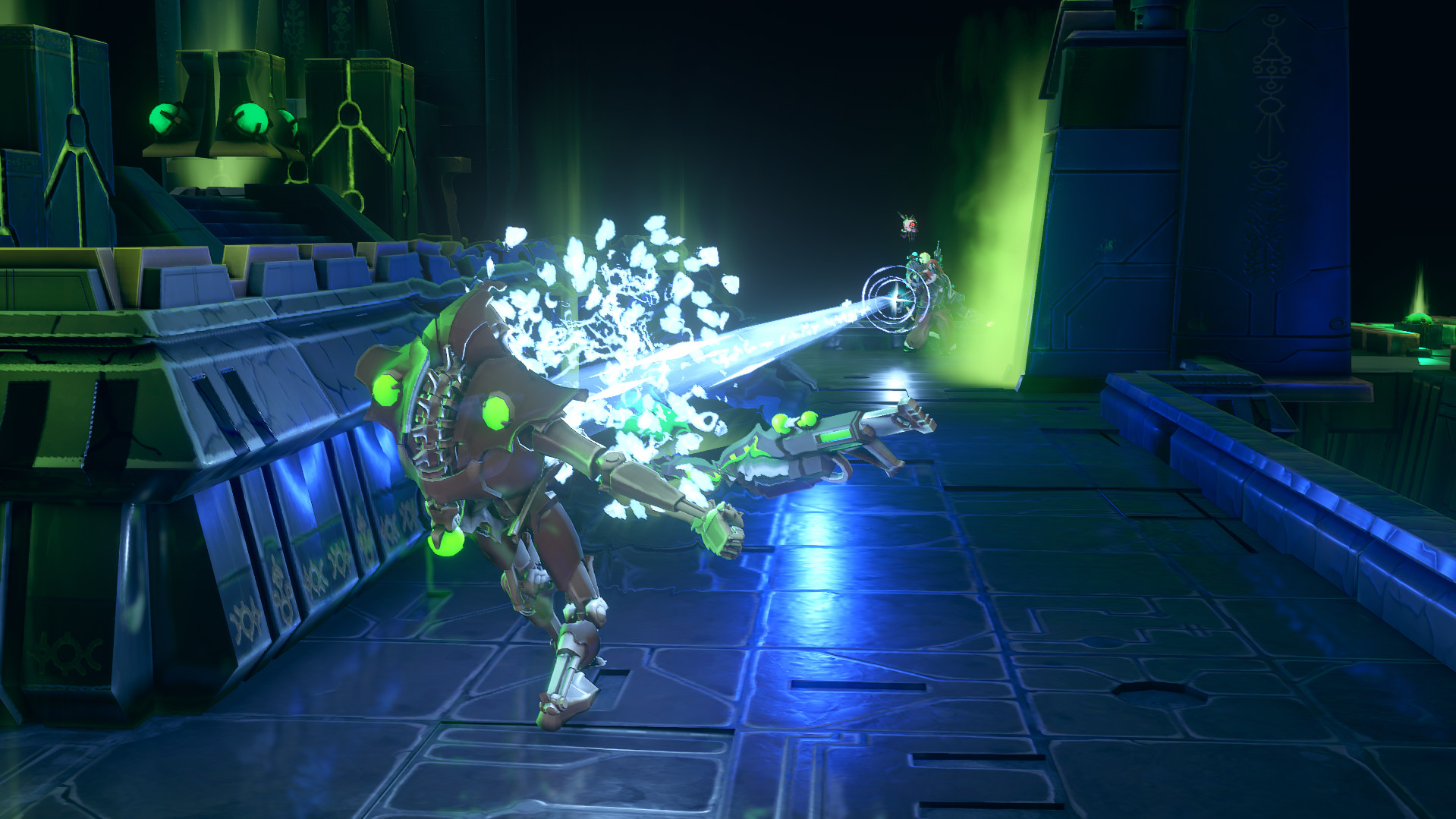
Combat is played on a tactical battlefield against Necron forces, with the Tech-Priests and their cohort acting in turns. The priests are the central units: they can move, attack, use equipment and activate discipline abilities, with their position and action order shaping how the squad deals with threats. Mechanicus does not use a cover system, so positioning is about distance, target access, movement and managing danger in the open. Cognition points are the combat resource that unlocks many stronger actions. They can be gathered through interactions such as scanning tomb objects and fallen enemies, and spent on abilities, weapon attacks or extra movement. Different weapons make different demands: an energy weapon may require Cognition simply to fire, while a melee specialist may spend the resource to cross the battlefield quickly. Cognition-generating objects can become tactical anchors; controlling access to one may keep the group supplied for a later burst of attacks. The player balances ordinary actions with the finite resource needed to unleash specialised equipment.
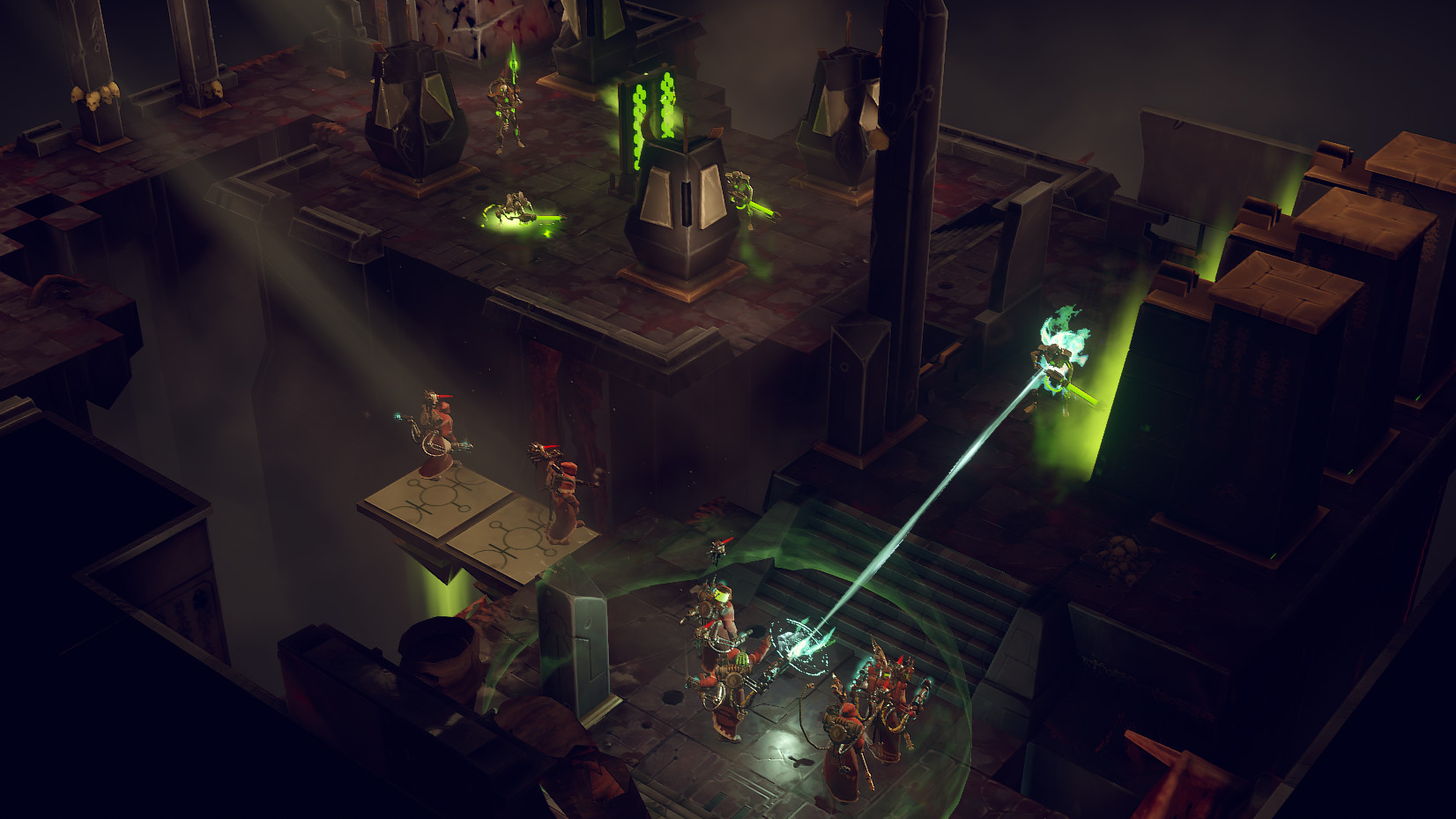
Tech-Priests can be developed along multiple disciplines and equipped with weapons, support items, servo-skulls and mechanical augmentations. The game allows classes and skills to be mixed across a cohort, so a priest can focus on a role such as ranged damage, close combat, healing or support, while equipment adds further abilities and stat changes. Skill choices affect how the team operates together: one priest may help other units attack, another can improve access to Cognition, and a third may specialise in direct damage or recovery. The player chooses which priests to bring to an assignment and can also deploy support troops. These troops are summoned during battle using Cognition rather than selected as fully developed characters at the start; they have simpler actions and do not receive the same customisation as Tech-Priests. Servitors can absorb attacks and occupy enemies, while later unlocks add more capable units, including Skitarii and Kastelan robots. The mix of customisable leaders and expendable support forces gives each deployment a different balance of resource generation, protection and firepower.
The Necron awakening links the risks of exploration to the difficulty of combat. During a mission, room exploration and encounters raise the local threat; the amount of exploration also affects the rewards available, so a direct route and a thorough search carry different costs. When the expedition returns, the awakening pressure feeds into the campaign’s broader meter. That growing threat influences the conditions under which later operations take place and gives urgency to decisions made in tombs. Injuries and other consequences can also affect the cohort after an expedition, so an apparently successful mission can leave the player with a force that needs attention before the next deployment. Blackstone recovered during missions provides a resource for improving Tech-Priests, complementing the gear and equipment found in the tombs. This creates a persistent loop: choose an assignment, navigate its chambers, decide how much risk to take, fight through the opposition, then use recovered resources to improve the expedition before going back underground.
The story and strategic systems meet in the command decisions aboard the Caestus Metalican. Faustinius’s officers debate how the expedition should respond to discoveries, and choices made from the ship can influence later missions and which ending follows. Tomb exploration also offers smaller decisions, where the reward may be useful technology or Blackstone but the cost may be a wound or a faster awakening. The player is not only directing individual attacks; they are deciding which knowledge to pursue, which priests to invest in, what equipment to bring, and how much of the tomb to uncover before withdrawing. Achievements earned during play grant abilities that can be used once per mission, adding another limited tactical option. Across its 50 hand-crafted missions, the first Mechanicus game combines a science-fantasy expedition narrative with squad tactics and persistent force management. Its focus is the Adeptus Mechanicus campaign against the Necrons on Silva Tenebris, distinct from the later sequel, Mechanicus II.
- Developer
- Bulwark Studios
- Genre
- Turn-based tactical strategy