
About Warhammer 40,000: Dawn of War III
Warhammer 40,000: Dawn of War III is a real-time strategy game about the Space Marines, Orks and Eldar converging on Acheron after a catastrophic weapon is discovered. Its campaign alternates command among the three factions, while multiplayer combines resource control, Elite units, Doctrines and battles fought over a defended Power Core.
The conflict in Dawn of War III begins when a catastrophic weapon is found on Acheron, a world where the Space Marines, Orks and Eldar are already at war. Space Marine commander Gabriel Angelos, Ork warlord Gorgutz and Eldar seer Macha lead the factions whose competing ambitions are forced into the same crisis. The campaign carries that struggle across several war-torn worlds. Rather than telling the story from only one army's position, its 17 missions give the player command of all three factions over the course of the campaign, with each army bringing different units and battlefield tools.
The Space Marines are disciplined soldiers supported by heavy armour and powerful named warriors; the Orks bring a sprawling horde whose culture is built around battle; the Eldar combine specialist troops, speed and psychic power. The game presents them as distinct RTS armies, not cosmetic variants. Line units form the bulk of a force, while larger Elite units bring abilities that can change an engagement. A balanced army still matters: the manual emphasizes that no individual line unit is enough on its own, so players must combine units that cover one another's weaknesses and answer the opposing force.
On the battlefield, the player issues orders in real time, builds structures, produces line units and captures resource points. Requisition and Power fund units and technology, while Elite Points accumulate for powerful Elites and faction super abilities. Capturing and upgrading an Elite resource point increases the rate of Elite Points, linking map control to access to those stronger options. The economy is a continuing trade-off: spending on an immediate squad can secure ground, while investing in the resource base can support a larger force later. The official manual advises holding secure resource points before risking a push toward more exposed ones.
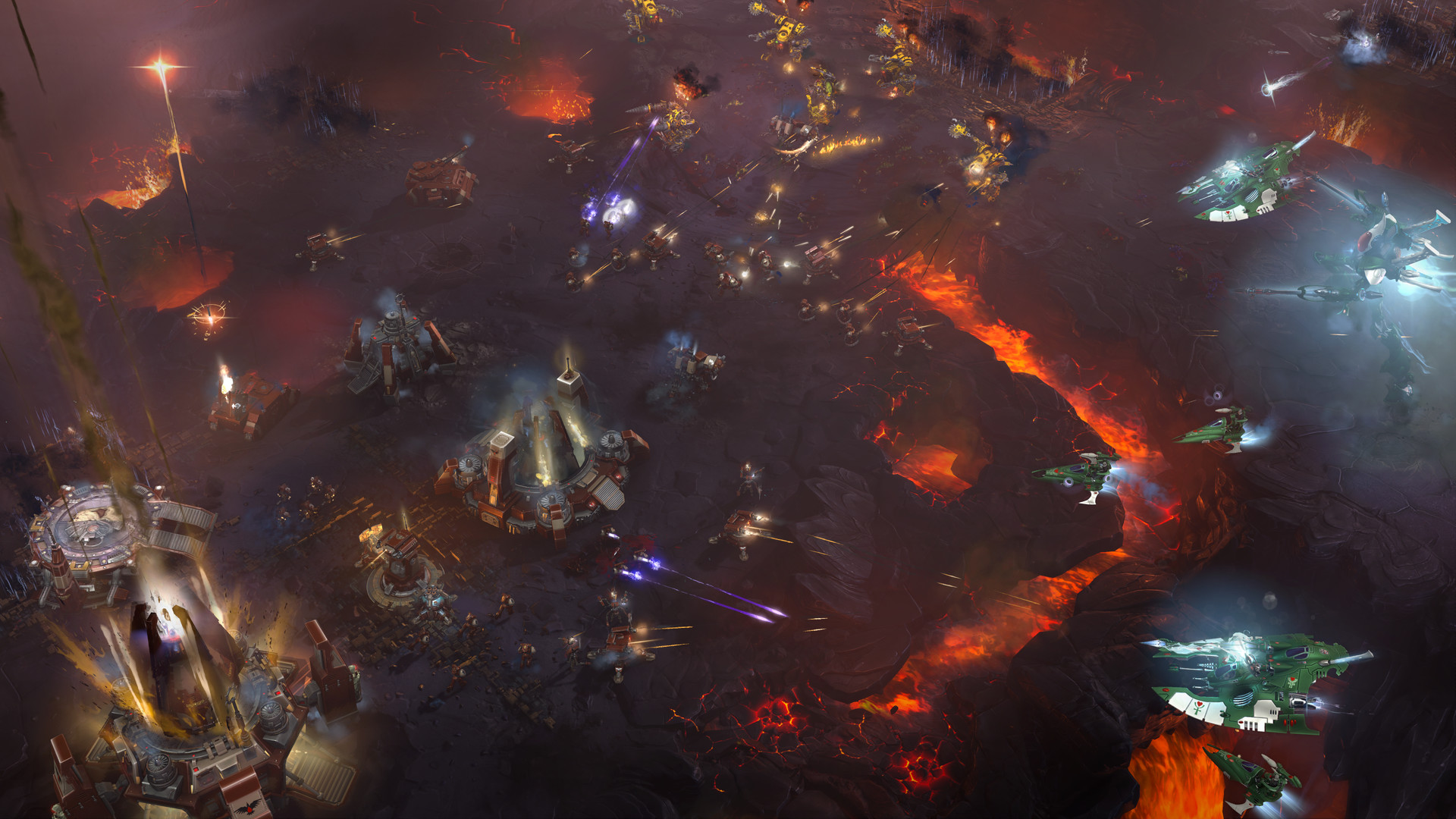
Engagements ask players to read range and formation as well as unit matchups. Many units can switch between ranged and melee stances; changing to melee can tie up opposing troops and reduce the damage they deal while the rest of the army moves or fires. Heavy Cover points can give a force a temporary defensive position, but cover can be destroyed and some line units are specifically equipped to counter it. Stealth adds another information problem: some units begin hidden, others activate stealth with an ability, and detector units reveal enemies concealed nearby. Builders also act as detectors, giving ordinary support units a scouting role.
Elite units and super abilities share the Elite Point resource, so calling in a champion or launching a faction power carries an opportunity cost. Before a multiplayer match, players select three active Elites and equip up to six Doctrines: one Elite Doctrine for each chosen Elite and three Standard Doctrines that affect the wider army. The loadout can therefore shape what a force is prepared to do before units are produced. During a battle, the Space Marines can call in Drop Pods through their faction mechanic; each faction also has a distinct super ability, such as the Space Marine Orbital Bombardment and the Eldar Eldritch Storm.
The story campaign is separate from the multiplayer progression systems. Campaign missions can be played at different difficulty levels, which can be changed from mission to mission, and tutorials can be started later if a player wants to revisit the controls. Finishing a campaign mission for the first time on a difficulty awards Skulls, as does completing a multiplayer match; Skulls unlock additional Elites and Doctrines. Elites used in campaign or multiplayer earn experience, and levelling them up unlocks rewards such as Elite Doctrines and skins. The campaign also lets players use some Elite units before they have unlocked them for multiplayer.
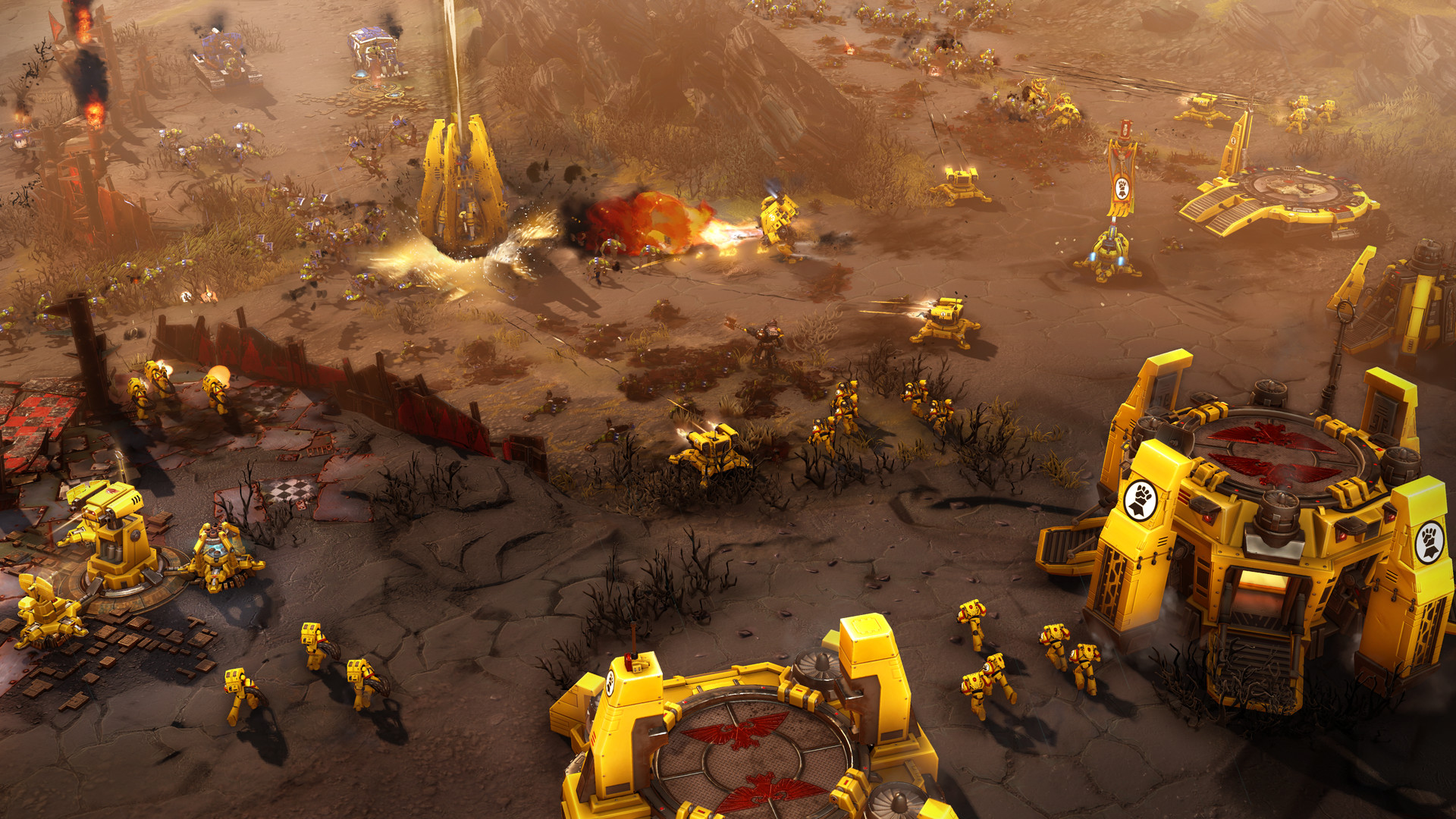
Multiplayer offers one-versus-one, two-versus-two and three-versus-three matches against human players or computer opponents. Its principal Power Core match objective is staged behind the enemy base's defenses: Shield Generators protect Turrets, and the Turrets in turn protect the Power Core. Attackers must bring down a Shield Generator before its corresponding Turret can be destroyed; once the defenses are cleared, the Core becomes vulnerable. This makes a match a contest over resources and access to the base, rather than a direct rush at the final structure from the opening minutes.
Multiplayer matches also advance through Escalation Phases, which occur at ten-minute intervals and alter the value of keeping units alive and controlling objective structures. Early in the match, a portion of the cost of a destroyed unit is refunded; later phases reduce that refund while increasing the strength of add-on resources and defensive structures. These changes give the match a defined tempo and make earlier map control relevant as the game progresses. Together with the Elite loadout, resource points, stance choices and destructible cover, the escalating battlefield asks players to plan for both the next skirmish and the stronger defenses that arrive later.
- Developer
- Relic Entertainment
- Genre
- Real-time strategy