

About Wandersong
A wandering bard sets out to learn the Earthsong, a mysterious melody believed to prevent the universe from ending when the goddess Eya resets reality. Wandersong combines side-scrolling movement with freeform singing: the bard’s notes affect creatures, objects and puzzles, turning exploration into a musical conversation with the world and its many inhabitants.
Wandersong begins with a universe whose creation and ending are part of the same cycle. The goddess Eya once sang everything into existence, and at the close of an epoch she sings again to reset reality. The player follows a bard who hears that the Earthsong may offer a way to prevent the world’s erasure and decides to seek it out. This is not a quest built around a warrior claiming a weapon or gathering an army: the central tool is the bard’s voice, and the journey advances through encounters with people, places and things that respond to music. The premise gives the adventure a clear long-term direction while keeping its immediate focus on the people the bard meets along the way. The bard must collect pieces of the Earthsong to understand a song that could change the universe’s fate, tying discovery and travel to the larger effort. Eya’s role establishes the scale of the danger, while the bard’s ordinary, personable presence keeps the story grounded in one traveler’s attempts to help. The bard travels across a colorful world, meeting a broad cast and solving puzzles as music links each encounter to the wider journey.
Movement and music share the same spaces rather than taking turns in separate modes. The bard runs and jumps through side-scrolling environments, and the control stick also shapes the notes being sung. This makes singing available while moving through a level: the character is presented as a walking musical instrument rather than someone who must stop to open a separate performance screen. The singing interface uses a circular, rainbow-colored wheel, with directions corresponding to different notes. The circular wheel turns the control stick into an instrument, letting the player shape melodies while moving around that wheel. The notes are conveyed through sound, color and direction, a design that supports deaf and color-blind players. The rhythm of play therefore comes from testing and steering a melody in context, not from a separate score display or a combat meter. The bard’s animated movement is also part of this feedback: The protagonist’s expressive animation responds to control, giving singing and traversal a consistent physical personality. The control scheme links basic platforming to the game’s central idea, so the same travel that carries the bard between scenes also invites the player to try notes against the surrounding world.
Singing functions as an interaction system with different responses attached to different things. The world presents a collection of props that behave in distinct ways when the bard sings to them, so a newly encountered object can be approached by trying music and observing what changes. A bird can repeat a sequence that grants the bard a large jump, while a vine grows in the direction of the note sung to it. These actions connect melody to movement. A response can open a route, provide a traversal boost or alter the shape of a small obstacle, letting the player use the voice to make progress through a platforming space. The exact behavior depends on the object, which means the player is encouraged to explore rather than assume that one tune works everywhere. Some interactions are puzzles with a particular intended outcome, but the puzzles are broad and playful rather than exacting tests that punish experimentation. The bard can try possibilities until an object does what the situation requires. That approach makes the environment legible as a conversation: notice a prop, sing toward it, then use its reaction to continue. Familiarity with the wheel helps, but the important information is often the local response of each creature or object, not memorizing a universal sequence of notes.
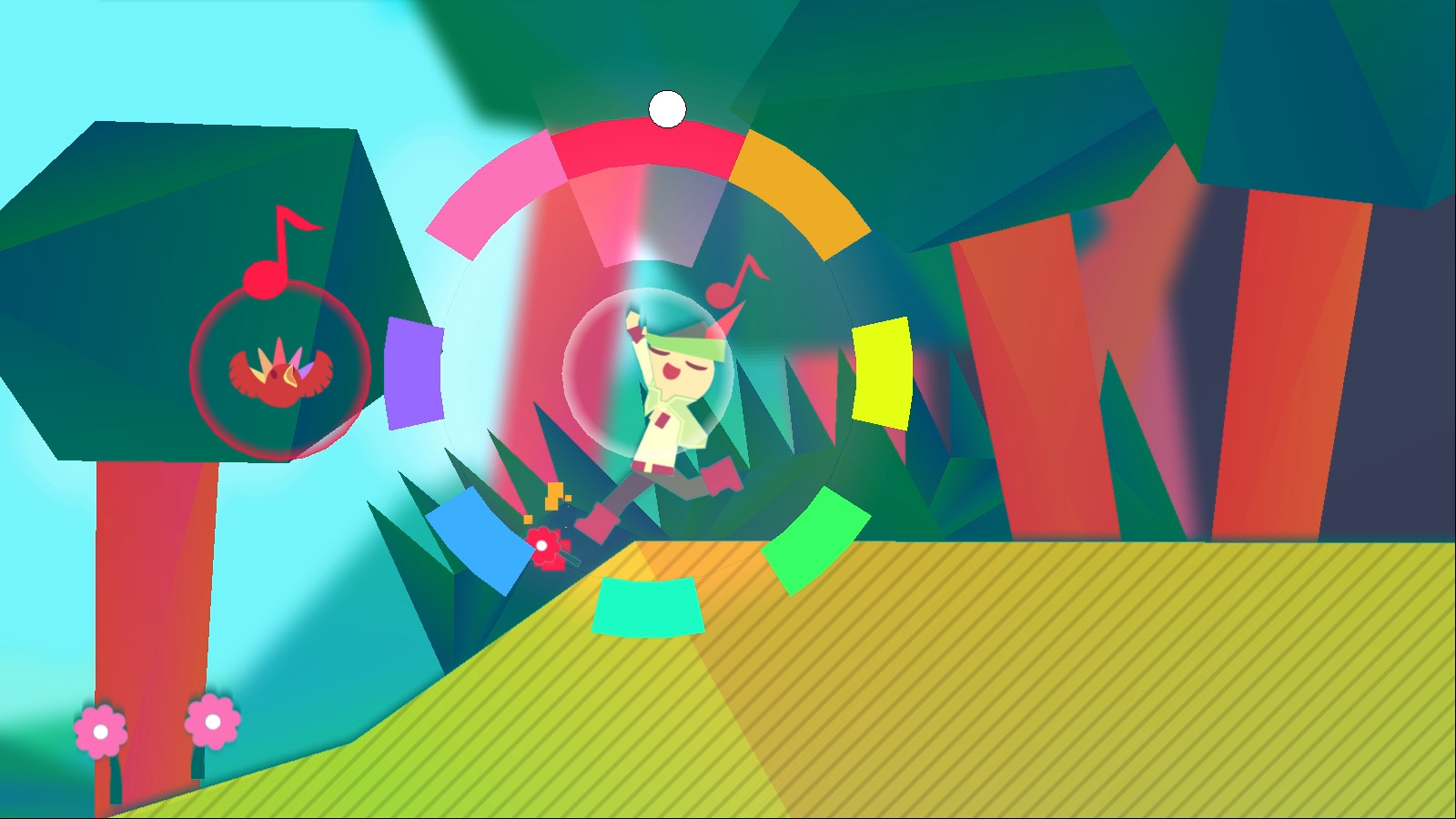
The adventure’s progression is tied to the search for pieces of the Earthsong and to meeting people across the world. The bard seeks pieces of the Earthsong in the hope that it can prevent reality from being erased, while travel also brings secrets and friendships. That structure gives exploration two scales. At the larger scale, travel is part of assembling knowledge about the cosmic threat and the possible answer to it. At the local scale, each area offers new people and objects whose reactions to the bard’s music can reveal a way forward. More than 150 characters populate the adventure, giving the journey a broad social field rather than a succession of empty platforming rooms. Conversation and musical interaction are therefore both ways of engaging with the world: the bard can meet its inhabitants, while singing gives the player a direct way to test how they or their surroundings respond. The Earthsong journey connects narrative progress to travel and encounters; no numeric upgrade track is specified for this progression. The progression that is clearly established is narrative and exploratory: move through the world, encounter its characters, solve singing-based puzzles, and continue searching for the song connected to the cycle of Eya’s creation and reset.
Wandersong’s puzzles draw on repetition and directional control without making music a high-pressure accuracy test. The bird example asks the player to repeat a sequence before receiving a jump, while the vine responds to the direction of a sung note by growing that way. Other objects have their own reactions, and each reaction gives the player reason to keep trying sounds and seeing what happens. This leaves room for playful improvisation while still giving a puzzle a useful goal: an interaction may need to produce the change that lets the bard proceed. The design avoids making these situations overly challenging or overly specific, and failure does not remove progress. A player can keep attempting a sequence without being set back. Music is also represented in multiple sensory forms, with each note associated with sound, color and direction. These choices support access for deaf and color-blind players and clarify the wheel’s orientation as the player sings. The music mechanic thus serves several linked purposes: it supplies the game’s expressive input, gives world objects a way to communicate, creates light traversal puzzles, and keeps errors from becoming costly. The resulting challenge is about noticing how a particular element behaves and responding with the relevant musical gesture, rather than maintaining a combo or completing a demanding rhythm-chart sequence.
The presentation connects the sound of singing to a bright, hand-shaped visual world. Each level uses a small set of colors for shapes and platforms; the rainbow wheel sits inside environments whose colors establish each area’s identity. The bard’s animation is similarly expressive, and the protagonist’s movement and reactions make control feel personal. A Shell in the Pit provides a sprawling soundtrack for the musical platforming adventure, which pairs an emotional story with a large cast. The soundtrack supports the premise without reducing music to background decoration, because the player’s own notes remain an active part of movement and problem-solving. The accessible presentation is also built into the musical language: direction and color accompany each note, while repeated attempts do not cost progress. Wandersong is a single-player adventure and platforming game; the Switch release is a one-player digital edition. The complete game is available on PC, Mac, PlayStation 4 and Nintendo Switch, with platform details varying by release. Across those environments, the defining activity stays consistent: travel as the bard, sing to what is encountered, and follow those responses toward the Earthsong.
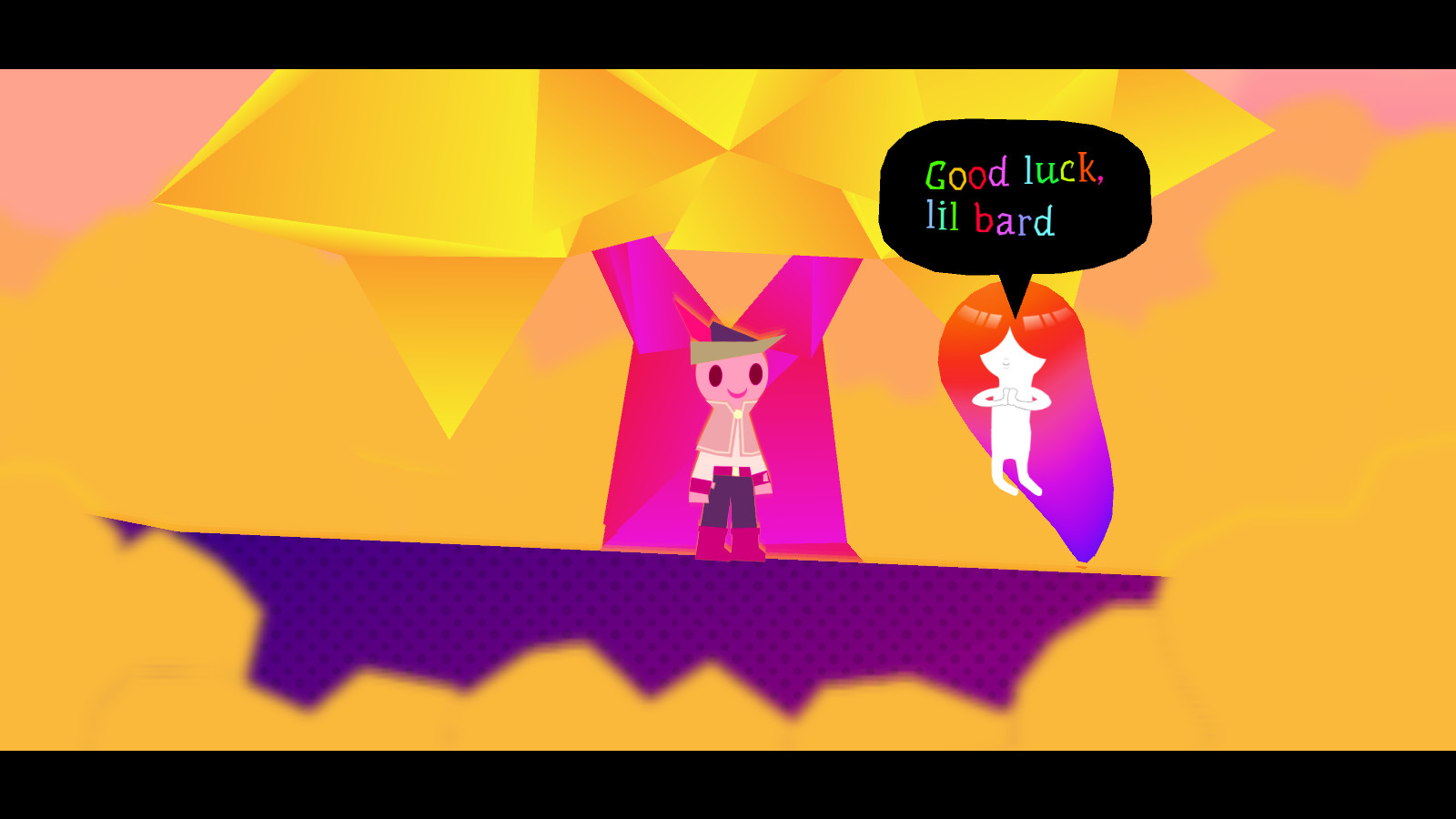
The journey also gives the bard ways to express music when no puzzle demands it. A dedicated dance button lets the character dance at any time; the action does not unlock a route or satisfy a score requirement. That small freedom fits a game where singing can fill an otherwise quiet walk, and where helping people matters alongside reaching the next destination. The bard eventually travels with Miriam, a witch whose withdrawn manner contrasts with the traveler’s spontaneous singing. Their partnership brings another character into the search for the Earthsong and gives the story room for conversations that a solitary platforming quest would not have. Each act can also move from an inhabited region into a spirit world, where the bard uses song to negotiate light platforming challenges and reach an Overseer associated with a fragment of the Earthsong. These changes in setting make the long quest more specific: learn what a region needs, find its spirit-world route, and continue the search with the people the bard has met.
- Developer
- Wishes Ultd. / Greg Lobanov; Steam also lists A Shell in the Pit.
- Genre
- Musical platforming adventure; Steam genres Adventure and Indie.