
About Viewfinder
Viewfinder is a first-person puzzle adventure in which photographs, paintings and other flat images can become part of the surrounding world. Explore connected hubs, solve spatial challenges with an instant camera and other tools, and piece together a story about a climate-strained world and the people seeking a way forward.
Viewfinder places its first-person puzzles in a colourful, carefully arranged world whose rooms and outdoor spaces contain photographs, sketches, paintings and everyday objects. The images are more than decoration: the central rule lets you set one into the environment and make its depicted space part of the place around you. A picture of a bridge can become a crossing; other images can extend a ledge, cover a gap or change the shape of a route. The visual shift is also the main puzzle language. You inspect a room, notice where the exit or a needed object sits, then judge which image could supply the missing geometry. Rather than moving a character through a conventional sequence of combat encounters, the game asks you to walk, look, handle images and test how a new view can alter the space.
Most puzzle spaces give you a clear destination, commonly a teleporter that carries progress onward, while leaving the route to it open to interpretation. You can rotate and position a picture, compare its edges with the existing architecture and decide where the new structure should meet the floor or a platform. The same image can create very different useful shapes depending on its orientation and placement, so a picture is not simply a key to one matching lock. A successful solution often comes from reading the room as a composition: the image supplies a surface, the room supplies an anchor, and the player works out how those pieces can connect. The early levels introduce each available tool, while later puzzles combine them in more inventive ways rather than repeating a single placement trick.
The image-placement rule becomes more flexible as the game adds equipment. Early puzzles provide individual images that can be picked up and set into the world. Fixed cameras later let you capture a view from a chosen position, making the framing itself part of the decision: a scene that appears ordinary can become a useful bridge, platform or replacement section when transferred elsewhere. A portable instant camera expands that process by letting you photograph scenes for later use. Because pictures can include real architecture and objects, choosing what to frame matters as much as finding a picture already placed for you. You may need to step sideways, change the angle or include an edge that will line up with another surface after the image is placed.
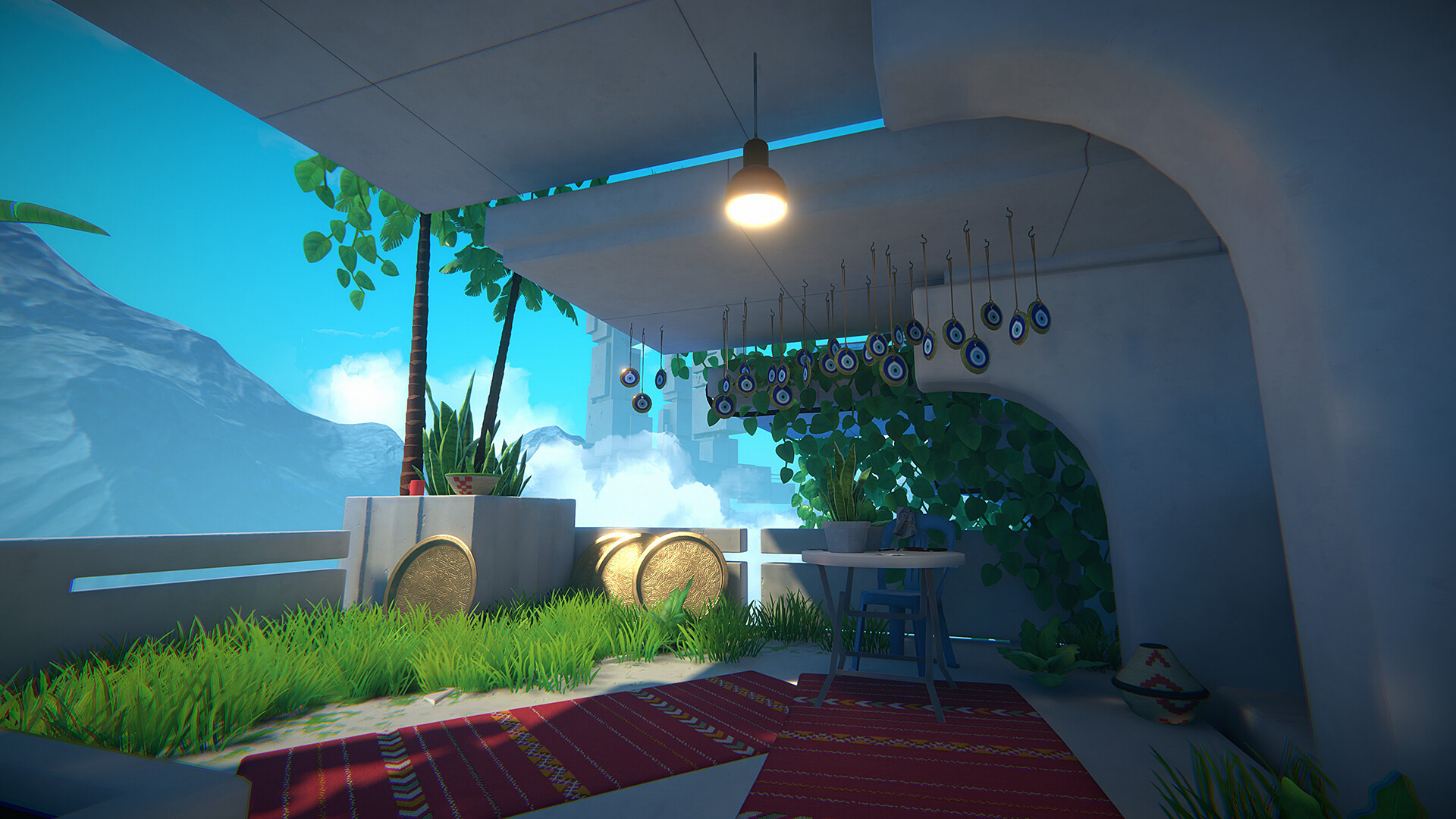
A photocopier adds another useful option by making copies of a picture, allowing one view to support several placements instead of forcing you to choose only one use. The copier does not solve the spatial problem by itself: you still need to decide which copy belongs at each position, and how those new pieces of scenery can form a safe route. Other objects sit within the puzzles too. A battery, for example, can be found inside a picture rather than lying loose in the room, so an image may conceal a physical object as well as depict a landscape. The game uses these interactions to make photographs function as both architecture and containers, encouraging you to examine their contents and the real space around them before committing to a placement. Copies can also extend one image into several pieces of a longer route.
Progress is organised through several connected hub areas, with individual puzzle stages branching from those spaces. Completing a stage opens its route onward, while returning to a hub lets you choose among the puzzles available there. The five hubs and more than seventy puzzles described by the developers give the campaign a larger structure than a single corridor of test rooms; additional optional puzzles offer harder spatial problems for players who want to continue experimenting. There is no one required arrangement for every level, and alternate solutions can emerge from the same image rule. The practical task remains readable even when the answer is not: reach the teleporter, use the tools present in that stage, and reshape enough of the route to get there.
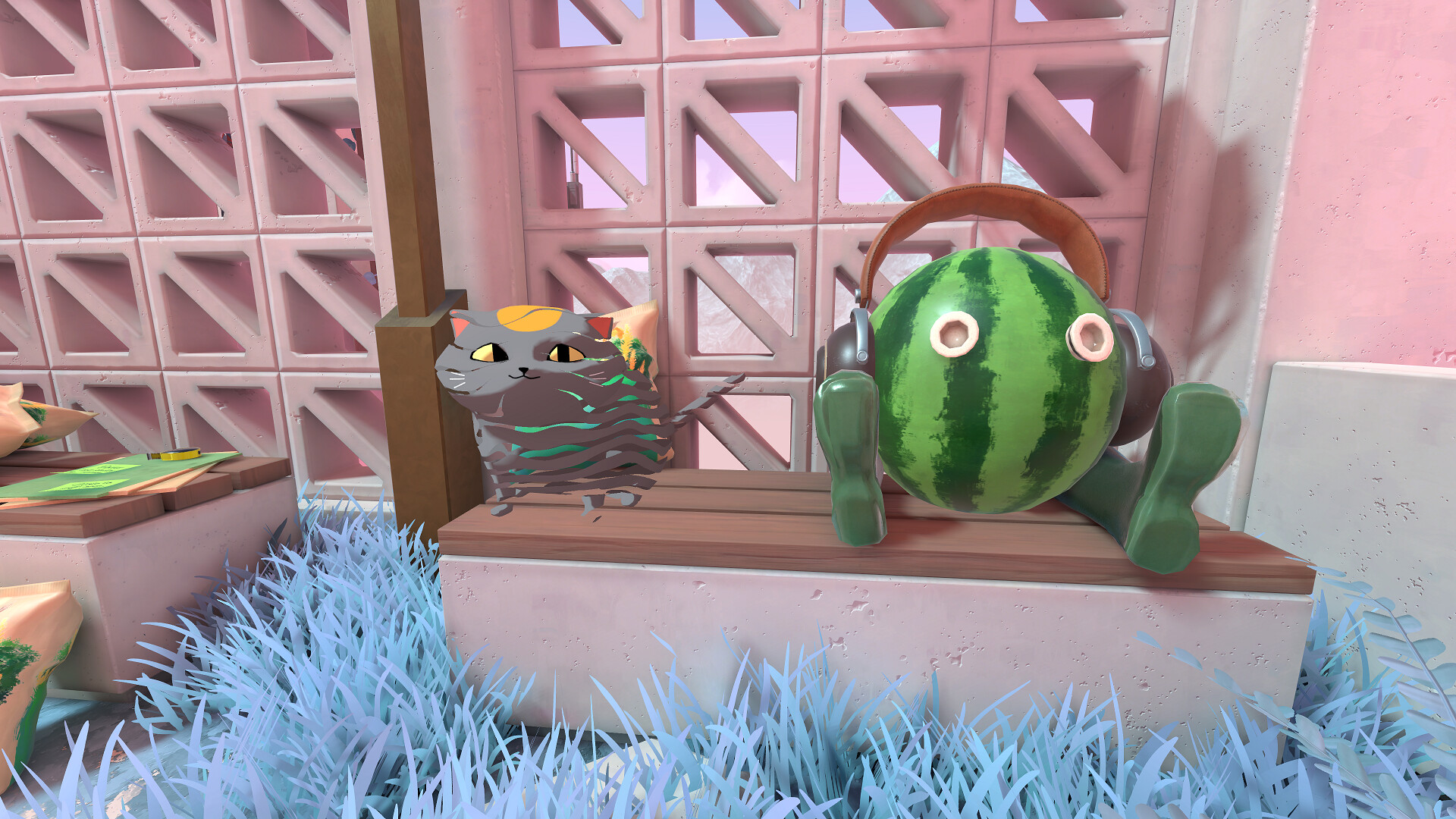
The surrounding story gives the puzzle spaces a larger context without interrupting their hands-on rhythm. Recordings found through the environments fill in a world facing a climate crisis and the possibility that a cure may be connected to the unfamiliar place in which the puzzles unfold. A handler speaks to the player at intervals, while Cait, an ethereal cat, appears as a recurring presence and offers occasional context. The narrative can be followed through these environmental fragments and conversations, or given less attention while solving the rooms. Exploring therefore has two roles: it reveals how to cross a particular space and lets the player gather pieces of the situation outside it. A single timed puzzle at the end brings previously introduced tools together under greater pressure, asking the player to move quickly between framing, copying and positioning images rather than relying on one new device alone.
- Developer
- Sad Owl Studios
- Genre
- First-person puzzle adventure