
About Vampire: The Masquerade - Bloodlines
After a forbidden Embrace turns a mortal into a vampire, the fledgling is pulled into the rivalries and rules of Los Angeles’s hidden Kindred society. This 2004 action role-playing game lets players shape their vampire through clan, skills and Disciplines while pursuing story quests across the city, balancing conversation, investigation, stealth and combat.
Bloodlines begins in modern Los Angeles, where vampires live among humans under the Masquerade: the rule that their existence and supernatural conduct must remain secret. The player character is a newly Embraced fledgling whose creation violates Kindred law, drawing the attention of the city’s Camarilla leadership. Under Prince Sebastian LaCroix, the fledgling is sent into a world of clan loyalties, local rivalries and disputes over who controls the city. The premise makes survival political as well as physical: a mission can involve earning trust, keeping a secret, or deciding how far to follow an order.
Character creation sets the role-playing foundation. Players choose a gender and one of seven clans, then shape a starting character through Attributes, Abilities and Disciplines. Clan determines which supernatural powers are available and can affect how the character approaches dialogue and feeding; the choices are not merely cosmetic. Brujah favor direct physical force, while Toreador combine social influence with speed, and Tremere command blood sorcery. Malkavians and Nosferatu have distinctive perspectives and constraints that can change the feel of conversations or movement through public spaces. A clan choice therefore guides a style without locking the player out of every other way to solve a problem.
Attributes and Abilities translate that character concept into practical checks. Strength and Dexterity support physical approaches; Wits and Intelligence contribute to defense, hacking and research; social attributes help with persuasion, intimidation or seduction. Abilities feed into specific actions such as Brawl, Melee, Firearms, Stealth, Security and Computer. These ratings can determine whether a character can force a lock, slip past a guard, access a computer or open a more persuasive line in conversation. Rather than making every obstacle a combat encounter, quests often place dialogue, stealth and technical options alongside fighting, so the character build changes which routes feel available.
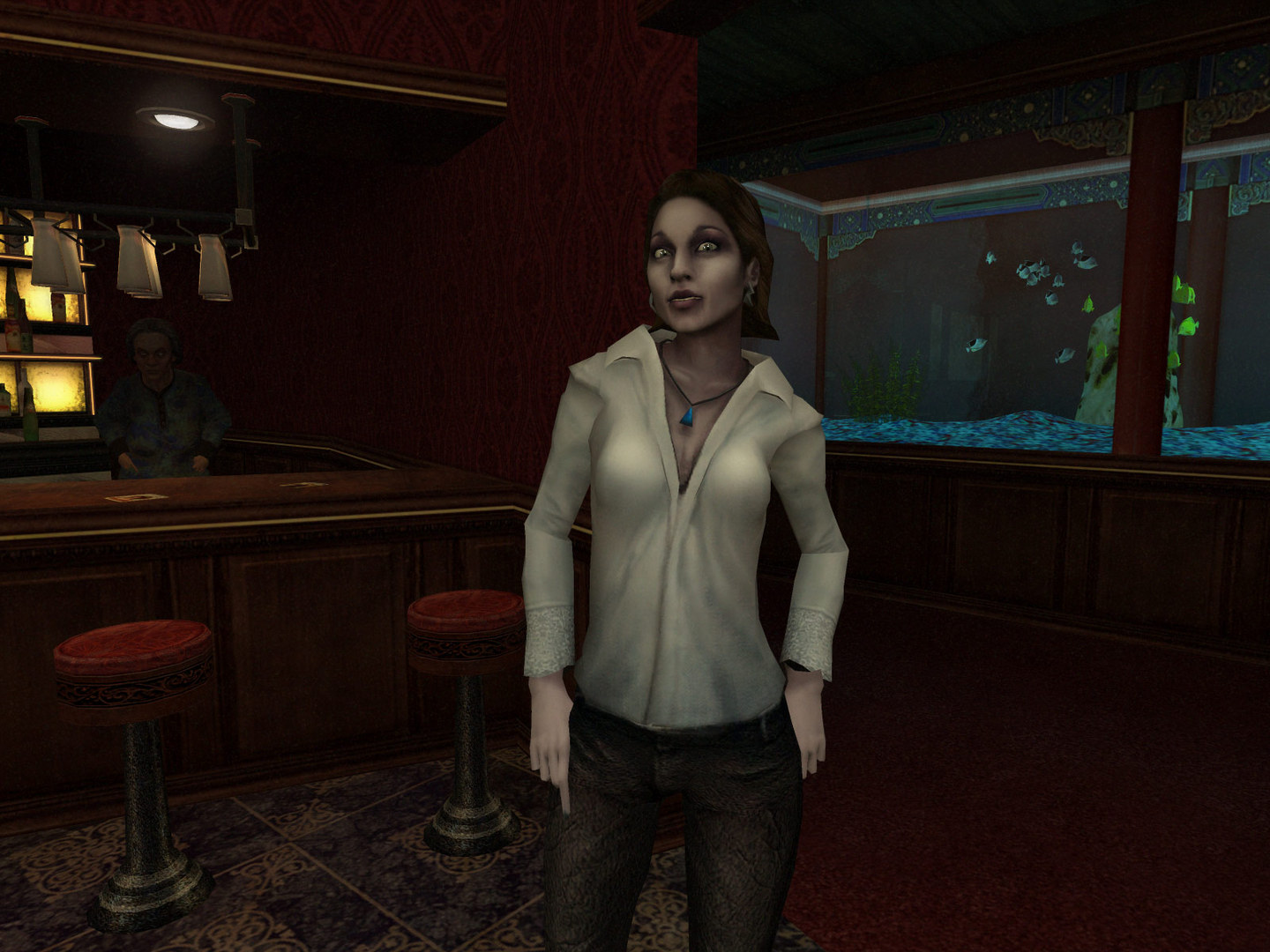
The campaign moves through distinct Los Angeles neighborhoods, with Santa Monica, Downtown, Hollywood and Chinatown acting as connected hubs for main quests and optional work. Characters encountered in clubs, shops, apartments and faction meeting places offer leads, errands and competing accounts of events. Nines Rodriguez and other Anarchs provide a counterpoint to the Camarilla, while the Sabbat and other supernatural groups create threats that are not solved by simply pleasing the Prince. LaCroix assigns central missions, but conversations and side quests give the fledgling other relationships to manage. Returning to familiar streets reveals new contacts and tasks as the main story develops.
Feeding is both a survival system and a social risk. Blood fuels Disciplines, and the player can replenish it by feeding on living people or using stored supplies. A victim must be isolated enough that witnesses do not expose the vampire; feeding in public or using conspicuous powers can put the Masquerade at risk. Some people may be approached through conversation, while others require the player to find a quiet opportunity. Clan also matters: Ventrue have a restricted range of suitable victims, and Nosferatu face unusual difficulty blending into public spaces. Managing hunger therefore connects route planning, character traits and the choice to preserve secrecy.
When violence breaks out, Bloodlines combines first-person action with role-playing attributes and powers. The player can fight bare-handed, use melee weapons or firearms, and activate clan Disciplines that spend blood. A Brujah’s Celerity can alter the pace of a fight; a Tremere can use Thaumaturgy for supernatural attacks; Obfuscate supports stealth for clans that possess it. Auspex can reveal enemies through walls, which can help with ranged combat or planning an approach. The game asks players to decide whether a room is best handled by sneaking, talking past a guard, disabling a threat with a power or committing to a direct fight.
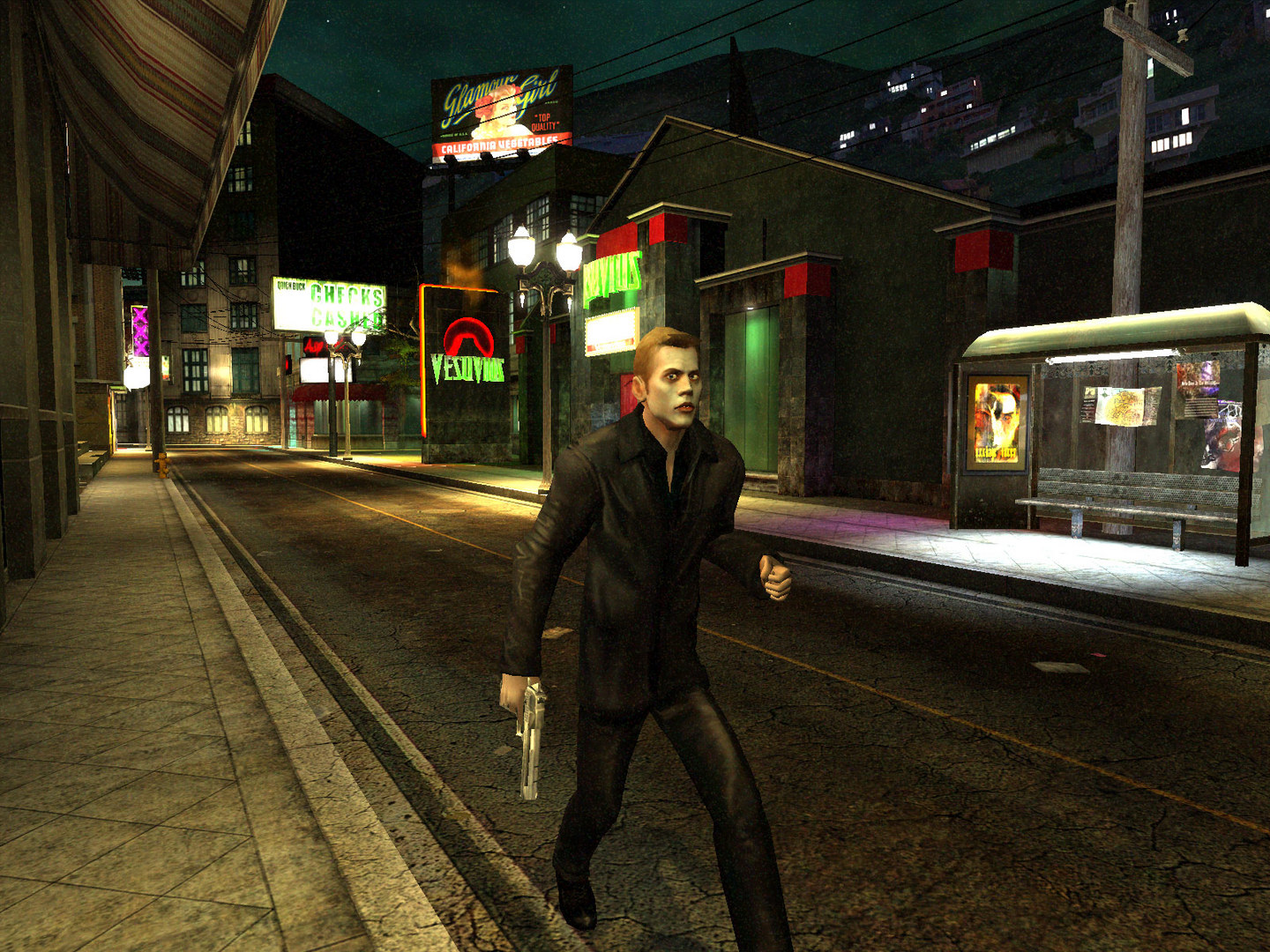
Progress comes through completing quests and earning experience, which can be spent to improve Attributes, Abilities and Disciplines. This creates tradeoffs: improving Persuasion can open more dialogue solutions, while investing in Security or Computer supports locked doors and terminals; combat-focused upgrades make hostile encounters more manageable. Exploration can reveal skill books and useful items, while shops provide weapons, ammunition, blood supplies and equipment as funds allow. Optional quests add their own characters and challenges, and their outcomes can affect rewards or later conversations. The system supports focused builds, but players can still develop a broader set of tools as the story proceeds.
The fledgling also gains a haven that serves as a private base between excursions. There, the player can restock, check messages on a computer and follow up on leads delivered through email. Some quests use these messages to direct the next step, so returning home is part of the campaign rhythm rather than a separate management mode. The streets remain the main space for investigation and encounters, while the haven links those episodes and gives side characters a channel to reconnect. Across these systems, Bloodlines treats the vampire fantasy as a set of linked decisions about identity, secrecy, resources and influence in a city whose inhabitants have their own agendas.
- Developer
- Troika Games
- Genre
- Action role-playing game