
About Valkyria Chronicles
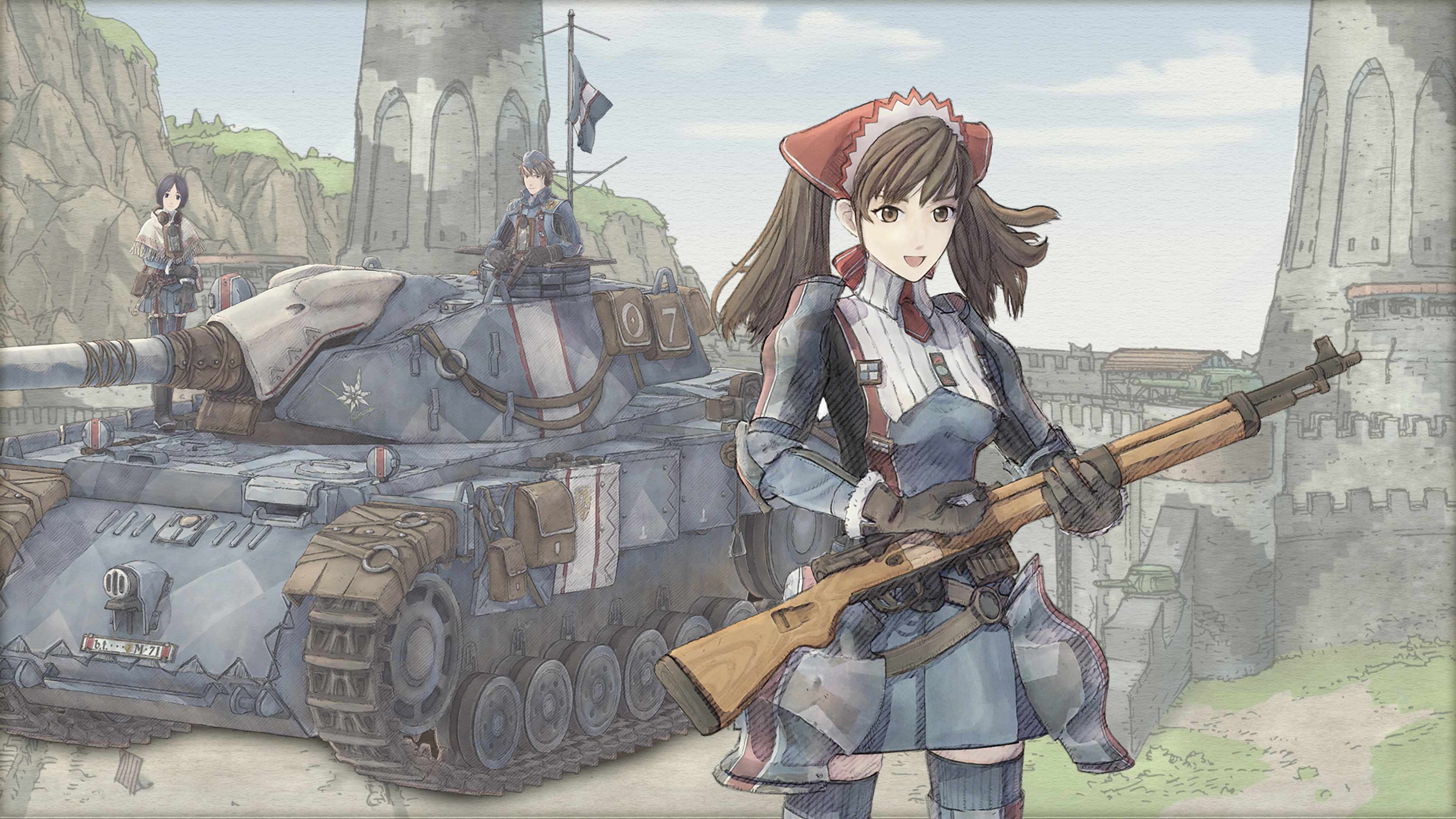
Valkyria Chronicles follows Welkin Gunther and Gallia’s Squad 7 as a neutral country is invaded during the Second Europan War. Battles mix map-based command with direct control of individual soldiers and the Edelweiss tank. Between operations, you assemble the squad, train its classes, improve equipment and watch a watercolor-styled story unfold through an illustrated book.
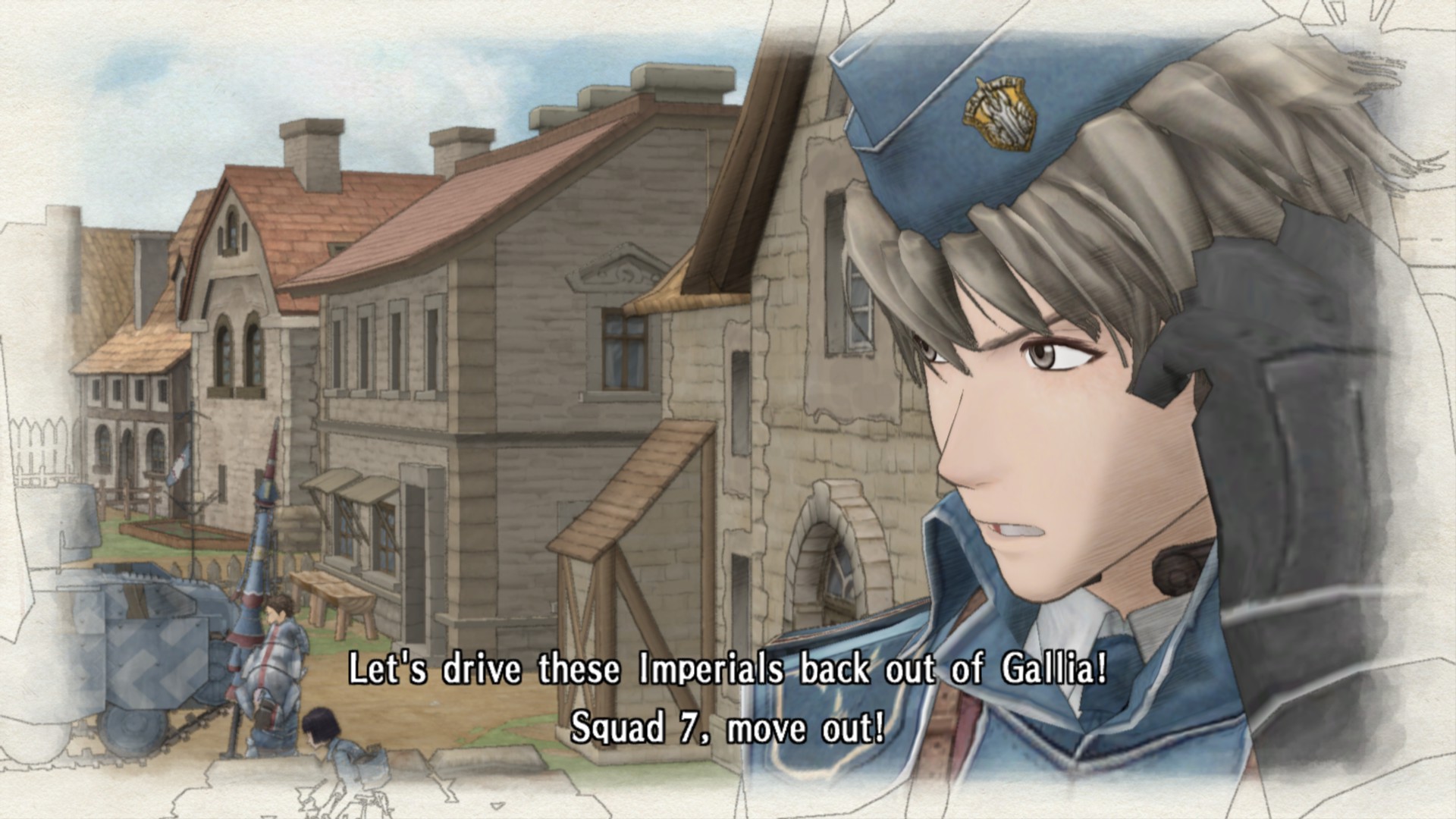
The year is 1935 E.C. on the fictional continent of Europa. The Eastern Imperial Alliance and the Atlantic Federation are at war, and both powers need Ragnite, a mineral used to fuel machinery and treat injuries. Gallia sits between them and has its own deposits, so its neutrality cannot protect it when the Empire invades. The opening brings that continental struggle down to the border town of Bruhl. Welkin Gunther returns from university as Imperial forces arrive; he escapes with town watch captain Alicia Melchiott, his sister Isara and the Edelweiss, a prototype tank built by his father. They enter the Gallian Militia and become the core of Squad 7. Welkin commands citizens pressed into a war for their homes rather than professional soldiers who can be treated as interchangeable counters. That distinction gives the battles a different weight: the soldier moving across a field under fire has a name, a background and a place among the rest of the squad. The campaign also introduces the legendary Valkyrur as more than a bedtime story, complicating what initially looks like a conventional struggle over territory and Ragnite. The early premise is enough to understand why Gallia fights without giving away where that legend leads.
The story is presented as an illustrated book, with episodes appearing as pages and combat operations marked as maps. It is not a continuous open world in which Welkin walks between towns. Selecting a page advances the narrative or starts a mission; tabs provide places to review the squad and prepare for what comes next. Once Welkin commands Squad 7, a briefing shows the operation's objective, camps, opposing forces and possible routes. You choose who deploys and where they begin rather than allowing the story to pick a fixed party. The roster can hold up to twenty active soldiers, and the barracks show each one's class, health, mobility, weapon range, accuracy and other useful details. Alicia, Rosie and Largo are central members who cannot be removed from the squad. The roster's personalities are also part of the tactical picture: character Potentials can affect performance, and some soldiers work especially well with particular comrades. A campaign mission therefore starts before a shot is fired, with the choice of whether this map calls for scouts who can cross ground quickly, anti-tank fire, close-range protection or an engineer to sustain the rest of the force. The book format keeps the campaign, headquarters and battlefields connected while letting each operation present a distinct spatial problem.
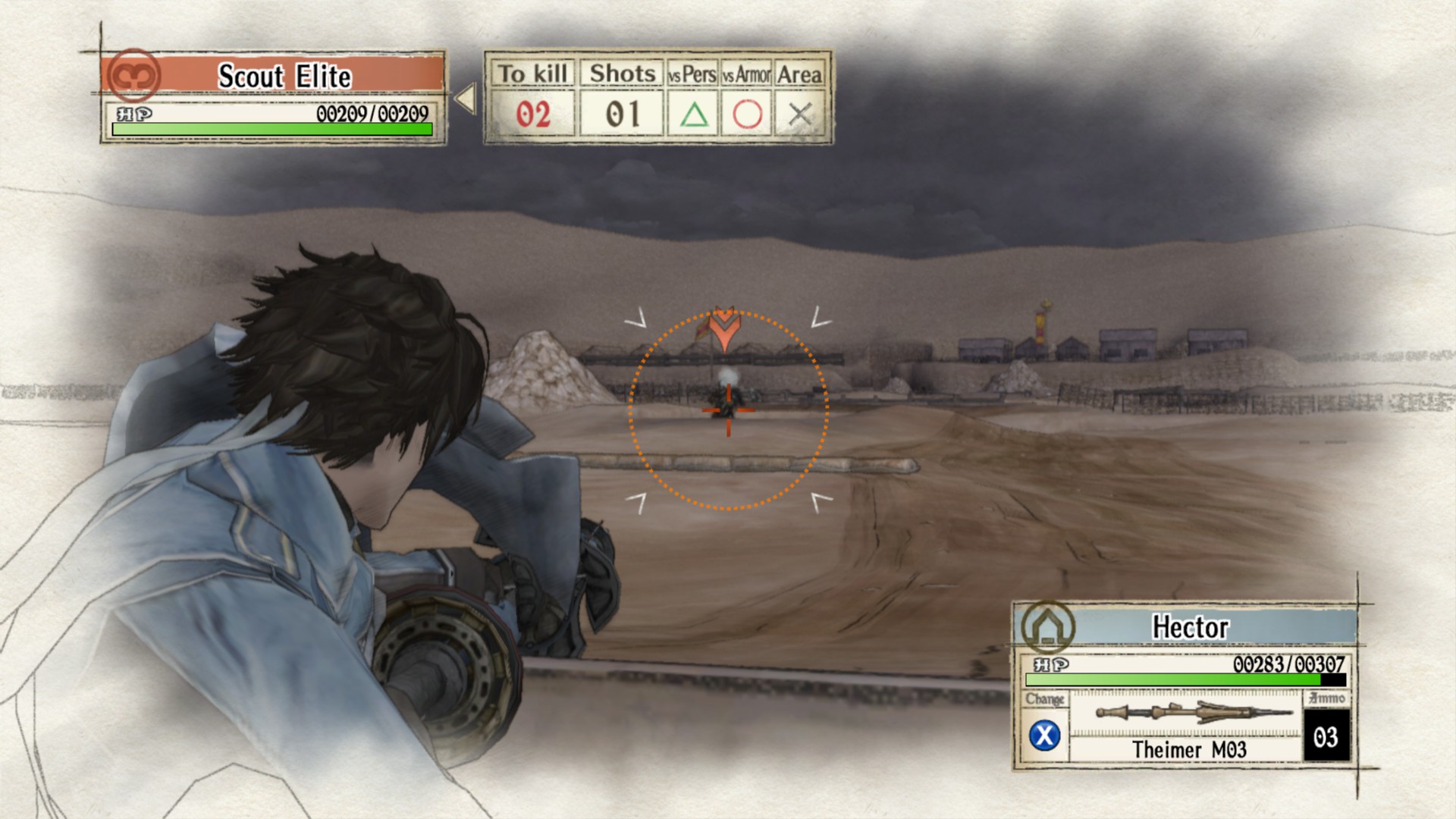
Valkyria Chronicles calls its battle system BLiTZ, and its rhythm is more specific than simply taking turns. Command Mode shows the field from above and gives you a pool of Command Points. Spending a point activates an infantry soldier; moving a tank costs more, while Orders and reinforcements also compete for that same pool. Choosing a unit drops you into Action Mode, where you steer that soldier or tank directly across the terrain. Movement consumes Action Points, with the available distance depending on class. When you find a firing position, Target Mode lets you aim and take one attack for that action. The enemy is not inert while you run through an exposed lane: interception fire can punish a route before you reach cover, and the opposing phase lets its units reposition and shoot while yours answer automatically. You can end a phase with Command Points unspent, saving some for a later opportunity rather than spending every activation immediately. Reusing one soldier in a turn is possible, but repeated actions reduce the movement available to that unit. These rules make the choice of who moves first, how far they travel and where they finish matter as much as the eventual shot. A promising attack loses its value if the soldier has no protected position left at the end of it.
The five infantry classes solve different pieces of that problem. Scouts carry rifles and cover long distances, so they can reach a camp or reveal a route that a slower unit cannot. Shocktroopers use machine guns for dangerous close-range fights, while snipers work from distance but struggle if enemies close on them. Lancers carry anti-armor weapons and can threaten a tank, though their low mobility leaves them exposed to infantry. Engineers have weak combat power but restore ammunition, repair tanks, clear mines and fix damaged sandbags. Welkin's Edelweiss adds its own weapons, including anti-armor shells, explosive mortar rounds and a machine gun, but its greater Command Point cost means using it is a deliberate choice. The terrain keeps those roles from becoming a simple damage ranking. Sandbags, tall grass and camp positions can shelter a unit; sight lines warn when an enemy sees and can intercept them. A friendly camp restores health and ammunition and allows withdrawals and reinforcements, so taking ground can change the supply situation for the whole squad. A soldier who falls to zero health is in critical condition rather than immediately lost. Reaching them to call a medic can save them, but leaving them exposed too long or allowing an enemy to finish them risks permanent loss. Holding a route, reaching a casualty and capturing a camp can pull the same small team in different directions.
Between operations, the headquarters give those soldiers and vehicles room to grow. Experience Points are used to train infantry classes, while DCT funds new weapons, defensive equipment and tank improvements through research and development. The barracks let you change equipment and review a soldier's Potentials and combat statistics before deciding whether to keep them active. Weapons can also come from defeated enemy leaders or post-battle awards, so equipment is not limited to a fixed starting issue. The training field and R&D facility have different jobs: one improves the people using the equipment, the other changes what they carry or what the Edelweiss can do. Repeated skirmishes award experience and funds, offering a way to strengthen Squad 7 outside the next story operation. Their availability expands as the campaign advances. The book also adds personnel, weaponry and glossary entries over time, making the wider conflict and the unit roster easier to follow without forcing every detail into a cutscene. This preparation cycle feeds back into deployment. A better-trained class or improved tank does not erase a poor route across an open field, but it gives the commander more ways to answer an entrenched defender, a minefield or a vehicle blocking the objective.
SEGA's CANVAS engine gives the soldiers, towns and battlefields the look of watercolor illustrations in motion. The painterly style fits the book presentation, but it does not make the fighting consequence-free; the story keeps returning to what an invasion does to Welkin's friends and neighbors. English and Japanese voice options are available in the PC release, whose store page describes the same Gallian campaign and BLiTZ system as the console versions. Edition details need a little care. The original game began on PlayStation 3, the later PC version includes previously released additional missions, and the PlayStation 4 Remastered edition includes prior DLC along with its visual and performance update. Those extra missions and PS4-specific features are not required to understand the base story or Squad 7's headquarters and battle systems. Across versions, the distinctive loop remains the same: open another page of Welkin's account, prepare named soldiers for a particular operation, spend Command Points on a plan, and then take direct control when it is time to cross the ground. The contrast between an illustrated campaign record and the immediate risk of moving one vulnerable soldier through enemy fire gives this strategy RPG its shape.
- Developer
- SEGA
- Genre
- Tactical role-playing game