
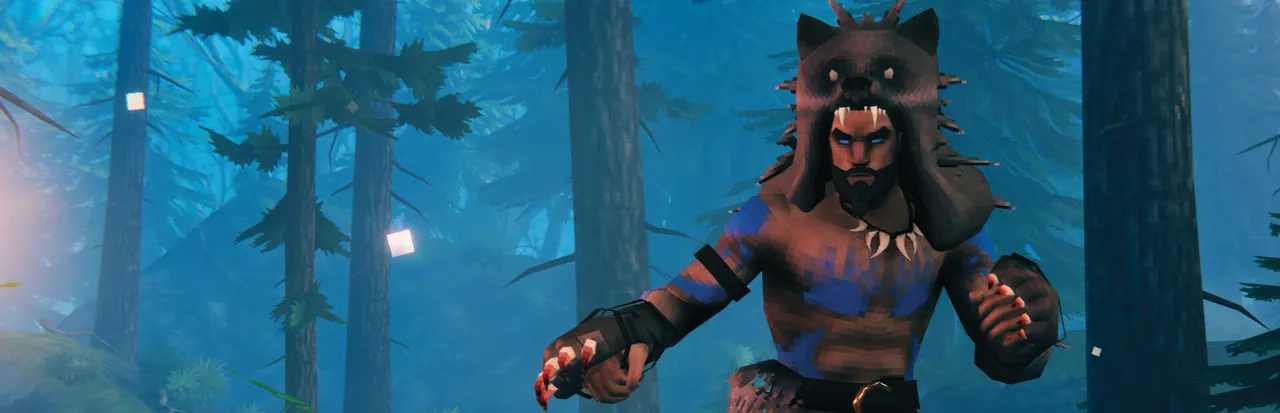
About Valheim
Valheim casts the player as a fallen Viking sent to the tenth world to overcome its Forsaken and prove worthy of Valhalla. Across procedurally generated biomes, survival, crafting, sailing, settlement building and boss battles feed into one another, with each region introducing new threats and materials.
Valheim begins with a fallen Viking brought to the tenth world, a wilderness where Odin’s Forsaken have taken hold. The task is to face these powerful beings and make the dangerous lands traversable, one biome at a time. The setting draws on Norse imagery without reducing the journey to a straight path between boss arenas: forests, mountains, swamps, open plains and other regions create distinct environments to cross and inhabit. The player arrives with little equipment, learns how the world behaves, and gradually turns survival into a sustained expedition supported by a home, better tools and knowledge of the terrain.
The first hours are grounded in gathering and shelter. Wood, stone, food and hides become the basic materials for tools, weapons, armour and a work area. A workbench enables crafting and repairs, while shelter and a fire give a settlement practical value beyond appearance. Building pieces need support, and larger structures call for planning roofs, floors and internal space. As the player reaches new materials, improved crafting stations and equipment expand what can be made. A small refuge can become a longhouse with storage, cooking facilities and room to prepare for journeys, or a network of outposts that reduces the distance between a frontier and safety.
Food is a central part of readiness rather than a simple hunger timer. Eating different foods raises the health and stamina available to the Viking, so choosing a meal affects how much punishment can be endured and how long the player can run, block or fight. Berries, mushrooms, meat, fish and cultivated ingredients can be turned into more substantial dishes as recipes and facilities become available. Farming and animal husbandry add a dependable source of materials and meals to the settlement. Preparing food, mead and equipment therefore links exploration back to the base: a journey into hazardous country begins with decisions made at home about supplies and the risks ahead.
Combat asks the player to manage distance and timing. Enemies telegraph attacks, and blocking, parrying, dodging and choosing an appropriate weapon matter more than simply attacking continuously. Weapons and shields suit different approaches, while armour and food determine how much margin for error the character has. Skills improve through use, so repeated actions contribute to a character’s capability without replacing the need to learn an enemy’s pattern. Creatures and hostile groups also differ by biome, making a familiar weapon or protection set less dependable when the player moves into a new environment. Retreating, preparing and returning with better equipment is part of the survival loop.
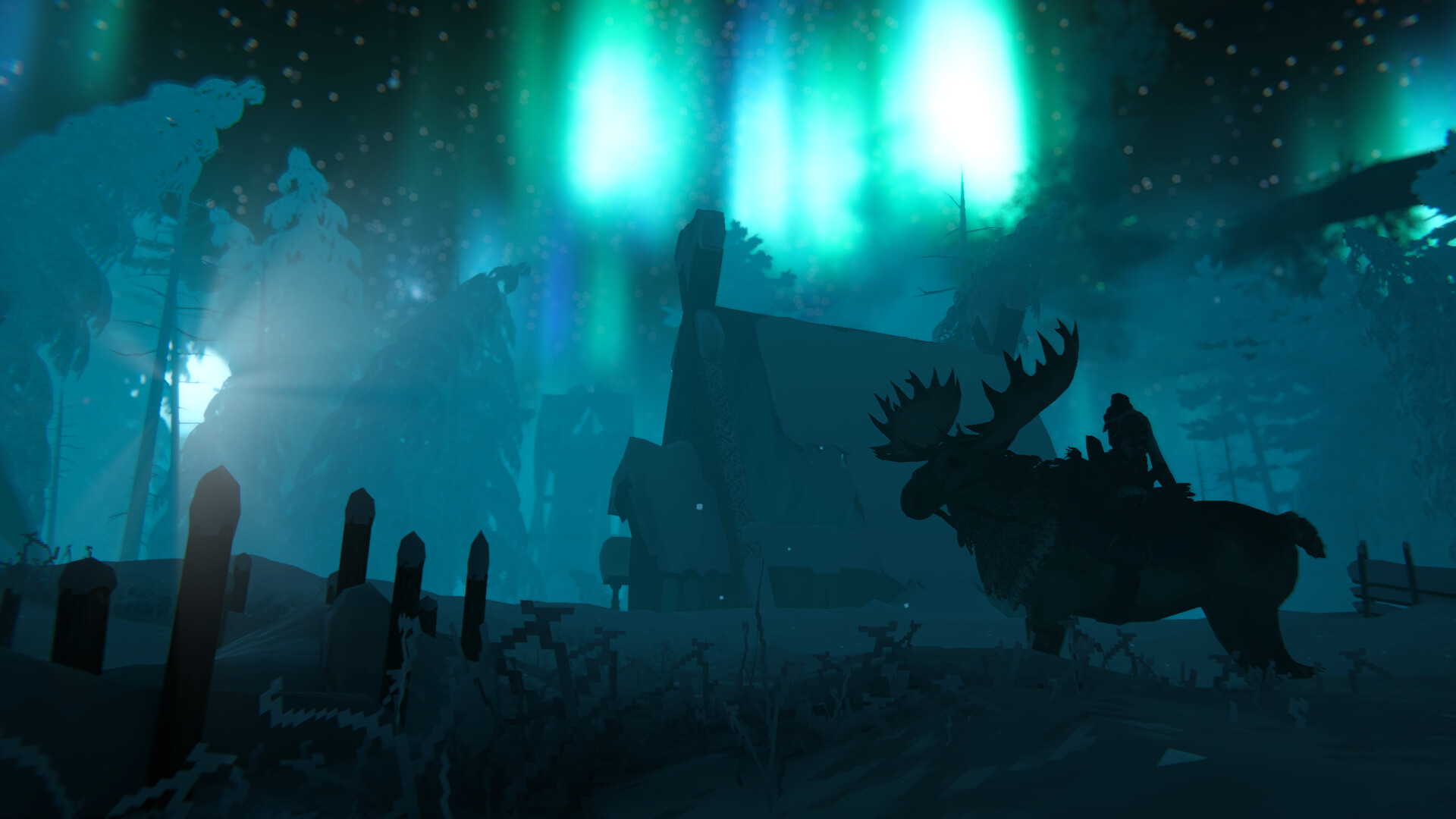
Exploration connects the separate biomes into a progression. The world is procedurally generated, and the player can travel on foot, by boat, or through other later options as they become available. Sailing makes coastlines, rivers and open water consequential: ships carry people and cargo, while wind and weather influence a crossing. Dungeons, crypts and caves offer confined expeditions for resources and discoveries, contrasting with exposed journeys across forests, mountains or mist-covered ground. Each new biome asks the player to learn its hazards and locate unfamiliar materials. Those resources unlock the next tier of crafting, which in turn makes deeper exploration and stronger opponents more manageable.
Bosses, known as Forsaken Ones, provide the major milestones. The main biome progression is marked by these bosses, and defeating a boss supplies a new opportunity or resource that helps the player venture farther. Finding the means to summon a boss involves exploring the region and gathering what its altar requires; the encounter then tests combat preparation rather than just map progress. A victory changes the practical horizon of the adventure by enabling new crafting and access to the next stage. This structure gives the open world a broad direction while leaving room to build, hunt, farm, sail or explore at the player’s own pace between major confrontations.
A settlement also has to withstand the world around it. Building is not merely decorative: roofs, fires, work areas and defensive choices support daily crafting and give the player a place to return after an expedition. Raids can threaten a home, so walls, gates and an understanding of enemy approach matter as a base grows. The building system lets players shape interiors and exteriors, while upgrades to crafting stations organize progression around increasingly rare materials. Valheim can be played solo or cooperatively, and its player-hosted worlds let groups divide tasks such as gathering, construction and scouting. The same journey can therefore feel like an individual campaign or a shared frontier project.
The release version carries this progression through the Deep North, the last major biome added for version 1.0. Its presence completes the sequence of distinct territories and Forsaken challenges that frames the journey through the tenth world. The story’s broad goal remains legible throughout: establish a foothold, learn each region, gather the resources it yields and confront the force that blocks further progress. Yet the day-to-day route is self-directed. One session may focus on a ship or a new hall, another on searching for a dungeon or preparing for a boss. Those projects meet in the recurring work of making a harsher world survivable.
Valheim launched into early access in 2021 and closed that chapter in September 2026 at 1.0, developed by Iron Gate AB and published by Coffee Stain. Six years is a long time to sit unfinished. It doesn't feel unfinished any more.
A survival game where home is the reward
Most games in this genre treat the base as a pit stop — somewhere you store things between excursions. Valheim inverts that. The dungeons are genuinely grim and the bosses will take several attempts, and the fire and ice regions are as hostile as anything in the genre. But the thing the game is actually built around is returning from all of it with a battered shield and sitting by your own hearth, either alone or with whoever you've brought along. Conquering something is the excuse; coming home is the point.
That framing does more work than it sounds like it should. It makes building matter without turning it into a craft grind, because a longhouse you've put together over twenty sessions is a place rather than a menu. It also gives co-op a reason to exist beyond convenience — the game is measurably better with three or four people because someone has to sail, someone has to cook, and everyone has a story about the time the boat went badly.
The look does more than it gets credit for
Valheim is deliberately lo-fi: pixelated textures, not many polygons, a palette that looks hand-mixed rather than rendered. The result holds up better than plenty of games with ten times the budget. The procedural regions — peaceful meadow, dreary swamp, snowbound mountain — land with a Northern European coherence that reads as considered rather than generated, and every fresh map still manages to look as though a person built it.
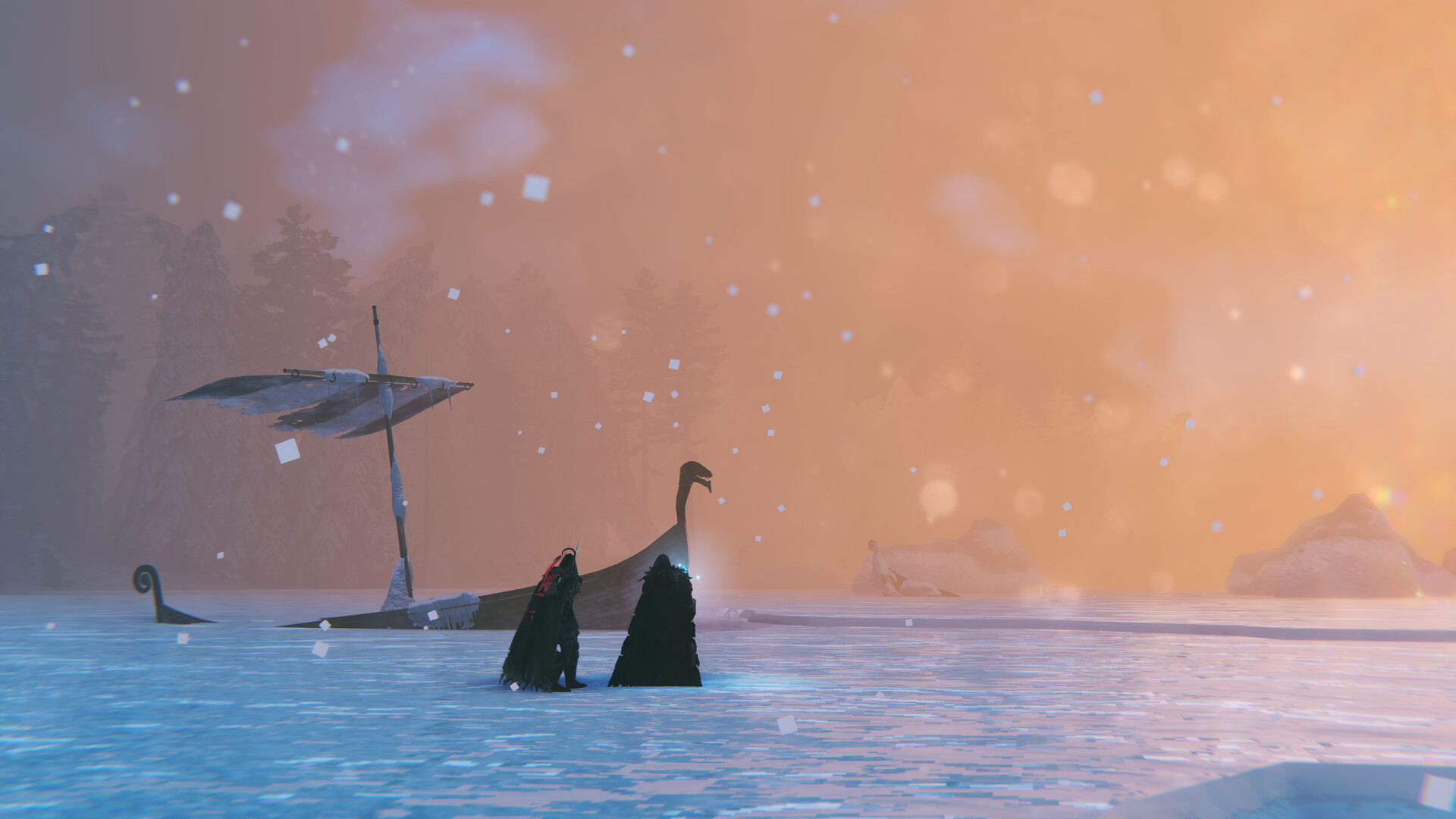
There's a specific moment most players seem to share: the first time a hand-built ship goes in the water. Sailing is the main way you cross distance, and the steering is awkward in a way that's easy to defend — it's clumsy the way a boat is clumsy, and learning to make a tight turn against the wind is its own small satisfaction. You will spend a long time preparing for that first voyage. It's worth the preparation.
The pulse
The 1.0 release was received as a completion rather than a relaunch, which is the right frame. It is one of the best survival games around, and it has finally arrived complete. Both are written by people who have been in it since early access, and both lean on the same thing — not the systems, but the atmosphere and the sense of place. The recurring caveat across the coverage is familiarity: if you have played Valheim on and off for years, 1.0 is a conclusion rather than a discovery, and the people getting the most out of it now are the ones arriving fresh.
Should you play it
Yes, and with other people if you possibly can. It's the rare survival game where the co-op isn't a convenience feature bolted onto a solo experience — the division of labour is part of the design, and the game is at its best with a crew and a long-term base.
Solo works too, and it's a calmer, more deliberate experience, but expect the grind to stretch. Skip it if you want a survival game with a tight campaign and a clear end, because Valheim's shape is long and mostly self-directed, and the bosses are milestones rather than a plot. And if you already played it heavily in early access, be honest that you may be buying a finished version of something you've already worn out.
Go deeper with V4mp
- Developer
- Iron Gate AB
- Genre
- Viking survival and crafting
Explore Valheim further
Explore the wiki for detailed reference pages on the game's world, systems, items and locations.