
About Unpacking
Across eight house moves, Unpacking follows an unseen woman through changing rooms and stages of life. Open boxes, place belongings in a new home, and work out where objects belong. The rooms and possessions shift over time, letting a mostly wordless story emerge through what travels with her and what is left behind.
Unpacking begins with a small, familiar task: empty the moving boxes in a room and find a place for everything. Across eight moves, the spaces grow from a childhood bedroom to larger homes, and the person moving remains unseen. There is little dialogue to explain what is happening. Instead, the belongings provide the clues: favourite objects return, new interests appear, and some things disappear between moves. A bedroom or kitchen becomes a portrait assembled from the objects that occupy it. The story is not delivered as a series of scenes to watch; each room is built by the player while unpacking. That makes the central question less about where the character is going next and more about what her changing surroundings suggest about the life taking shape around her.
Each move opens with boxes and a home viewed in detailed pixel art. Click or select a box to take out its next object, then place that object on furniture or another suitable surface. Most belongings can go in several places, so a room can be arranged to suit the player’s own sense of order. Plates might be stacked in a cupboard, books lined on a shelf, towels hung in a bathroom, and smaller pieces placed in drawers. Objects can be moved again as the room fills in. The task is tactile and deliberate: choose one item, look over the space, and decide how it can fit alongside what is already there. The game has no countdown pushing the process along, and no score measuring how quickly or neatly a room is completed.
Placement still has boundaries. Some belongings have a set of acceptable locations, and an item placed somewhere unsuitable is marked with a red outline. When every box is empty, those signals point back to the objects that need another home before the move is complete. The feedback is practical, but it also makes arrangement part of the storytelling. The room around an object can change what it suggests about the person who owns it. Some boxes contain objects that seem to belong in a different room, so clearing them may mean carrying things across the home rather than finishing one space at a time. The game leaves most choices open while using a smaller number of constraints to give the unpacking its puzzle shape.
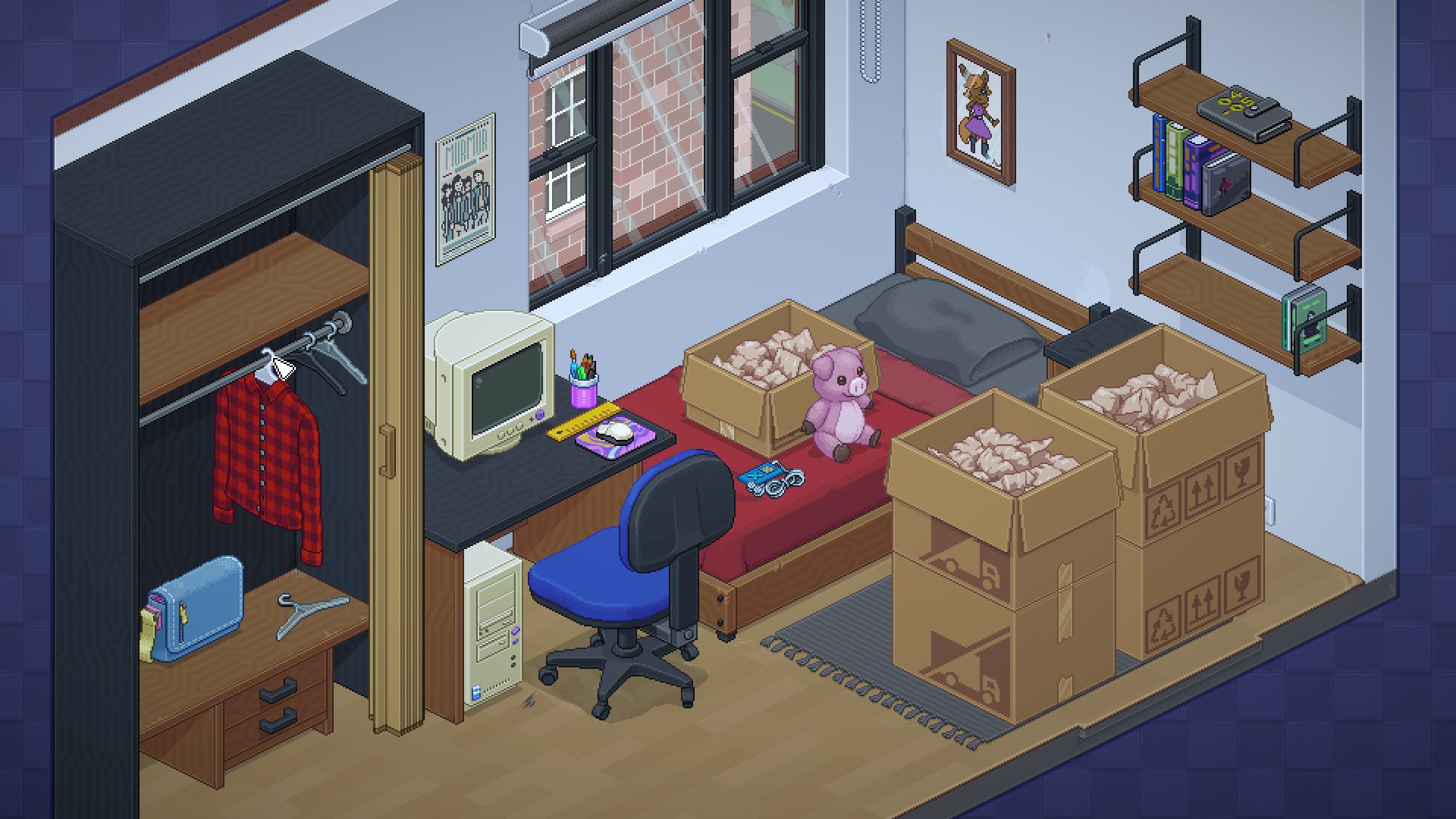
The home changes the puzzle. A single bedroom offers a compact set of surfaces; a larger house may spread belongings across several rooms with different furniture and storage. The same kinds of objects can have different practical options from one move to another, while the number of possessions grows and older belongings must fit alongside new ones. A desk that once held a few books may later need room for more equipment, and a shelf that worked in one home may not exist in the next. These changes create gentle spatial problems without adding a separate inventory or upgrade system. The player learns by trying likely places, noticing the red feedback, and reconsidering what else in the room could move. Familiar items make each new space legible, while its layout asks for a fresh arrangement.
The possessions also connect one move to the next. A recurring object may be packed away and unpacked again in a different room, where it sits beside newer interests or responsibilities. Other belongings are absent, and that absence can be as noticeable as a new purchase. Small changes in the collection build a timeline without naming every event outright. The rooms carry most of the detail without a narrator explaining what each object means. The player sees the character through what she keeps, how she uses her space, and which things have to make room for others. The approach keeps the narrative close to everyday life: moving into a new room or sharing a home is represented through furniture, boxes, and the ordinary decisions involved in making a room usable.
Sound gives each placement a distinct response, from the soft contact of an object meeting a surface to the rustle of items being handled. The soundtrack, composed by Jeff van Dyck, accompanies the work without adding spoken direction. These small audio details help distinguish actions as the player picks up, moves, and sets down belongings. The quiet presentation also leaves room to examine a shelf or open a box at a measured pace. There are no gameplay cues that rely only on hearing, and music and sound effects have separate volume controls. Together with the uncluttered rooms and compact interactions, the audio keeps attention on the spaces being arranged and the items that give them a personal character.
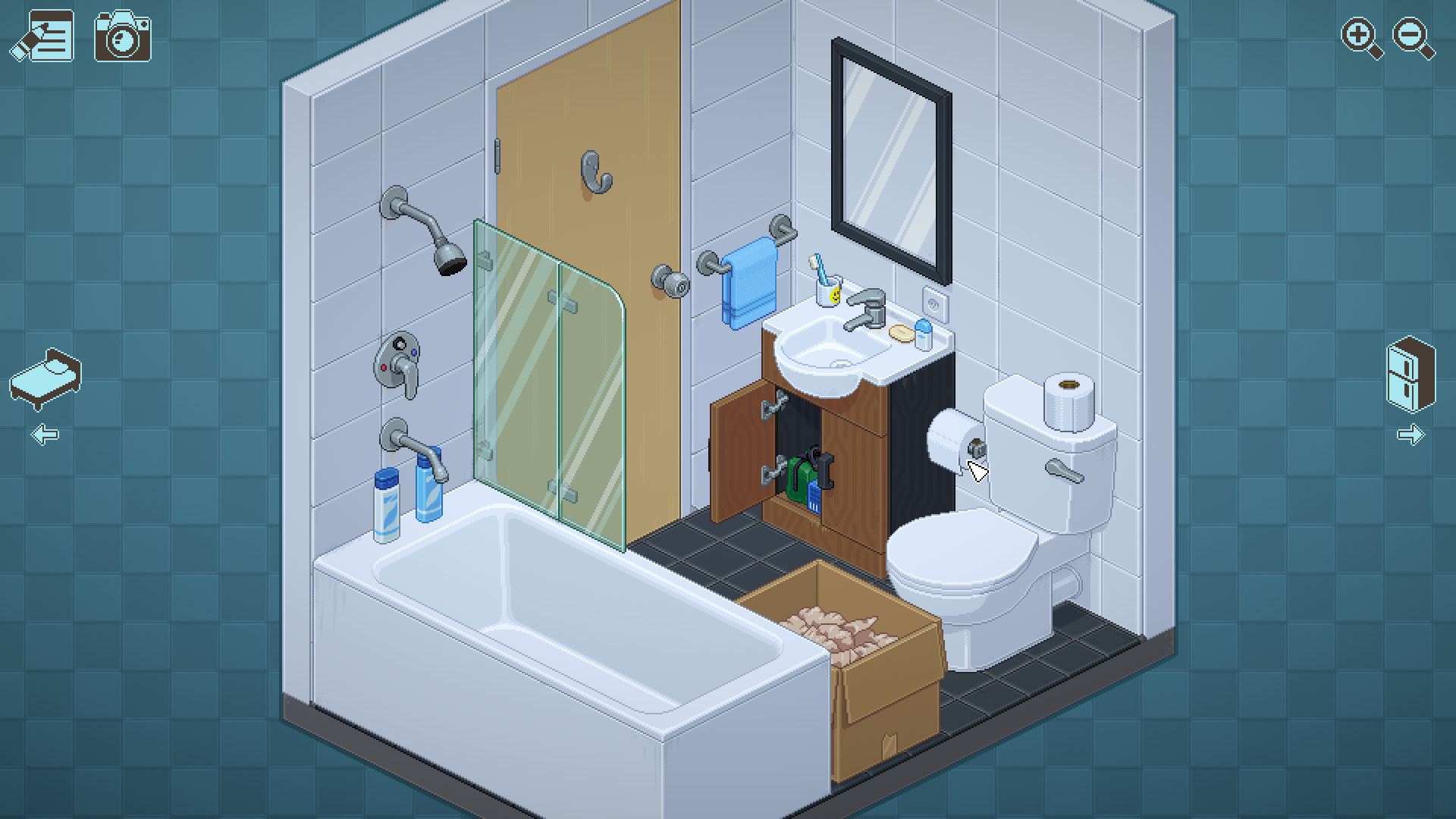
Unpacking includes options for players who want to change how its placement puzzles work. Controls can be remapped, the interface can be enlarged, and the screen can be zoomed in; the red outline used for invalid placements can also be changed. The accessibility menu includes an “Allow items anywhere” option that removes the placement requirement, turning each room into a free arrangement space. On PC, the game supports mouse and keyboard, gamepad, and touch on supported hardware; the Switch version also offers touch and motion controls alongside gamepad input. These settings leave the same homes and possessions in place while changing how a player interacts with them. Whether following the intended placement clues or arranging objects more freely, the activity remains focused on opening boxes and shaping lived-in rooms.
- Developer
- Witch Beam
- Genre
- Puzzle; home decoration; block-fitting puzzle, as described by the developer.