

About Unforeseen Incidents
When handyman Harper Pendrell finds a dying woman as Yelltown Fever spreads, he is drawn into a conspiracy surrounding the outbreak. He investigates by exploring hand-painted locations, questioning residents, collecting and combining objects, and using the attachments of his multi-tool. A scientist, a reporter and others help him follow the evidence.
Harper Pendrell is a small-town handyman whose routine is interrupted when he encounters a woman dying from a fast-moving illness. The outbreak, known as Yelltown Fever, is spreading through his home town, and the woman’s request sends him toward people who may be able to uncover what is happening. What begins as a local emergency grows into an investigation of a wider conspiracy involving the Rancho Health Corporation and the handling of the disease. The player follows Harper through a series of illustrated places, looking for clues and trying to determine which people can help. The story is a mystery adventure rather than an action game: Harper does not fight his way through the outbreak, and the challenge is to learn enough about the illness and its circumstances to take the next step. The crisis shapes daily life around him. Homes, shops and public spaces show a community under pressure, while residents respond to the danger with different levels of fear, suspicion and willingness to speak. Harper’s ordinary skills and curiosity place him at the centre of events larger than his initial encounter.
The principal character is joined by a small circle of people with different kinds of knowledge. Professor MacBride is a scientist and Harper’s longtime neighbour, while Jane Helliwell is a journalist pursuing information about the outbreak. The official descriptions also identify a reclusive artist as part of the group whose knowledge is relevant to stopping the disease. Harper remains the player-controlled investigator, but conversations with these people help him interpret information that objects alone cannot explain. Residents and officials encountered along the way have their own positions, from practical concerns about daily life to claims about the fever and the organizations responding to it. The cast is presented through dialogue and expressive character art, with Harper’s comments giving exchanges a dry, conversational edge. The game uses its ensemble to make the mystery social: an item may provide a clue, but the player still has to decide who to show it to, which question to ask and what information to connect. As the investigation moves beyond the first victim, the relationships among Harper, MacBride, Helliwell and the other people he meets provide routes into the wider problem.
Most of the play takes place through point-and-click exploration of hand-painted two-dimensional scenes. The cursor identifies interactive objects and exits; the player moves Harper across a background, examines details, talks to characters and collects useful items. Scene transitions link the locations into a route through town and beyond, and maps become available in some sections to move between locations already marked there. This structure means observation matters: a small object or a change in the scene can supply a needed component, information or reason to revisit a person. Dialogue is not just exposition, because questions and replies can reveal a lead or establish what Harper should attempt next. When a new destination becomes relevant, it expands the places available to investigate. The game does not present a large free-roaming map or a separate combat loop; progress comes from choosing where to look, what to ask and how to use what Harper has gathered. Movement within a room is deliberate, with Harper walking between points of interest, while the hand-drawn layouts and camera framing guide attention toward people and interactive details.
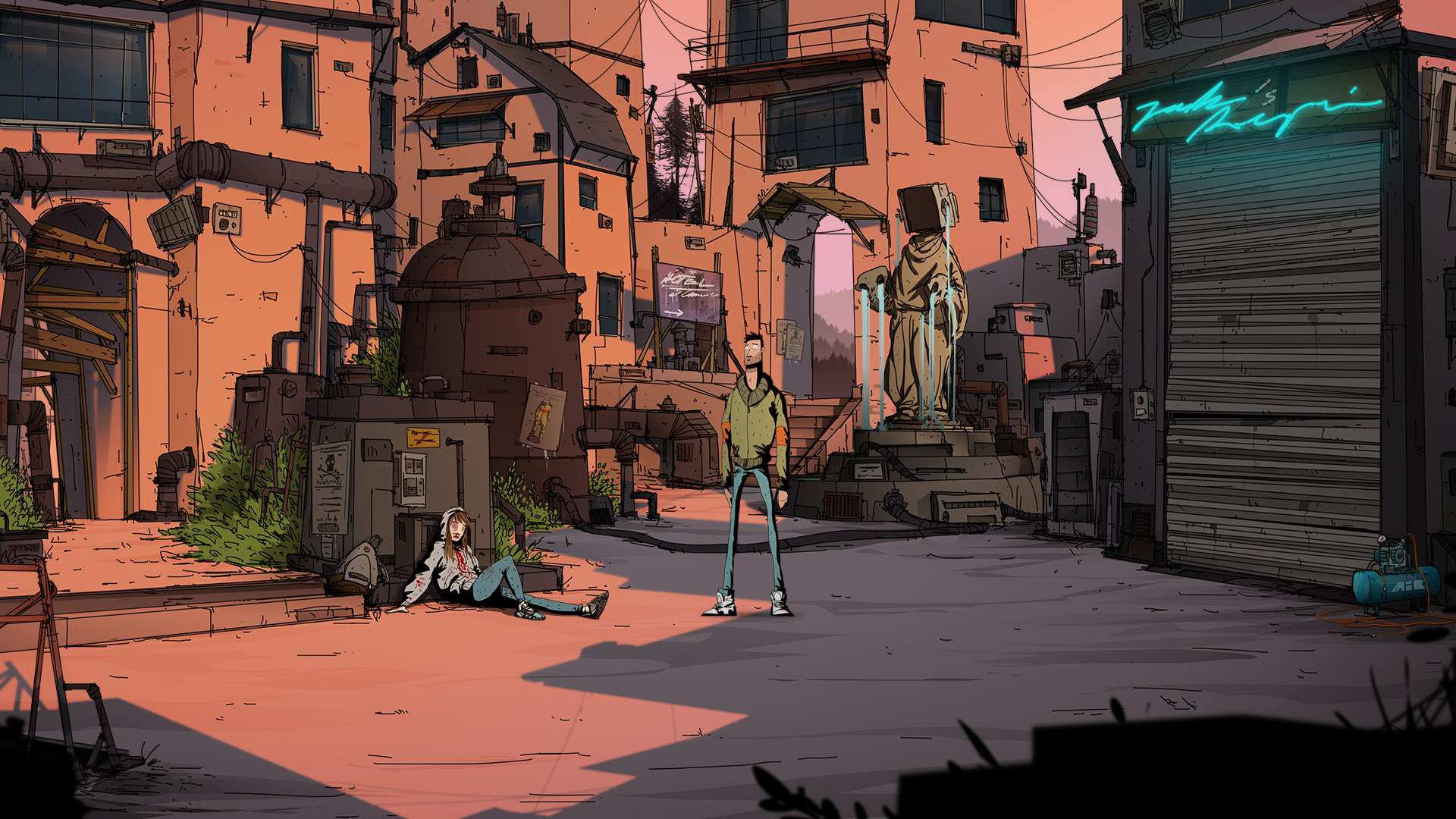
Harper’s multi-tool is the central piece of equipment in the puzzle system. It opens to provide a set of practical attachments, including implements such as a screwdriver, scissors, pliers, a file, a wrench, a can opener and a knife. The player chooses the attachment that suits a task, then uses it on an object or scene element; other inventory items can also be examined, combined or applied to the environment. The tool does not work as a universal key. A puzzle may depend on finding the right attachment, gathering an additional object or understanding what a character has said about the problem. Some collected objects contain further usable parts when inspected, so the inventory itself rewards examination. A wrong attempt produces Harper’s response, and the player can use that feedback alongside visual clues to narrow down what the scene requires. These interactions turn his handyman background into a practical problem-solving method: repair, modify or access something with the items available, then carry the result into a later encounter. The sequence of object puzzles is connected to the investigation rather than a detached collection of mini-games.
The story carries Harper out from the worn streets and interiors of Yelltown into other locations as his leads develop. Yelltown’s declining small-town character is visible in the houses and businesses where the fever has changed everyday routines. Later parts of the investigation include the cleaner seaside town of Port Nicola and places tied to the people or institutions involved in the outbreak. Each setting has its own local details and characters, so moving to a new area changes the questions available as well as the scenery. Some tasks involve gathering and presenting information in conversation, while others ask Harper to solve a physical problem with his tool or inventory. The player gradually assembles a chain of clues, often returning to people with fresh context after learning something elsewhere. The spreading illness gives these errands a larger narrative urgency: each clue is part of finding out how the crisis arose and whether it can be stopped. The contrast between the modest local community and the larger conspiracy gives the journey scale without abandoning the close-up work of examining a room, asking questions and working out the next practical step.
Progress is primarily chapter- and puzzle-based. New evidence opens further conversations or locations, and the player advances by resolving the specific obstacle currently blocking Harper’s investigation. Dialogue can offer more than one response in some exchanges, but the story remains a directed mystery rather than a branching campaign with separate routes. Puzzles use a mix of inventory combinations, multi-tool attachments, environmental interactions and conversational reasoning. In one kind of challenge, the player must gather details from different scenes and present or arrange them with the person who can make sense of them; in another, a tool or combination is needed to change the environment. These variations keep investigation from being reduced to using every item on every object. The adventure’s progression depends on close attention to Harper’s surroundings and to what other characters know. The story moves through its planned locations as the outbreak and its causes become clearer, with some dialogue choices shaping individual exchanges without changing the basic direction of the plot. The result is a single-player narrative whose principal reward for solving a puzzle is access to the next piece of the mystery.
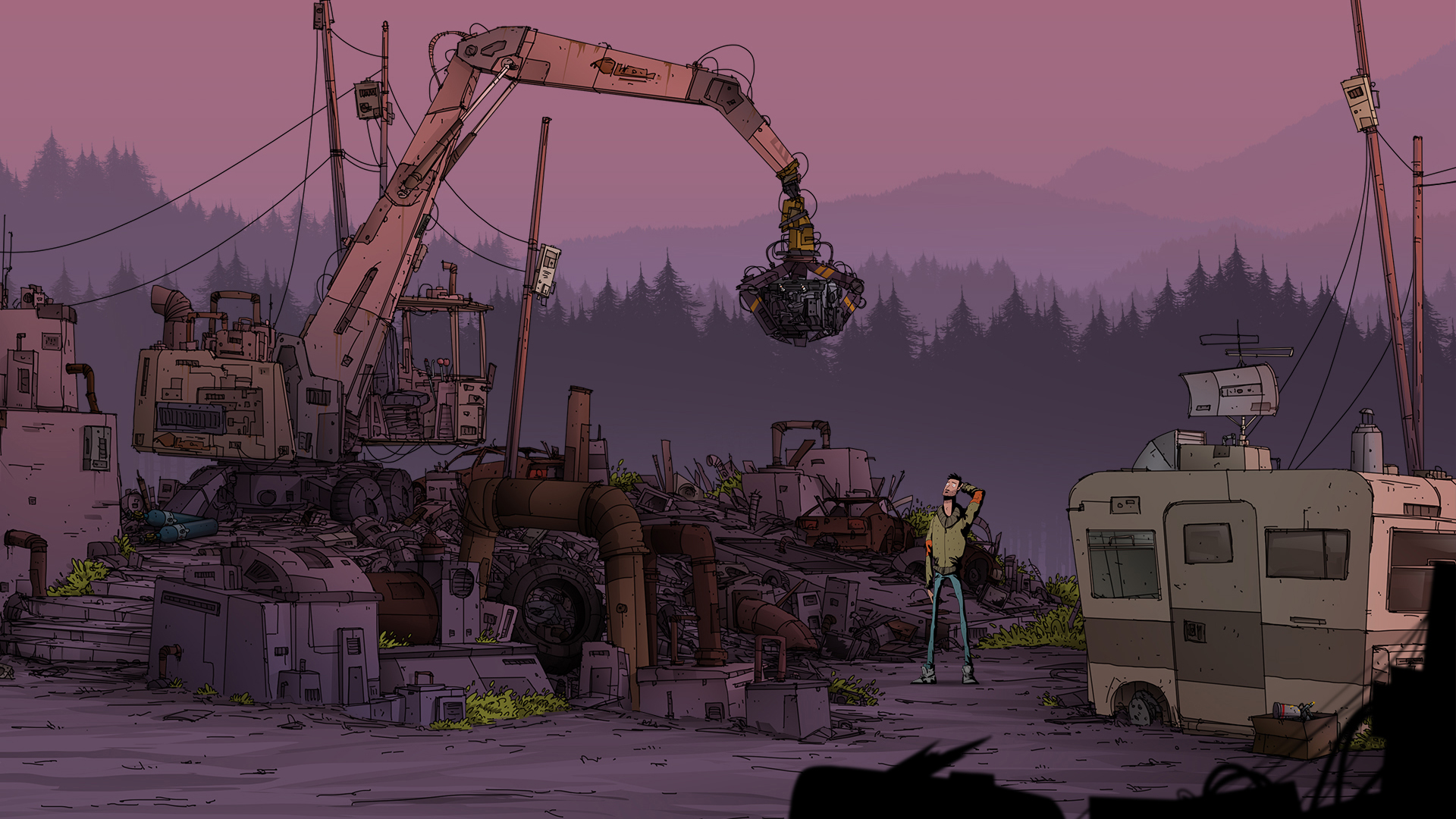
The visual design uses hand-painted 2D backgrounds with a comic-book character style, placing Harper and the other figures inside carefully drawn spaces. The scenes often contain worn domestic interiors, local businesses and public places that give the epidemic a grounded setting. Strong linework and colour make objects readable while helping each location retain its own mood. Dialogue appears in speech bubbles, reinforcing the graphic-novel presentation, and the game includes English and German voice acting alongside its written dialogue. Music and environmental sound support the shifting tone between an ordinary conversation and a developing public crisis. The Steam release is a single-player adventure developed by Backwoods Entertainment and published by Application Systems Heidelberg; the publisher’s product page lists Windows, macOS and Linux requirements, while the event profile also lists Nintendo Switch. This profile describes the complete game at the level of its premise and systems, without implying that one platform build or edition contains material absent from another. The investigation remains focused on Harper’s search for the truth behind Yelltown Fever, with hand-drawn settings, voiced exchanges and object-based puzzles carrying the player from the first encounter toward the people and evidence that can explain it.
- Developer
- Backwoods Entertainment
- Genre
- Single-player point-and-click mystery adventure