
About Under The Waves
Under The Waves follows Stan, a professional diver living alone beneath the North Sea in an alternate 1979. Pilot his submarine, swim through caves and wrecks, gather materials, and follow the traces of memory as a story about grief unfolds in the depths.
Under The Waves places Stan, a professional diver, in the North Sea during an alternate version of 1979. He is there on a long assignment, far from ordinary life, and the pressure of isolation is bound to a personal loss he is trying to face. The sea is more than a backdrop: its distance from the surface reflects Stan's withdrawal, while strange events below the waves draw him toward memories he would rather leave alone. The story follows those events through his point of view and keeps the question of returning to the surface close at hand. Its science-fiction details sit beside a recognisable emotional problem, giving the setting a slightly displaced quality instead of a strict historical one. Stan's journey moves between practical work in a submerged environment and fragments of a life that has followed him down there. The game presents that movement as a reflective adventure, where exploring a place also means encountering parts of the past attached to it.
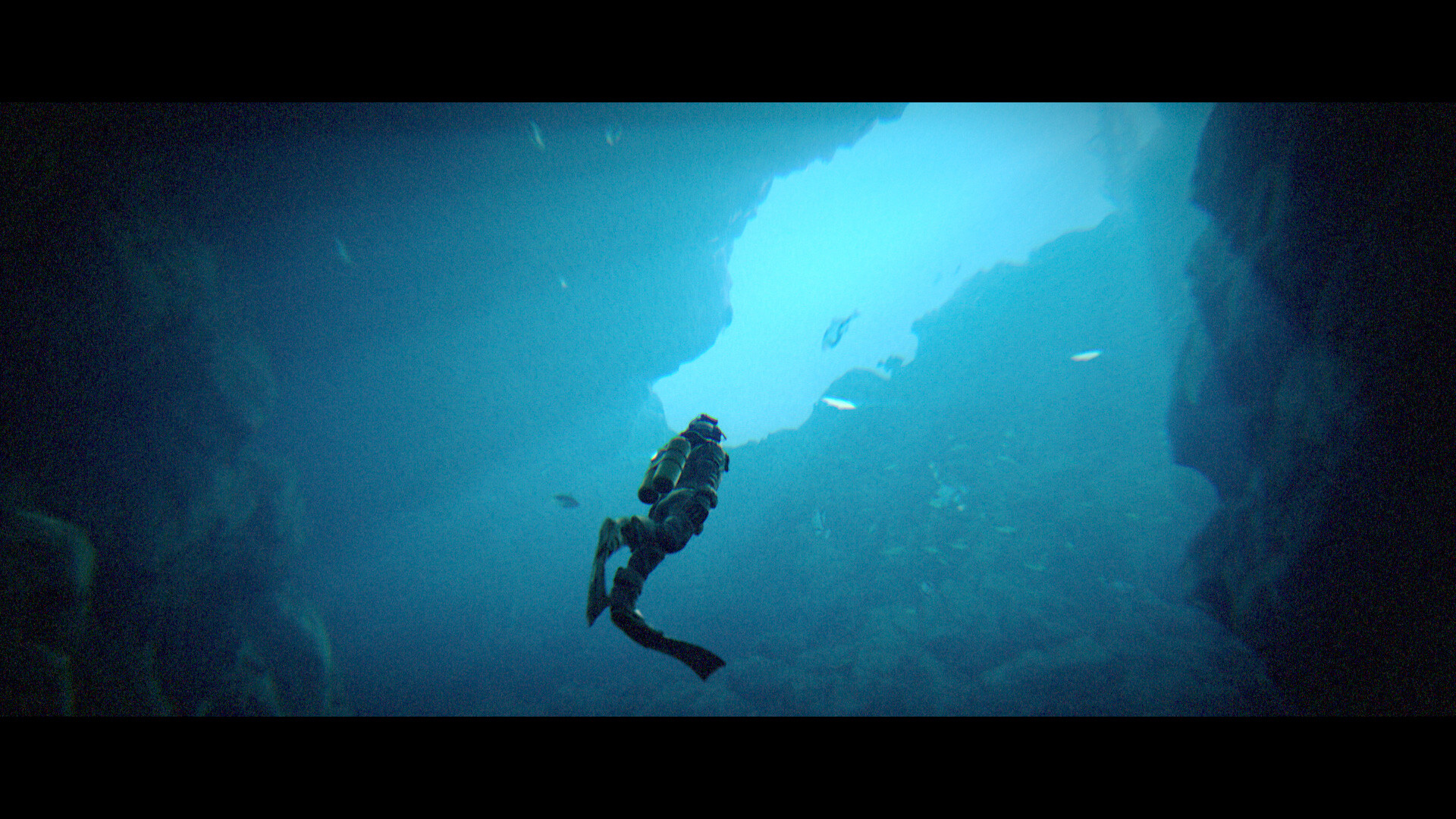
The seabed can be crossed in Moon, Stan's submarine, or by leaving the vehicle and swimming in a diving suit. These two ways of moving give the landscape different scales. From the cockpit, the vehicle carries Stan across broad stretches of water and past large structures; outside, caves, wrecks, plants and small objects become reachable at a more deliberate pace. The dives centre on exploration and observation. Wildlife can be encountered along the way, and the quiet of the ocean often becomes the dominant sound and mood. Moving out from Moon asks the player to read the terrain and choose where to look, while returning to it reconnects that wandering to Stan's work and shelter. This rhythm makes the environment feel both open and bounded: the water invites detours, but the suit and vehicle remain part of how the expedition functions. The contrast between enclosed machinery and exposed swimming reinforces the tension between human-built spaces and a natural world that continues beyond them.
Exploration is tied to finding things that explain the place or make a later dive possible. Caves and shipwrecks hold backstory pieces, collectibles and material that can be salvaged; submerged plants and other corners of the seabed reward looking beyond the most direct route. Collected materials can be used to craft equipment that helps Stan travel farther. That gives a detour a practical purpose as well as a narrative one: a find can add context to what happened before, or contribute to the tools needed for another part of the expedition. Some moments are discovered only by leaving the most direct route and looking around. The search links curiosity to gradual access, so the player is encouraged to notice the geography rather than simply follow a straight line between story beats. Salvaged material and industrial equipment also make exploration feel connected to human presence in the ocean.
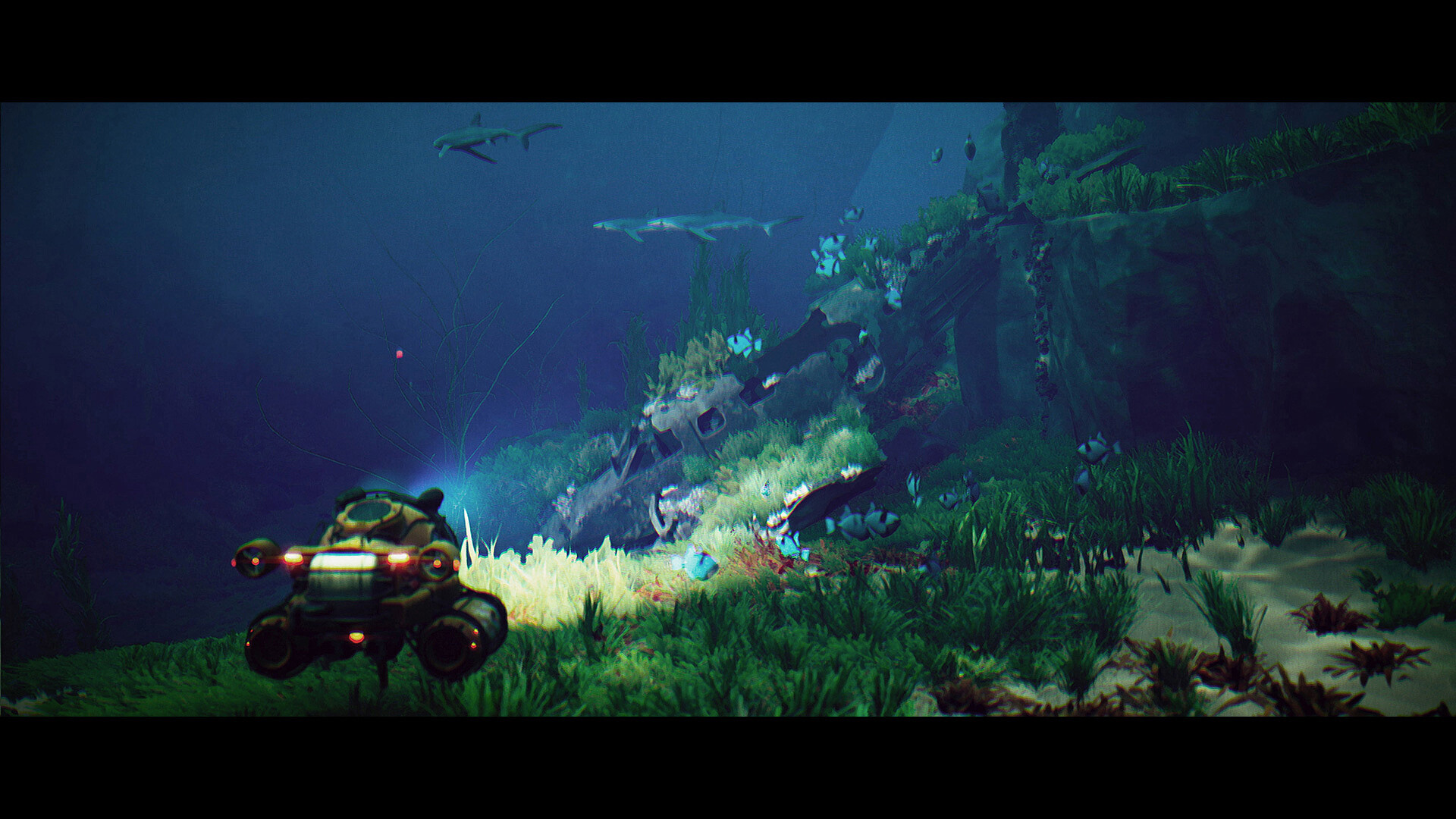
The industrial side appears in retro-futuristic facilities scattered through the water. They are not presented as a clean break from nature: steel structures, machinery and the open sea occupy the same landscape. The setting places nature beside the marks people leave on it, from deep trenches to built facilities. The player moves through these spaces as Stan, following objectives and memory-linked events rather than directing a crew or managing a settlement. That narrower focus helps the environment stay personal. A cave, a wreck or a working installation is encountered at the scale of one diver, and the details of that visit matter because of what Stan is trying to process. The late-seventies look adds grain and analogue shapes to a world with science-fiction and fantasy elements, keeping the machinery rooted in an imagined past. Each human structure sits visibly inside a much larger ocean.
Under The Waves treats grief and loneliness as central story subjects, but approaches them through movement and observation instead of action spectacle. Stan's self-imposed solitude is reflected by the distance between him and the surface, while unusual incidents make that retreat harder to sustain. The plot follows events that take him deeper into both the sea and his own history. Stan faces a difficult choice between remaining lost and returning to life, a tension that gives his exploration an emotional direction. Conversations and environmental discoveries provide ways to understand his circumstances without reducing the adventure to a sequence of plot summaries. As the player accompanies him, the same quiet landscape can feel like refuge, worksite and reminder. The slow pace implied by diving and searching gives the story room to sit with uncertainty. A small observation can carry more weight than a dramatic confrontation, because the world around Stan is shaped by absence as much as by what is visible.
Ocean preservation is another strand of the setting. Parallel Studio and Quantic Dream partnered with Surfrider Foundation Europe around ocean preservation, and the story attends to ocean life and the consequences of human activity. That context appears in the relationship between wildlife, salvageable waste and industrial sites, not as a separate management simulation. The player encounters the ocean through Stan's work and his personal crisis, so environmental details share space with the story rather than replacing it. Under The Waves is built around a compact point of view: one diver, one extended stay below the surface, and places he can reach by submarine or suit. Its exploration asks for curiosity and patience, while its narrative asks what isolation can conceal and what it costs to stay there. Those threads meet in the same dives. Each return to the seabed can reveal something about the world around Stan and something about why he came so far from everyone else.
- Developer
- Parallel Studio
- Genre
- Narrative-driven adventure